


As sirens sound across Israel and security and economic uncertainty persist, the country’s real estate market is showing a complex and uneven picture.
On one hand, there has been a slowdown in sales, cancellations of deals and rising mortgage burdens. On the other hand, prices in some segments remain stable or even rise, alongside renewed activity in the luxury market driven by Jewish buyers from abroad, particularly in Tel Aviv, despite repeated missile fire on the city since the start of the current fighting.
Buying under fire
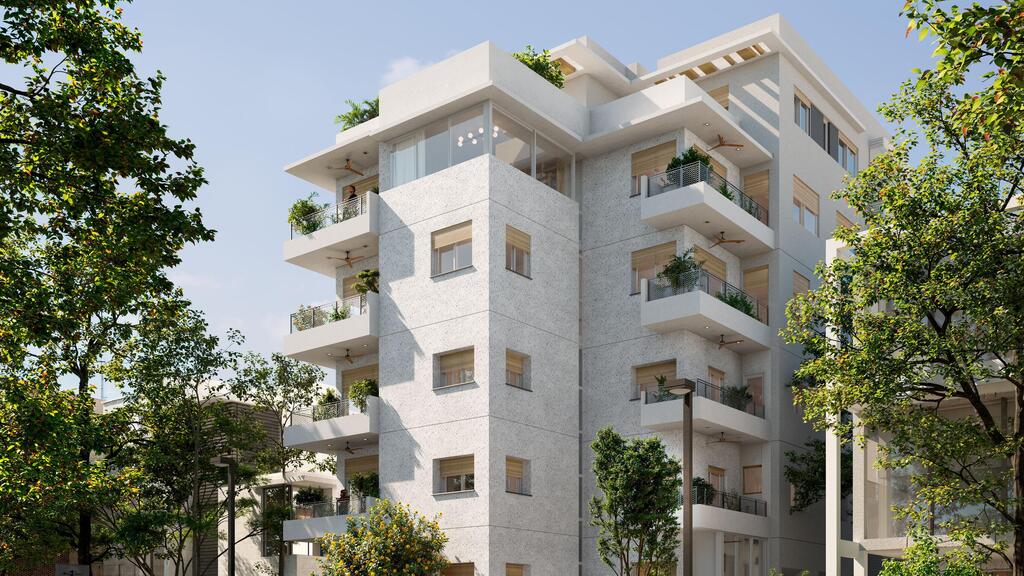
Last week, an unusual deal was signed in a Tama 38/1 project on Michal Street in central Tel Aviv. A lawyer from France purchased two adjacent apartments for a total of about NIS 13 million (about $3.5 million), with plans to combine them into a single residence ahead of a future move to Israel.
The units, located on the fourth floor of a six-story building, span a combined area of about 167 square meters and include two balconies and two safe rooms. They were purchased at the presale stage without financing incentives, at a price reflecting roughly NIS 77,000 per square meter (about $20,800).
According to the buyer, the decision was driven by a desire “to strengthen the connection with Israel and contribute to the economy,” a feeling that intensified after the October 7 attacks. The purchase was made remotely with the assistance of a law firm representing him.
Gilad Goder, vice president of marketing at Ben Shalom Entrepreneurship, which is developing the project, said there has been “growing interest from Jews abroad who want to strengthen their connection to Israel through real estate investment.”
“For many of them, this is also an emotional and value-based decision, beyond economic considerations,” he added.
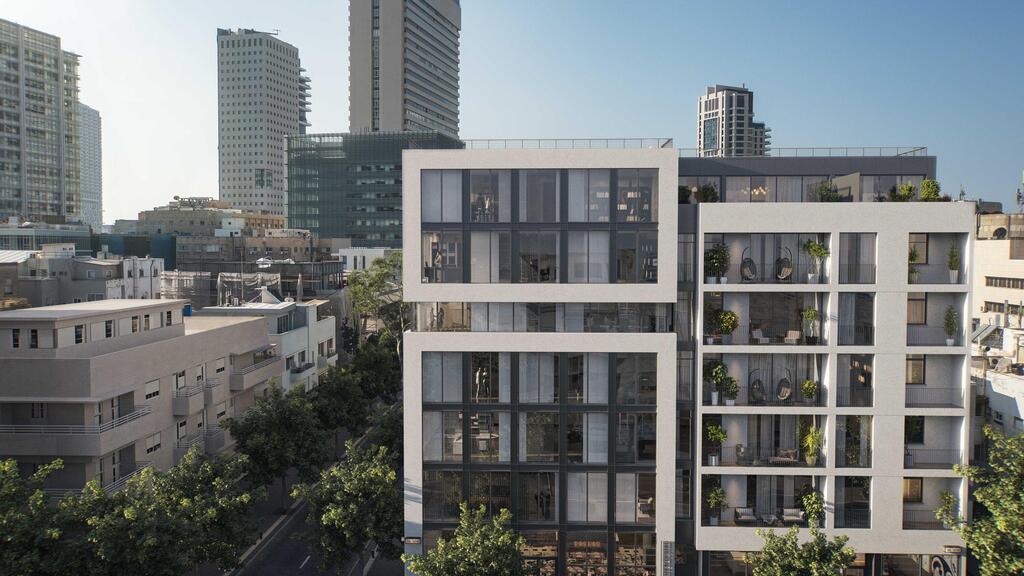
Allenby 100 Tel Aviv project
(Illustration: Division 3)
Cautious but ongoing activity
The deal is not an isolated case. Data from projects across central Tel Aviv point to continued activity, though more cautious than before.
In another recent transaction, a couple in their 50s from Paris purchased a four-room apartment in the Noga 1 project in northern Jaffa for about NIS 8 million (about $2.16 million). The 115-square-meter apartment, which includes balconies totaling about 15 square meters, is located on the first floor.
The property was acquired as a vacation home for now, with plans to immigrate to Israel in the future. The negotiations began a week before the war broke out and were finalized last week. The price reflects about NIS 69,600 per square meter (about $18,800), excluding balconies.
At Yuvalim City Boy, developers report deals signed in recent days at prices ranging from about NIS 70,000 to NIS 94,000 per square meter (about $18,900 to $25,400), mainly for smaller apartments near the coastline and the light rail route in Tel Aviv.
For example, in a project on Allenby Street, a two-room apartment measuring 61 square meters, with a 6.5-square-meter balcony, parking and storage, was sold for about NIS 6.03 million (about $1.63 million), reflecting roughly NIS 94,000 per square meter (about $25,400), with occupancy expected in about a year.
In another project on Ben Yehuda Street, a three-room apartment of 78.8 square meters, with a 15-square-meter balcony, was sold for about NIS 7.04 million (about $1.9 million), or NIS 81,700 per square meter (about $22,100).
Near Rothschild Boulevard, in a project on Herzl Street, a two-room apartment of about 50 square meters sold for approximately NIS 3.69 million (about $1 million), reflecting about NIS 69,800 per square meter (about $18,900).
Despite the war and prolonged uncertainty, demand in central Tel Aviv remains relatively high, according to developers.
“Buyers are already looking at the day after,” said Ran Belinkis, one of the company’s owners. “They understand the value of central locations, both for living and for investment. Demand remains stable and sometimes even strengthens in high-quality projects.”
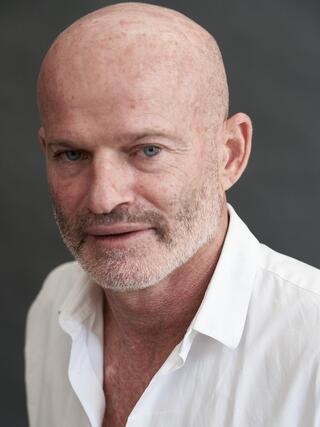 Ran BelinkisPhoto: Ron Kedmi
Investors still active
In eastern Tel Aviv as well, several deals have been recorded, mainly by investors.
In a residential project on Gallipoli Street in the Yad Eliyahu neighborhood, a garden apartment of about 108 square meters with a 45-square-meter yard was sold to an Israeli investor for around NIS 5 million (about $1.35 million).
“Even in the current period, we are seeing deals close, mainly from buyers who identify opportunities,” said Rami Dvash, vice president of sales at the company. “There is more checking and more hesitation, but those who believe in the asset and its location move forward. Prices remain stable when it comes to quality products.”
 Rami DvashPhoto: Raz Rogovsky
A more complex picture
Alongside the continued activity, broader data point to a more complicated trend.
In the Tel Aviv district, prices have seen a moderate decline over the past year, alongside a sharper drop in new home sales and the total number of transactions. Industry figures say the market has become more volatile, with periods of slowdown alternating with localized increases in activity.
In the financing sector, a similar pattern is emerging. At Edit Finance, which provides financial advisory services for real estate projects, officials say activity has not stopped but has become more precise and cautious.
“The current period has not halted the market, it has refined it,” said Moshe Feldman, the company’s vice president for business development, marketing and sales. “Developers are advancing mainly projects with high planning certainty, and buyers are making more measured decisions. Financing continues to flow, but with a strong emphasis on accurate financial planning, deal quality and the resilience of all parties involved.”
 Irit HooperPhoto: Michal Bandak
Marketing firms are also seeing a shift in buyer behavior.
“The buyers of this period are different,” said Irit Hooper, CEO of Inhouse Project Marketing. “They come much more prepared, they check everything in depth, but once they decide, the decision is very focused. Demand is maintained mainly in projects with strong locations and proper planning, alongside a decline in interest in less precise products.”