


Not many people realize it, but buildings often have a shorter lifespan than humans. Though they are seen as symbols of permanence, structures wear down over time. Materials age, systems gradually fail, and changing climate conditions, along with daily use, accelerate deterioration.
In modern construction, buildings are typically expected to last between 60 and 100 years, depending on design quality, materials, maintenance and location. Even iconic structures once viewed as timeless increasingly require deep renovations to remain standing.
Gallery
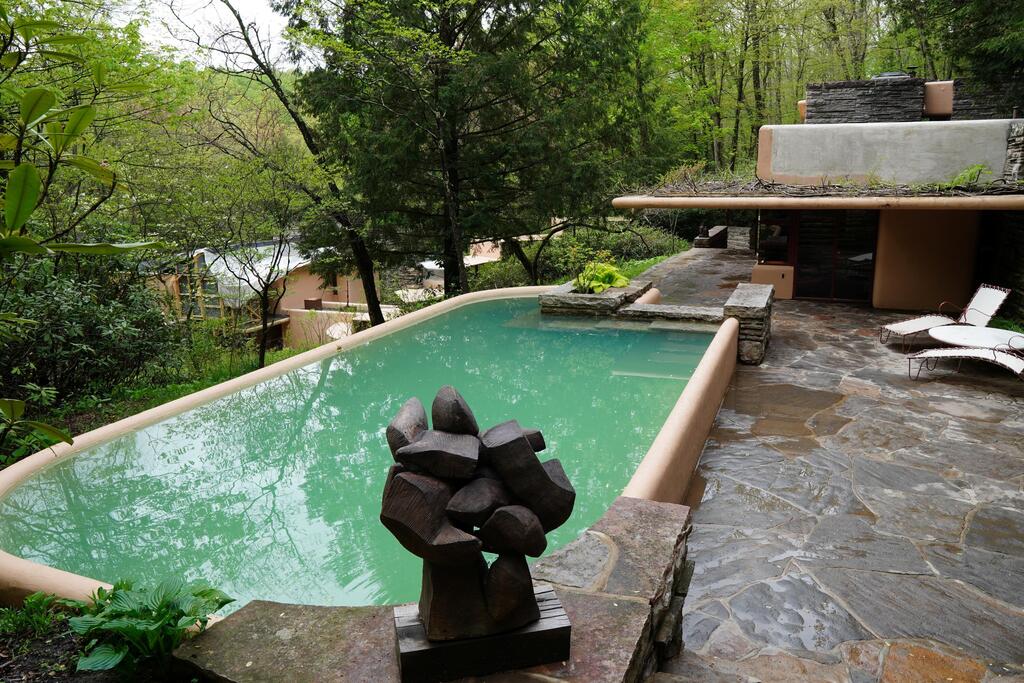
Fallingwater. UNESCO World Heritage site and architectural icon, but plagued by persistent leaks
(Photo: quiggyt4, shutterstock)
That is now the case for one of the most famous homes of the 20th century, Fallingwater, designed by American architect Frank Lloyd Wright, one of the most influential figures in modern architecture. Wright also designed New York’s Guggenheim Museum, along with numerous landmark private and public projects.
Since its completion in the mid-1930s, Fallingwater has become one of the most recognizable symbols of American architecture, featured in nearly every textbook, must-see list or discussion of modern housing. It opened to the public as a museum in 1964 and has since drawn architecture enthusiasts, students and professionals from around the world.
In 2019, it was designated a UNESCO World Heritage Site alongside seven other Wright works. Its significance lies not only in its striking beauty, but in how it reshaped the relationship between architecture, landscape and the experience of living.
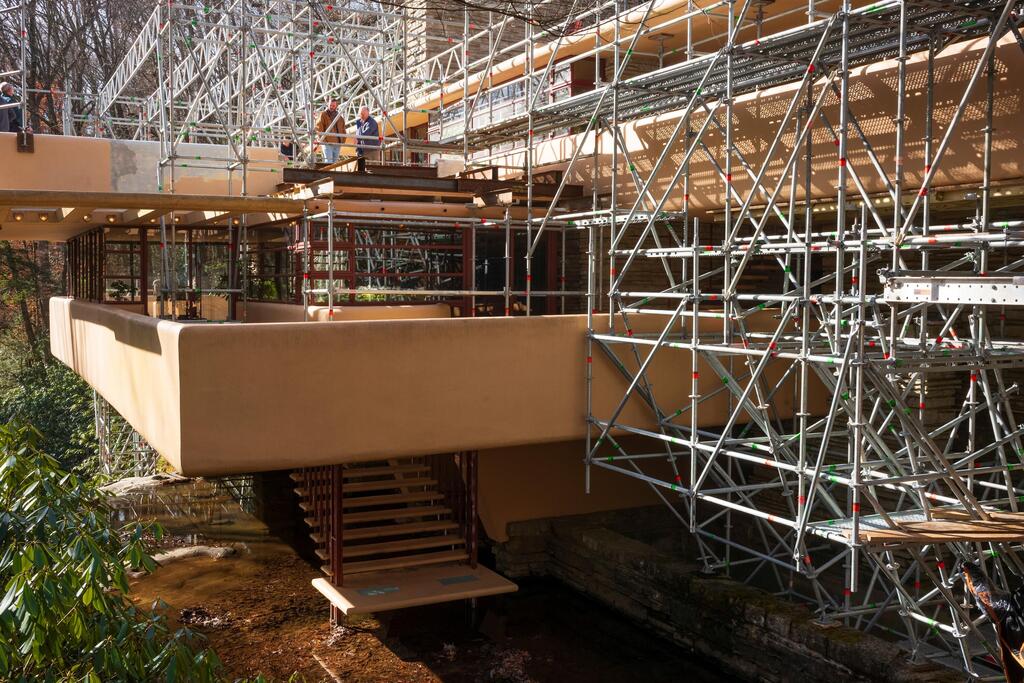
Fallingwater during restoration work
(Photo: JWCohen, shutterstock)
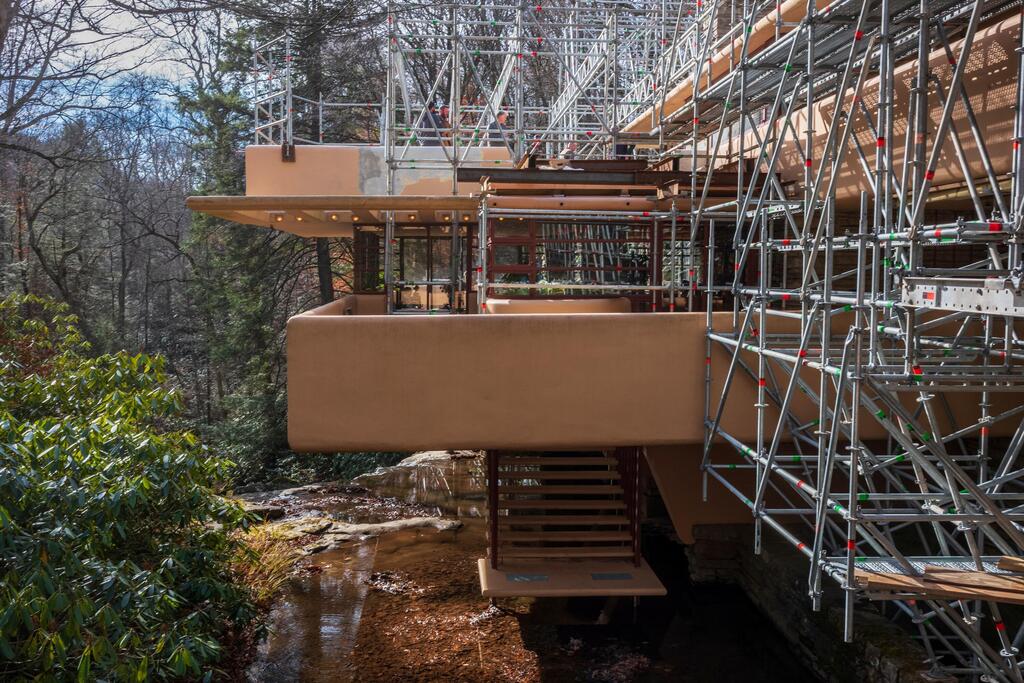
(Photo: JWCohen, shutterstock)
Built into nature, not beside it
Located in a nature reserve in western Pennsylvania, the house stretches dramatically over a rushing waterfall, as if it emerged from the rock itself. It was built for the wealthy Jewish Kaufmann family from Pittsburgh, who wanted a vacation home in the forest.
Wright gave them more than a house. He created a vision of living within nature, not just next to it. His goal was to design a structure so integrated with its surroundings that the outdoors becomes part of the interior.
The home’s concrete terraces hover above the water, demonstrating how a heavy industrial material can feel light and almost poetic. Interior spaces open to the forest, and much of the structure incorporates stone taken directly from the site.
The project not only redefined the American vacation home but also deeply influenced generations of architects worldwide. Many see it as the moment modern architecture proved that technological innovation does not have to come at the expense of a connection to nature, everyday comfort or spatial quality.
The American Institute of Architects once called it “the best all-time work of American architecture.” Architecture critic Paul Goldberger described it as "perhaps the most famous house built in the 20th century.” More than 90 years after it was designed, Fallingwater remains a touchstone for how a building can become an integral part of the landscape rather than simply occupy it.
The cost of skipping waterproofing
Over the years, the structure’s condition deteriorated. It suffered from recurring leaks, aging materials, facade damage and wear to its original interior finishes, which are especially sensitive to moisture. In fact, many of these problems have existed since shortly after the house was built.
Pamela Jerome of Architectural Preservation Studio, which led the restoration, said one of the biggest challenges stemmed from Wright’s decision not to include waterproofing elements in the walls. She said that’s a critical component to prevent water intrusion; the leaks mainly came through the stone walls, wherever they meet roofs or terraces.
Another issue was Wright’s choice to use river pebbles instead of crushed stone as aggregate in the concrete, which affected the material’s long-term durability. Some aspects of the original engineering design also required reinforcement.
As part of the preservation project, the team filled cracks in the stone walls, resealed vulnerable joints, repaired and replaced windows and doors, and upgraded waterproofing systems on roofs and terraces. The goal was to reduce damage and ensure the building’s survival for decades to come.
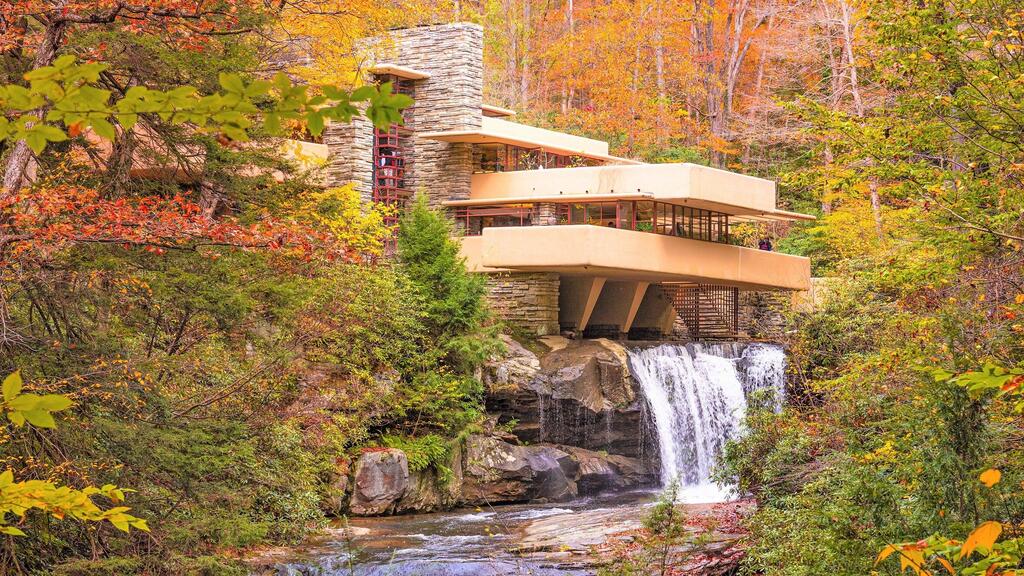
Fallingwater, designed by Frank Lloyd Wright for the Kaufmann family
(Photo: Shutterstock)
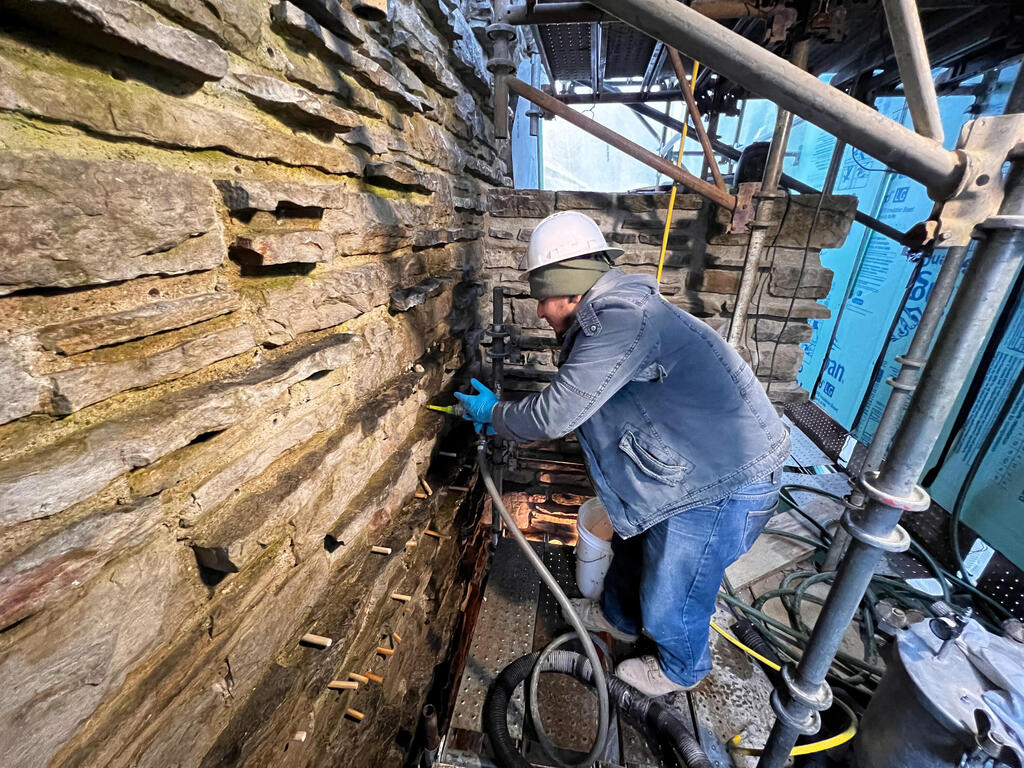
Injecting liquid grout during restoration work
(Photo: courtesy of the Western Pennsylvania Conservancy)
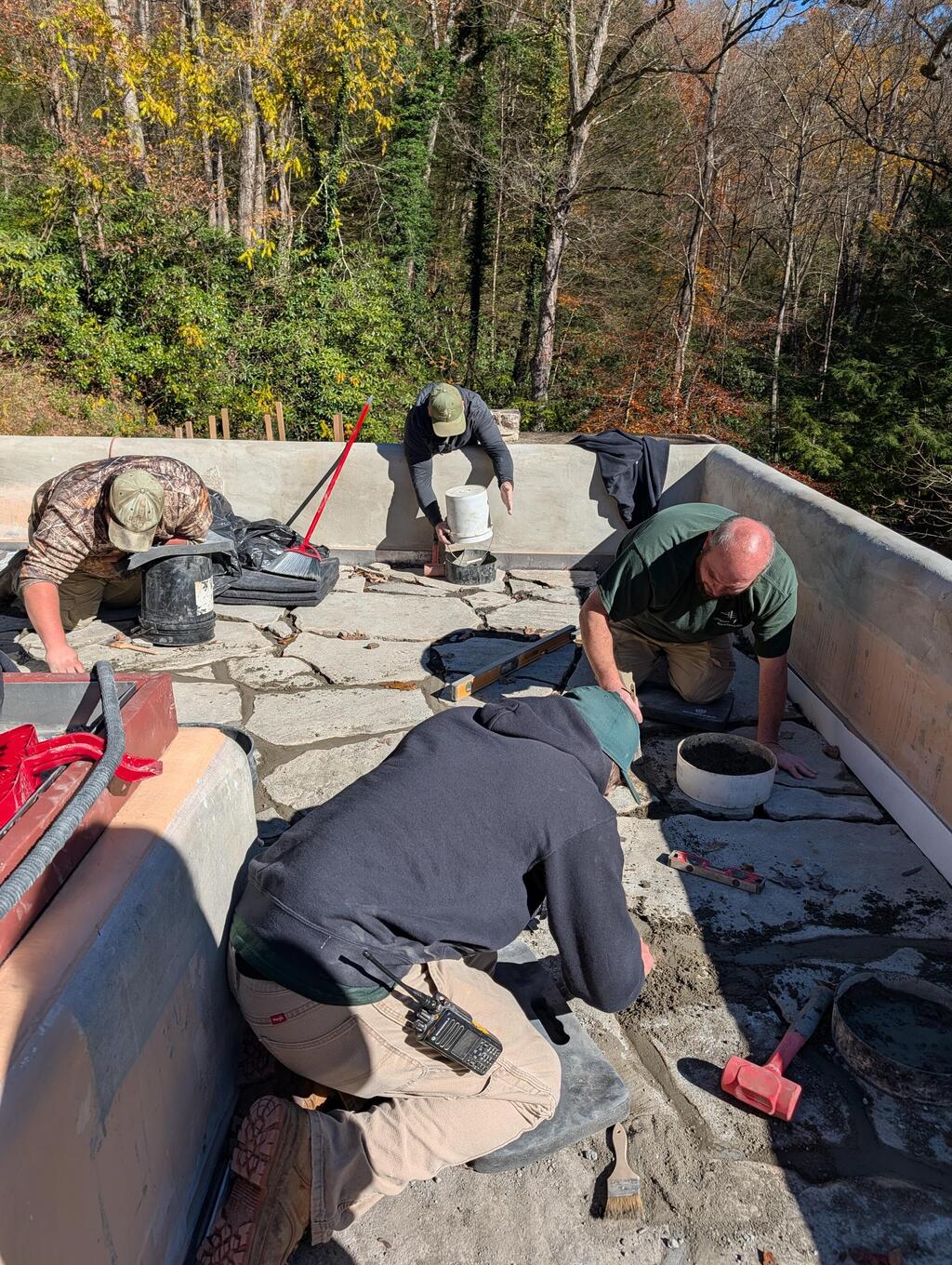
Replacing stones on the terrace
(Photo: courtesy of the Western Pennsylvania Conservancy)
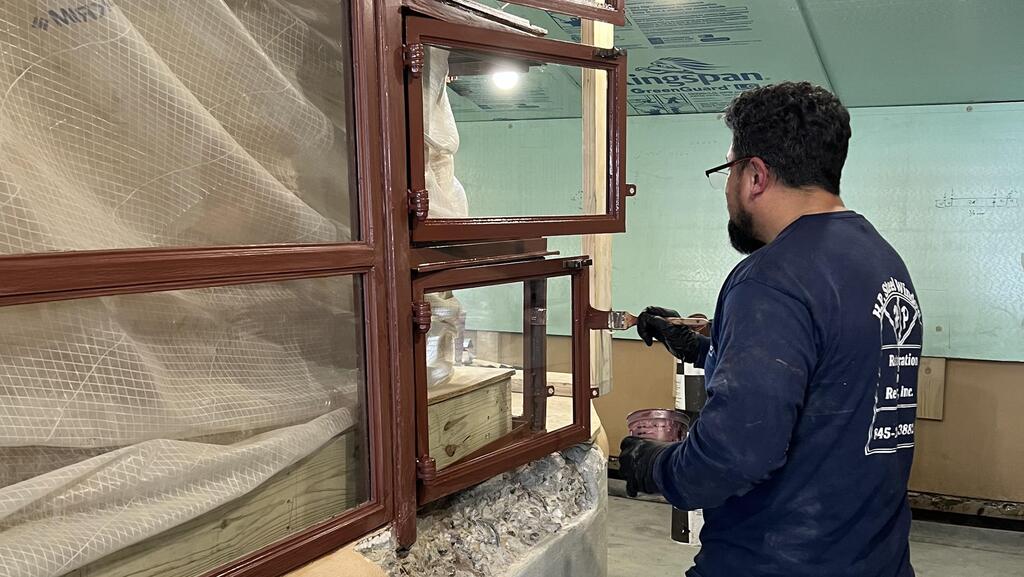
Hand-painting the window frames
(Photo: courtesy of the Western Pennsylvania Conservancy)
The restoration plan, estimated at $7 million, is considered essential to securing the future of one of the most important architectural sites in the U.S. Despite its remote location in the forest, Fallingwater attracts more than 150,000 visitors each year, a testament to its enduring cultural and tourist appeal nearly 90 years after it was built. For many, visiting the site is more than touring an old house; it is a direct encounter with one of the defining works of modern architecture.
Work on the main structure is expected to be completed next month, coinciding with the 90th anniversary of its completion. Scaffolding that covered the house in recent months is now being gradually removed, revealing once again its dramatic terraces, horizontal concrete lines and the striking interplay of stone, water and forest that made Wright’s creation an international icon.
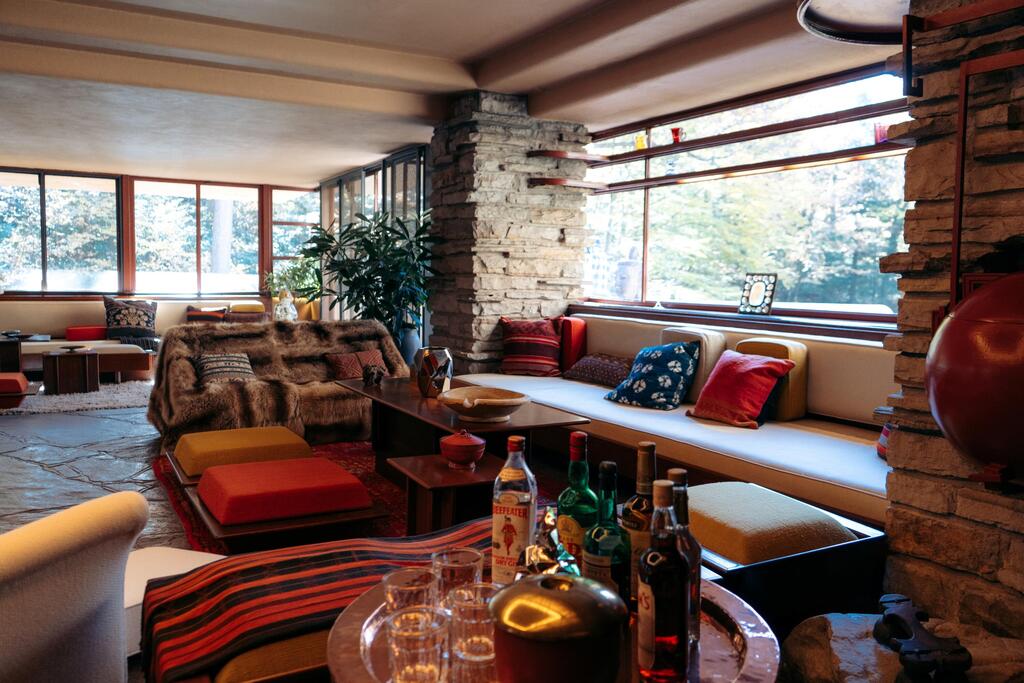
Interior of Fallingwater, which draws about 150,000 visitors each year
(Photo: Taras Vovchuk, shutterstock)
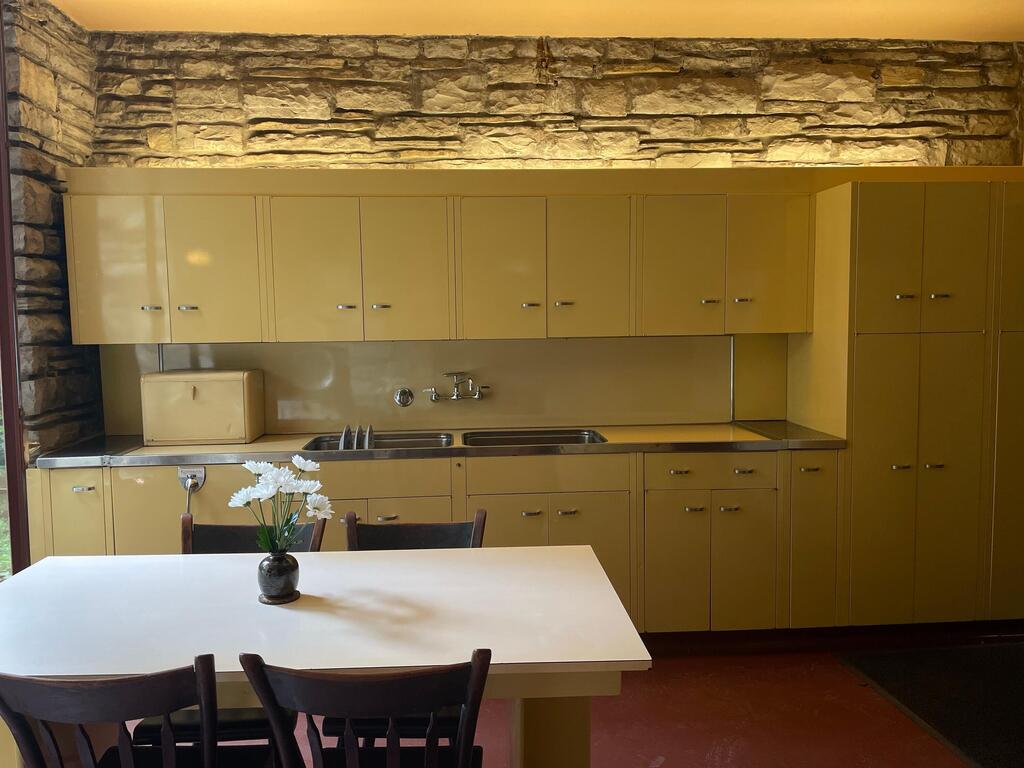
A pioneer of modern architecture. The yellow kitchen at Fallingwater, designed by Frank Lloyd Wright
(Photo: Magsfry, shutterstock)
The visionary behind the legend
Frank Lloyd Wright remains one of the most influential figures in modern architecture and is widely regarded as the most important American architect of the 20th century. Born in Wisconsin in 1867, he designed hundreds of private and public buildings over a career spanning more than 70 years.
Wright challenged the conventions of his time and developed the concept of “organic architecture,” which holds that a building should not be imposed on its surroundings but grow out of them, responding to topography, climate, local materials and the needs of its occupants. He favored horizontal lines, open spaces and a direct connection between indoors and outdoors, ideas considered groundbreaking at the time.
Alongside his achievements, Wright was a controversial figure with a turbulent personal life, including a widely publicized family tragedy (his partner, Mamah Borthwick, and two of her children were murdered in a home he designed). Yet it was precisely this combination of bold vision, innovation and uncompromising personality that cemented his legacy.
More than 60 years after his death, his influence remains visible in homes, museums and the broader language of architecture. He designed more than 1,000 structures, about 530 of which were built.
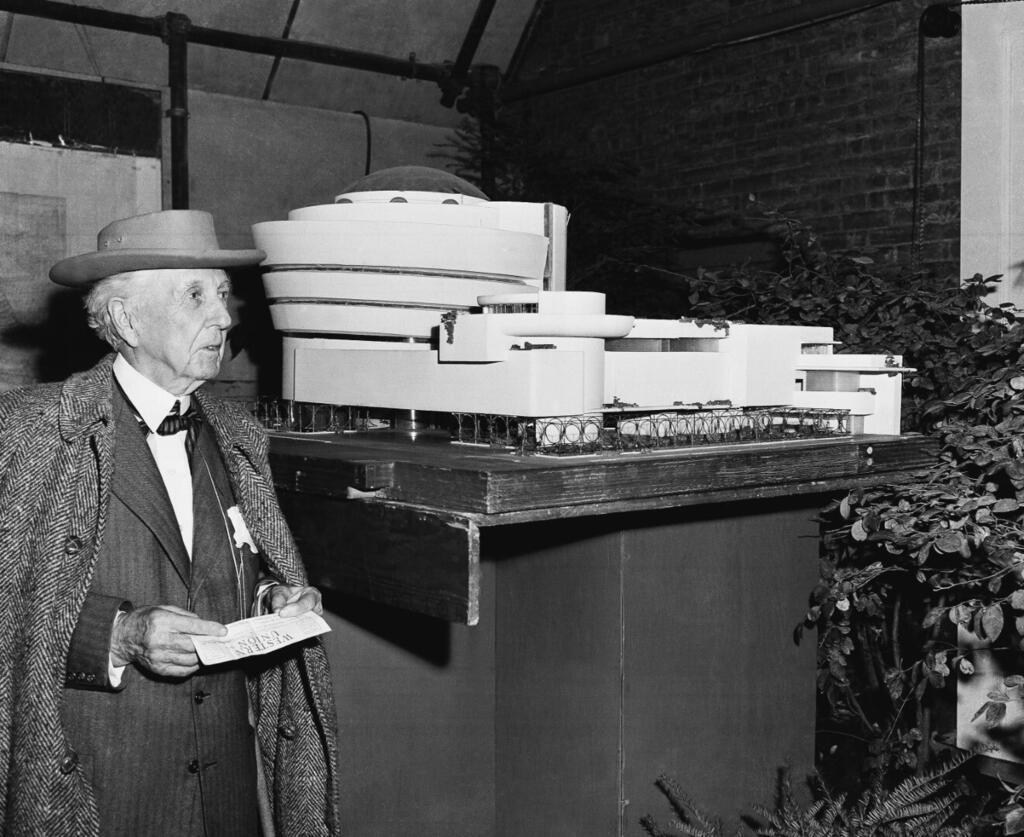
Wright beside a model of the Guggenheim Museum in New York
(Photo: AP)
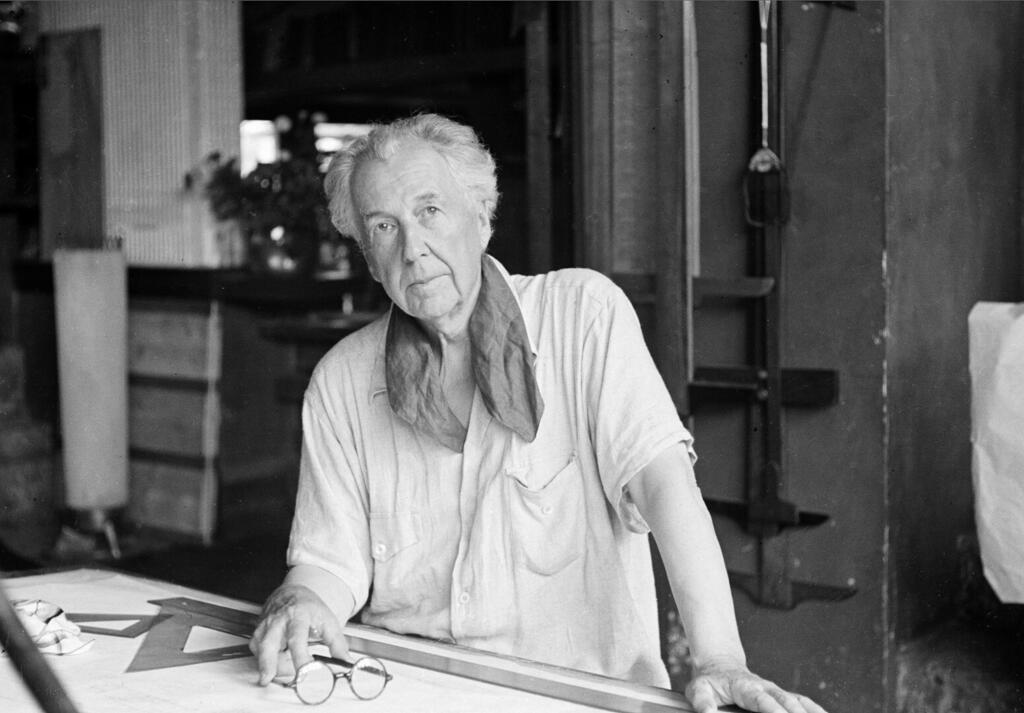
Wright at his drafting table. He designed more than 1,000 buildings, about 530 of which were built
(Photo: AP)
Fallingwater’s story offers a wider lesson. Architecture does not end on opening day. Even the most important and beautiful buildings are tested over time by wear, climate change, evolving technology and shifting public expectations.
In this case, the recent restoration is not just about fixing structural problems, but a reminder that architectural heritage requires ongoing investment and careful maintenance.
At a time when much construction is fast and often short-lived, Fallingwater stands as proof that truly great buildings are measured over decades.