

In the heart of Los Angeles, the Goldrich Cultural Center has opened as part of Holocaust Museum LA, an impressive architectural work by Israeli American architect Hagy Belzberg. Unlike the original structure, the new building next to it is strikingly different.
Its rounded lines create a sense of movement and continuity, almost like arms stretching toward the park and the surrounding community. The white roof, with its organic, wave-like shape, gives the building an almost floating appearance, while the open spaces and transparent facades connect the interior to the outside.
Gallery
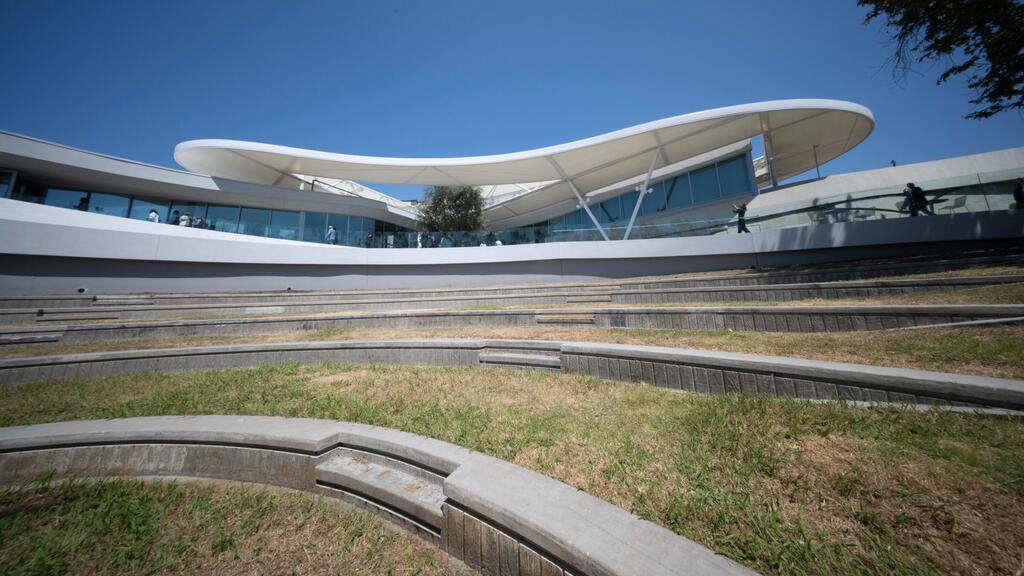
Goldrich Cultural Center blends into the topography of the surrounding area
(Photo: Courtesy of Goldrich Cultural Center)
From above, the building appears to be part of the landscape rather than a foreign object placed within it. It winds along the park, follows the topography of the land and overlooks its surroundings. The main canopy serves as a kind of “architectural umbrella,” uniting the different pavilions and creating a gathering space — a place where people can pause, come together and reflect on the past.
Memory inside, a thriving park outside
Behind the moving project is Belzberg, who was born in Israel and moved to the United States as a child. He also designed Holocaust Museum LA, which opened in 2010.
The museum began as an initiative by Holocaust survivors who met in English classes in Hollywood. They began collecting documents, photographs and personal items from the Holocaust period in order to preserve the memory of their murdered loved ones and educate future generations. For years, the collection moved from one location to another, until it eventually found a home in the current museum.
The choice of Belzberg as the architect to design the Goldrich Cultural Center, which opened to the public on June 14, was clear and natural for the museum’s board and CEO Beth Kean.
A few weeks before the center’s official opening, the two took me on a tour of the site, which was still under construction and being prepared for the grand opening.
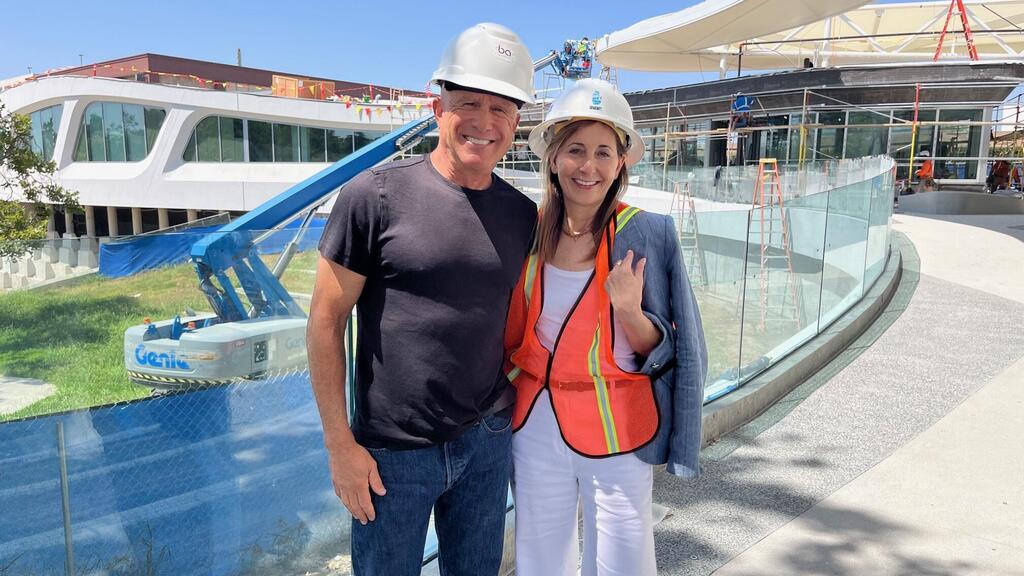
Israeli American architect Hagy Belzberg and Holocaust Museum LA CEO Beth Kean
(Photo: Courtesy of Goldrich Cultural Center)
During the tour, Belzberg explained that he designed the center so visitors would move naturally between the different spaces, while through the huge windows they would glimpse the beautiful green park outside. The contrast between exhibits telling the story of Jews during the darkest period in history and the pastoral scene outside was intentional and part of the message.
“You see life outside — people walking, dogs running, families having picnics, children playing soccer. During the Holocaust, while Jews were imprisoned in ghettos and camps, life continued beyond the walls. We want visitors to feel and understand that contrast,” the architect said.
The decision to expand the museum came after heavy demand from visitors, especially from educational institutions in Los Angeles and beyond.
“When we opened the museum, we estimated that about 15,000 visitors would come each year, but within a short time the number jumped to more than 100,000 annually, including about 30,000 schoolchildren. The original building simply could no longer contain the demand. That is why, about six years ago, the vision was born to establish the Goldrich Cultural Center, and today we are in the final stages of construction,” Belzberg said during the tour.
The new center spans about 6,500 square meters, almost twice the size of the old museum. The expanded campus includes 25,000 historical items that allow visitors to trace the story of the Holocaust, from Jewish life before the war, through the horrors that took place during it and to its continuing implications for today’s reality.
“Most of the items were donated by Holocaust survivors, camp liberators and their descendants,” Kean said.
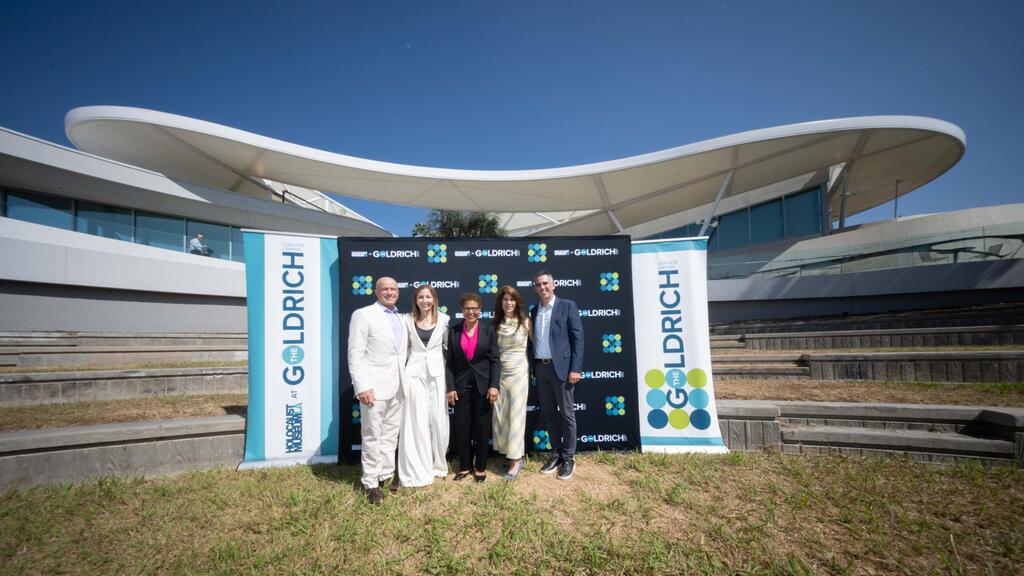
Goldrich Cultural Center
(Photo: Courtesy of Goldrich Cultural Center)
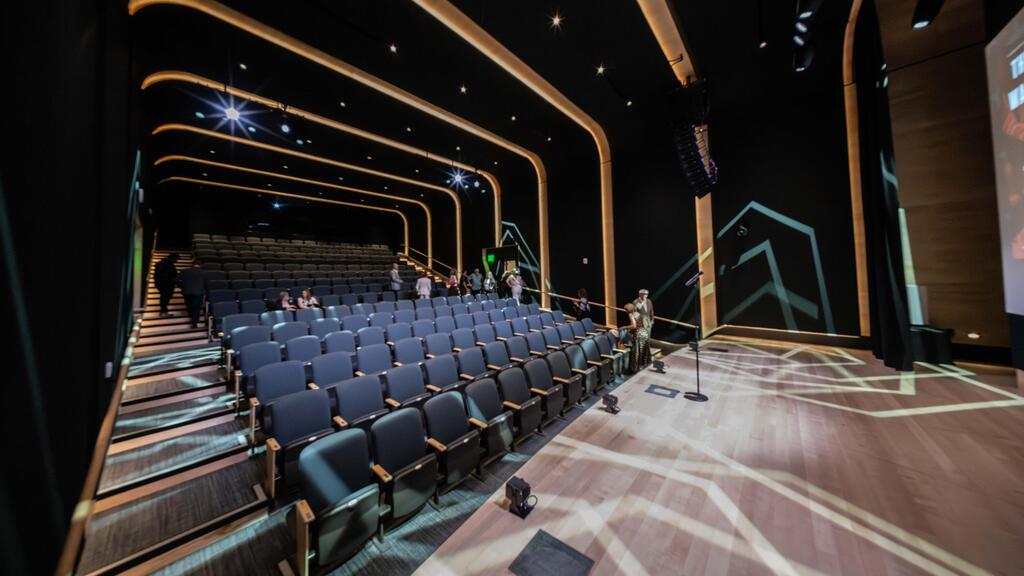
The new center also includes a theater that hosts cultural events, music, films, lectures and public discussions
(Photo: courtesy of Goldrich Cultural Center)
An interactive theater where visitors will be able to 'meet' Holocaust survivors through advanced hologram technology
(Photo: Courtesy of Goldrich Cultural Center)
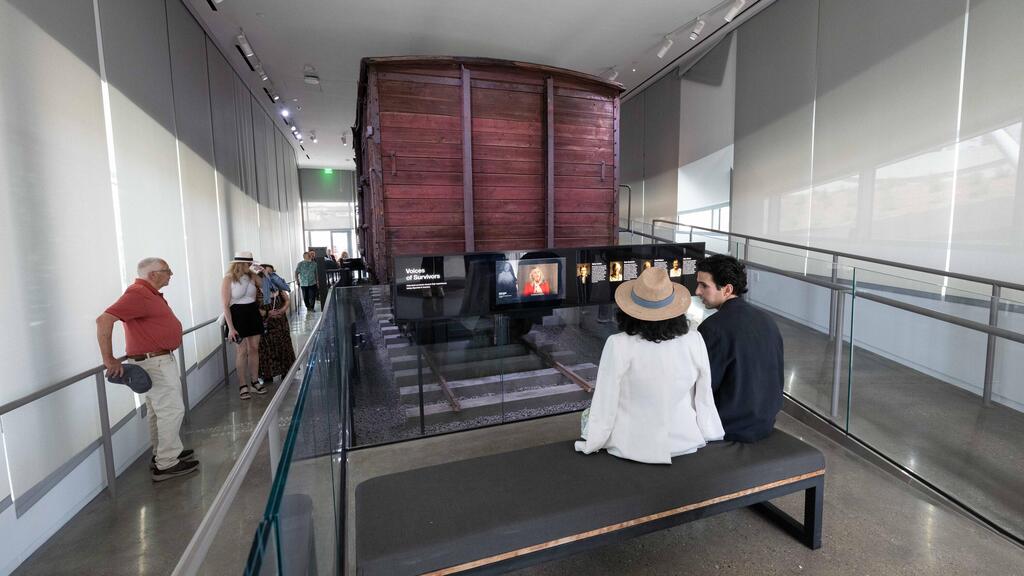
One of the center’s most prominent exhibits is an original freight car from the Holocaust period, one of the few of its kind to survive in the world. The car was discovered near the Majdanek extermination camp, and during the war it transported up to 200 people a day in a space of 23 square meters on the way to concentration and extermination camps.
“We have seen cars like this in countless photographs, but when you stand in front of one in reality, it is impossible to remain indifferent,” Belzberg said. “We wanted to create a more intimate experience — one that slows visitors’ pace, leads them to walk around the car and allows them to gradually confront what is inside it.”
Including a 'meeting' with Holocaust survivors
The project was made possible after the Los Angeles city government allocated unused land within Pan Pacific Park for the expansion, without reducing lawns or green spaces. The state of California provided an initial $8.5 million grant, which helped launch fundraising for the museum’s expansion.
According to Kean, the grant reflected recognition of the institution’s growing impact. Additional major support came from the late Jona Goldrich, a real estate developer, Holocaust survivor and philanthropist, for whom the center is named, as well as from other donors. The project’s cost is estimated at about $70 million.
The new center also includes a theater that hosts cultural events, music, films, lectures and public discussions. Next to it is an interactive theater where visitors will be able to “meet” Holocaust survivors through advanced hologram technology. Instead of only watching recorded testimony, visitors will be able to ask questions and receive answers in real time — an experience designed to preserve not only the stories, but also the humanity and presence of those who lived through the events.
For Belzberg and Kean, the new center is deeply personal. Belzberg’s father was only 3 years old when his mother fled Poland for Mandatory Palestine, then under British rule. Many members of his extended family were murdered in the Holocaust.
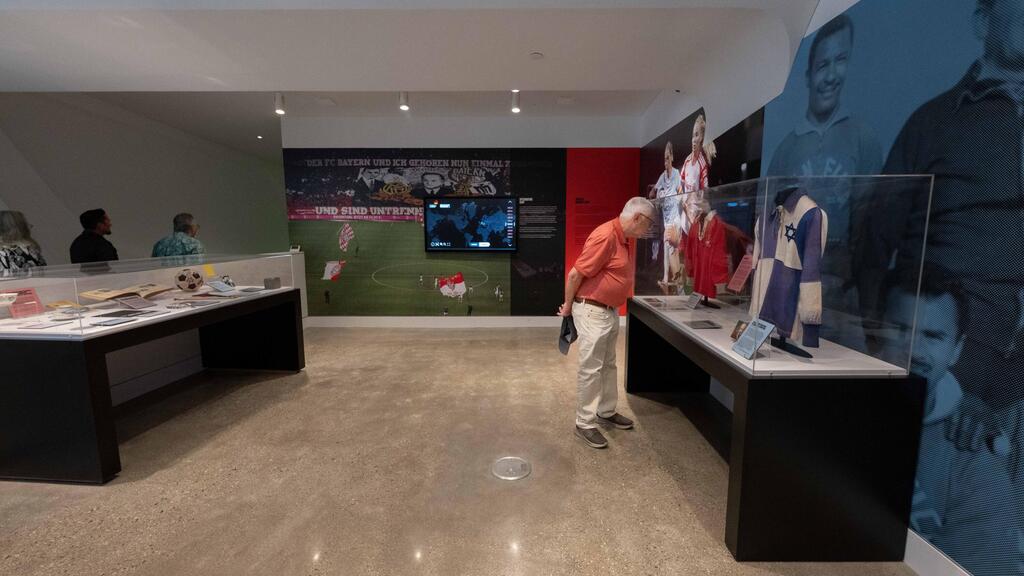
Some 25,000 historical items on 6,500 square meter
(Photo: Courtesy of Goldrich Cultural Center)
Kean’s grandparents were also Holocaust survivors from Poland. Her grandmother survived two concentration camps, including Auschwitz, and had the number she received in the camp tattooed on her arm. Her grandfather was sent to forced labor camps.
“I grew up with these stories from a very young age,” Kean said. “But they did not tell them in order to remain inside the suffering, but to teach about dignity, responsibility and the importance of educating future generations. We must not be indifferent or take things for granted.”
One of her favorite items in the museum is a photograph of her grandfather as a child in Poland, before World War II.
“A few years ago, my cousin in Mexico City found a picture of my grandfather when he was about 8, standing inside the great synagogue in his hometown. He was part of a children’s choir, alongside the synagogue’s rabbi and cantor,” Kean said.
A single photograph, she said, can open a window into a vanished world.
“It allows us to reassemble parts of our history.”
That is also the central idea behind the first exhibition in the new center, which will focus on Jewish life in Europe before the Holocaust.
“You have to understand what existed before in order to understand the magnitude of the loss,” Kean said.
According to her, the museum’s goal is to humanize history and make it relevant not only to the Jewish community, but to every person who visits.
Belzberg struggles to hide his emotion when speaking about his architectural creation. For him, he said, it is a life’s work.
“Twenty years of my career have been devoted to this — from the first museum until today,” Belzberg said. “This is exactly why I became an architect.”
Admission to the Goldrich Cultural Center is free for children and teenagers up to age 17.