

A sharp slowdown in Tel Aviv’s new housing market is becoming impossible to ignore. A Ctech review of sales data from eight residential projects developed by public real estate companies in the city shows a market that is not merely cooling, but in some cases nearly frozen.
The sample covered different parts of Tel Aviv and a range of projects, from luxury towers to smaller urban renewal developments. The picture was consistent: sales in 2025 declined across the board compared with 2024, itself considered a weak year for Israel’s real estate sector.
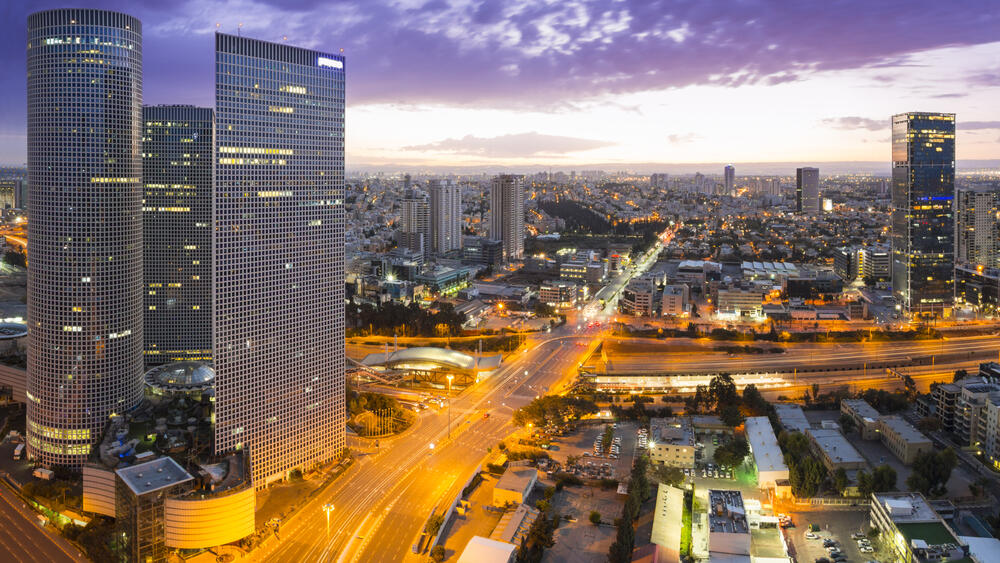
The slowdown is now so deep that developers are willing to pay double brokerage commissions to close deals. Brokers and marketers who once received about 1% of an apartment’s price are now being offered 2%, and in some cases, developers are reportedly willing to discuss even more.
The pressure is also visible in projects that are close to occupancy but still have many apartments unsold — a situation that was rare in Tel Aviv just a few years ago.
At Hagag Real Estate’s Bavli project, which includes 247 apartments and is expected to be completed in 2031, only 16 apartments were sold in 2025, down from 52 in 2024. The weak sales help explain the company’s aggressive marketing move: a 30% discount offered to club members on 50 apartments in the project.
Israel Canada’s SHE project also shows the difficulty at the top end of the market. Only two apartments were sold there in 2025, at prices of 30 million shekels and 32 million shekels. Since marketing began in the fourth quarter of 2024, just four apartments have been sold — a strikingly slow pace for a company known for aggressive sales and marketing.
At Africa Israel’s DUO project, which includes 510 apartments, sales technically improved in 2025: the company sold 13 apartments, compared with nine in 2024. But given the scale of the project and its expected 2027 occupancy date, the broader picture remains troubling. About 149 apartments are still available for sale, roughly 30% of the units intended for sale in the project.
The slowdown is not only reflected in the number of deals, but also in prices per square meter. Y.H. Dimri, which is marketing the Yama project in Sde Dov, sold 32 apartments since launching sales about six months ago. But the average price per square meter fell by 6,000 shekels compared with the price at the end of the year.
At Shikun & Binui’s luxury Weizmann 55 project, the slowdown is also evident. Only three apartments were sold in 2025, following 14 sales by the end of 2024. The project includes 40 apartments and is expected to be occupied in June, yet more than half of the units remain unsold. The price per square meter in 2024 was about 10,000 shekels higher than in 2025, reaching 67,500 shekels per square meter.
Vitania’s project at 55 HaHarash Street sold 27 apartments over three quarters since marketing began, out of 103 total units. A slower pace can be seen at Prashkovsky’s luxury HaGaDa project on Bnei Dan Street, an urban renewal development with four buildings and 52 new apartments. Although the project is nearing occupancy, about a quarter of the units have not yet been marketed. Sales fell from 21 apartments in 2023 to 12 in 2024 and just six in 2025.
Another slow-moving project is Bonei Hatichon’s development on Bnei Ephraim Street, which includes 46 units. Thirty-one apartments remain unsold. The company sold 10 apartments in 2024 and only five in 2025, a 50% drop. The average price stands at 43,000 shekels per square meter before VAT.
The review points to a very slow sales pace across the city. In projects that launched several years ago, sales have fallen by 50% to 80% compared with 2024. In Hagag’s Bavli project, for example, sales dropped by about 70% in a single year.
The pressure is clearest in projects expected to be occupied within the coming year, where many apartments are still unsold. At Weizmann 55, more than half the apartments remain available even though occupancy is only about a month away.
Until a few years ago, developers could choose how quickly to sell apartments, timing sales according to construction progress and expected price increases. Today, many are ready to sell their entire inventory immediately at market price — and in some cases below it.
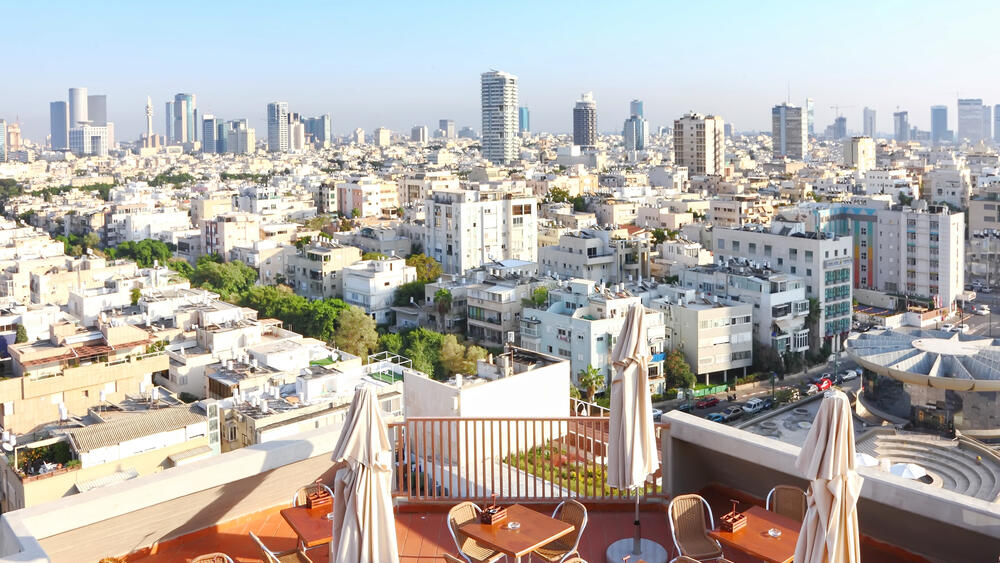
The slowdown is now so deep that developers are willing to pay double brokerage commissions
(Photo: Shutterstock)
For the past two decades, even when apartment purchases froze, the recovery came quickly, usually within a few months and often with a sharp rebound. That happened after the end of the COVID-19 pandemic, when both purchases and prices surged. These recurring pauses gave developers confidence that downturns were temporary and that prices would soon rise again.
This time looks different. Higher interest rates, which began rising in 2022, combined with prolonged uncertainty from the war and the rising cost of living, have created a market that has been sluggish for roughly three years.
The freeze is not unique to Tel Aviv, but it is more visible there because of the city’s high prices, large supply and more sophisticated buyers. High land prices in the heart of the country’s demand zone are also weighing on developers. Many Tel Aviv projects are defined in company reports as highly material, meaning the developers are under serious pressure to sell.
One source active in Tel Aviv real estate compared the current period with the boom years, especially 2022, when developers cut commissions paid to brokers and marketers.
“The companies turned up their noses,” the source said. “They felt they no longer needed their services, because meetings and deals came easily, so why pay someone to bring them buyers?”
Then the market changed.
“After October 7, the situation changed. Developers understood that they had to sell and brought back the regular 1% commissions. Since the beginning of the year, the situation changed again, and developers are willing to pay double commission, meaning 2% of the apartment price. Some are willing to talk about more. At the same time, the official price lists of the companies have gone down, and that is before all kinds of financing benefits.”
According to the same source, the amount of supply in parts of the city has become overwhelming.
“In parts of the city there is now a supply of apartments in endless projects, at all kinds of stages, including projects that have already been occupied and still have apartments for sale. This is a phenomenon that did not exist three or four years ago. The supply is so crazy that it confuses buyers. They see a large number of apartments and some conclude that it is worth waiting a little so prices will fall further.”
A December 2025 report by the Finance Ministry’s chief economist reflects those market conditions. According to the report, Tel Aviv saw a jump in the use of financing benefits. The share of transactions with financing incentives rose to 37%, compared with 26% in November and 33% in December 2024.
Developers across the market are now offering various financing benefits, but as occupancy approaches, their ability to keep offering such incentives shrinks — and the difficulty of selling grows. In at least one project, Dimri’s Sde Dov development, buyers got what many had been waiting for: the price per square meter fell by 6,000 shekels from the end of 2025.
“You can’t argue with the data. This is really a long wave of stoppage,” said Roni Cohen, CEO and partner at Eldar Real Estate Marketing. “We have had several waves of stoppages, but what we are experiencing here began with the rise in interest rates in 2022, and other parameters were added to it. Tel Aviv is a luxury market, and usually those who buy apartments are people who have money in their pocket and many investment alternatives.”
Cohen said demand has not disappeared entirely. Inquiries are still coming in, but many are not turning into purchases.
“The projects selling today are usually on paper, sometimes eight years ahead. You see two segments in the market — investors looking for small apartments, and buyers of luxury properties, penthouses and the like. In both cases, these are usually people who do not need to sell their old apartment. What we are missing is the large segment of move-up buyers. They are struggling to enter deals today because it is hard to sell the old apartment. The market for 3.5- to 5-room apartments is suffering the most today, and you see that in Sde Dov,” he said.
Developers, Cohen added, are trying to reduce their dependence on financing benefits, but it is difficult.
“Today, the bon ton is 20/80 combined with a contractor loan, and the balance is indexed with a cap. But it costs developers a lot of money, and they will not be able to give these benefits without limit and over time. In the end, it rolls into the apartment price.”
Still, the luxury market has not disappeared entirely. Nuri Rahamim, co-owner of Rosio Properties, a Tel Aviv luxury real estate brokerage, said some buyers are still searching for apartments priced in the tens of millions of shekels.
He said he measures the market through three parameters: leads, meetings and purchase offers.
“I work from Florentin to the Yarkon, including in new projects, and my test is the number of leads I receive, the number of meetings and offers to buy an apartment. Not every lead indeed turns into a meeting, and not every meeting turns into a deal, but in each of these parameters that I count, there is an increase.”
According to Rahamim, 2026 has continued to show signs of renewed activity among buyers looking for apartments around 15 million shekels, and May began especially strongly.
“In the first five days of this month, I received a number of leads equal to an entire month,” he said.