


After hitting a low point in October, Israel’s housing market rebounded in November with a sharp increase in home sales. Still, when viewed over a longer period, the broader slowdown in residential real estate activity remains in place.
According to data published Wednesday by the Central Bureau of Statistics, 7,780 homes were sold nationwide in November 2025. That represents a jump of about 60 percent compared with October, one of the weakest months in recent years, and an increase of 3.2 percent from November 2024.
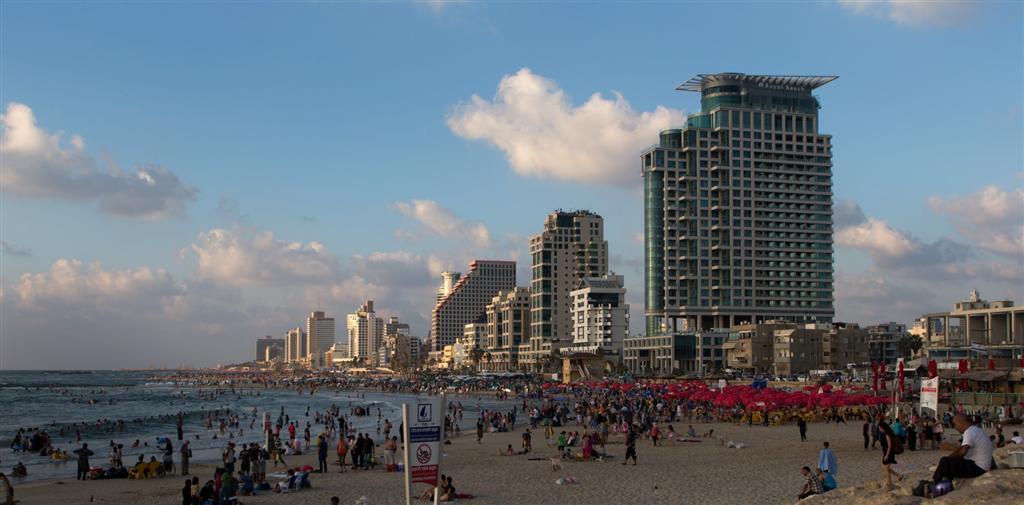
Tel Aviv leads in new home sales
(Photo: Yaron Brener)
Of the homes sold in November, 37.7 percent were newly built apartments, totaling 2,930 units. About one-third of those were sold under government-subsidized affordable housing programs. The remaining 62.3 percent, or roughly 4,850 homes, were secondhand properties.
The statistics bureau tracks housing trends using rolling three-month periods. Between September and November 2025, about 19,930 homes were sold, a decline of 11.9 percent compared with the previous three-month period from June through August. After adjusting for seasonal factors such as holidays and vacation periods, however, transaction volume rose by 3.5 percent. Compared with the same period a year earlier, both the unadjusted and seasonally adjusted figures showed declines of 10.1 percent and 6.5 percent, respectively.
New home sales continue to weaken
Newly built homes accounted for 38.3 percent of all transactions during the September to November period, or about 7,640 units. Roughly 37 percent of those were sold with government subsidies. Sales of new homes fell 7.5 percent compared with the previous three-month period. After seasonal adjustment, the data pointed to an increase of 7.4 percent. On a year-over-year basis, new home sales declined sharply, down 16.6 percent in the raw data and 14.7 percent after seasonal adjustment. Secondhand homes made up 61.7 percent of total sales during the three-month period, totaling about 12,290 units. Compared with the previous three months, secondhand sales dropped 14.5 percent. After seasonal adjustment, a modest increase of 1.2 percent was recorded. Compared with the same period last year, secondhand sales declined by 5.5 percent in the raw figures and by 0.3 percent after seasonal adjustment.
Trend data show that from October 2021 through April 2023, total home sales fell at an average monthly rate of 3.9 percent. From May 2023 through June 2024, the trend reversed, with average monthly growth of 2.5 percent. Since July 2024, sales have again trended downward, declining by about 1 percent per month on average. New home sales fell at an average monthly rate of 3.8 percent between August 2021 and March 2023. From April 2023 through May 2024, sales rose by an average of 3.8 percent per month. Between June 2024 and June 2025, the trend reversed again, with average monthly declines of 2.4 percent. In recent months, sales have been volatile, and the statistics bureau said it is too early to identify a clear direction. Secondhand home sales declined at an average monthly rate of 3.6 percent from October 2021 through August 2023. From September 2023 through November 2024, sales rose by an average of 2.9 percent per month. Between December 2024 and October 2025, the trend turned negative again, with average monthly declines of 1.6 percent. Although November recorded a modest uptick, officials said it does not yet indicate a sustained turnaround.
Haifa leads secondhand sales
Israel’s central and southern regions recorded the largest share of home sales during the September to November period, accounting for 24.5 percent and 20.4 percent of all transactions, respectively. Compared with the previous three-month period, sales of new homes increased in the northern region by 30 percent and in the Tel Aviv region by 17.6 percent. New home sales declined in all other regions, with the sharpest drop recorded in the south, down 26.8 percent. Sales of secondhand homes fell in every region. The steepest declines were recorded in Jerusalem and the West Bank region, where sales dropped 21.6 percent.
The cities of Tel Aviv-Yafo, Jerusalem, Be’er Ya’akov, Ofakim, Haifa and Elad led the country in new home sales during the three-month period, each with more than 300 units sold. In the secondhand market, Haifa ranked first, followed by Jerusalem, Tel Aviv-Yafo, Beersheba, Ashkelon and Petah Tikva, each with more than 400 homes sold. At the end of November, the number of new homes still on the market stood at about 83,630 units, a marginal increase of 0.06 percent from October. At the current pace of sales, the estimated supply period was 30.1 months.
Trend data show that since April 2022, the number of unsold new homes has increased at an average monthly rate of 1.4 percent. About 31.4 percent of unsold new homes were located in the Tel Aviv region, totaling roughly 26,260 units, while 24.2 percent were in the central region, or about 20,270 units. Among cities with populations exceeding 100,000, Tel Aviv-Yafo had the largest inventory of unsold new homes, with about 9,810 units, followed by Jerusalem with around 8,290. Among smaller cities, the largest inventories were recorded in Lod, Kiryat Gat, Be’er Ya’akov, Ramat Hasharon, Ra’anana, Ofakim, Kiryat Ono, Kiryat Bialik and Or Yehuda.