

Israel’s construction industry is facing a fresh labor crunch after the government abruptly froze a key track for bringing foreign workers into the country, despite persistent manpower shortages and delays in housing projects.
The Population and Immigration Authority informed manpower companies and contractors that the 40,000-worker quota approved for direct recruitment outside government-to-government agreements had been fully exhausted.
Gallery
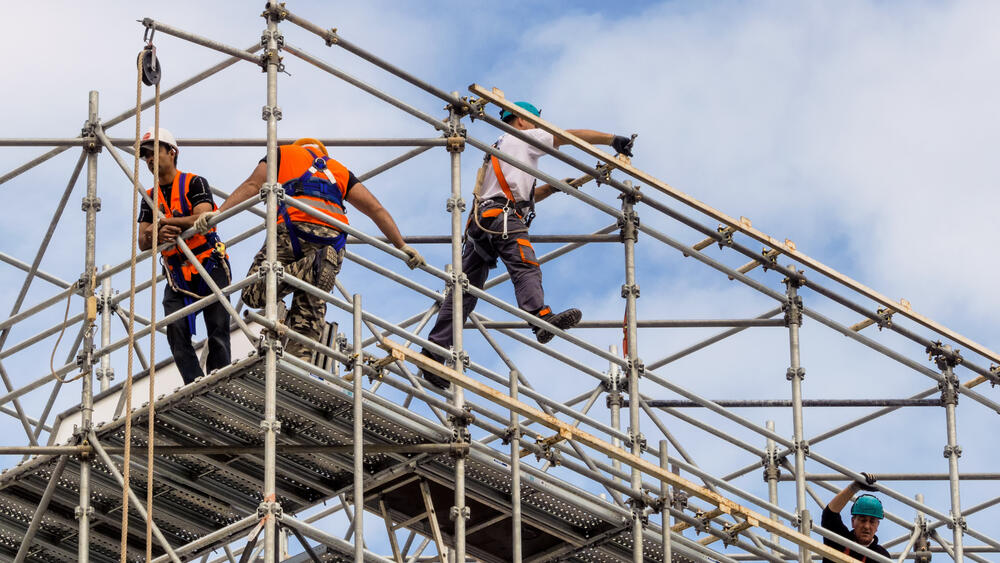
Contractors warn of fresh delays as Israel halts private recruitment of foreign construction workers
(Photo: Shutterstock)
As a result, no new applications may be submitted under the temporary fast-track program, and even requests already filed but still under review have been frozen until further notice.
An email sent by the authority to relevant companies, obtained by ynet, said the quota under the emergency framework created following the outbreak of the war had been “fully exhausted.”
“Given the exhaustion of the quota, no new applications should be submitted for bringing foreign workers under this framework until further notice,” the authority wrote.
It added that previously submitted applications that had not yet been approved, including those already under examination or processing, would not be authorized for now.
The decision surprised contractors and manpower firms, many of which had already invested time and money in recruiting, screening and training workers abroad.
Industry officials say the freeze could further slow construction and create uncertainty for developers already struggling with labor shortages.
The private recruitment route was introduced after the war sharply reduced the number of available workers in the construction sector. The government initially expanded bilateral, state-run recruitment programs but struggled to bring in workers quickly enough.
A parallel system was then created allowing contractors and manpower companies to recruit workers directly from abroad.
Industry representatives strongly favor that model, arguing that it allows them to test and select workers themselves and has helped stabilize the sector.
‘The government is harming a successful model’
The Israel Builders Association sharply criticized the freeze.
“The government is harming a successful model for bringing foreign workers,” the association said.
It argued that after shortcomings in the government-to-government, or G2G, system, the private route proved far more effective.
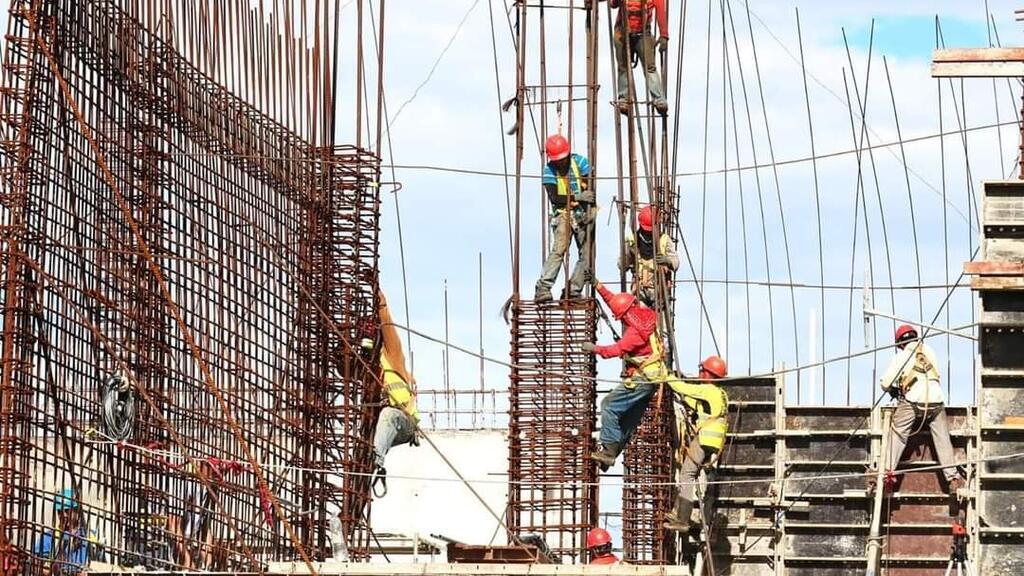
(Photo: Maria Rashad)
According to the association, more than 80,000 foreign construction workers are currently in Israel, over half of whom arrived after the recruitment model was changed.
The association said the influx had helped reduce the average construction period from 38.6 months to 37 months, with further improvement expected.
“Contractors report that they are very satisfied with these workers, and stability has finally been created in this area of the industry, even though a shortage still remains,” the association said.
It called for an additional quota of foreign workers under the same private recruitment model.
The group warned that shifting back toward G2G recruitment could slow the arrival of workers, undermine contractors’ confidence in the system and once again lengthen construction times.
It also argued that workers arriving through the government-run route may require longer training and adjustment periods, while some may eventually leave construction for other sectors.
Labor costs, it noted, account for 40% or more of total construction costs, meaning longer project timelines can directly affect housing prices.
The Construction and Housing Ministry was also caught off guard by the sudden freeze and supports increasing the quota.
Ministry officials said they were aware that the quota was close to being exhausted but expressed surprise that the suspension was announced with virtually no advance notice.
The ministry said it had been seeking an expansion of the quota for months, so far without success.
Construction and Housing Ministry seeks urgent meeting
The Construction and Housing Ministry said the private recruitment track had become a major tool for rebuilding the sector’s workforce.
“The exhaustion of the quota reflects the demand and success of the move, which has been a central component in the recovery of the construction industry and in increasing its production capacity in recent years,” the ministry said.
It said it had already requested an additional 20,000-worker allocation. That request, according to the ministry, received professional approval but encountered other obstacles.
The ministry has now asked the Prime Minister’s Office director-general to convene an urgent meeting of ministry directors-general in an effort to approve the increase as soon as possible.
Officials argue that construction is the only sector that repeatedly exhausts its foreign worker quotas, while other industries do not fully use theirs.
Workers can still be brought to Israel under bilateral agreements, the ministry noted.
For now, government and industry officials are trying to advance either an executive-level committee decision or a move through the Housing Cabinet to increase the quota.
Not everyone supports the private recruitment model.
The workers’ rights organization Kav LaOved argued that private recruitment from countries that already have bilateral agreements with Israel undermines those agreements.
The group said around 6,000 skilled workers who have already passed screening abroad have not yet been invited to Israel by manpower companies.
“If contractors have complaints about problems in the bilateral recruitment track, the State of Israel should address them rather than turn to private recruitment,” the organization said.
Kav LaOved called for an immediate halt to private recruitment and urged the government instead to regularize the status of thousands of workers who came to Israel during the war and are already employed in construction.