

About 30 years ago, a couple bought an old house in the Neve Tzedek neighborhood of Tel Aviv. The house sits on one of the small streets of the historic quarter and has roughly 120 square meters spread over three floors, with the third floor unusual for the area and standing above the rest.
“It’s actually the tallest house in the neighborhood,” says architect Michal Naftali of Studio OMI, who is also the daughter of the homeowners. “Before my parents bought it, an architect lived there who added a small room on the roof, and that’s how it stayed.”
After the purchase, another unexpected space was discovered in the house, this time below ground rather than above it.
“There were layers of flooring on top of the original decorative Gluska tiles,” Naftali recounts. “When they removed them, they found a small room about 2 by 2 meters with a two‑meter ceiling, which apparently served as a weapons cache during the British Mandate.”
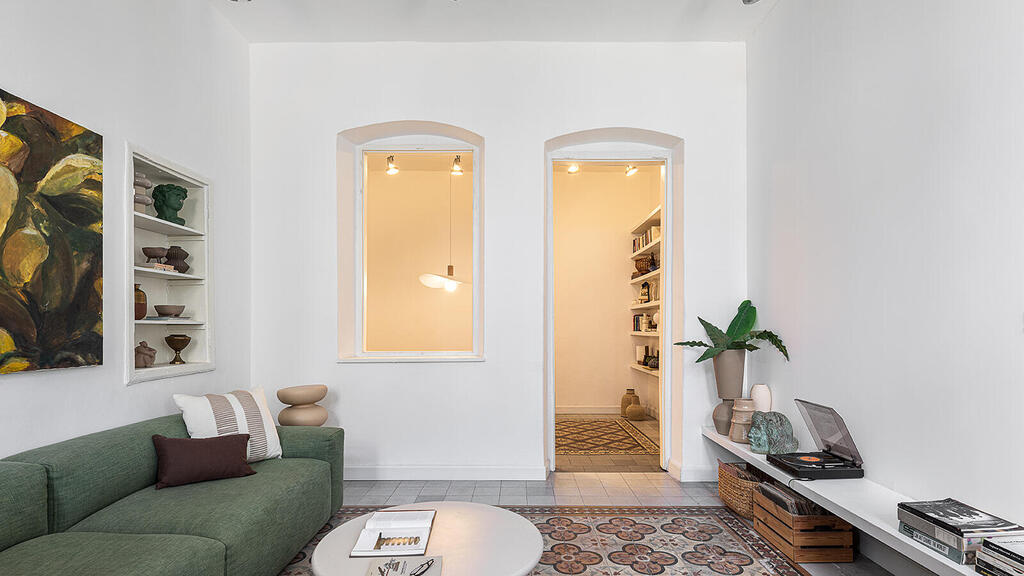
Illustrated tiles and arches
(Photo: Gadi Yosef)
Over the years, the house has been used for various purposes
(Photo: Gadi Yosef)
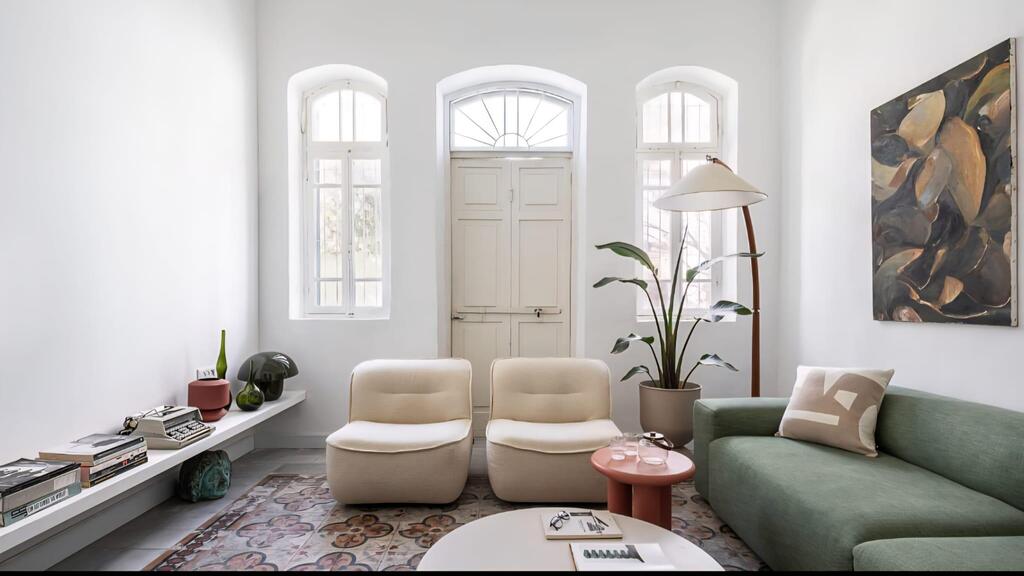
During the renovation, new Gluska tiles were added to complete the look
(Photo: Gadi Yosef)
An unusual structure
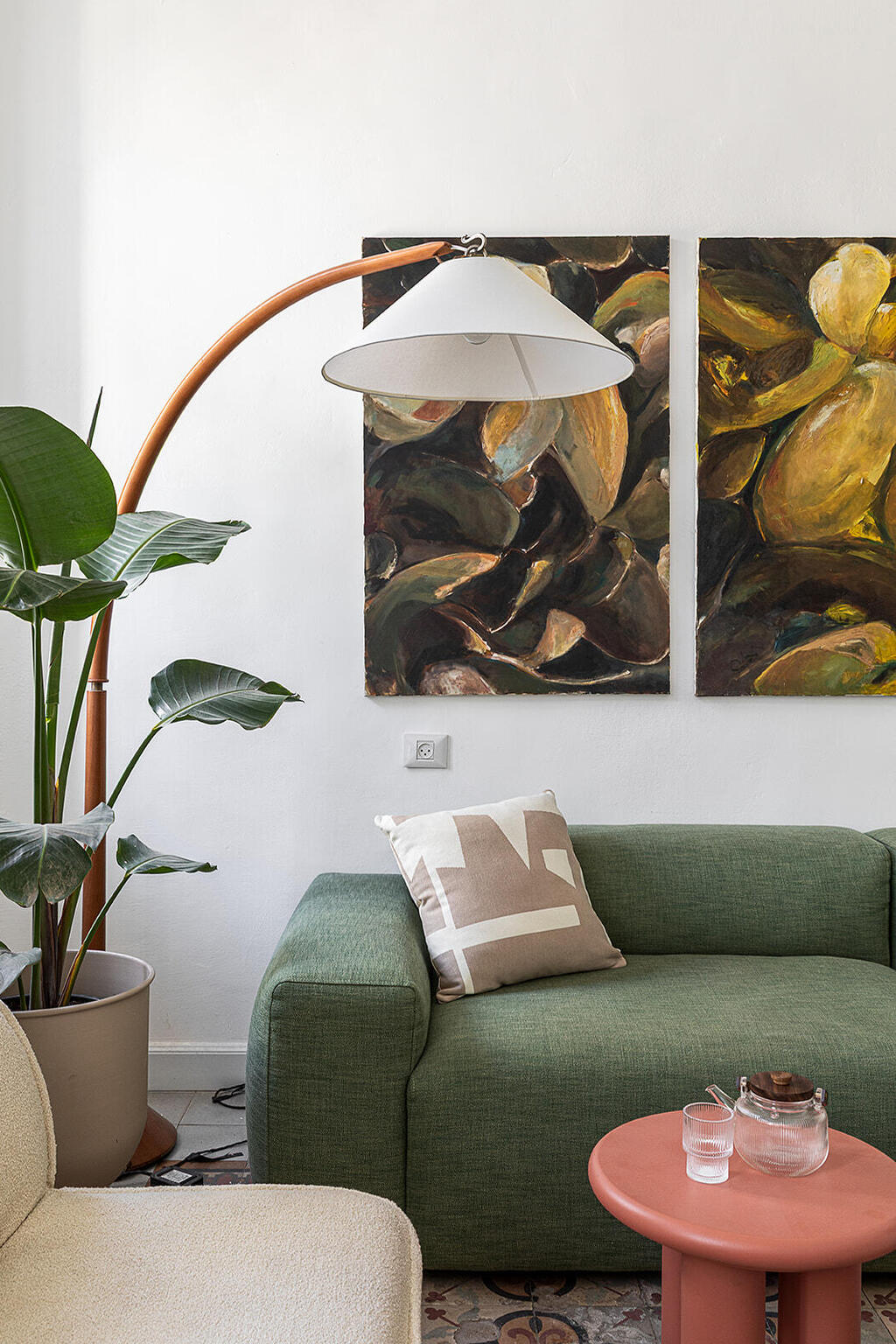
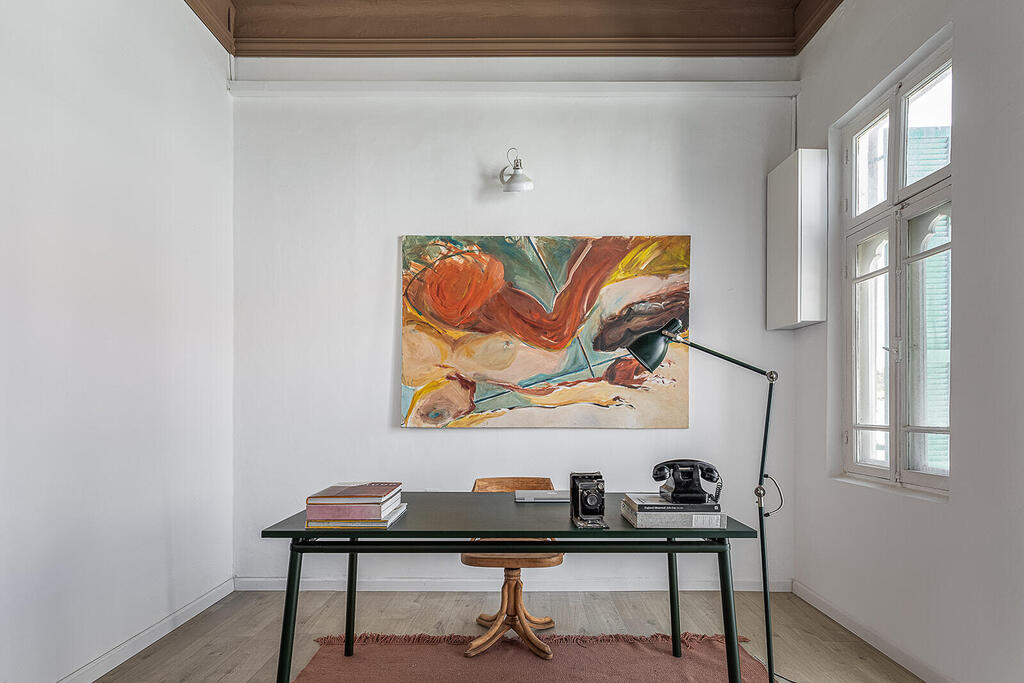
Over the years the house served various purposes. Most of the time it was rented out, but the roof room was kept by the mother of the family as a painting studio. Her works now hang on the walls throughout the home. The large paintings in the living room above the sofa, the one behind the desk in the study, and the smaller pieces in the bedroom and first‑floor foyer are all her brushwork. She also crafted the driftwood mirror frames in the ground floor powder room and the first‑floor bathroom from wood she found in nature.
Later, one of the couple’s four adult children—Naftali’s brother—moved into the home, and in recent years the decision was made to turn it into a vacation rental.
“Just before the war we started a general renovation,” Naftali says. “We polished the floors, added new Gluska tiles to fill in missing spots, and built a large bookcase on the lower level.” Naftali’s involvement paused during the renovation under happy circumstances—she gave birth and stepped back. Interior designer Naama Rodin Asher then took over the project.
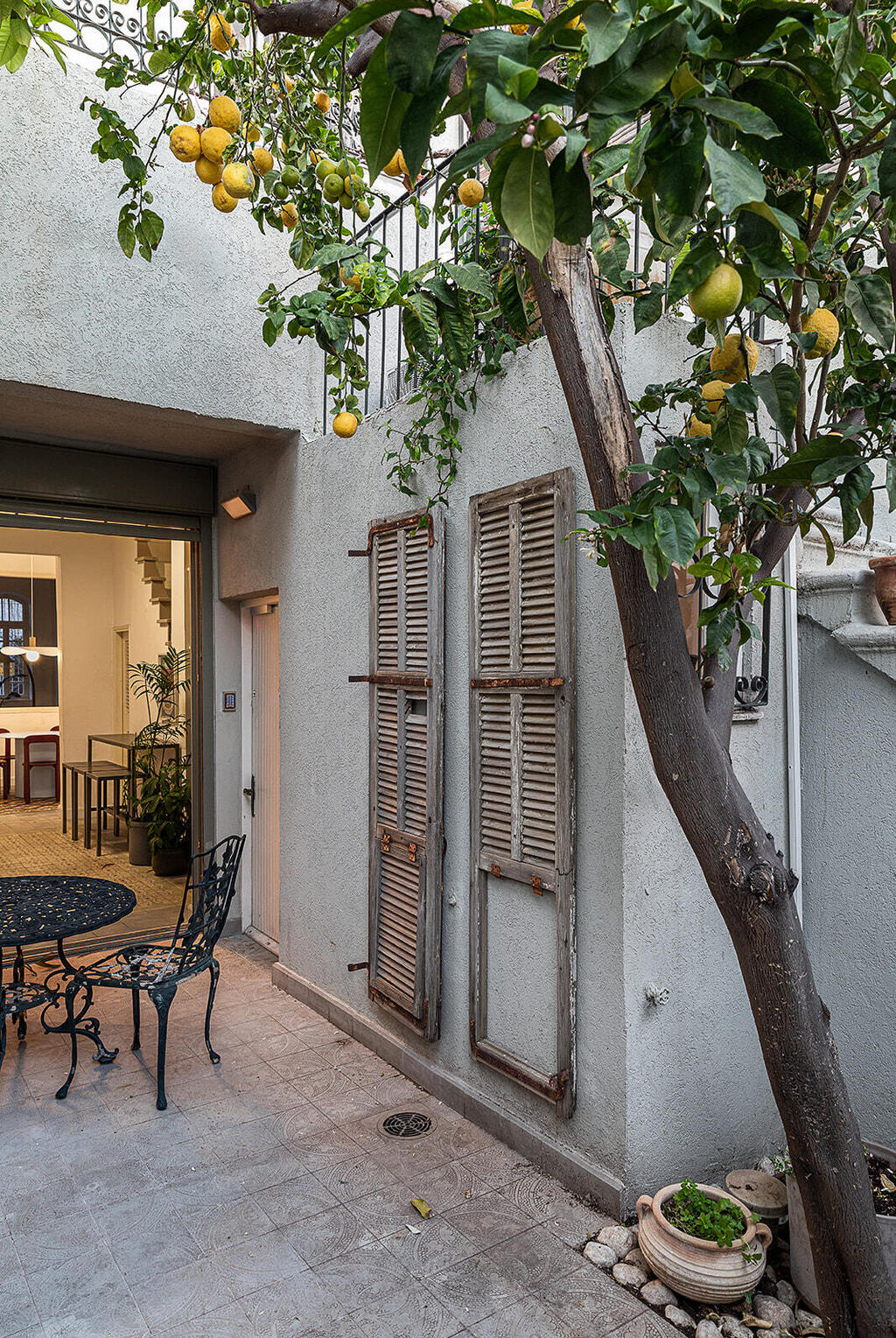
The house's courtyard
(Photo: Gadi Yosef)
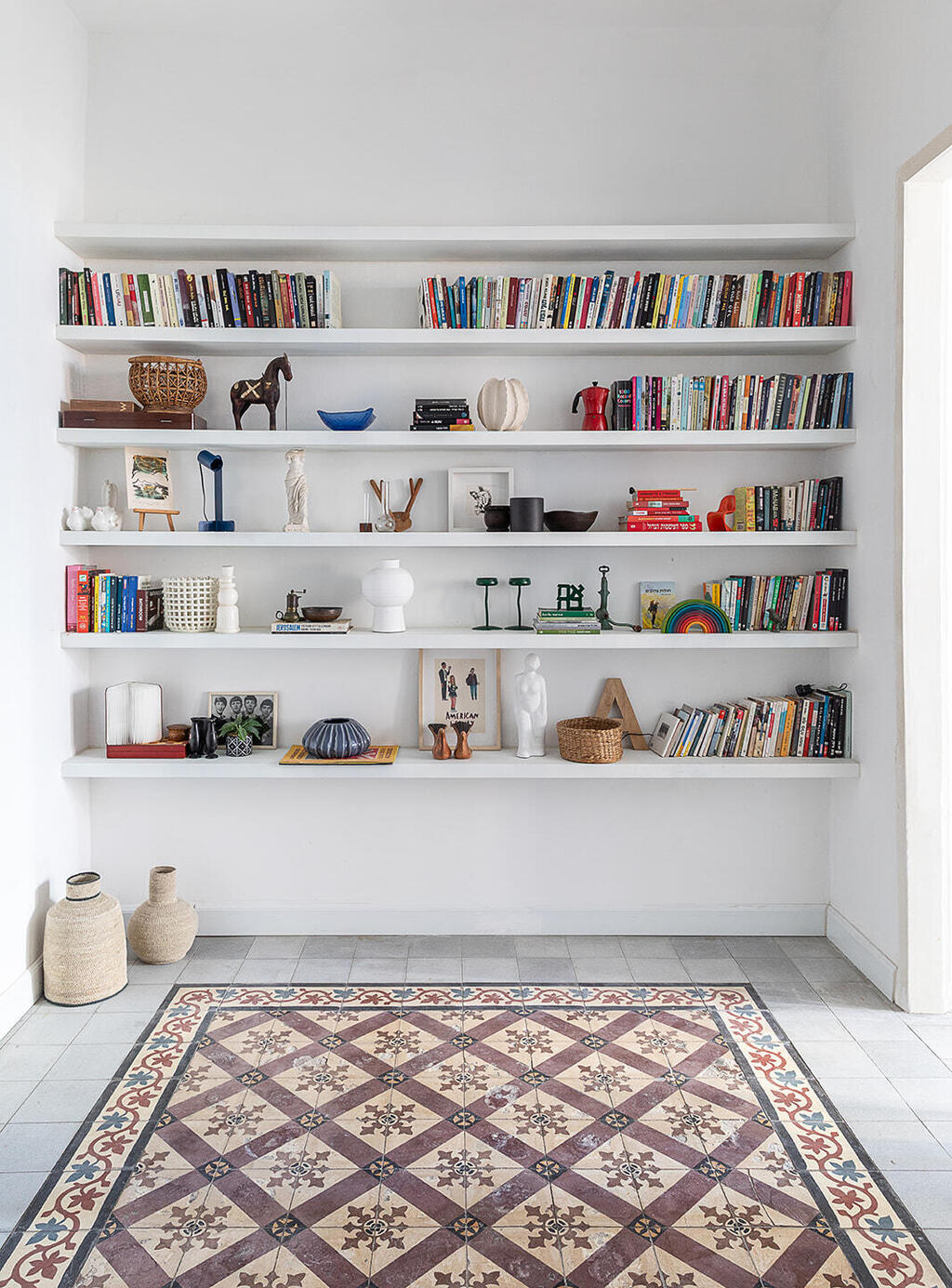
Tiles as a carpet
(Photo: Gadi Yosef)
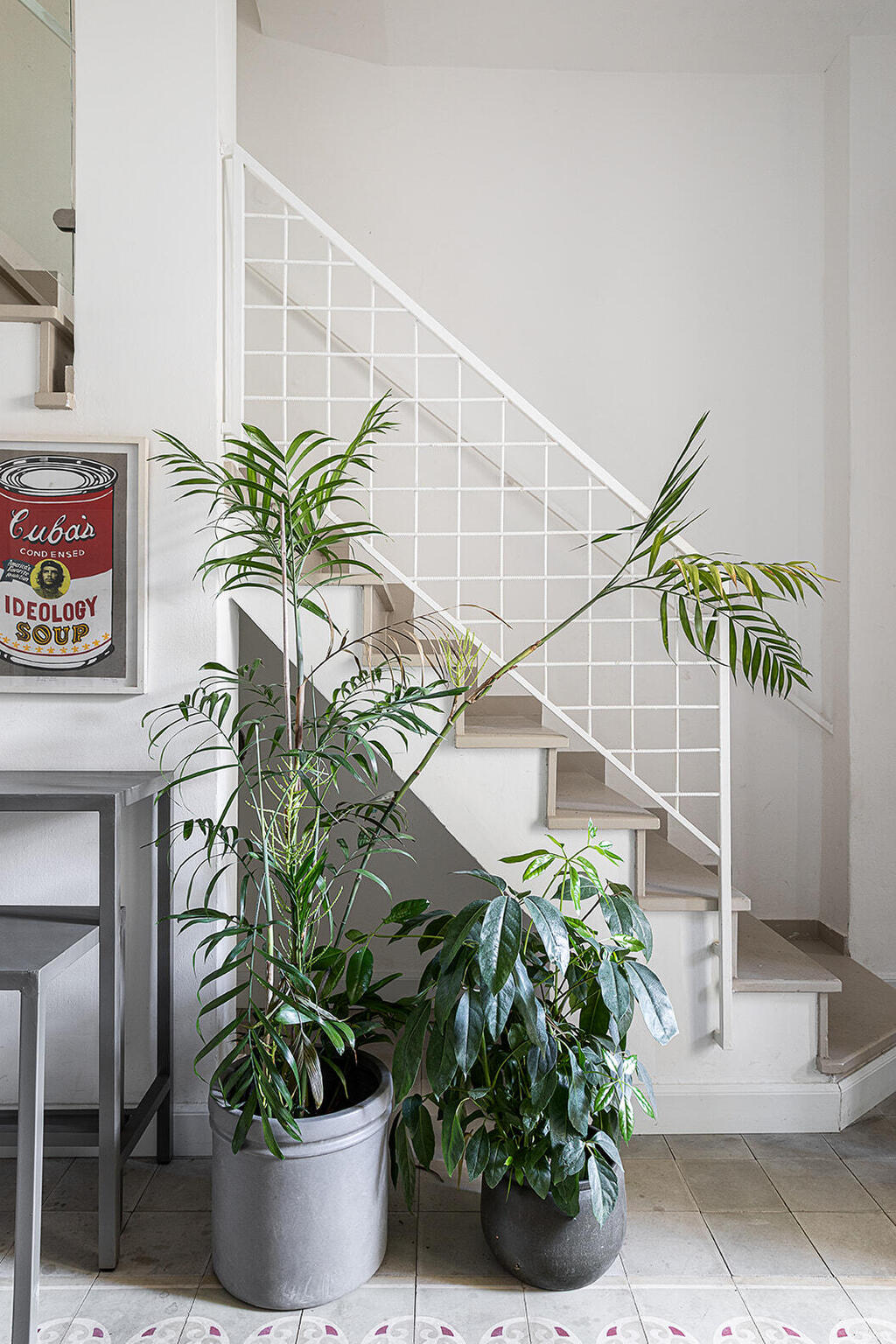
A house without hallways. The stairs.
(Photo: Gadi Yosef)
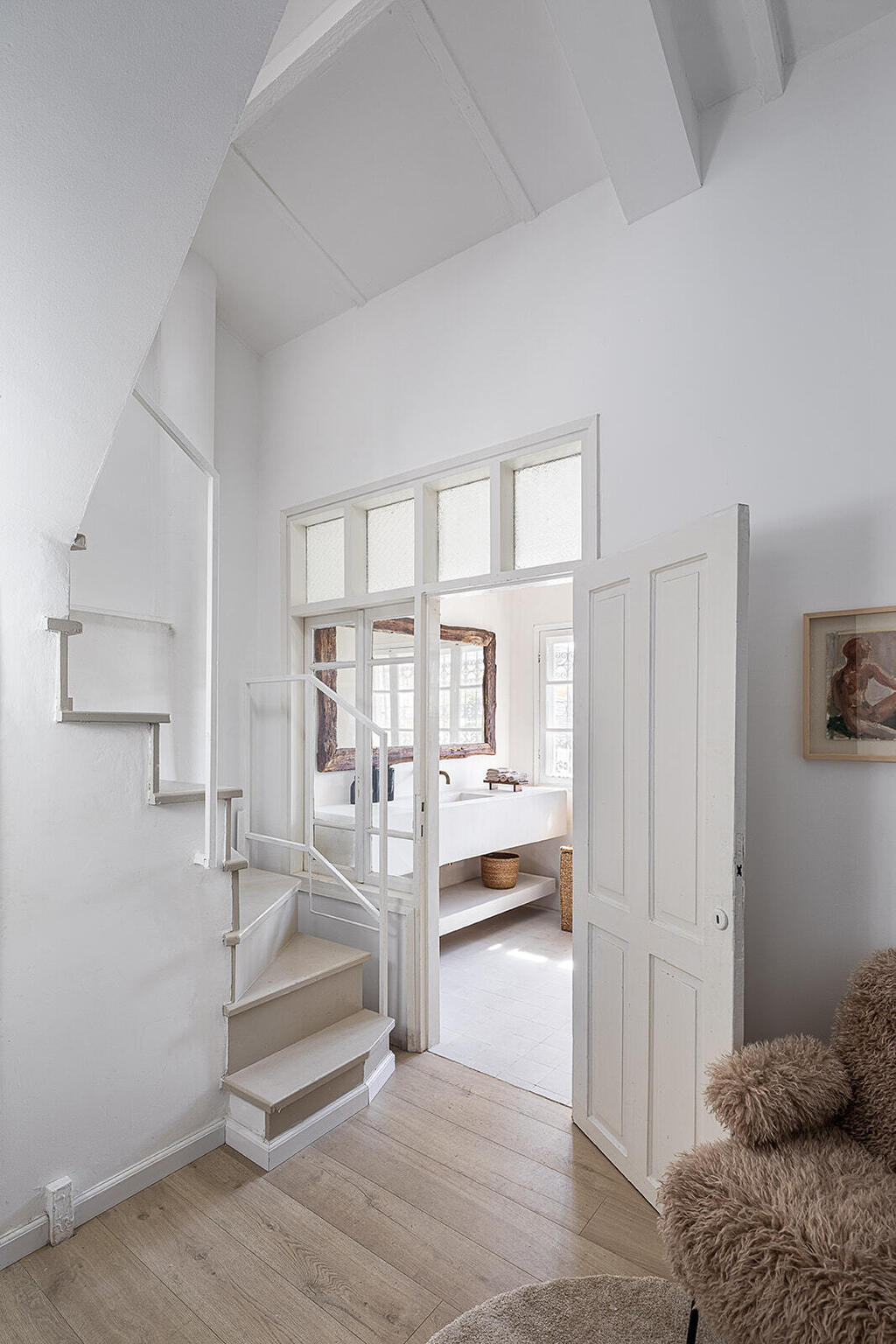
Levels, slopes and angles. A glimpse into one of the bathrooms
(Photo: Gadi Yosef)
“It’s a non‑standard building: three floors of a long, narrow rectangle with windows only on the short walls and no corridors at all,” Asher says. “When we began, each floor spoke a completely different language because of the way the building evolved over time. On the ground floor, the kitchen had been renewed previously with very modern white cabinets, but they kept the original windows and patterned floors. On the first floor they installed wood flooring. The third floor was something else entirely—I didn’t know where to start.”
Design driven by tiles
Entry to the house is through a small paved courtyard with an orange tree heavy with fruit in season. To the right is the official entrance, but through the large window one can already see most of the first floor, which opens into the kitchen and flows into the rest of the level—again, without corridors.
“We didn’t touch the cabinets,” Asher says. “But we added furnishings and décor to the kitchen: artwork, plants, a narrow bar table and metal chairs.”
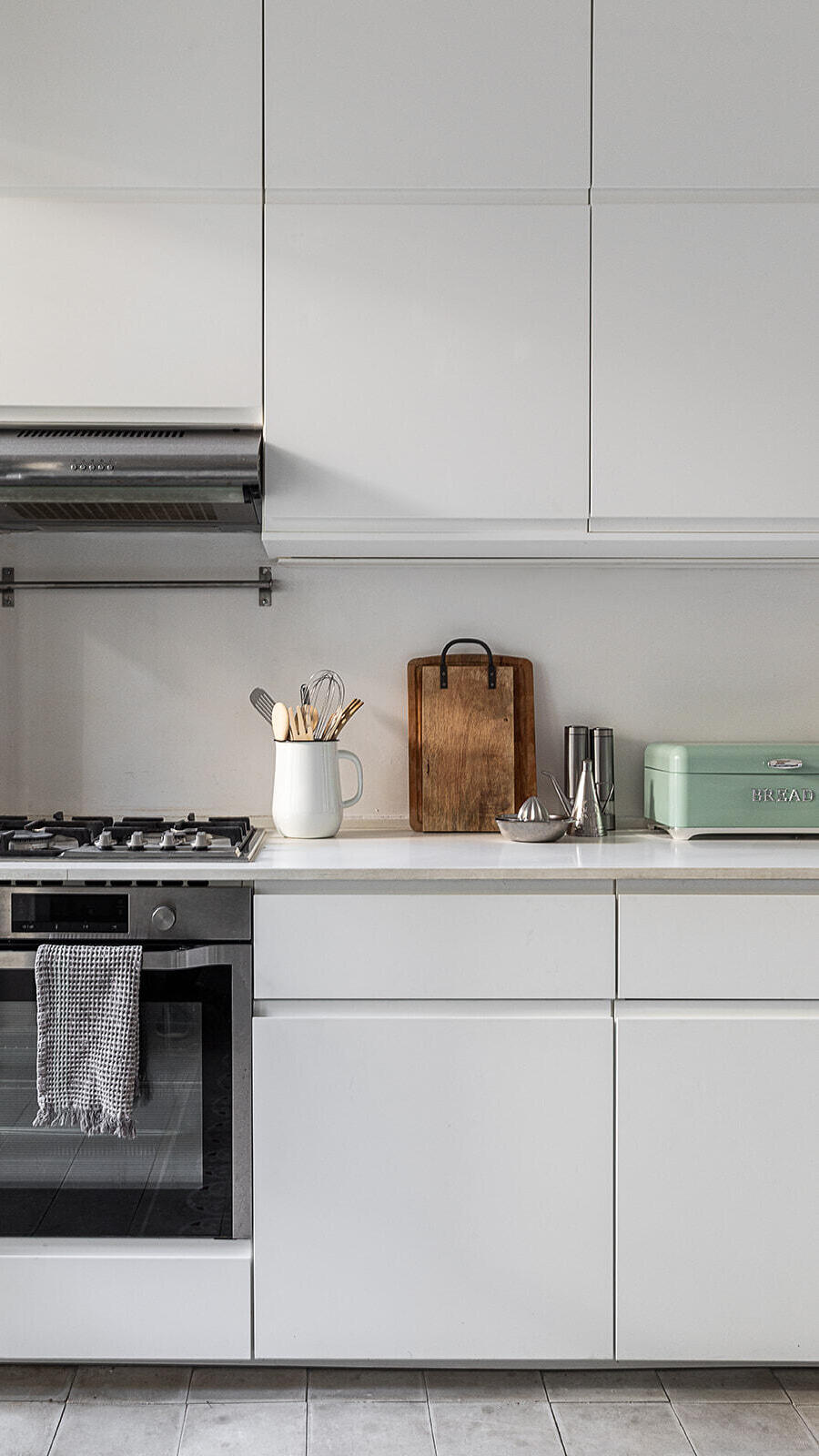
The kitchen has been upgraded but most other elements have been retained
(Photo: Gadi Yosef)
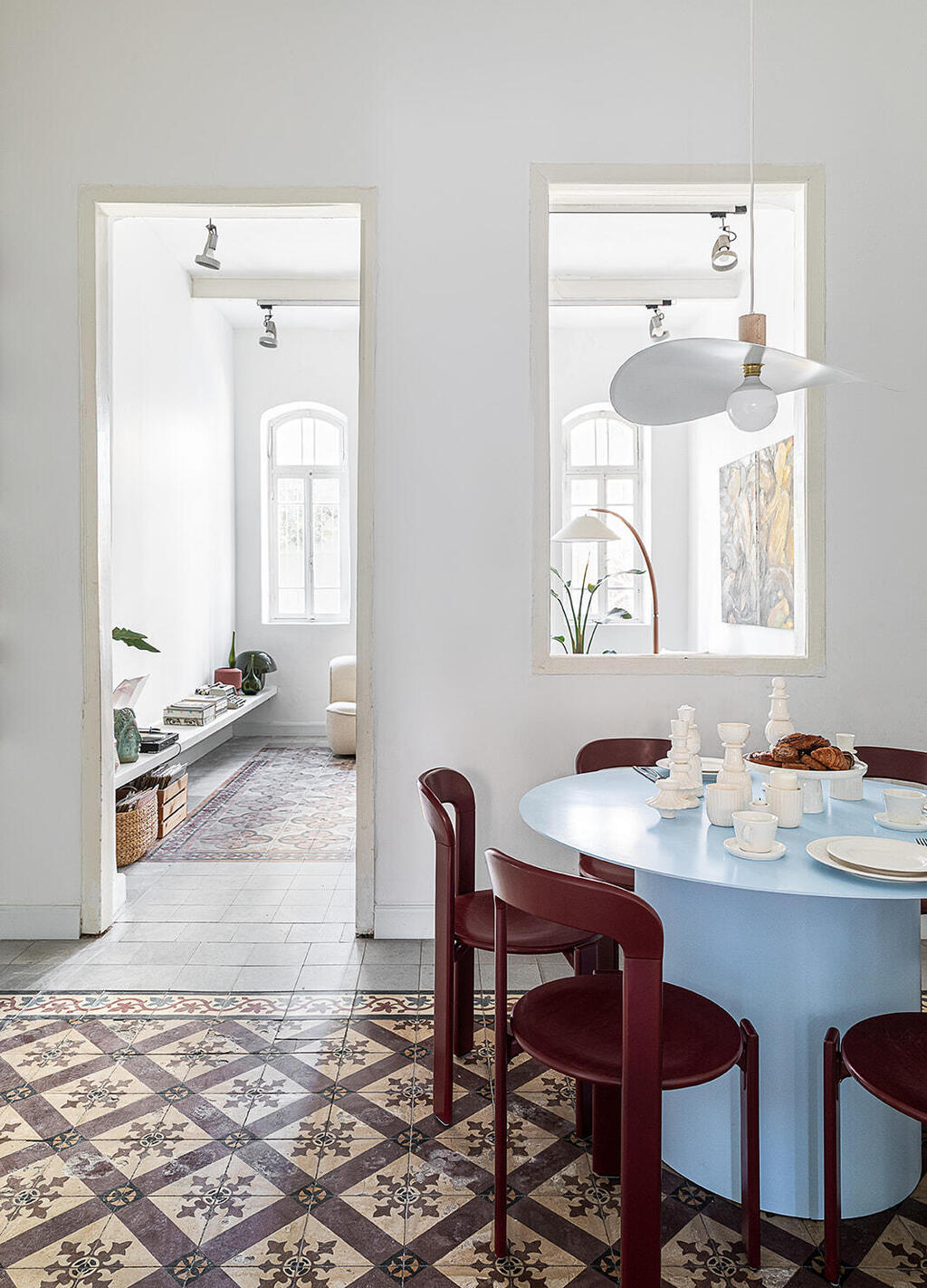
The round and colorful dining table
(Photo: Gadi Yosef)
Beyond the kitchen is another room in the center of the rectangle. It has no windows of its own, but wide internal openings bring in light. Wooden shelves stretch from wall to wall on one side, forming a large, crowded library, while the other side holds a blue dining table, burgundy chairs, a large piece of artwork and a white light fixture.
“On the lower floor, the design choices were largely dictated by the tiles,” Asher says. “In the end, it’s like a stunning rug that covers the floor and has to be taken into account.”
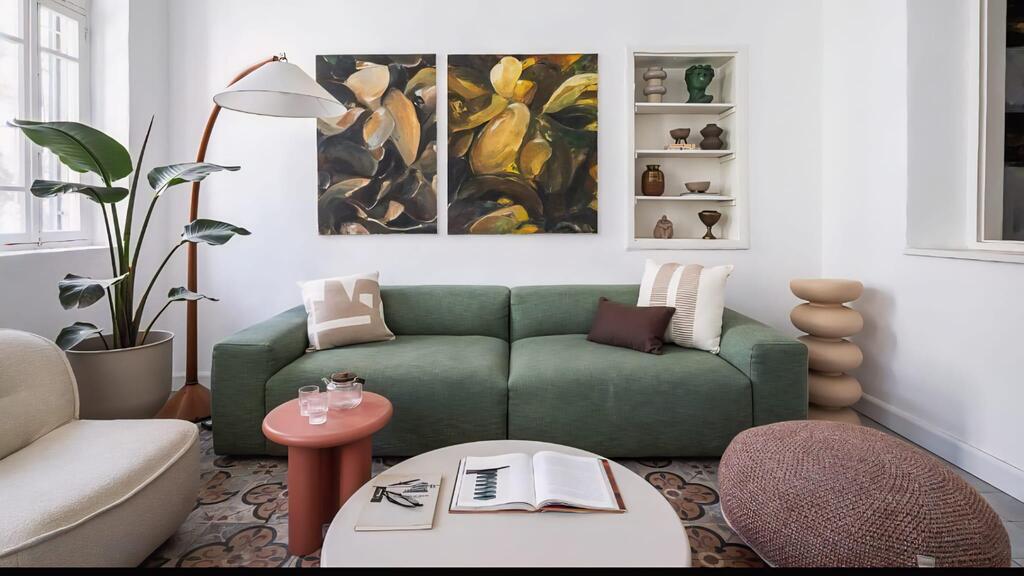
The living room showcases beautiful old windows and unique decorative tiles different from those in other spaces on the floor. The green sofa was purchased in South Tel Aviv, and the rest of the living room furniture, Asher says, came from the Tollman’s collection. A floor lamp standing in the corner was already in the house before the renovation and was restored, and decorative objects are displayed on white shelves set into a niche.
From there, stairs lead back toward the entrance and to a small powder room, where hangs the mirror framed by the mother, then upward to the first floor via steep steps.
“It’s such an old house it doesn't meet any modern standard for anything,” Asher jokes. The stairwell opens into a foyer with a cozy furry chair, and even the washing machine is hidden inside custom cabinetry.
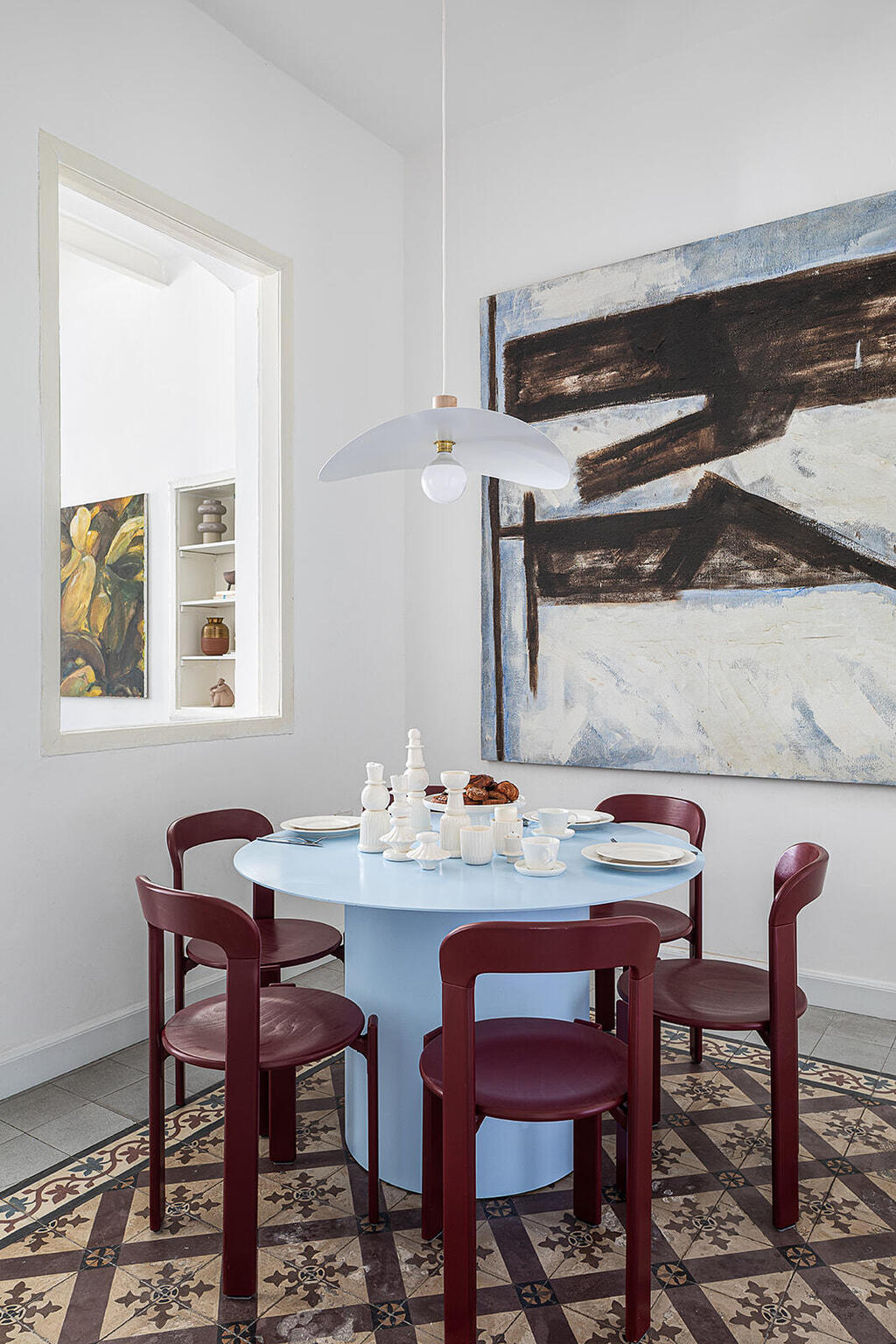
Original art by the homeowner
(Photo: Gadi Yosef)
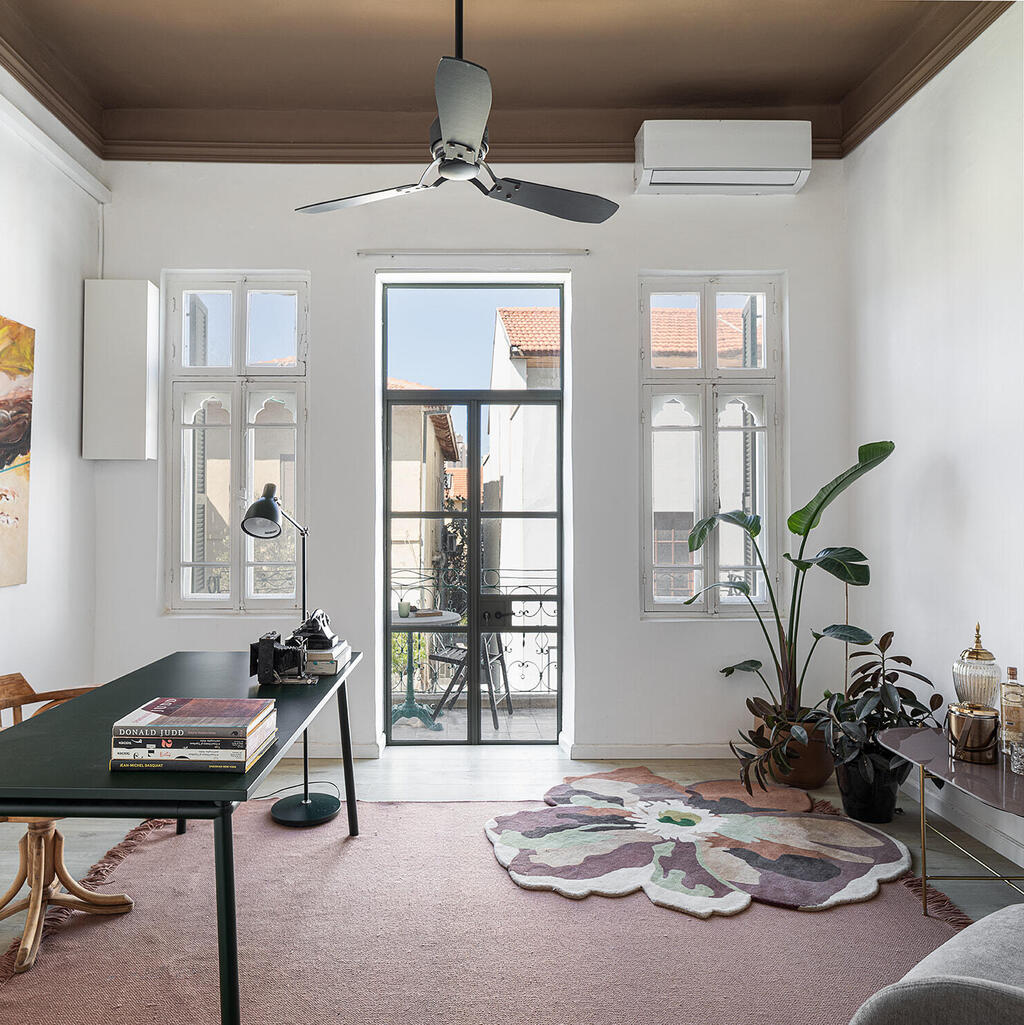
The study room characterized by special windows
(Photo: Gadi Yosef)
More art by the homeowner
(Photo: Gadi Yosef)
Thoughtful design throughout
To the left is the main bathroom. “We renovated it while my brother was living here with his family,” Naftali recalls. “We wanted there to be a bathtub for the children and made all sorts of creative solutions to build it despite the space limitations. We clad the entire room in Mineral Silicato plaster—walls, tub, sink—and I think it turned out really nice.”
To the right of the foyer are two rooms: one converted to a bedroom and the other to a study.
“Because of the wood flooring and integrated carpentry, this feels very different from the ground floor, and I looked for a way to create a connection between the levels,” Asher says. The solution was painting the ceiling brown above the cornice in the same tone. “It reflects the hues of the floor below and also slightly lowers the very, very high ceiling.”
In the bedroom, peeling paint on a wall reveals layers of old wallpaper.
“It was like that when we bought the house, and my mom loved it and decided to keep it,” Naftali says. Alongside the peeling wall and original doors stands an IKEA floor lamp that adds a touch of modern lightness. The standout light fixture in the room was designed by Asher herself.
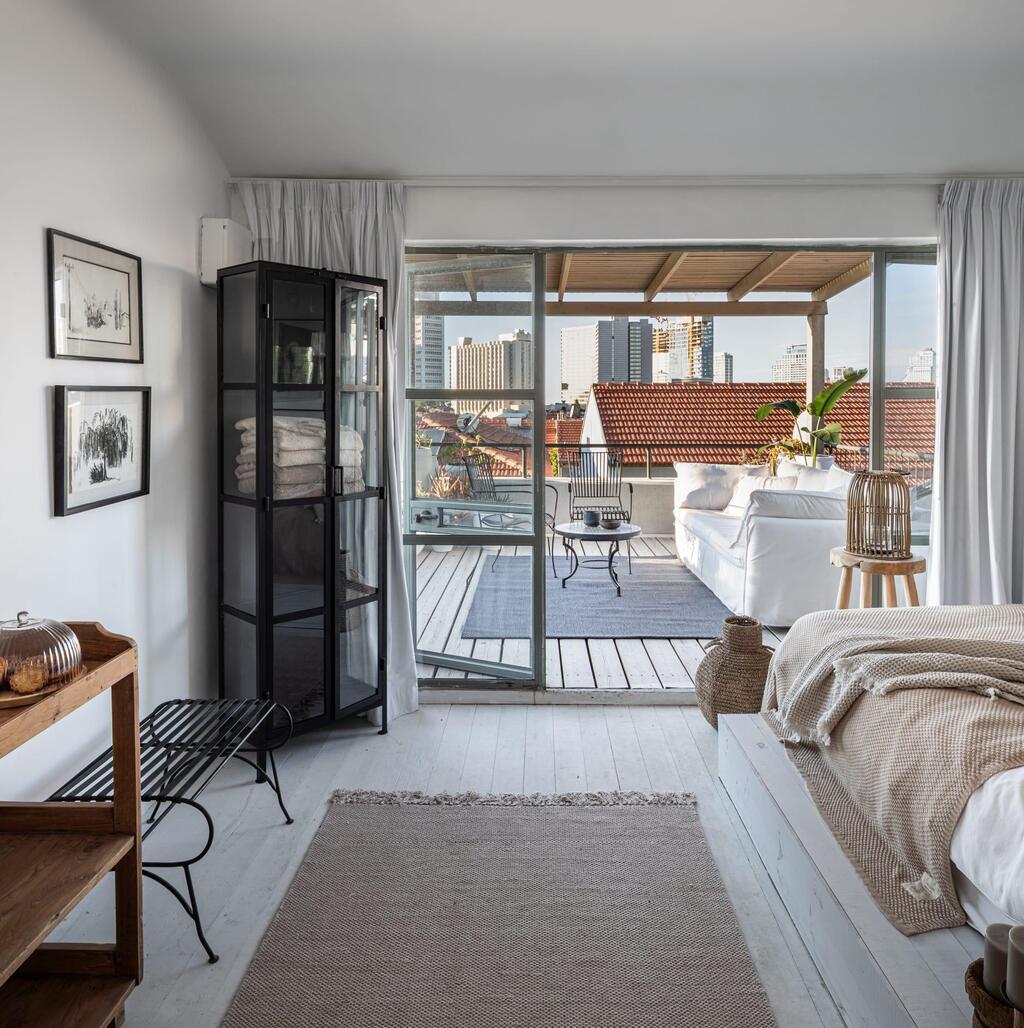
From the bed to the balcony
(Photo: Gadi Yosef)
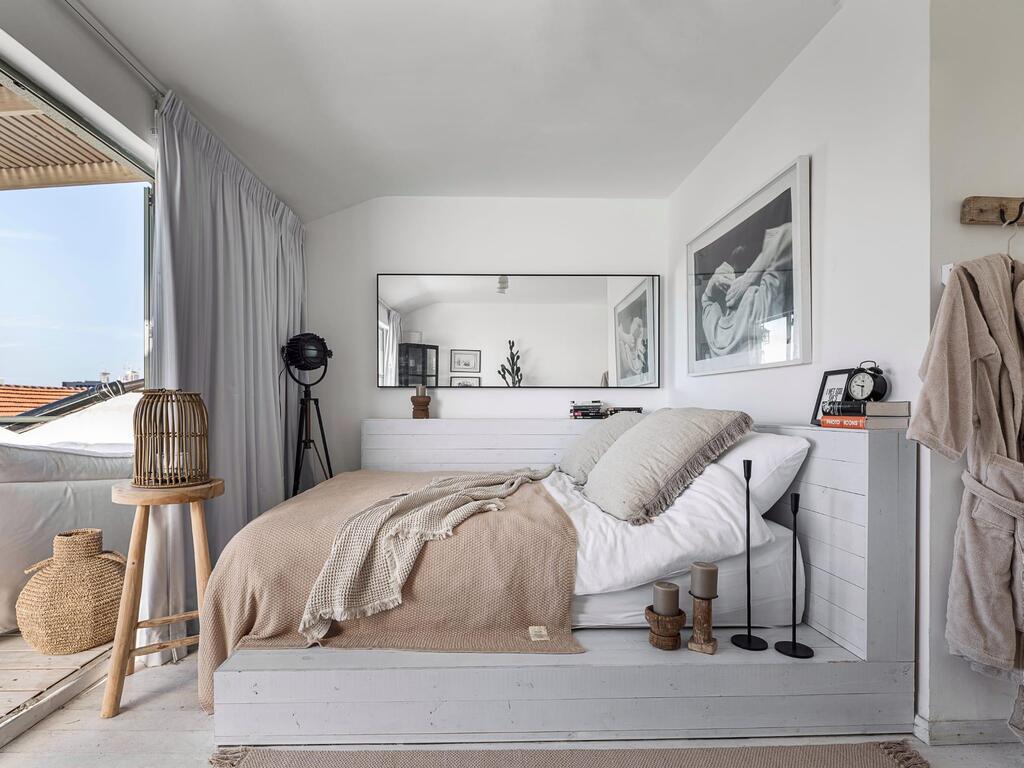
The bed is on a wooden platform and there is an exit to the balcony
(Photo: Gadi Yosef)
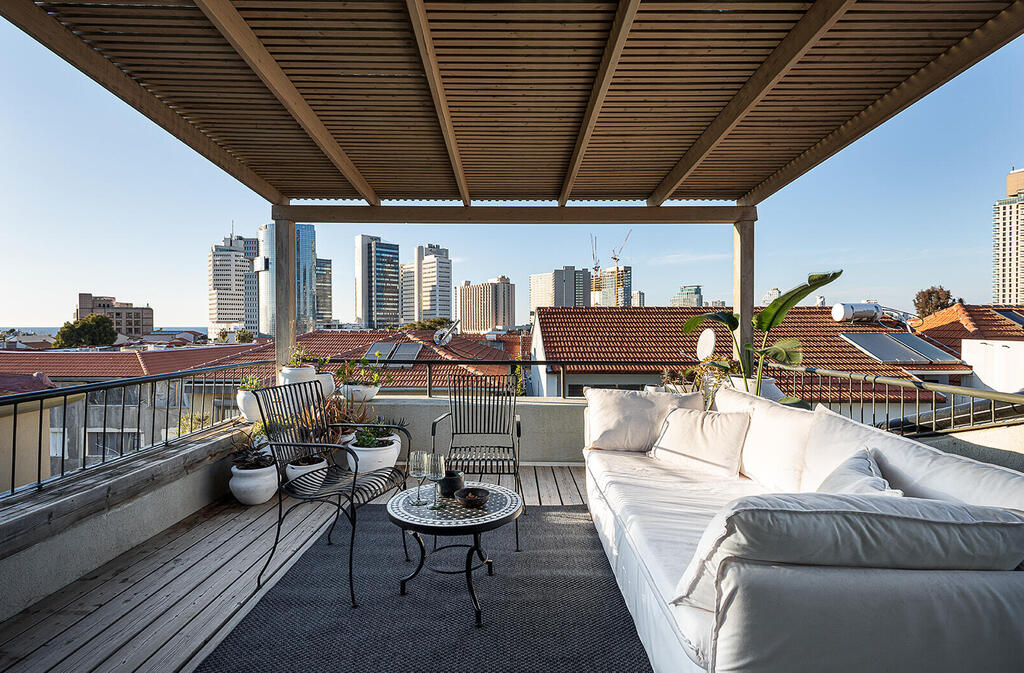
On the roof overlooking the neighborhood
(Photo: Gadi Yosef)
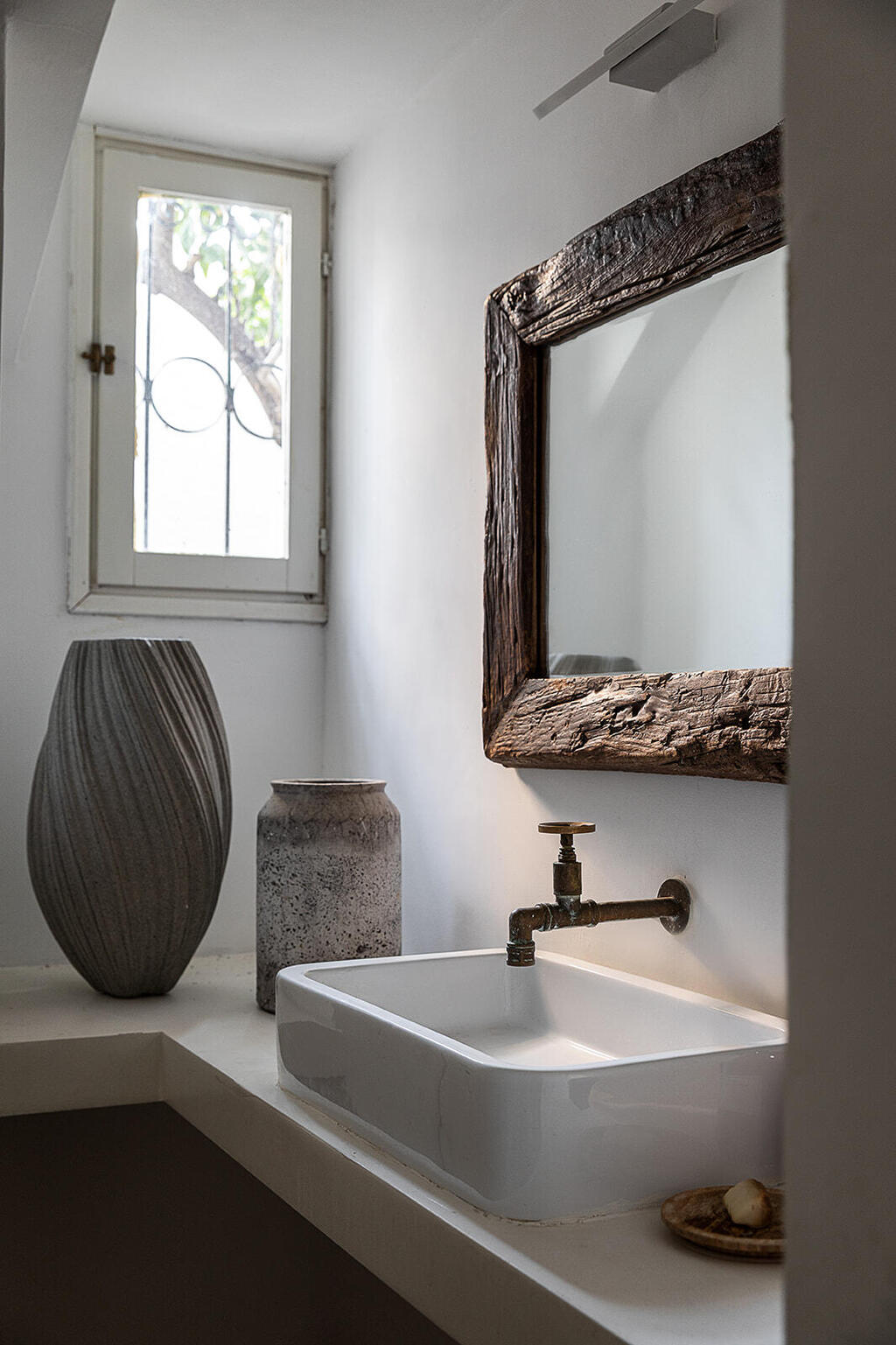
The mirrors are framed with collected driftwood
(Photo: Gadi Yosef)
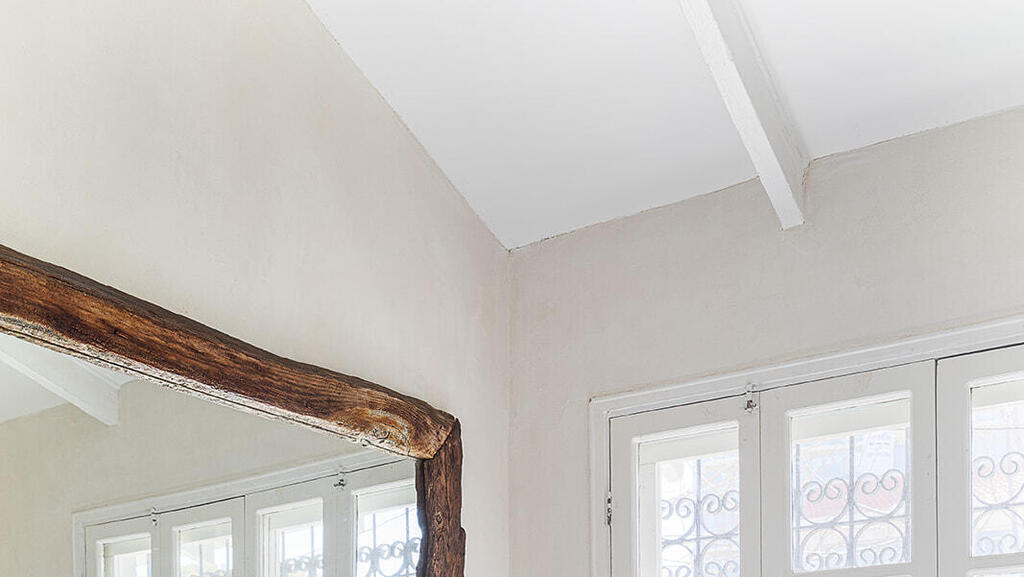
Additional bathroom with driftwood mirror
(Photo: Gadi Yosef)
“There wasn’t space for much beyond the bed and I really wanted something special,” she says. “So I designed a spider‑shaped light in the same brown as the ceiling and ordered it from the VaYehi Or store in Tel Aviv.”
In the adjoining study, old and new play off each other, with a modern desk and a pair of Tollman’s rugs beside an old restored wooden chair.
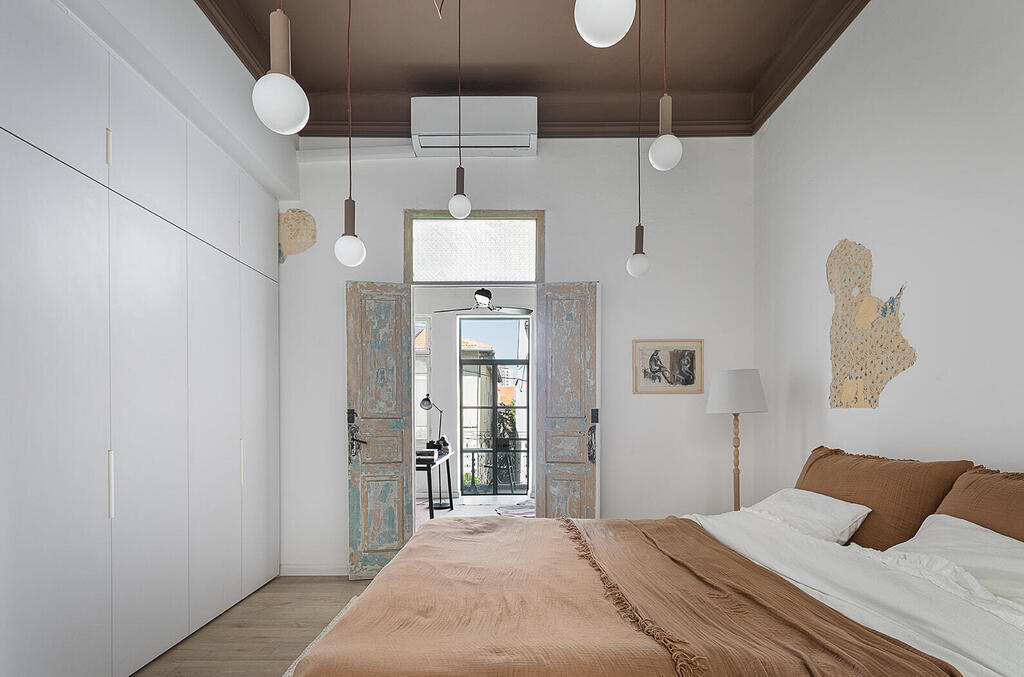
The bedroom. White with a chocolate ceiling
(Photo: Gadi Yosef)
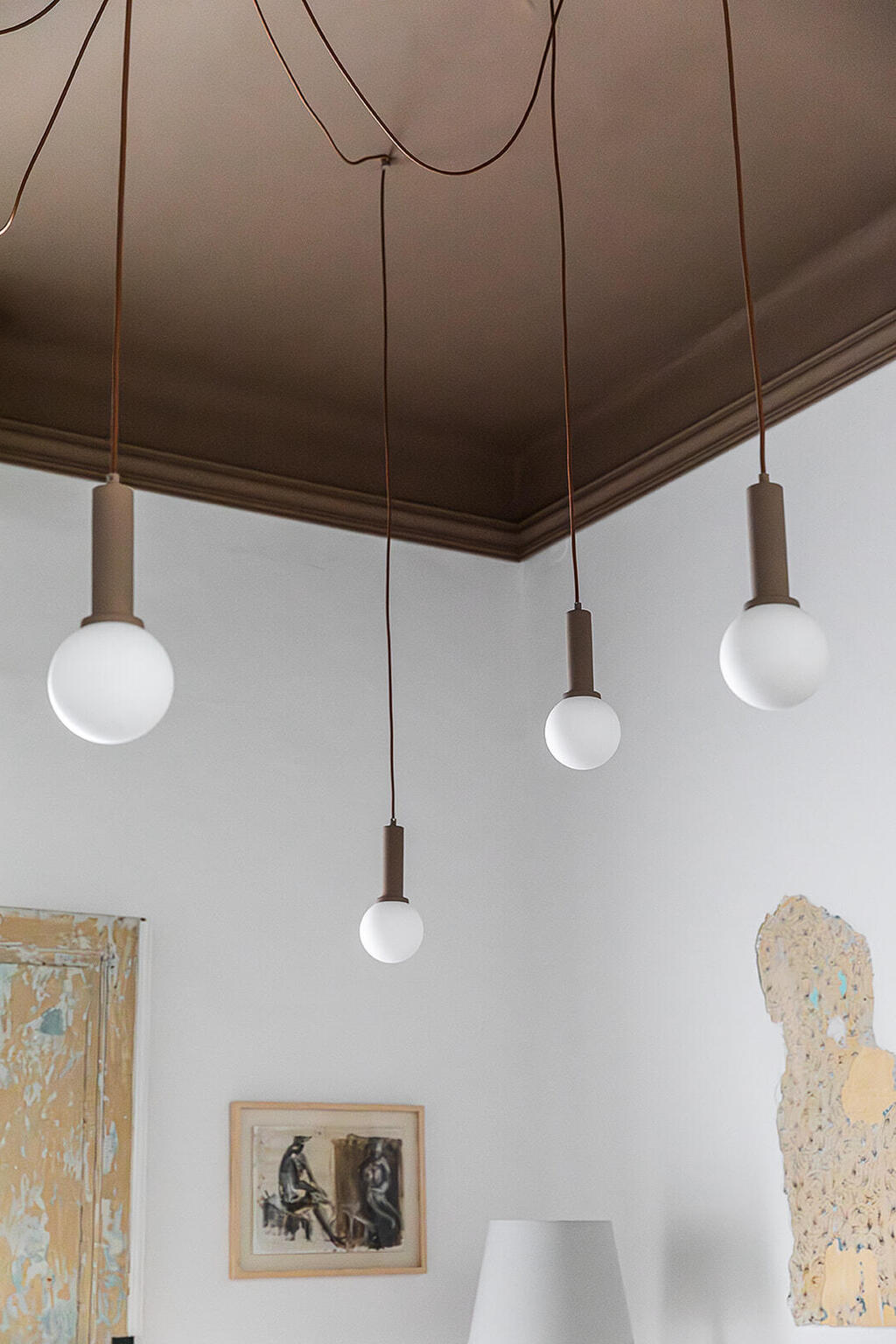
A chocolate brown ceiling, a spider-shaped light fixture, and evidence of life from a bygone era
(Photo: Gadi Yosef)
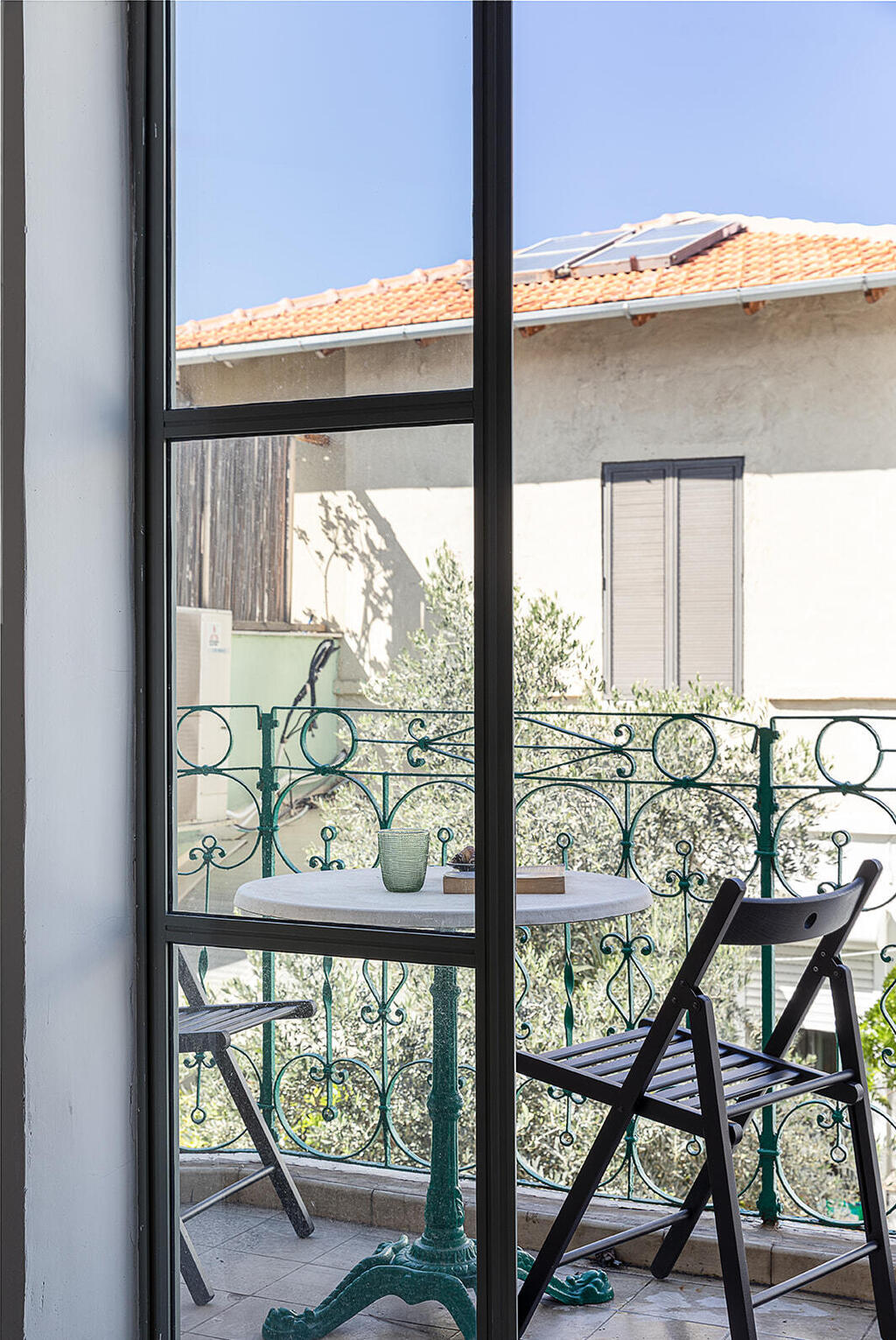
Intimate balcony
(Photo: Gadi Yosef)
Up to the roof
The winding staircase continues to the rooftop level. Here the floor was covered in old, sanded wooden boards painted white, with a white wood platform bed fitted to it. This level also has a small additional bathroom and a large terrace overlooking the surrounding rooftops.
“I felt that everything outside was very urban and rough, and I tried to soften it by adding light tones,” Asher says. She painted the plant pots white and added a large white sofa, creating a comfortable balcony space from which one can sit and enjoy the low surrounding roofs, distant towers and cranes - and beyond them, the sea.