


The disastrous fire at the residential towers in Hong Kong, which as of now has claimed the lives of 146 people, with some hundred people are still listed as missing and 79 are hospitalized in critical condition, has sharpened the question of whether Israel’s high-rises are prepared for emergencies.
Property-management experts fear a similar catastrophe and caution that the warning signs in Hong Kong were clear, and Israel is not far from facing such devastating scenarios.
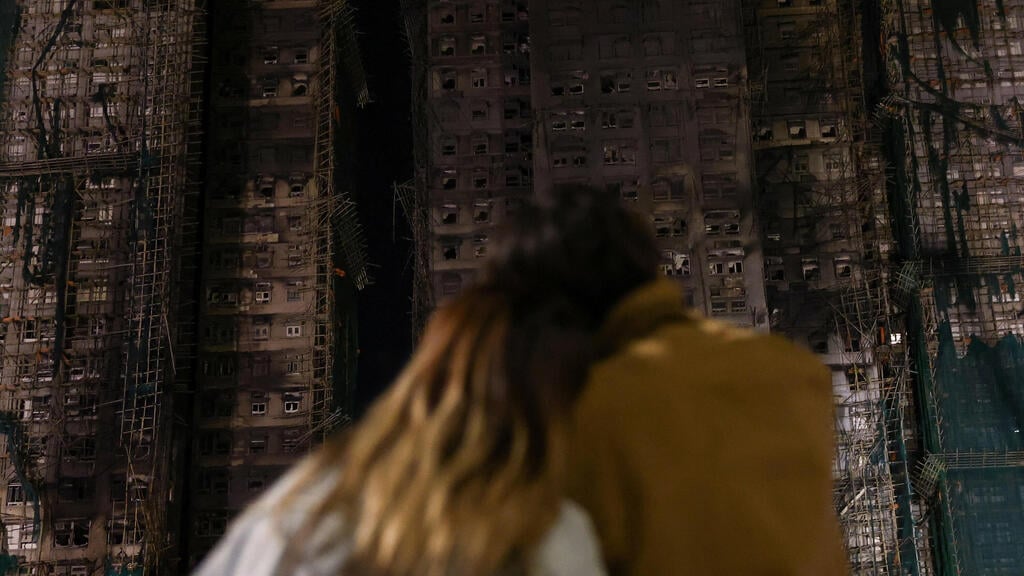
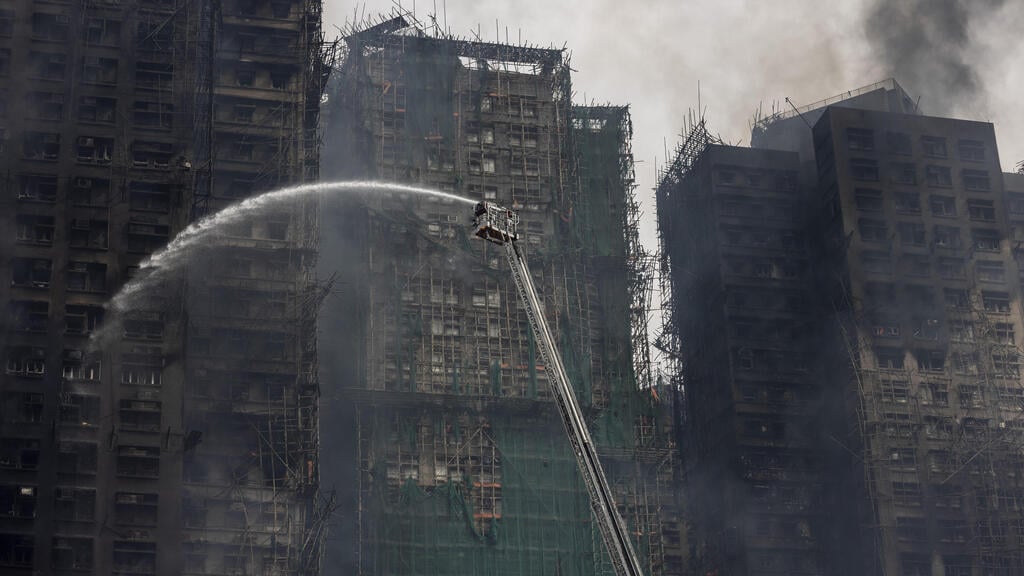
The deadly fire in Hong Kong spread rapidly because of bamboo scaffolding. Amir Rosenblum, facilities management specialist at Idan (S.N.I.), notes that the bamboo scaffolding accelerated the incident, but it may not have been the main factor that triggered the fire.
Gallery
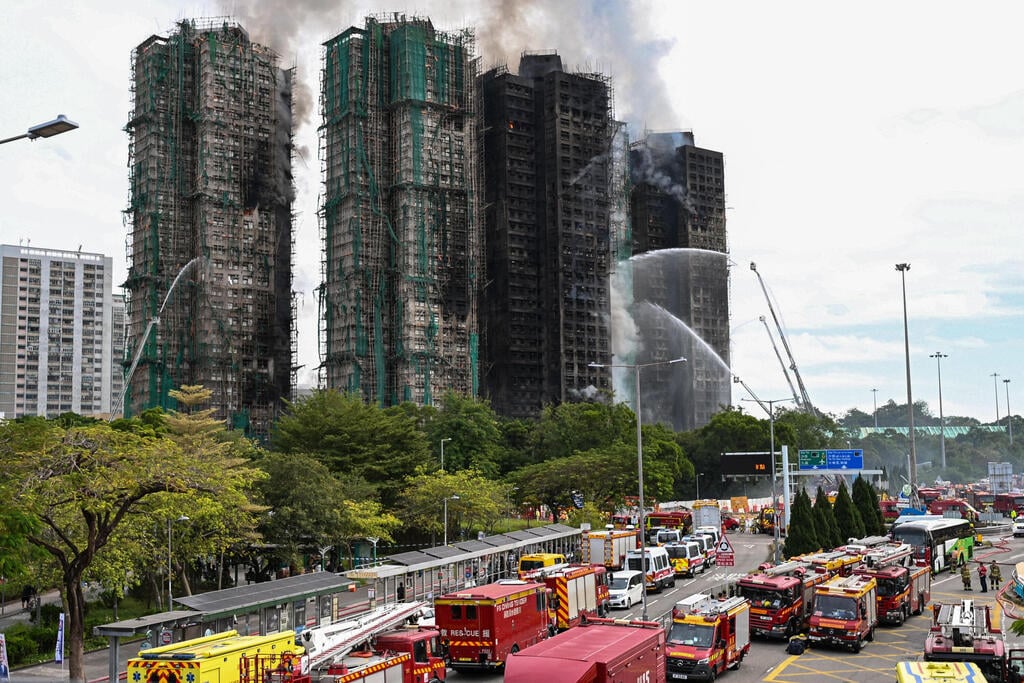
Fire in Hong Kong residential tower
(Photo: Isaac Lawrence/Getty Images , Dale DE LA REY / AFP)
“This is a project of roughly 2,000 housing units, home to about 5,000 people", he said. " Israel is approaching similar scales with its large mixed-use projects that include 1,000 housing units or more, together with retail space, offices and hotels. It’s essentially a city within a city, and that is why all safety systems must be fully integrated."
Rosenblum explains that such advanced residential and mixed-use complexes must have professional management and maintenance. “Some incidents can’t be prevented, but their impact can be reduced. Fortunately, Israel doesn’t use bamboo scaffolding, but even when renovating buildings with standard scaffolding, a management company and an engineer must oversee the process. An outsider could climb the scaffolding and spark a fire, and it’s important to understand the risks in such situations.”
In any case, Rosenblum stresses that even in routine situations, there are emergency systems like smoke detectors and sprinklers that require consistent upkeep, while what matters most is how well the management company is prepared to handle an emergency.
Questions that should be asked are: When was the last time the management company ran an evacuation drill? Is it in regular contact with the Fire and Rescue Service, which itself is still not fully prepared to handle emergencies in high-rises? Who keeps critical information about residents who cannot evacuate themselves, such as older adults, people with disabilities and families with small children?”
He says the management companies must stay alert and ensure that stairwells and common areas are not blocked by tenants’ storage. They must inspect emergency lighting and appoint safety officers and first-aid responders from among the residents. “If a resident owns a motorboat and decides to store diesel canisters in the building’s storage room, that is a ticking bomb. The management company must be prepared for such scenarios."
From 150 shekels a month to hundreds or thousands
The Hong Kong disaster underscores not only the need for strict safety procedures at construction sites but also the importance of maintaining safety systems in populated high-rises.
Matan Kanety, Chairman and owner of Mekdan Management and Maintenance Ltd, active in Israel and Serbia for 30 years and responsible for nearly 2 million square meters of income-producing real estate, says that the central problem in high-rise living is that most residents are unaware of the building’s safety systems and how well they are maintained.
“People were used to living in apartments with a ‘vaad bayit’ - the volunteer residents’ committee that manages a building - paying 150 shekels a month paying 150 shekels a month for someone who acted as electrician, cleaner and painter in one. In luxury towers, in contrast, they need to pay hundreds or thousands of shekels to ensure equipment is in working order,” he says. “The property-management market has no regulation, and anyone can become a management company.
(Photo: Amr Alfiky/ Reuters)
In Israel, towers costing tens or hundreds of millions of shekels are being built, including massive and complex projects worth a billion shekels and up, with 80 floors. Developers, contractors and banks are chosen with great care, yet when it comes to management companies for residential towers, the choice is often driven by price rather than quality."
He adds that some companies have years of experience, in-house engineers and safety consultants, train managers, conduct safety drills and perform full integration tests on fire-detection systems, but others do not.
“Take for example, a dangerous scenario where a fire alarm goes off when an elevator gets stuck. In such a case, all systems must work in harmony: when there is a fire alarm, elevators should immediately descend to the ground floor, fire doors must close to separate common and residential areas, and the management company must ensure this.
"Residents need training; they need to get familiar with the evacuation routes in the building, but that’s not always how things play out in practice."
“Most building residents' committees in Israel do not understand their personal liability in a disaster,” Kanety says. “After an emergency, authorities check who was responsible for maintenance, and if safety systems were faulty, the committee may face criminal liability. The problem begins when a committee chooses a management company based only on price. Cheaper companies may compromise on maintenance or employ managers without proper safety training."
(Photo: Isaac Lawrence/Getty Images, Dale De La Rey/ AFP)
Mandatory inspections every building committee should require include:
• Fire-detection systems should be inspected every six months by a certified tester, while tested as a fully integrated system.
• Water reservoirs and sprinklers should be checked annually to ensure adequate water pressure and readiness. “There have been cases where water tanks were empty or pumps inoperable, discovered only during a drill or, worse, during an actual emergency,” Kanety warns.
What should be done? Kaenty says evacuation routes must be maintained: “Stairwells must be completely free of objects. In some buildings the stairwell becomes a shared storage area. That not only breaks the law but can cost lives.”
"Proper signage and emergency lighting are also essential. "At night or in thick smoke, they can be the difference between life and death", he says. Fire doors must function, close automatically and connect to the detection system. “A fire door left open is useless."
Extreme weather
“At this stage, reports from Hong Kong indicate that the fire broke out in external scaffolding installed for construction work,” Israel David, acting chair of the Engineers Association for Construction and Infrastructure, said at the group’s annual conference in Tel Aviv. “The scaffolding is made of bamboo, which is highly flammable. Hong Kong has extreme weather and storms, so fires spread swiftly in strong winds."
He added, “Israel’s safety authorities have tightened regulations, and I believe such an event is unlikely here. Fires do occur in buildings under construction, but contractors apply fire-prevention measures. The Fire and Rescue regulator enters the process only at the end, when issuing an occupancy permit. That shows the lack of awareness of fire safety during construction. Decision-makers often assume that things abroad are better, but that’s not always the case.”
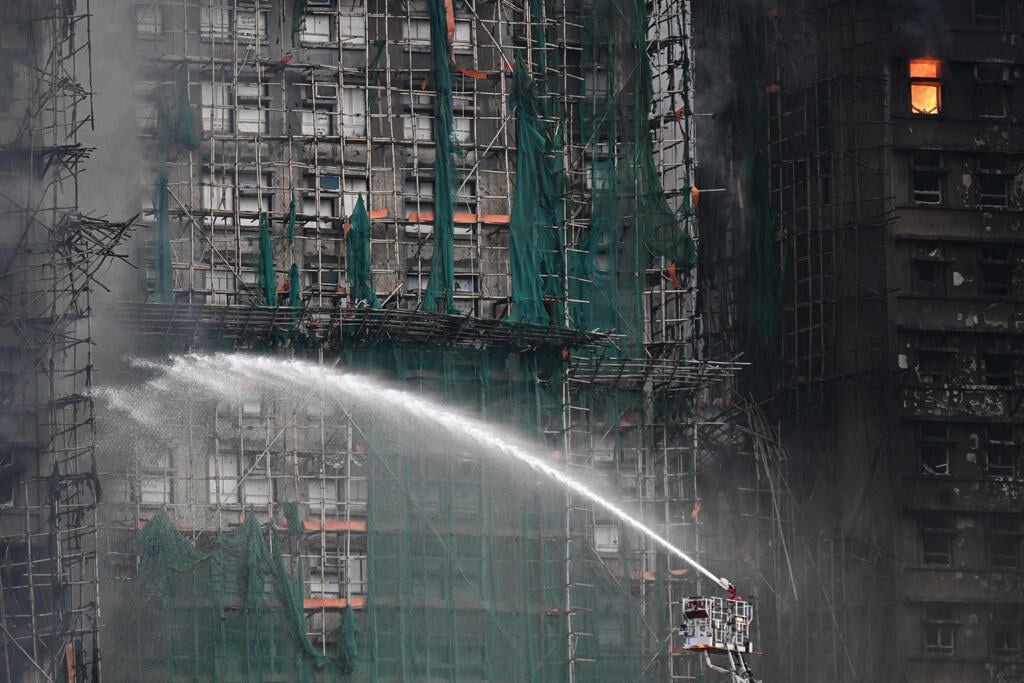
"The dangers of using flammable materials during renovation"
(Photo: Isaac Lawrence/Getty Images , Dale DE LA REY / AFP)
Aviad Gerstel, VP engineering and partner at Massad Oz Management and Engineering , says the Hong Kong disaster highlights the dangers of using flammable materials during renovation, such as wooden scaffolding. “Israel has learned from global incidents, including the 2017 Grenfell Tower fire in London, and regulations here are extremely strict."
He notes that Israel’s standards include two layers of fire safety in high-rises. The first is preventing ignition, using only aluminum scaffolding and non-combustible construction materials tested rigorously as a condition for receiving a completion certificate, with special attention to exterior cladding and vertical elements.
"The second layer is controlling a fire if one breaks out: preventing its spread, enabling rescue, protecting lives and reducing damage. This includes advanced systems such as automatic extinguishing, fire barriers, smoke-control systems, positive-pressure stairwells and measures preventing fire from moving between floors", says Gerstel.
“During construction, the contractor has direct responsibility for fire safety, but project-management companies on site ensure that standards are applied in practice. We conduct close supervision during both planning and execution to guarantee that all safety components are installed and operate precisely according to standards."