


When Keinan David walks through the streets of London, few people would necessarily know he is Jewish. For members of the city’s ultra-Orthodox community, he says, that anonymity is rarely possible.
“When I walk down the street in London, I could be anyone. Nobody knows I’m Jewish, but Haredi Jews are an obvious target for antisemites, and my goal is to teach them how to protect themselves,” said David, a martial arts instructor and former IDF soldier.
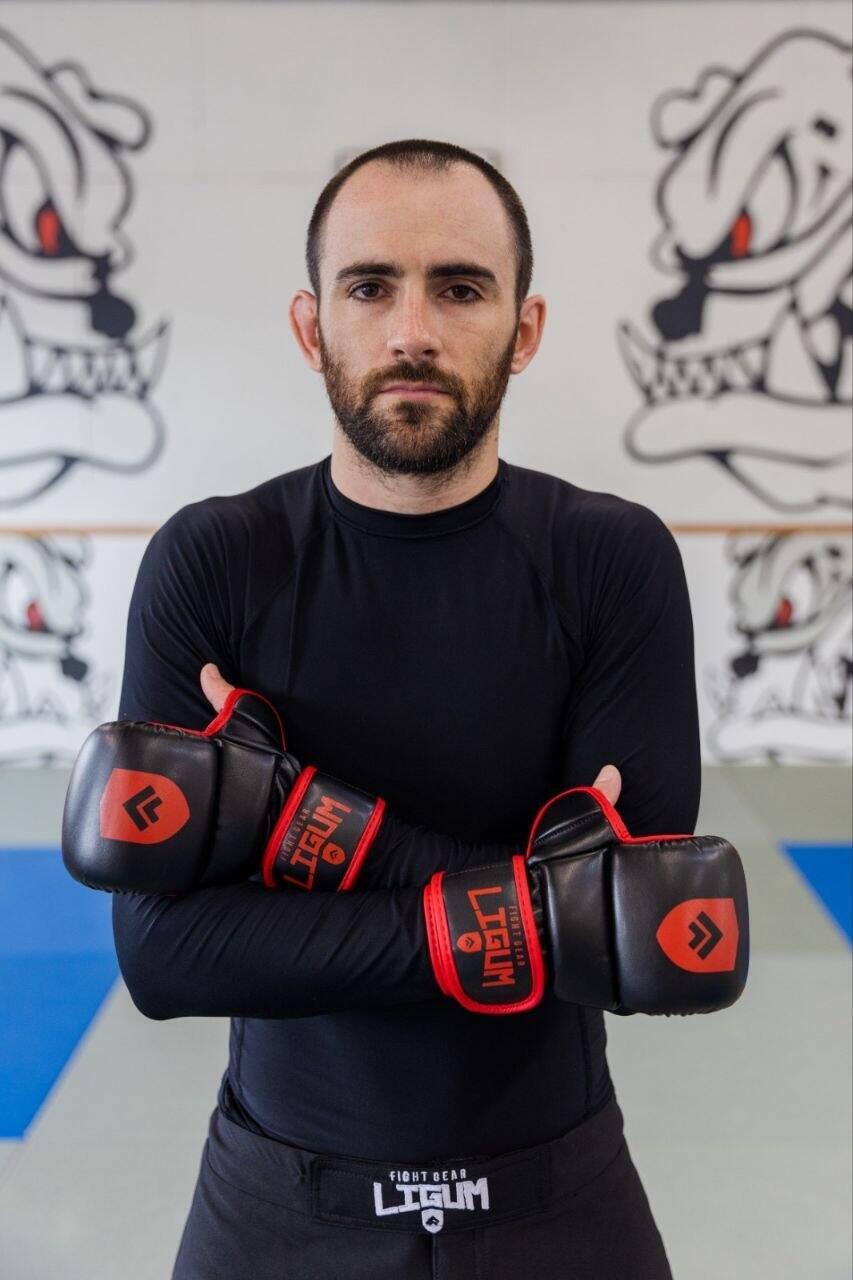
Amid rising antisemitism in Britain, David has set out to bring fitness, Krav Maga and practical self-defense training into a community where such activities are far from commonplace. “I have a club dedicated entirely to the Haredi community, with all the adaptations and nuances that come with it,” he said. “It takes time to reach them, convince them that it matters and give them the tools, but I can see the change and the desire to learn. It’s growing.”
David grew up in South Africa before moving to Israel at 18. “South Africa was a kind of bubble for me. We went to a Jewish school and spent most of our time inside the community,” he said. “I don’t think there was much antisemitism, but personal security and crime were always issues, and they only got worse over the years.”
He moved to Israel through the Masa program, later studied at what is now Reichman University in Herzliya and completed full military service as a lone soldier. Afterward, he decided he needed a change.
“Being in the army and entering the Israeli workforce are completely different things,” he said. “After the army, I felt I needed some space, and I didn’t really have a clear plan for what I was going to do. I trained in martial arts, and it was a kind of healing process for me.”
His wife completed her military service shortly afterward, and the couple decided to try life in London, where they had relatives. “That was 10 years ago, and we’re still here, part of the local community,” he said.
David began working in security, first for an Israeli company and later with an organization involved in protecting Britain’s Jewish community. He eventually went independent and opened fitness and martial arts clubs for Jewish clients.
His Haredi club, however, required a completely different approach. “The marketing, the branding, everything has to be different and adapted to their community,” he said. More recently, he opened another club aimed at secular and traditional Jews, which he describes as more commercial and modern.
Even the language used to promote the Haredi club has to be carefully calibrated.
“I can’t market it with any reference to aggression, and I hardly use the words ‘self-defense,’ because that can be problematic,” David said. Instead, he focuses on physical activity, health, discipline and confidence.
Keinan David leads a Krav Maga class for London’s Haredi community


People often come to lose weight, improve fitness or build confidence, he said. Parents may bring children who have too much energy, are struggling at school or experiencing bullying. “So I incorporate a lot of fitness work into the training, but we absolutely train in self-defense as well. I just don’t market it that way.”
Since the Oct. 7 Hamas attack on Israel and the war that followed, David says awareness of personal security has increased among British Jews, including within the ultra-Orthodox community.
“There is definitely a change and a rise in awareness,” he said. “Many of them still deliberately ignore what’s happening around them because they don’t like being distracted from their religious lives. There is a certain percentage of the Haredi community that will never walk into my club for exactly those reasons, and that’s fine.”
He stresses that his goal is not to change anyone’s way of life. “Precisely because they are so visibly identifiable, and because there are threats against them, I felt there had to be at least one person giving them a chance to defend themselves if something happens.”
Anxiety rises, but Jewish life goes on
David also trains at mainstream martial arts and fitness clubs around London, where he says attitudes toward Israel can sometimes make Jewish members uncomfortable.
“You can run into people saying terrible things about Israel, train alongside someone wearing a Palestine shirt and see all kinds of fundraising events for Gaza,” he said. “Because of that, a lot of Jews don’t train in places like that and look for something more communal.”
At his own clubs, however, David deliberately avoids creating a militant atmosphere. “I try not to give the vibe of, ‘Come on, let’s fight terrorists,’ or constantly talk about antisemitism,” he said. “The goal is for the class to be useful, but also friendly and enjoyable.”
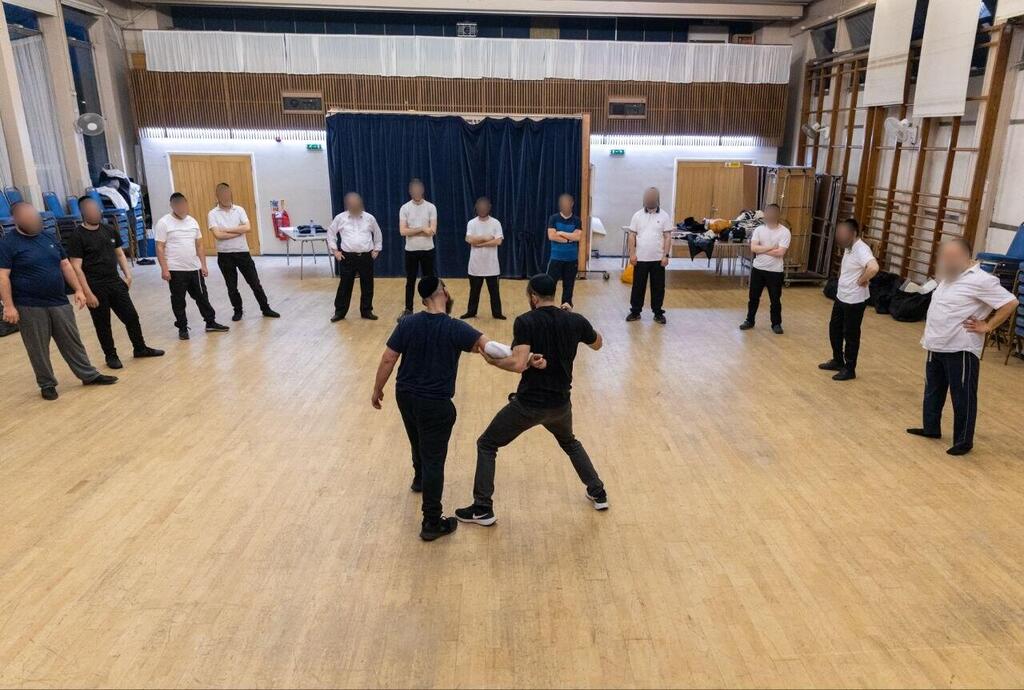
(Photo: Tami Shfeler – Mitztalmim London)
For David personally, daily life in London remains largely normal. “If I walk down the street or go about my regular day, I probably won’t encounter anything aimed directly at me,” he said, though he noted that the keffiyeh has become a common sight in the city.
He said serious attacks in Manchester and London’s heavily Jewish Golders Green neighborhood had shaken the community, while roughly 3,700 anti-Jewish incidents recorded this year reflected a sharp rise compared with when he first arrived in Britain a decade ago.
“There is definitely more anxiety in the community,” he said. Yet what has surprised him most is its resilience.
“People simply continue living their Jewish lives. They’ll keep going to synagogue, wearing kippahs in the street and sending their children to Jewish schools,” David said. “We’ll see a much greater security presence around all of that, but we’re not going to give up Jewish life, including in public spaces.”