

Once, it was simple. Every sports car—whether a hot German compact (hello, Golf), an American muscle car (hey there, Charger) or an exotic from Italy (what's up, Testarossa)—came with a manual transmission. In most cases, there wasn’t even an option for an easier ride. Today, that’s no longer true. Not even close.
A mix of natural human comfort and inevitable technological evolution has led to major advances in automatic transmissions. They're now significantly quicker to operate and far more efficient, with minimal power loss. As a result, automatics now deliver better performance than manuals, often by a wide margin. Even in motorsport, the world’s top drivers in almost every category no longer touch a clutch.
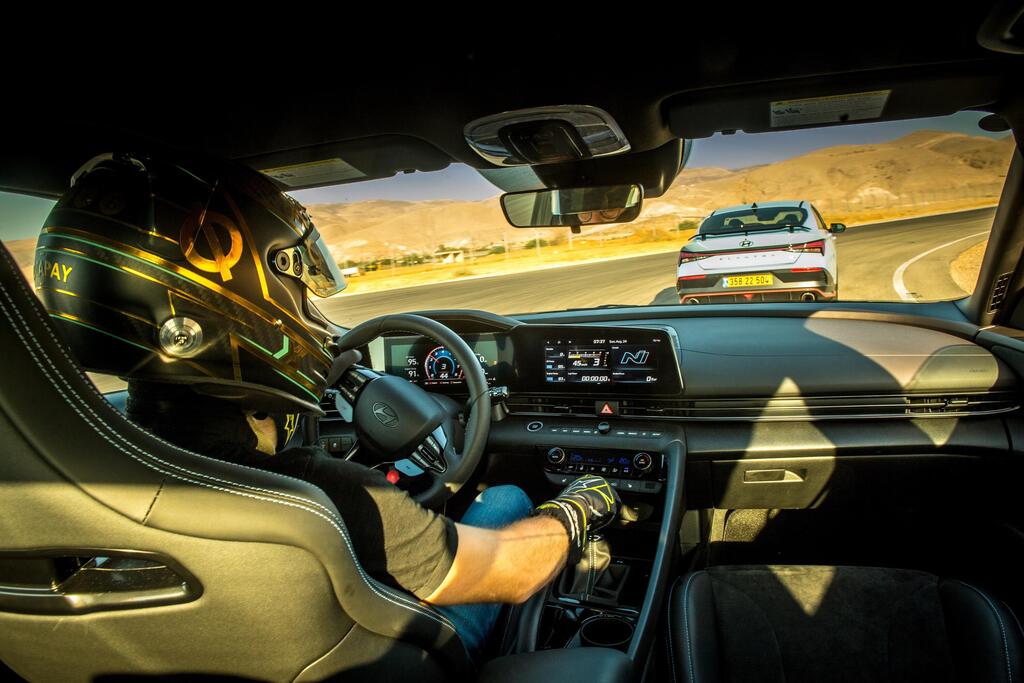
Among everyday drivers? Manuals are nearly extinct. Despite clear advantages that go beyond driving pleasure—like fuel economy or lower purchase and maintenance costs—almost no one wants to shift gears themselves anymore. Last year, more than 270,000 new vehicles hit Israeli roads. Of those, only about 1,400—roughly half a percent—were manuals, most of them commercial vehicles.
The shift has been so dramatic that it's now hard to find a driving instructor who teaches on a manual. Even high-end sports car makers like Ferrari and Lamborghini stopped offering stick shifts more than a decade ago. Volkswagen has dropped manuals from its performance-oriented family cars across its brands. The growing move to electric vehicles, which don’t require transmissions at all, has pushed the manual even closer to the museum.
Today, there are exactly two sporty models sold in Israel that still give you the choice between three pedals or two. One is the Hyundai Elantra N. The other? The Porsche 911 GT3—about ten times more expensive. We picked the first, mostly because the Porsche was in the shop. Not really—we took what we were given and headed out on a loop around Israel, with a racetrack waiting at the end.
Coastal Highway
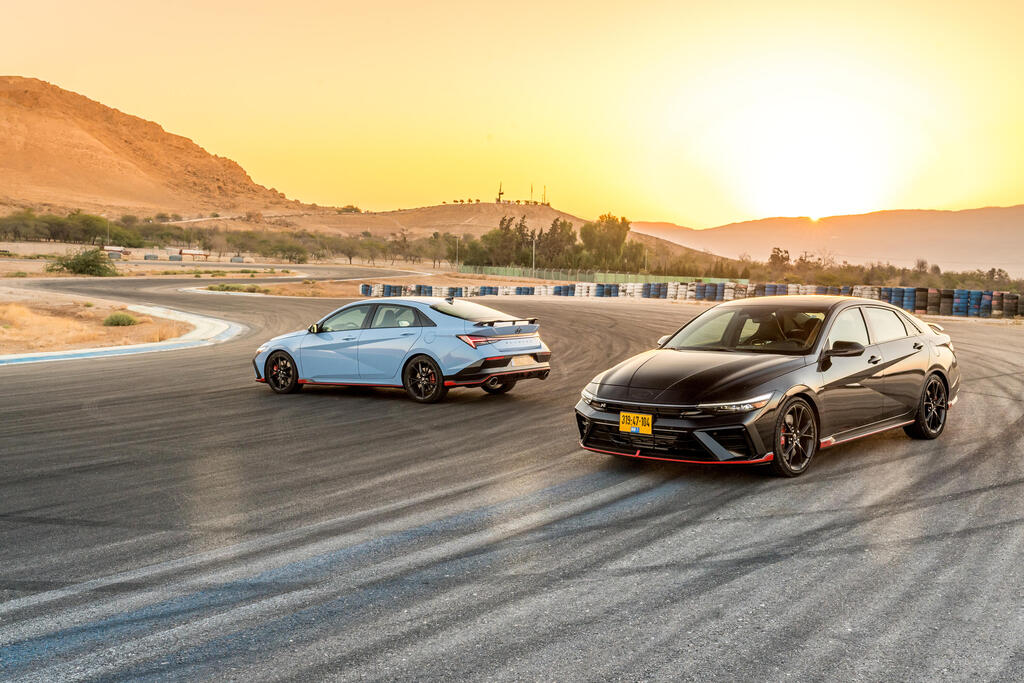
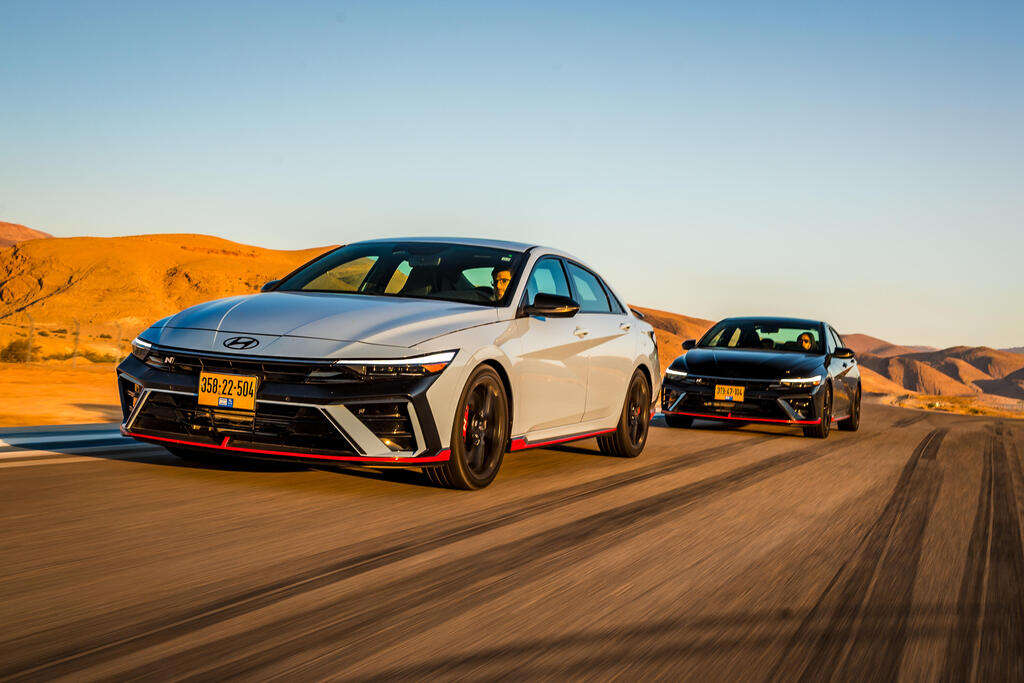
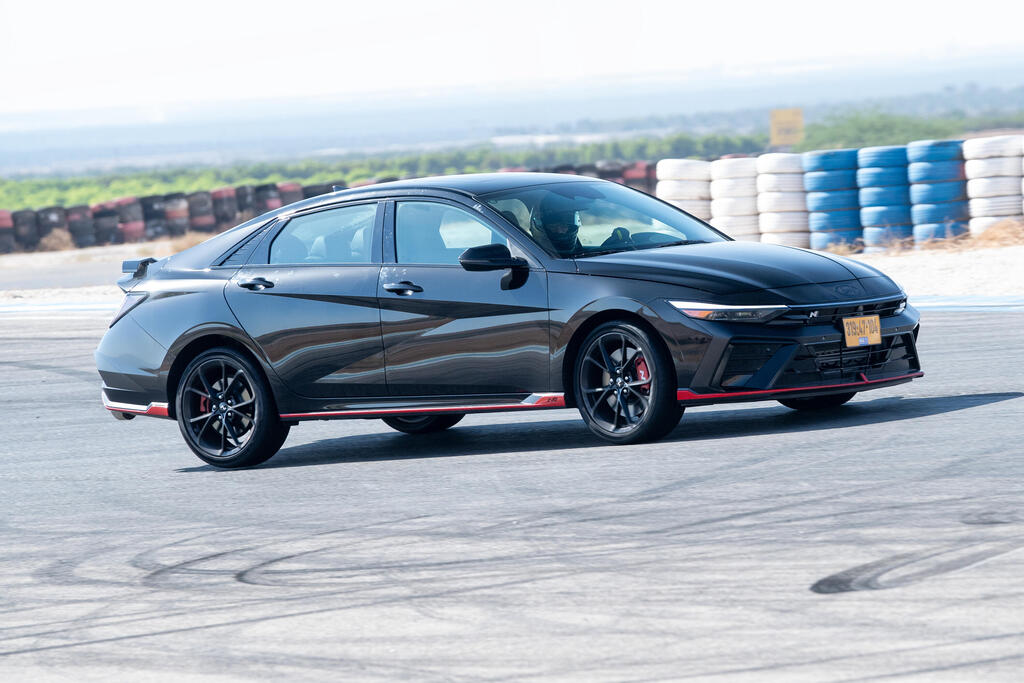
At 4 a.m., before the sun is up, we wake up both Elantras. The black one comes with a manual gearbox, mechanical shifter, clutch pedal and six forward gears plus reverse. The automatic came painted in Hyundai’s performance division colors—a sort of light blue with red accents. You can leave its shifter alone after takeoff or use paddle shifters behind the wheel to select from eight gears.
(Photo: Omri Gutman)
At this hour, our travel companions on the road north are mostly delivery truck drivers, still gripping their muddy coffee in one hand. Which car is better? It’s not a fair fight. Setting aside subjective feelings, the automatic is more comfortable. Far more. It also cruises more efficiently; in the manual, engine revs are higher during long drives, while the automatic’s top gears are clearly optimized for quiet, fuel-saving cruising.
On paper, the automatic is also quicker off the line—reaching 100 kilometers per hour (62 mph) in 5.3 seconds, half a second faster than the manual’s 5.8. And that doesn’t even reflect how easy it is to get there. With the manual, you need serious skill to avoid burning the clutch or squealing the tires—not to mention precise timing on shifts. That’s tough for the average driver. With the automatic, launch control requires nothing more than a strong right foot on the gas, a firm left on the brake, then letting go. Again and again. No talent required.
Same goes for overtaking. In a manual, you have to downshift to the right gear to deliver power at peak RPM. In the automatic? Just slam the pedal—no finesse needed.
Surprisingly, fuel consumption during our relaxed cruise section was identical for both cars: 12.5 kilometers per liter (about 29 mpg). Another point that once favored the manual—now gone.
Rev matching
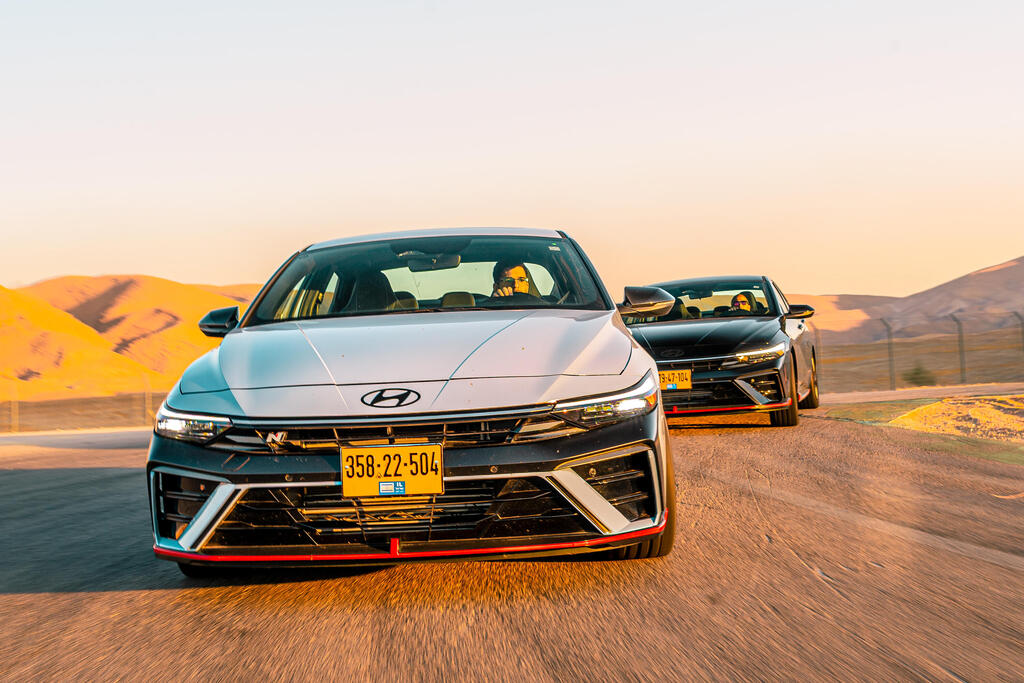
Route 899, which stretches from the northern town of Shlomi to the Ko’ah Junction, is one of the most exhilarating and demanding 60-kilometer drives in the country. It's a nonstop rollercoaster of elevation changes and every type of turn imaginable—from sweeping third- and fourth-gear curves to tight first-gear hairpins. And with little traffic, since despite the ceasefire, locals and tourists remain hesitant to return, the road feels wide open.
(Photo: Omri Gutman)
Driving a manual here is a full-time job, with plenty of overtime. There’s no room for distractions—you need to be fully focused on every move, squeezing every bit of performance from your mechanical understanding. Even then, it’s hard to shake off the automatic version. To keep up with it, you must constantly think ahead: read each upcoming turn, know exactly how you want to approach it, and choose the right speed and amount of power to apply on exit. Maybe just a light tap on the brakes, maybe one downshift—or two? And all of it has to happen fast. Otherwise, you fall behind.
The manual Elantra N features an automatic rev-matching system that perfectly synchronizes engine speed when downshifting—just before you release the clutch. In case you’re wondering, yes, it does a better job than I do, no matter how hard I try. Still, for the ultimate driving experience, I turn it off.
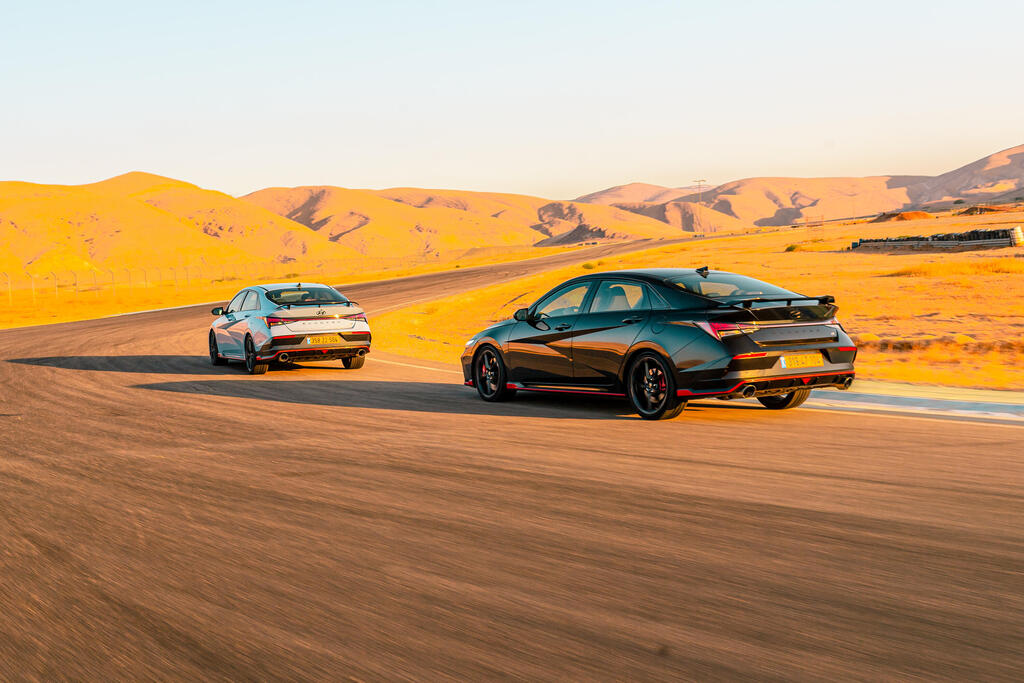
The process goes like this: right foot on the brake, left foot presses the clutch, right hand downshifts, upper sole maintains brake pressure while the heel taps the gas slightly, then release the clutch. It probably took you more than 10 seconds to read that sentence. In practice, the whole maneuver should take less than half a second. When it clicks, the reward is huge. The car flows smoothly, avoids unnecessary drag from long braking or wrong gear engagement, and creates a rare sense of connection between driver and machine. It may not be the fastest way around, but it’s a deeply satisfying one—guaranteed to plaster a huge grin on your face.
(Photo: Omri Gutman)
The automatic Elantra N uses a dual-clutch transmission—essentially a manual gearbox with two clutches, one for odd gears (1, 3, 5, 7) and the other for evens (you can do the math). It operates automatically, though. Without diving too deep into the mechanics, the system keeps two gears engaged at all times, so when the computer shifts—whether up or down, based on acceleration or braking data—it simply disengages one clutch and connects the other. That saved switching time makes the gearbox incredibly fast.
In theory, it’s the best of both worlds: the ease of a regular automatic with the direct power transfer of a manual, without the power loss of a traditional torque converter. The result? These advanced automatics are now so quick that even the most skilled racecar driver can’t match their shift speeds with a manual.
You can let the computer handle everything—it does a great job in N mode—or you can take control with the paddle shifters behind the wheel.
(Photo: Omri Gutman)
But it’s not just about speed. Driving the automatic takes a huge mental load off the driver, allowing full focus on steering, acceleration and braking. It’s also more forgiving. Say you come into a corner too fast and start drifting wide with early signs of understeer. If it's not a slow turn and you're going fast, that could be dangerous—especially if there's a truck coming the other way.
But without a clutch to worry about, your left foot can tap the brake, shift weight forward, boost grip on the front tires and eliminate understeer—while your hands downshift two gears to keep torque on tap. A calm, experienced driver can recover like a pro.
With the manual? You might already be in emergency mode. Still, mistakes are more likely in the automatic—not because it’s harder, but because it doesn’t demand full commitment the way a manual does. Your mind can wander. That’s what people say, at least. Same thing was said about ABS—that it leads to more accidents because drivers rely on it too much. In both cases, the claims may not be all that solid.
Against the clock
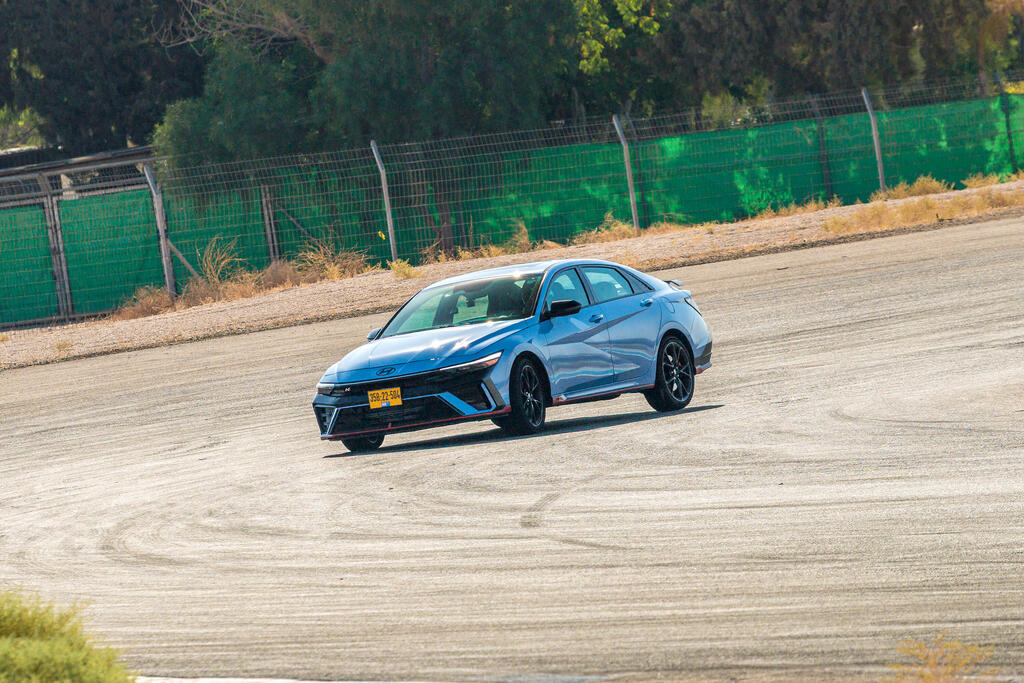
The Petza'el track in the Jordan Valley was the first racing circuit ever opened in Israel. Just over three years ago, it underwent a major renovation that doubled its length to 2.4 kilometers, increased the number of turns to 17, and added a relatively long straight of about 600 meters. Like the northern highway, it too has seen a significant drop in visitors over the past two years—understandably so, as reaching it from central Israel requires crossing the Green Line, a deterrent for many.
(Photo: Omri Gutman)
(Photo: Omri Gutman)
Still, the track is arguably the best in the country today. It strikes a smart balance between technical sections and fast stretches, making it the perfect place to compare the two Elantras and their different transmissions. No need to worry about law enforcement, reckless drivers or that one pothole that's been destroying tires for two years and counting. Best case, it ruins your rubber. Worst case? Don’t ask.
As on the twisty roads, the automatic is far easier to drive here—just focus on braking, steering and acceleration. The manual again demands much more concentration and forward planning. Driving it fast is much, much, much more challenging—elevating heart rate and soaking your shirt in sweat. But the manual version has a notable edge: it’s 40 kilograms (about 88 pounds) lighter, all of it off the front axle. That makes a big difference—especially in a controlled environment like this. On public roads, you might not notice it as much. Here, it’s obvious.
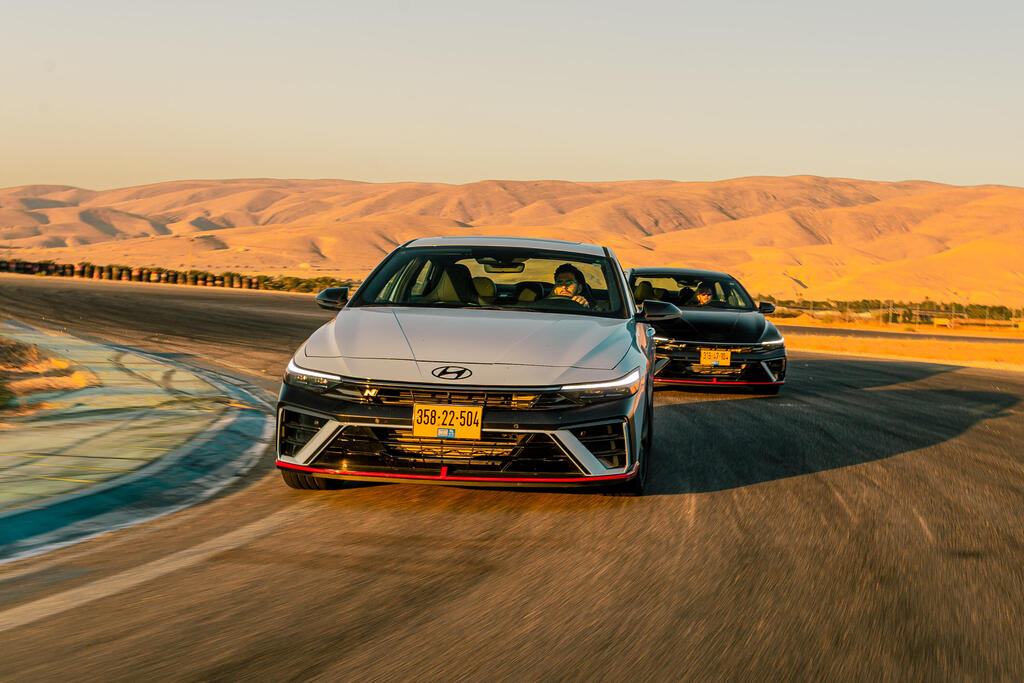
The front end is more responsive to directional changes and weight transfer, allowing higher corner entry speeds. And despite the automatic’s quicker shifts and a temporary boost mode that delivers extra power for 20 seconds, it was only 1 kilometer per hour faster at the end of the straight—168 kph versus the manual’s 167.
If you're sensing a surprise result here, you're right. The fastest lap time in the automatic Elantra was 1 minute, 7.66 seconds. The best lap in the manual trimmed three hundredths of a second off that—not much in the context of racing, but a meaningful result nonetheless. The manual compensated for slower gear changes and the resulting speed loss with quicker corner entries and exits.
(Photo: Omri Gutman)
The automatic was more consistent in its lap times—because it's easier to drive fast. The manual punishes small mistakes. Which means that, in a real endurance race, the automatic would likely come out ahead.
A tough choice
We started simple, and we’ll end the same way. The only real reason to prefer the manual—assuming you’re not taking it to the track for weekend races—comes down to personality, not function or even performance.
The manual gives a stronger mechanical-emotional connection. It brings joy and satisfaction that the automatic simply can’t—by nature of what it is. The manual is tiring, demanding, but even in heavy morning traffic, it can make you feel like you're driving something special.
If you’re after maximum performance with minimal effort, though, the automatic is your machine. You’ll probably be faster, safer and make fewer mistakes.
Which explains why I’d still choose the manual, every day, all day. Without a second thought.