

“I only realized this year that I’m doing things at a very high level, and that it shouldn’t be taken for granted. Americans struggle to get in and do what I do, not to mention the fact that I’m a woman and a foreigner. It gives me a tremendous sense of pride,” Cleveland Charge GM Liron Fanan told Yedioth Ahronoth and ynet in an exclusive interview after being named NBA G League Executive of the Year. Her team finished third in the Eastern Division.
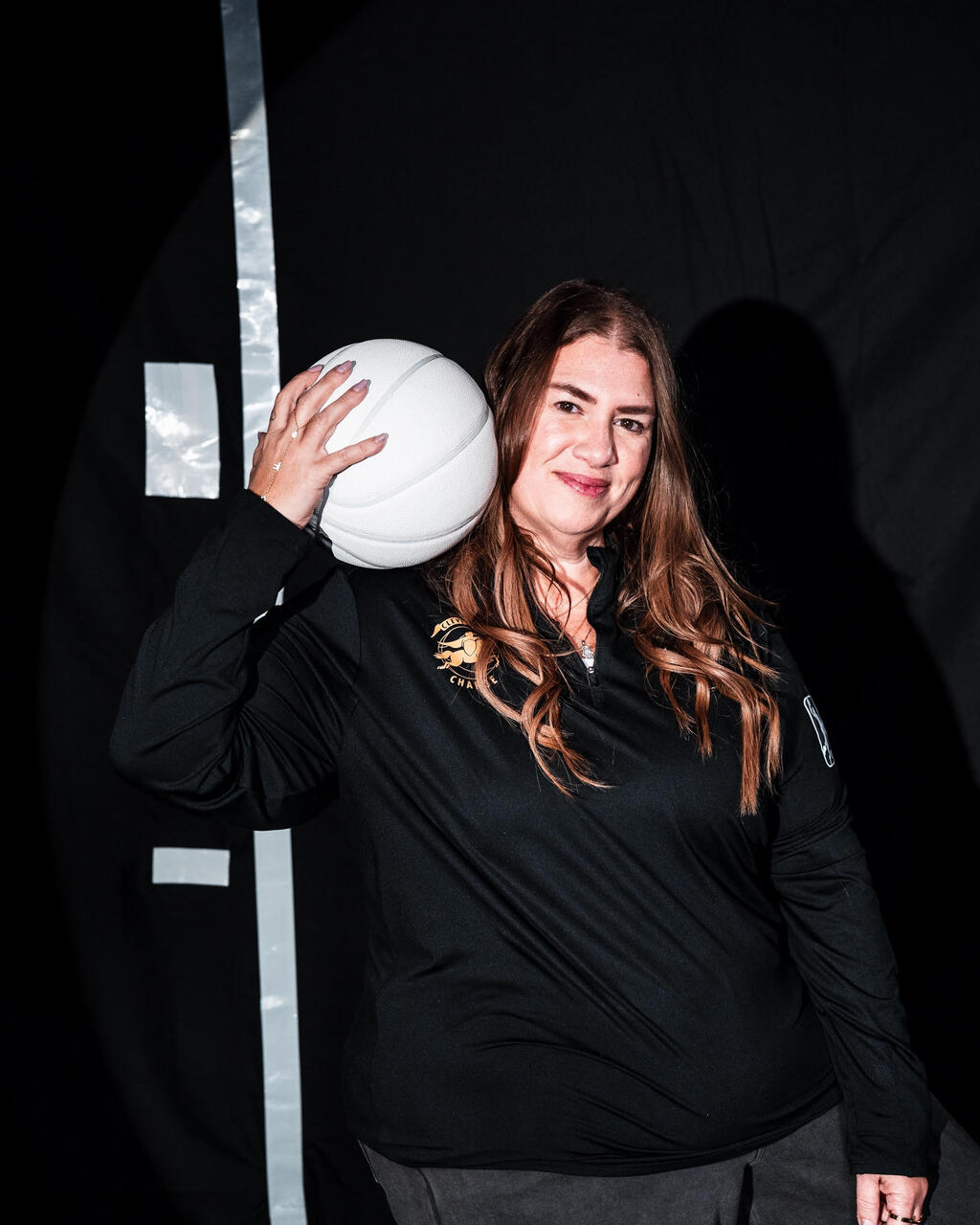
Fanan, 47, is aware of the magnitude of the achievement and is quick to add: “In everything I do here, I also know what I represent: my family, myself, Israeli sports and Israel as a whole. And I think I’m doing that very well.”
What is the significance of this achievement?
“This recognition is incredible, especially being the first woman to win this award. There were women in this role before me, and they did work that was just as amazing as mine, so it really is a huge achievement. But I worked very hard to get here and to earn the respect of most of the 29 team GMs for what I do.
“We had six call-ups in one season, and we managed to bring in more good players along the way. We kept winning and made the playoffs, and that was the key point. Another thing that stands out in our work here is staff development. Every year, we manage to build a staff that develops and moves on to other NBA teams.”
Fanan joined Cleveland as director of player development in 2018. In July 2023, she was promoted to GM, becoming the fourth woman in history to hold the senior position.
Do you feel you broke a glass ceiling as a woman?
“Absolutely, unequivocally. Today, everyone working around NBA teams knows exactly who I am. I’m making my mark in general and as a woman, and I’m opening the door for other women, too. I work with every team. I’m highly respected, very active, deeply knowledgeable, negotiating deals and building rosters. I’m responsible for the entire staff - coaches, physical therapists and strength coaches. I’m involved in trades for both the Cavs and for us. I perform this role just as well as any man, and I think that helps other women understand that they can do it, too.”
What is the highest point you can reach?
“I don’t think there’s a ceiling here. There are a lot of options. Over the past two years, WNBA money has become more relevant, and there are many positions. There’s also the college side. A lot of scouts and general managers move into jobs at major college programs, and that is very interesting, too. My goal is to run a team one day, the way I’m doing now in the G League, but at the NBA level.”
Maccabi didn’t appreciate me
Did you feel you weren’t appreciated enough in Israel?
“If you’re in Israel, no matter how good you are, you always have to go abroad to be appreciated, and that’s not just in my field. I was at Maccabi Tel Aviv for years, and I couldn’t rise above a certain level there. Once I went abroad, suddenly it became obvious that I could have done what I’m doing at the EuroLeague level, too.
“My dream was always to work in the NBA. My dream was not to be the GM of Maccabi Tel Aviv. For me, that job would have been a steppingstone, a turning point in my path, and it didn’t happen. I found myself moving into the agent world. I represented Omri Casspi, and that gave me a push and opened the door to a lot of things here.”
Sounds like they closed a door on you, and you climbed in through the window.
“I’ve said this many times: When one door closes, it doesn’t always mean everything is over. It was very hard for me to leave Maccabi Tel Aviv. Eli Driks, who was my boss at the time, didn’t want me to leave, either. But I understood that I had pretty much hit my ceiling there.
“They didn’t really see, or believe, that I could do what I wanted to do. So I simply picked myself up and moved in other directions. In the end, I ended up exactly where I wanted to be.”
What is your relationship with Maccabi Tel Aviv like today? Is there still anger?
“My relationship with everyone there is amazing. They still call me all the time to consult about players. Today, I’m in a different place, and all the anger and everything that happened is no longer there. I don’t have time to deal with it, and it doesn’t interest me, either. My brother, Regev, who is the head of physical performance, works at Maccabi, and we have an amazing relationship. The only thing we are not different about is our loyalty and our insane work ethic. I work with teams, and whenever it comes to fitness, I always talk to Regev. He is highly regarded in the U.S. and Europe.”
How hard is it to be far from your family during this period?
“I’m living a kind of double life. I wake up in the morning and get on the phone with my family, then start my workday and have to leave everything outside. Because with all due respect to me, nobody here cares; I have to run a team that has been contending for a championship for the past two years.
“There are days when I really break down. The most overwhelming month was after October 7. We had just started training camp. I got back from Shabbat dinner at friends’ at 11 p.m. and put the Israeli news on TV in the background. Suddenly, I saw the white pickup truck in Sderot. I sat down on the couch and didn’t move from it until 5 a.m.”
"Even two years later, it’s in my head all the time. People here always asked me if I wanted some time off, if I wanted to be home, but I understood that basketball is my escape. When the war with Iran started, I had very difficult days here. There are sirens all the time in Israel and my 75-year-old mother is going down to the shelter."
What is it like to be Jewish abroad at a time like this?
“Difficult. I don’t feel it too much in Cleveland, but if I’m in an Uber and notice the driver is Muslim or Arab, I don’t speak Hebrew on the phone. More than once, I’ve gotten into taxis with Palestinian flags. I don’t feel safe going to Jewish community events. To me, it’s an unnecessary risk, and I’m sorry I have to say that, but that’s the situation.”
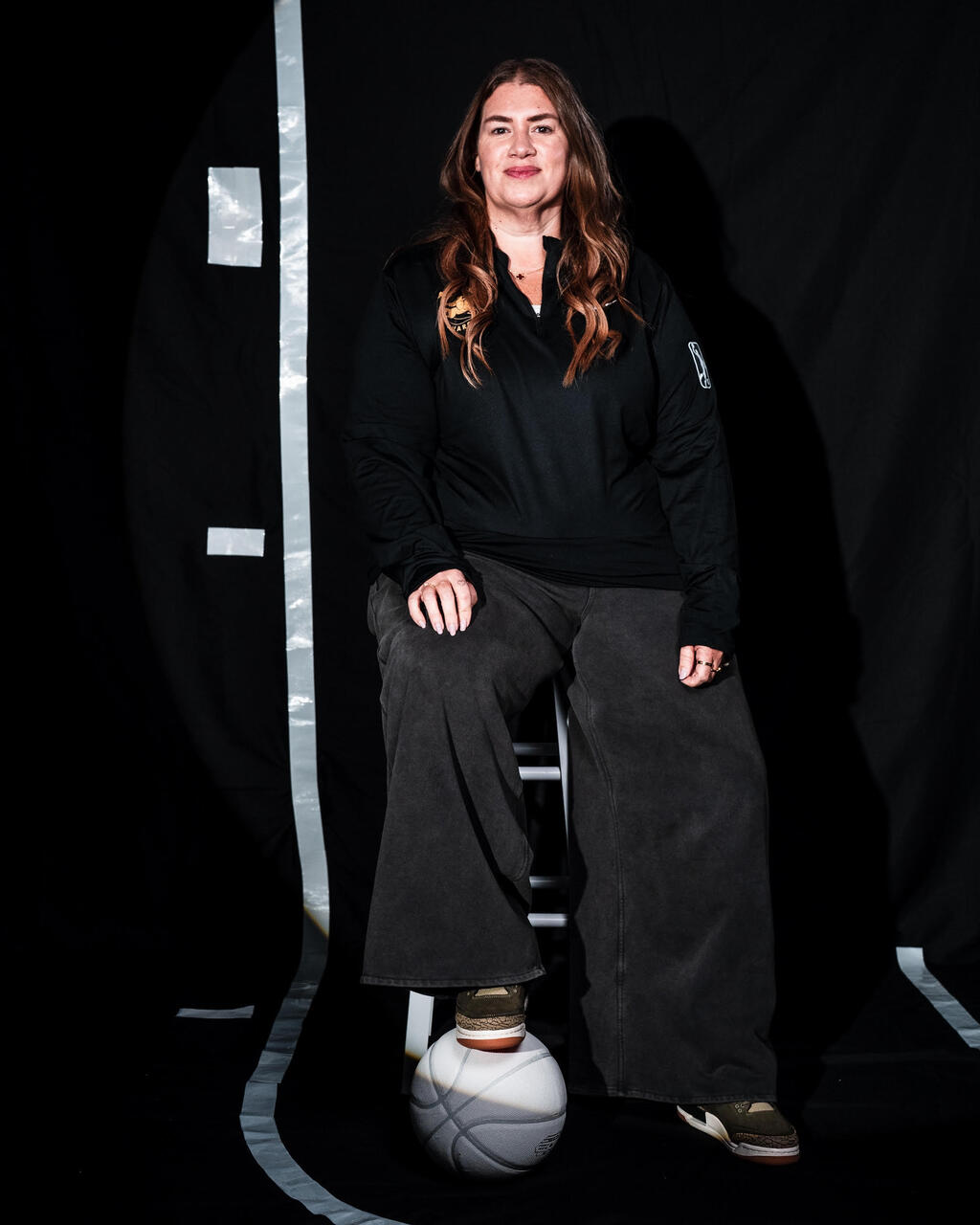
Liron Fanan. "I live a kind of double life"
(Photo: Dustin Johnson)
Shocked when I’m in Israel
What do you miss about Israel?
“Family and friends, obviously, first and foremost. I really miss the atmosphere, the beach, the weekends, the holidays. But on the other hand, every day feels like going to war: the pressure, the roads, people yelling at you. I don’t miss that at all.
“Every time I visit Israel, it’s a shock. I don’t see myself going back to that. Some people are happy in Israel. In the end, I wasn’t happy anymore. I couldn’t find my place. I felt trapped, including in terms of my ceiling.”
And today?
“I’m in a different place. I see my life here. I don’t understand why I need to live in a pressure cooker and through wars. That doesn’t mean I don’t love Israel. I see what’s happening, and I won’t get into political arguments, but it’s shocking to me. I don’t understand how people can deal with it. It’s just insane.
“Career-wise, too, if I had stayed through COVID and the war, in terms of income, I might have ended up on my mother’s couch, asking her to help me. Today, I help my mother financially.”
How does it feel to be able to help your mother?
“It feels great. I wish that after what happened with my father, she had been left with some kind of financial security, like an apartment. But things turned out the way they did, through no fault of hers. My mother is a 75-year-old woman who has to pay rent. She works, but it’s nowhere near enough. So part of why I’m here is to provide that financial stability for my family, and for myself in the future.”
So at 47, with an impressive career, when will you make time for your personal life?
“I spend a lot of time on myself. No need to worry; I have a pretty good work-life balance. I wouldn’t say my work hurts my relationships. You can combine the two.”
Do you want children?
“Very much. I’m at an age where, if I want it, it has to be now. I have to make decisions very quickly, and I won’t say it isn’t on my mind. I’m also in a 50-50 place, whether to go for it now or come to terms with the idea that I’ll always be that aunt whose nieces and nephews are like her children.”
My father and me
Even 17 years after the family tragedy, Fanan still struggles with the memories of her father’s suicide. In 2009, her father, Moni Fanan, a former team manager for Maccabi Tel Aviv’s basketball club, took his own life after running a private investment operation in the basketball world for years and falling into financial distress.
Did you feel you needed to escape from here after what happened?
“No. I stayed in Israel for nine years after my father died. The first two years were hard because I didn’t know exactly which direction I was going. I had left Maccabi just a year earlier, and I was trying to find my path. I didn’t know whether to continue with the player agency.
“I tried to get into the league administration, and Kopel tried to help me, but then he started getting all kinds of blowback. It felt like no one wanted to come near me professionally in the field, so I just carved out my own path. I found my place in the agent world together with Matan Siman Tov, and it was great.”
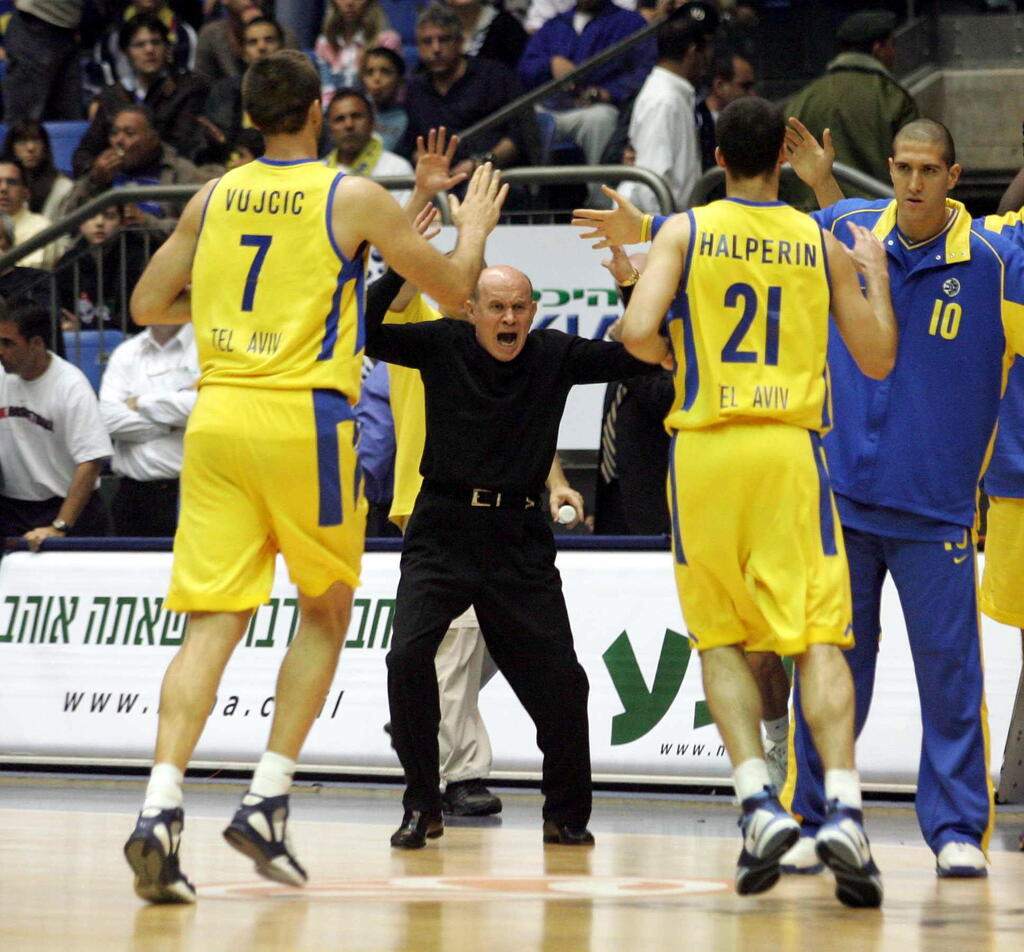
Moni Fanan celebrates with Maccabi Tel Aviv players in 2006
(Photo: Reuven Schwartz)
How often do you think about your father?
“A lot. The past month has been especially hard because we had a lot of success with the team this year, and it hurts that my father can’t see it. Then came this award, and I know he would have been absolutely thrilled.
“He always saw my future and my success. He always told me, ‘One day, you’ll be in the NBA.’ So it’s really hard, but it’s not just that. It’s a lot of other things in life, too. It’s very difficult.”
Do you feel any anger over the choice he made?
“No, not at all. I think he was in a very difficult place. He tried to take everything on himself and didn’t share it with anyone. He tried to give to everyone and do for everyone, like he always did.
“He was an amazing father. For 30 years of my life, he gave me everything and taught me so much. I wouldn’t be where I am today without that foundation. I’m very lucky he was my father.”
What should we wish you in the years ahead?
“To break more glass ceilings, to keep making us proud, to have the first Israeli woman CEO in the NBA, to have peace and quiet in Israel, and to see many more Israeli players come here, more Deni Avdijas, Ben Sarafs and Danny Wolfs.”