

On the eve of Europe’s largest motorhome and caravan exhibition, Fiat unveiled on Thursday an unconventional solution to a growing industry challenge: a Ducato van with two front cabs joined back to back.
The special edition, presented ahead of the Düsseldorf Caravan Salon opening Friday, is not intended for consumers. Instead, it was designed to streamline the delivery of unfinished vehicles from Fiat’s plant in Atessa, Italy, to European motorhome builders.
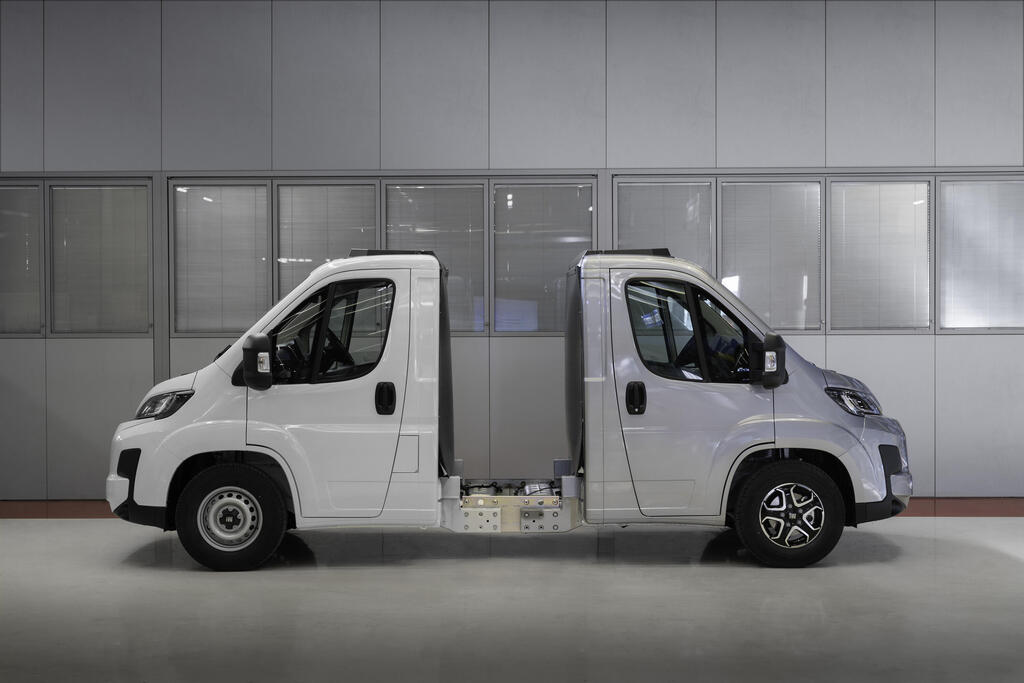
Each half of the dual-cab unit contains a complete cab and drivetrain. Once transported to conversion workshops, the pair is separated and each cab is mounted onto its own rear chassis and axle, customized to meet specific motorhome designs.
The approach was developed by Stellantis, Fiat’s parent company, to meet surging demand for motorhomes across Europe. Similar configurations will also be available in the Citroën Jumper and Peugeot Boxer lines, which share the Ducato’s platform. Despite being temporarily joined, each vehicle can have different specifications and colors. Technically, either cab can be driven independently as long as the other’s gearbox is set to neutral.
The Ducato supplied for conversions is powered by Fiat’s familiar 2.2-liter, four-cylinder turbo diesel producing 180 horsepower, paired with an eight-speed automatic transmission driving the front wheels. The vehicle can handle a maximum load of 4.4 tons. Depending on the builder, finished motorhomes can accommodate up to seven beds and include a bathroom, shower and full kitchen.
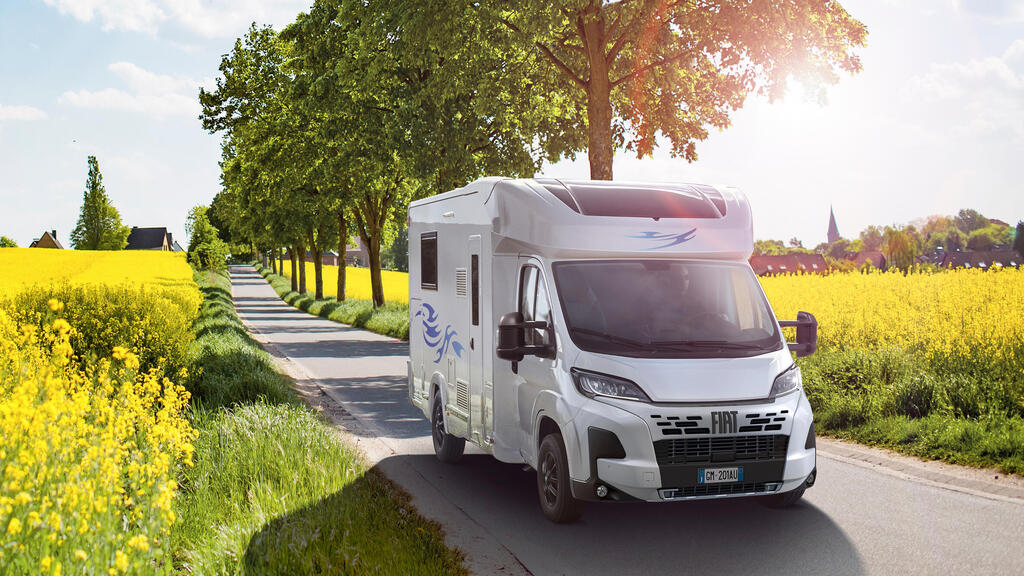
The original cab configuration offers two swiveling front seats that can turn 180 degrees to face a central dining table, replacing the three-seat layout of commercial versions.
While the double-headed Ducato may raise eyebrows, industry observers say the design highlights both the space pressures facing European auto transport and the versatility of the Ducato, long one of the continent’s most popular motorhome bases.