

There were great moments at the 1936 Berlin Olympics, whose opening ceremony took place exactly 90 years ago on Saturday. Unforgettable moments.
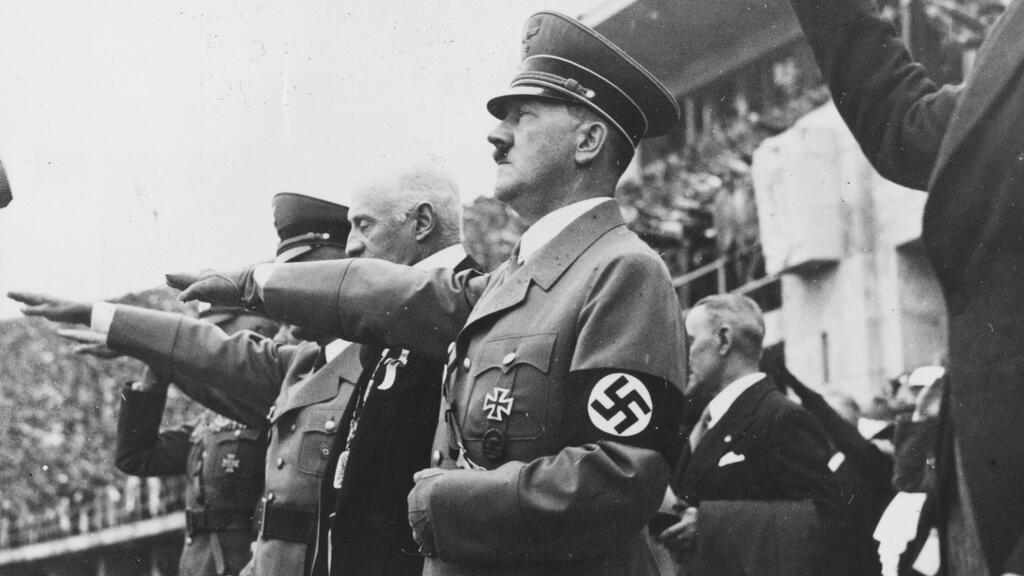
There was the first live television broadcast from an Olympic Games to viewing rooms across the city; the first torch relay from Mount Olympus in Greece to Berlin; the innovative use of Agfa color film developed in Germany; the monstrous 100,000-seat Olympic Stadium, built between 1934 and 1936 with Nazi government funding and under state ownership; the 77-meter bell tower above the western stand; Führer Adolf Hitler giving the Nazi salute.
And there was Jesse Owens.
Berlin, then still governed under the Weimar Republic, defeated Barcelona in 1931 in the contest to host the Games. It was the last time bidding cities were permitted to vote in the selection process.
Berlin received 43 votes. Barcelona, whose candidacy was harmed by the creation of the Second Spanish Republic that same year and fears of political instability, received only 16.
Hitler and the Nazi Party came to power in 1933 and embraced the Olympic Games as an extraordinary opportunity to conduct worldwide propaganda for the regime and present a new, tolerant Germany committed to peace.
The Olympics were so important to Hitler and Propaganda Minister Joseph Goebbels that the regime temporarily paused some public displays of antisemitism, ordered antisemitic signs removed from public places and assured the International Olympic Committee and foreign governments that Jewish athletes would not be excluded from Germany’s delegation.
Members of the Roma community received no such consideration. In 1935, Nazi security forces rounded them up and transferred them to a special camp outside Berlin in an effort to "cleanse" the city.
Even so, the Nazis allowed almost no Jewish or Roma athletes to join the German team.
Among those excluded was Gretel Bergmann, then the German record holder in the high jump.
Theodor Lewald, president of the German Olympic Committee, was removed from his position after it was discovered that his grandfather had been Jewish.
Wolfgang Fürstner, who was responsible for planning and constructing the Olympic Village and later became its commander, was dismissed shortly before the Games after it emerged that his grandfather had also been Jewish.
Fürstner killed himself several days after the Olympics ended.
Only one athlete with Jewish ancestry, a woman already living in the United States whose German citizenship had been revoked, was allowed to compete.
That athlete, through both her participation and the course of her life, embodied the full scale of the German and Jewish tragedy.
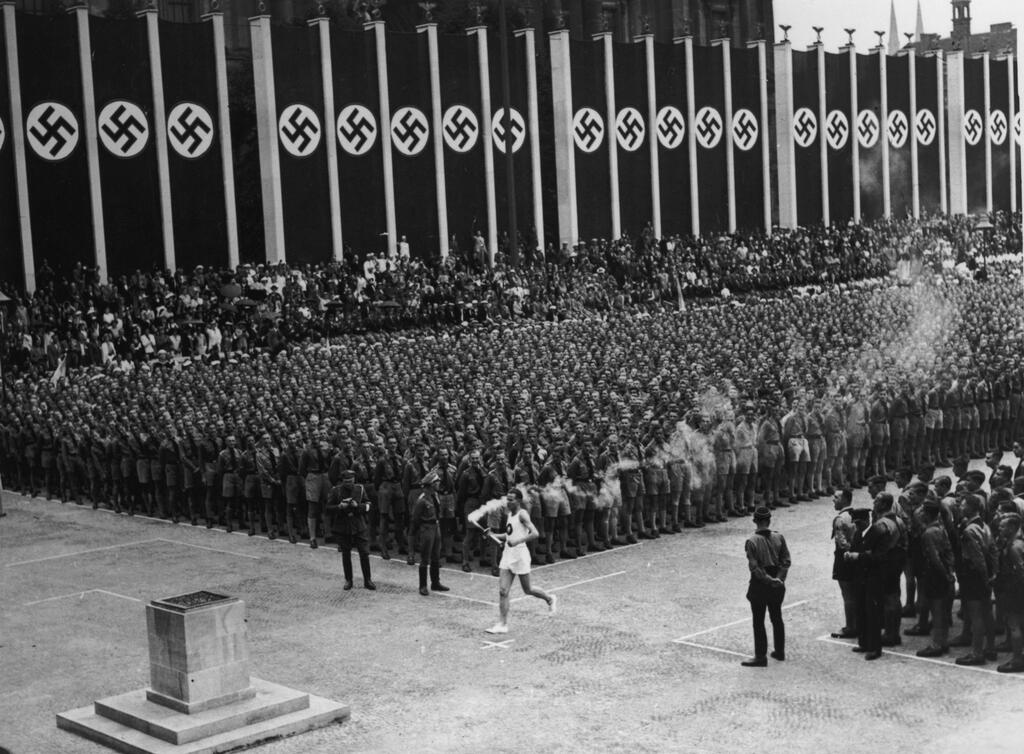
The Olympic torch at the Berlin Games
(Photo: Getty Images)
A useful Jew
Helene Mayer was born in 1910 to a Catholic mother and a Jewish father who worked as a physician.
In 1924, at just 13, she won the German foil fencing championship for the first time, a title she retained every year through 1930.
She won gold in the individual foil event at the 1928 Amsterdam Olympics and, a year later, repeated the achievement at the first European championship held in the discipline. She won the title again two years later.
Mayer became a celebrity in Germany. Posters bearing her image appeared everywhere.
At the 1932 Los Angeles Olympics, she finished fifth after learning, only two hours before the competition, that her boyfriend had died during a military exercise in Germany.
In 1933, Mayer was expelled from her sports club because she was half-Jewish. She left Germany for the United States, and the 1935 Nuremberg Laws stripped her of her German citizenship.
In an effort to stop a threatened boycott by several countries and sports organizations, the German Olympic Committee offered a gesture: It invited Mayer to join the German delegation for the Berlin Games.
Goebbels, however, barred the German media from mentioning her "impure" ancestry.
Despite protests by Jewish communities and athletes, Mayer accepted the invitation.
She won silver in the individual foil event. At the medal ceremony, she wore the official German uniform bearing a swastika and gave the Nazi salute, as the other German athletes did.
Mayer later said she had done so to protect her mother and two brothers, who were still living in Germany. Her father had died in 1931.
She faced fierce criticism and was described as a traitor and an opportunist who had agreed to serve as a useful Jew for Nazi Germany and the International Olympic Committee.
There was a striking detail: The other two medalists in the event, Austria’s Ellen Preis and Hungary’s Ilona Elek, were also Jewish.
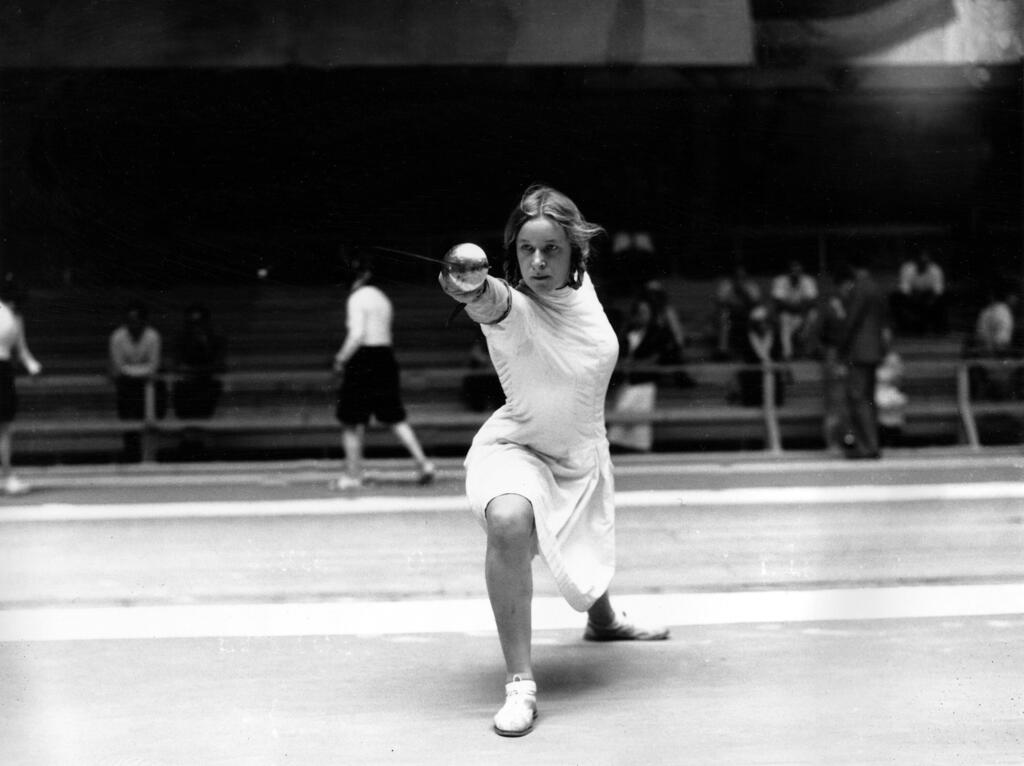
Described as a traitor and opportunist who agreed to serve as a useful Jew for Nazi Germany: Helene Mayer
(Photo: AP)
After the Olympics, Mayer won further medals at the first World Fencing Championships in 1937.
She then emigrated permanently to the United States and became an American citizen in 1940. She won the U.S. foil championship eight times.
In 1952, Mayer returned to Germany, married a baron and died one year later of breast cancer.
She was regarded as one of the greatest fencers of all time.
Salutes to Hitler
Nazi filmmaker Leni Riefenstahl wrote, produced and directed "Olympia," a two-part film, "Festival of Nations" and "Festival of Beauty," documenting the 11th Olympic Games in Berlin.
The film was groundbreaking in its technical innovation and visual aesthetics, including the use of cameras mounted on tracks, underwater filming and low-angle shots.
It achieved international success and won prestigious awards, including the prize for best foreign film at the Venice Film Festival in August 1938.
Just over two months after that award, the Kristallnacht pogroms swept across Germany.
The film was, in practice, a propaganda instrument serving the Nazi regime.
It was intended to glorify the government, portray it as positive and modern and celebrate the human body and supposed Aryan superiority.
Its award in Venice formed part of a series of victories by fascist and Nazi propaganda films that won because of political pressure.
What happened in Venice in 1938 prompted diplomats and filmmakers to create an independent film festival.
That is how the Cannes Film Festival was born, though the war delayed its inauguration until 1946.
At the opening ceremony, several delegations gave the Nazi salute to Hitler as he sat in the stands.
Spyridon Louis, winner of the first Olympic marathon in 1896 and leader of the Greek delegation, which marched first, presented Hitler with an olive branch from Olympus.
After the German delegation marched last, Hitler formally declared the Games open.
Jesse Owens’ Aryan friend
The United States won the gold medal in basketball, the first time the sport was included in the Olympics, after defeating Canada 19-8 in the final.
The medals were presented by James Naismith, the inventor of basketball.
Italy, between two World Cup victories in soccer, also won Olympic gold, prompting Benito Mussolini to claim the achievement as proof of fascism’s superiority.
Germany dominated the medal table with 101 medals, including 38 golds. The United States finished second with 57 medals, 24 of them gold.
It was a celebration for Hitler and the doctrine of Aryan racial superiority.
Only Luz Long refused to take part in that celebration.
Long competed against Jesse Owens in the long jump.
Owens had already humiliated Hitler and the other Nazi leaders by winning the 100-meter race. He then committed two fouls in long-jump qualification, and one more would have eliminated him.
Long approached Owens and offered advice on adjusting his jumping technique, advice that may have kept the American in the competition.
The two reached the final round tied for first place. But on his sixth jump, Owens leaped farther and won the gold medal.
Long, who looked like a model of the Nazi ideal of an Aryan man, approached Owens, embraced him, congratulated him and celebrated his victory.
During the war, Long was drafted into the Wehrmacht and sent to fight in Sicily.
From there, he wrote to Owens that he no longer knew what he was fighting for and asked him to explain to his family why he had been forced to do what he did.
Long died in 1945.
After the war, Owens visited Long’s family and later served as best man at the wedding of Long’s son.
Two Jewish sprinters, Marty Glickman and Sam Stoller, were dropped from the U.S. 4x100-meter relay team on the morning of the race.
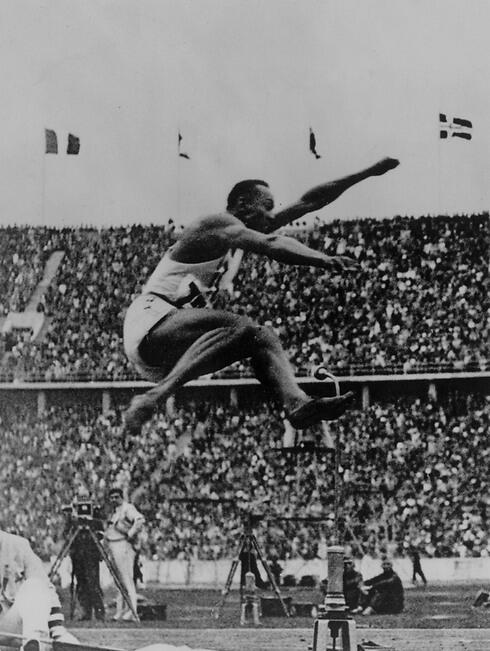
Jesse Owens competes in the long jump
(Photo: Getty Images)
Rumors claimed the decision had been made to avoid humiliating the German regime, although one of their replacements was Owens himself.
German wrestler Werner Seelenbinder, a communist, promised that he would refuse to give the Nazi salute if he won a medal.
He finished fourth.
Seelenbinder was arrested in 1942 after taking part in anti-Nazi activity and was executed two years later.
Is history repeating itself?
Germany wants to bring the Olympics back to Berlin.
The organizers and officials behind the effort thought it would be a moving symbolic act to connect two Olympics across a century and replace everything the earlier Games represented with the brightest possible colors.
Multiculturalism instead of hatred of the other. Acceptance and inclusion instead of alienation. Democratic liberalism instead of fascist nationalism. A hand extended in reconciliation instead of warmongering.
The truth, however, is far more complicated.
As then, today’s Germany is experiencing a serious political and economic crisis.
As then, Germany’s cultural and artistic scene remains among the world’s leading ones.
And as then, Germany is filled with hatred and division, antisemitism and hostility toward foreigners.
People die because they went to celebrate a Pride parade.
The party leading the polls by a wide margin is one that drew part of its ideology from the Nazis, and some of its members, including senior officials, want the 12 years of Nazi rule erased from memory.

Alternative for Germany party sign
(Photo: AP Photo/Michael Sohn)
That party, Alternative for Germany, held its national convention in the state of Thuringia from July 3 to 5.
Exactly 100 years earlier, the Nazis held their own national party convention there.
Jesse Owens was only a sudden flash, fast and almost too fleeting to see, of light in an Olympics that began 90 years ago.
When he returned to the United States with four gold medals around his neck and as a symbol of the triumph of the human spirit over racism, he retired from professional sports.
He was forced to enter hotels through special entrances, eat in segregated restaurants, ride freight elevators and drink from separate water fountains solely because he was Black.
The U.S. president did not even consider inviting him to the White House to honor his achievements.
Owens was forced to race against horses and dogs to earn a living.
The first Berlin Olympics were an episode, a brief intermission between the Nazis’ rise to power and the German public’s mass participation in carrying out Nazi doctrine.
What followed the Olympics were nine of the most monstrous years in human history.
The Olympic Games resumed only 12 years after the Berlin Games ended.
The organizers and authorities believe it would be a good idea to hold a second Berlin Olympics a century later.
Perhaps, as Alternative for Germany would like, the memory of what followed can be erased by then.
The stadium remains standing, almost untouched by the war despite the Allies’ heavy bombing.
Should Germany win the right to host the Games, that same stadium would host the ceremonies and competitions.
Perhaps by then, Alternative for Germany will already be in power.