

The saying goes, "sometimes you just need a bit of luck." But if you ask me, sometimes you need a lot of luck. But I can get by with a little. Let me tell you a story.
As fate would have it (yes, fate, luck — you’re starting to see the less-than-rational thread here), I found myself landing at the sprawling Heathrow Airport in London, land of the royal family and all that. The details are best kept under wraps, but that’s not the point.
“Just get here, I’ll sort you out with a car,” said the man on the other end of the line, in the kind of English spoken by those with blue blood. That’s how it is with people born on the full side of the financial glass — the universe (there it is again) just set it up that way for them.
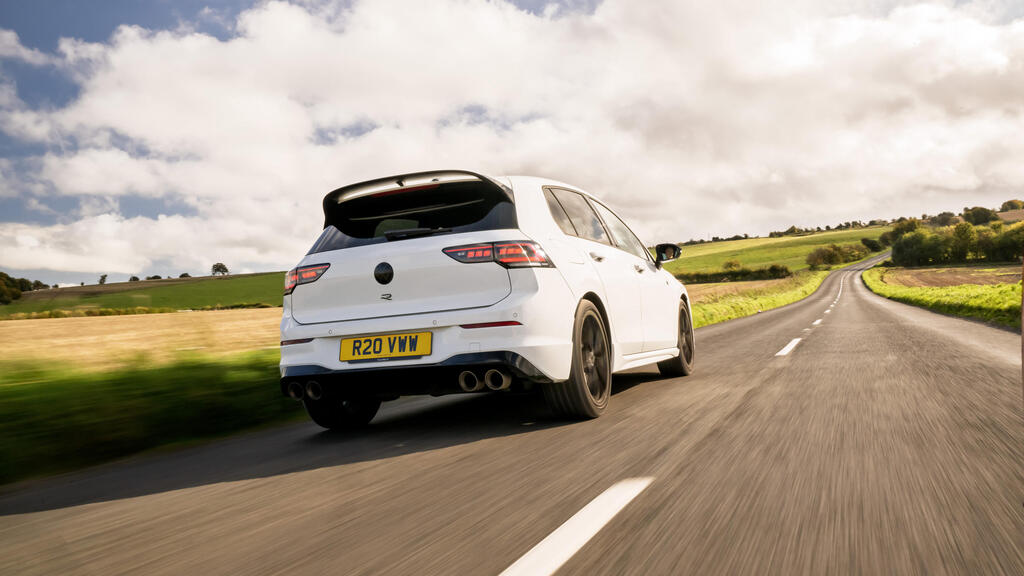
Five hours and roughly a hundred miles later, we walk out into the courtyard, and he opens one of the garage doors for me. “I bought it two weeks ago and haven’t even finished the break-in period, so go easy on the pads,” he muttered as he handed me a sleek remote that unlocks the doors and starts the engine of a facelifted Volkswagen Golf R. Sure, I’ll go easy on the pads. But wait, let’s rewind.
Volkswagen — the brand that invented the family-compact-action format with the GTI — is celebrating 50 years since that unforgettable hot hatch first tore up European roads, with more than 2.5 million units sold.
Back in 1992, the German automaker decided to up its game, dropping a 2.8-liter VR6 engine — a compact V6 that debuted a year earlier in the Passat and Corrado — into the Golf’s nose. With 174 horsepower, 0–100 km/h in 7.8 seconds, and a top speed of 225 km/h, it was one of the fastest family cars of its time. A dream car for any steering wheel junkie back then, and at one point — thanks to some strange pricing — a surprise bestseller. The ultimate wolf in sheep’s clothing, with iconic BBS wheels that made sure enthusiasts knew exactly what this was.
Then came the Golf R, about a decade later — still in that understated design, still with a V6, but now featuring Volkswagen’s first dual-clutch gearbox and permanent all-wheel drive. It delivered peak performance in any weather, on any road, and for any driver. The rest is history.
The R I now find myself in — quite unexpectedly — is the fifth generation of this model. I could try to understand why my host chose it, but I can’t quite get there. This is a man who doesn’t eat a business lunch in London’s financial district unless it has at least one Michelin star. You wouldn’t exactly call him “low profile.” Especially not someone whose driveway takes a full two minutes to drive down.
Just before I start the engine, I ask him why he chose such a modest-looking car, given the glittering automotive lineup in his enormous garage.
“I use it so I don’t scare off companies I consult for — at least before the contract is signed. After that, I show up in the Bentley.” Makes sense.
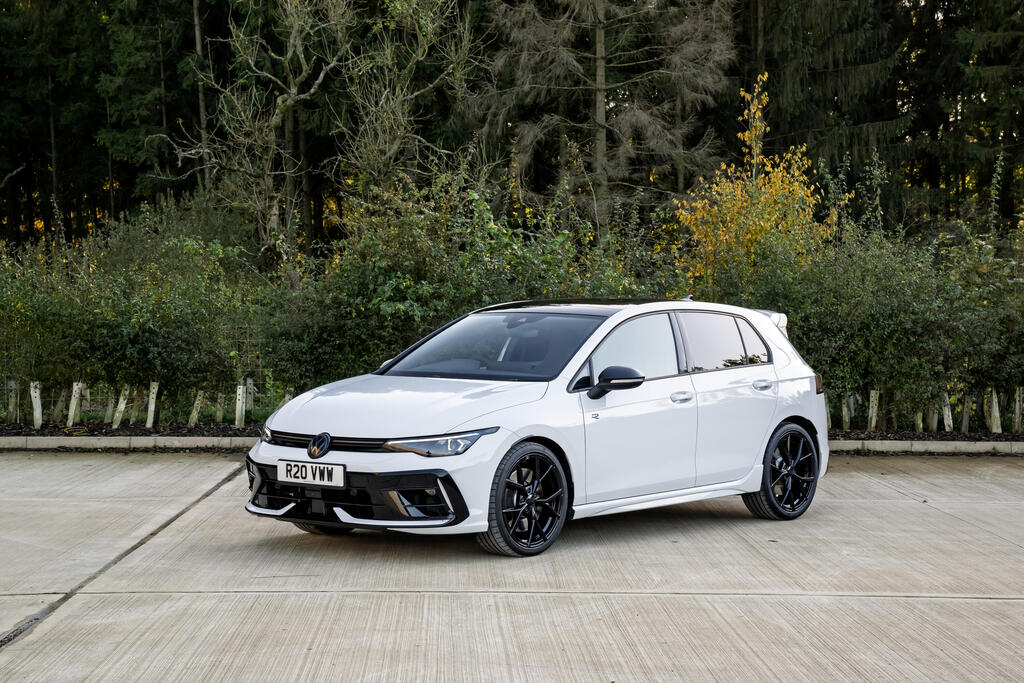
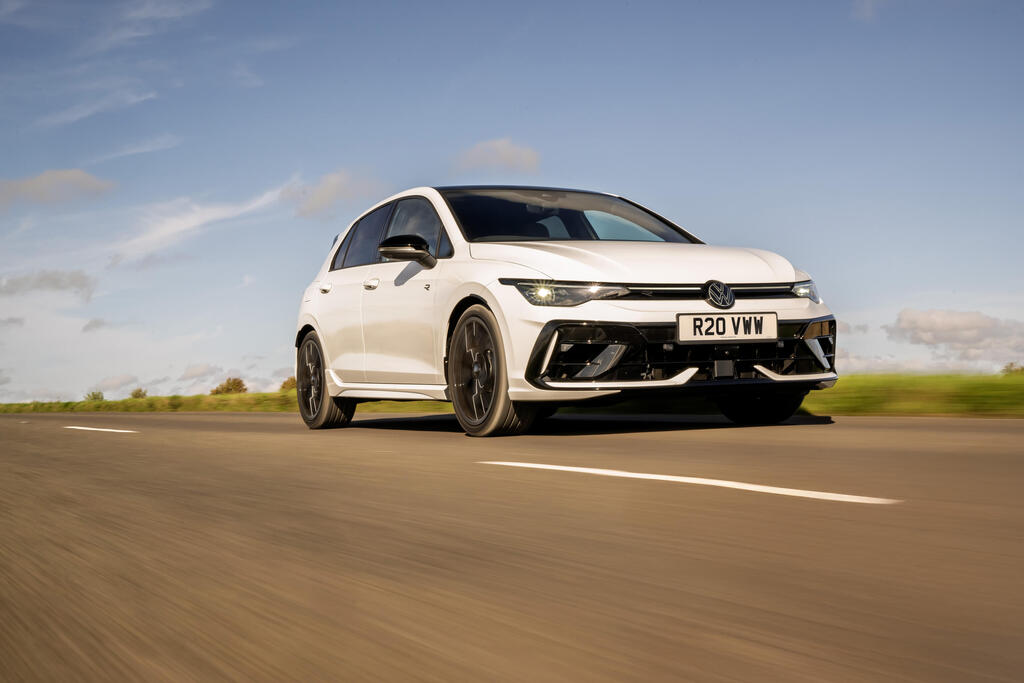
To the untrained eye, it looks like a regular Golf — aside from the rear spoiler, four tailpipes and large ventilated front brake discs. For those who care (not me, at the moment), there’s one more clue: new 19-inch wheels, which are 20% lighter than those on the pre-facelift model.
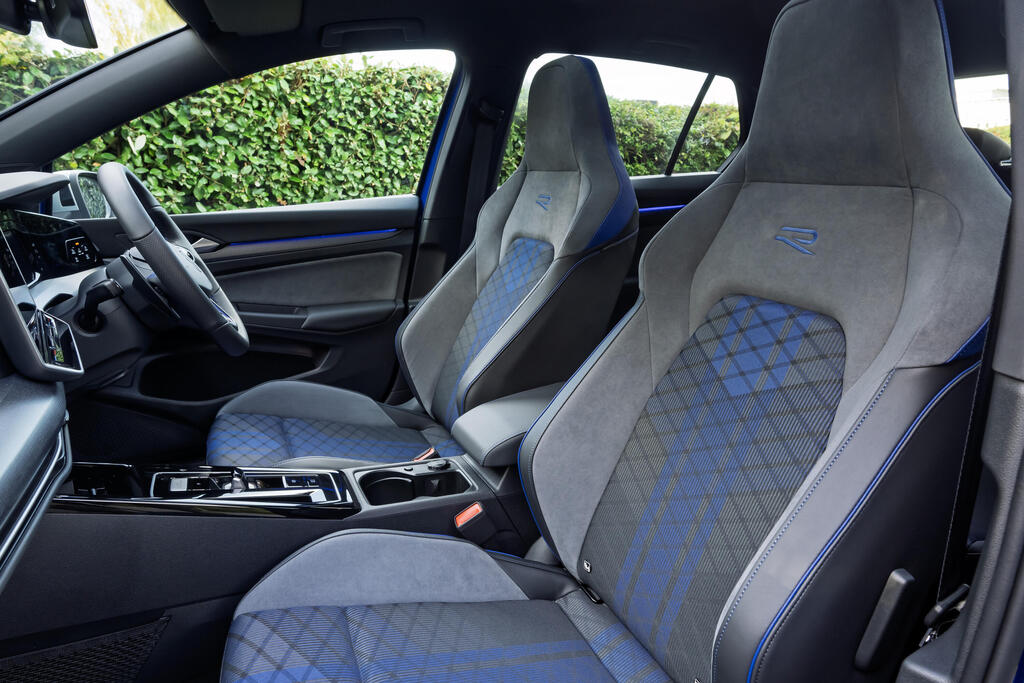
And of course, it wouldn’t be a Volkswagen if one of its coolest cars didn’t come with a cabin dressed entirely in somber black. The materials are high quality, sure, but there’s almost no sporty flair — except for the supportive sport seats, upholstered in a mix of fabric, Alcantara and leather. Manually adjustable, by the way.
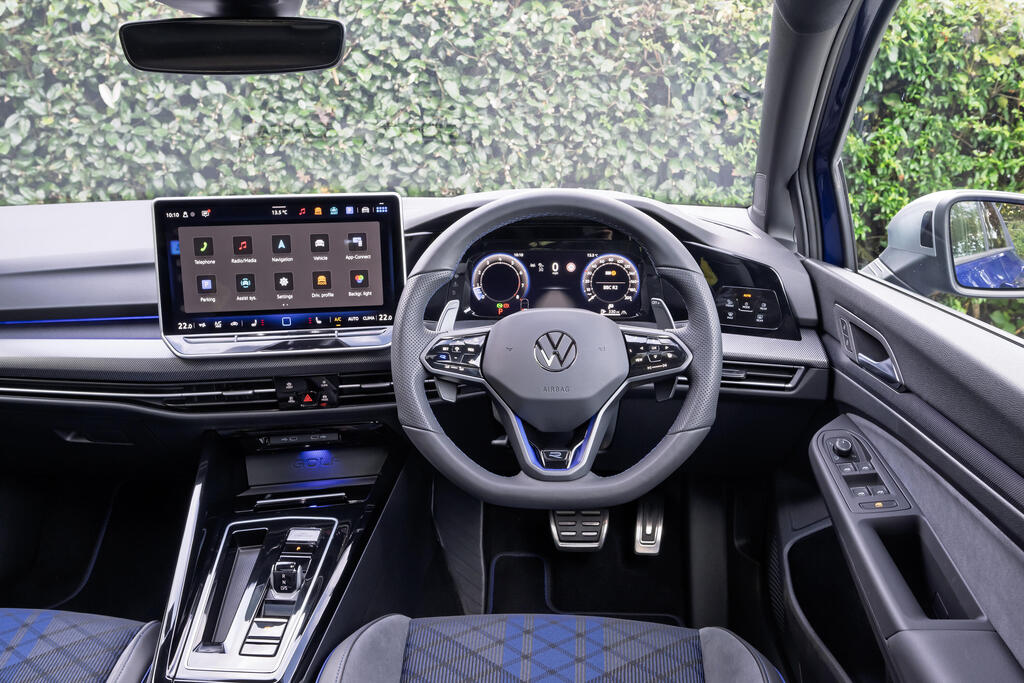
There’s a prominent R button on the steering wheel, and the paddle shifters are bigger than those in the GTI. Like in the regular facelifted Golf, there’s a large 12.9-inch touchscreen with a faster, improved interface — but it still has those maddening touch controls for climate temperature and volume, including on the steering wheel.
It's hard to understand why they haven’t been consigned to the dustbin of designs labeled: "Great ideas on paper that failed in reality — let them go already."
The 10.2-inch digital gauge cluster displays fun data from the drivetrain, G-forces and lap times. Nice — but not groundbreaking. Other than that? It's still a Golf.
No sound
Up front sits a familiar, time-tested and efficient engine from Volkswagen — the turbocharged EA888, beloved by VAG fans and engineers alike. It’s a 2.0-liter four-cylinder pushing 333 horsepower, paired with a lightweight titanium Akrapovič exhaust system that sounds more like an off-key trumpet than a proper fanfare. That’s no way to do it, Volkswagen. Sorry, this is not how you blow a trumpet.
The engine is mated to a 7-speed dual-clutch gearbox — the only option available now, since too few drivers are willing to put their left foot to use with a manual. Power is delivered to all four wheels via a full-time all-wheel drive system. But it’s not the excellent Haldex unit from previous R models. This is an all-new setup, developed by Magna, and it's even better. It features an electronically controlled rear limited-slip differential capable of sending up to 100% of torque to either rear wheel. Promising news for fun — and maybe less so for your tires.
Performance is impressive — forget the old VR6. An efficient launch control system rockets the Golf R from 0 to 100 km/h in 4.6 seconds and on to a top speed of 270 km/h — once you remove the pesky limiter chip. Yes, we know — the Tesla Model 3 is faster and cheaper. Relax.
Let it rip
One of the joys of driving in England is the seemingly endless network of narrow, twisty B-roads — flanked by greenery, riddled with elevation changes, imperfect signage and the occasional mud-splattering tractor in the middle of a fast corner to nowhere, just as you’re getting into the rhythm. And the Golf R feels more at home here than on Germany’s typically tidy country roads.
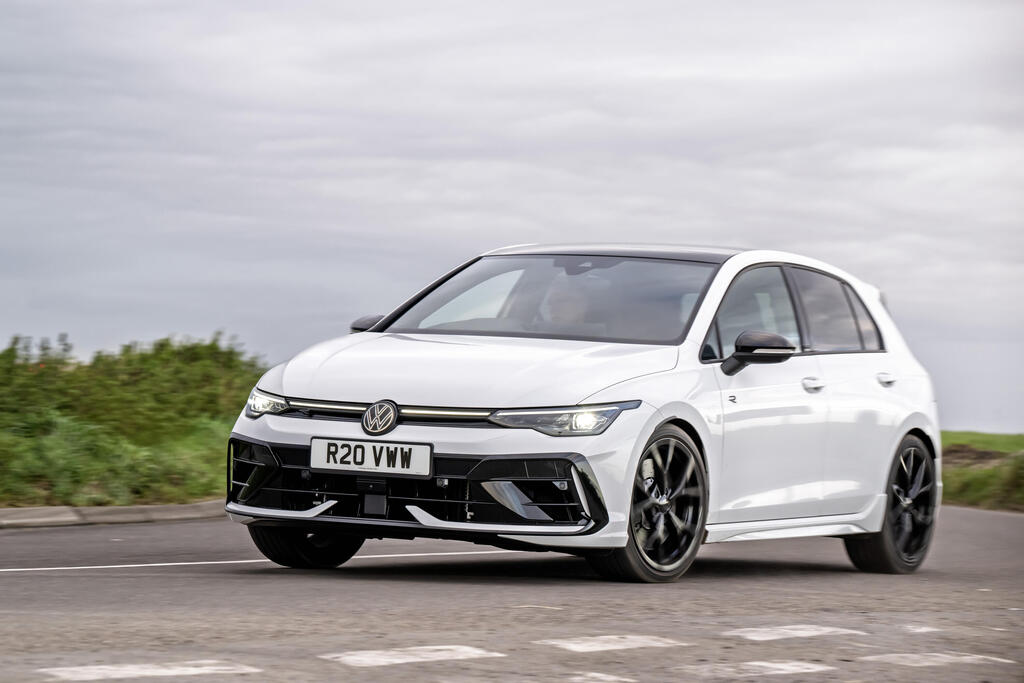
It’s also refreshing to discover that the driving mode selector includes an expanded version of the familiar “Race” mode. The first is called “Special” and is marked with an icon of the Nürburgring. No surprise — the Germans say it’s tuned specifically for the “Green Hell,” one of the most demanding tracks in the world. That’s helpful if you happen to know exactly which gear and RPM to take the mini-carousel at near the end of the legendary circuit. Less helpful if you’ve never been there.
Either way, it works beautifully. The drivetrain sharpens up, while the adaptive dampers are tuned with a bit more softness than expected. Nürburgring tarmac isn’t exactly smooth — it has abrupt elevation shifts and challenging surfaces — and this setup helps maintain grip. You really don’t want a back massage from the suspension on a bumpy backroad. Trust me.
The handling benefits from a fast steering rack (under two turns lock-to-lock) that’s precise and well-calibrated, placing the front wheels exactly where they need to be mid-corner. It’s not go-kart twitchy — this is still a Golf, more composed than hyper — but the advanced AWD system and well-tuned suspension allow you to get back on the throttle earlier than you expect. Unless, of course, you’ve got your own personal monster in the garage.
Forget the understeer that used to threaten a meeting with the guardrail (figuratively — not many of those here). At worst, you’ll feel the rear wheels scrambling for grip, and that’s fun — even if you don’t quite realize the tail is trying to overtake the nose.
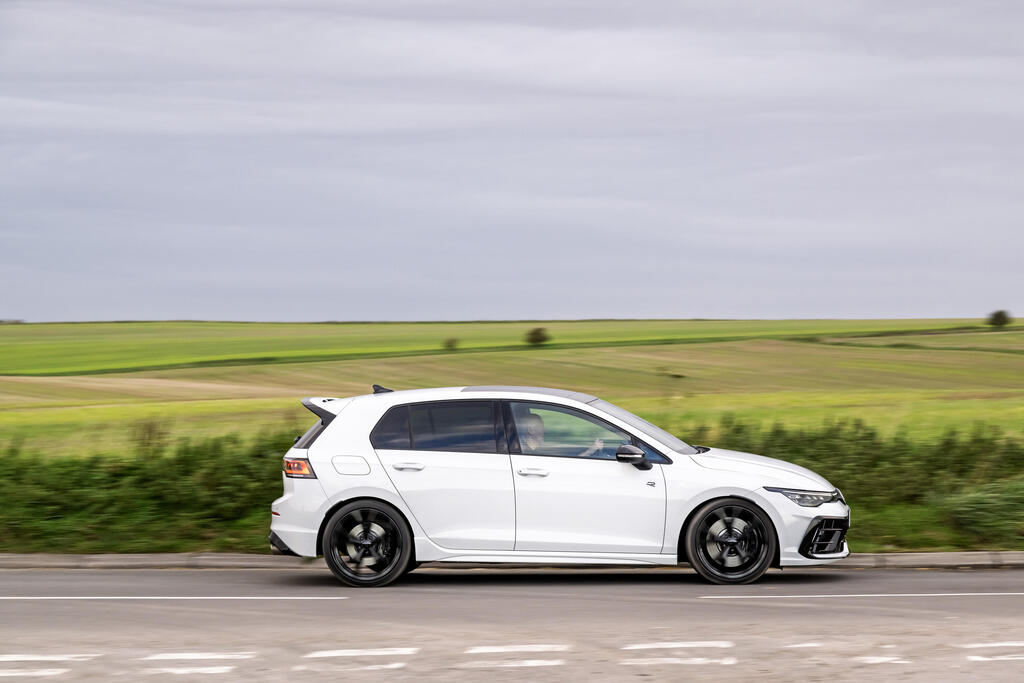
And if you insist on doing so, don’t worry — there’s also a “Drift” mode. That’s your license to unleash the inner lunatic sitting on your shoulder. Just make sure no one’s around to witness it. It’s childish, politically incorrect and absolutely brutal on your tires — possibly unsafe for both you and the car’s finely formed body panels.
But it’s so good that if I weren’t the calm, composed, responsible adult that I am, I’d have taken the car to a giant asphalt lot bordering an even bigger gravel lot and let off steam for at least 30 minutes. But I’m not that guy — just like I told the officer who came to ask why the only house within a 1.5-kilometer radius was complaining about the noise at 8 p.m.
Living with it
A rare moment of seriousness — I promise it’ll pass. Beyond its performance and playfulness, what’s most impressive about the Golf R is just how fantastic it is as a daily driver. In “Comfort” mode — which I intentionally left unmentioned until now — it feels like a regular Golf with sport seats and a touch more growl. Just a touch.
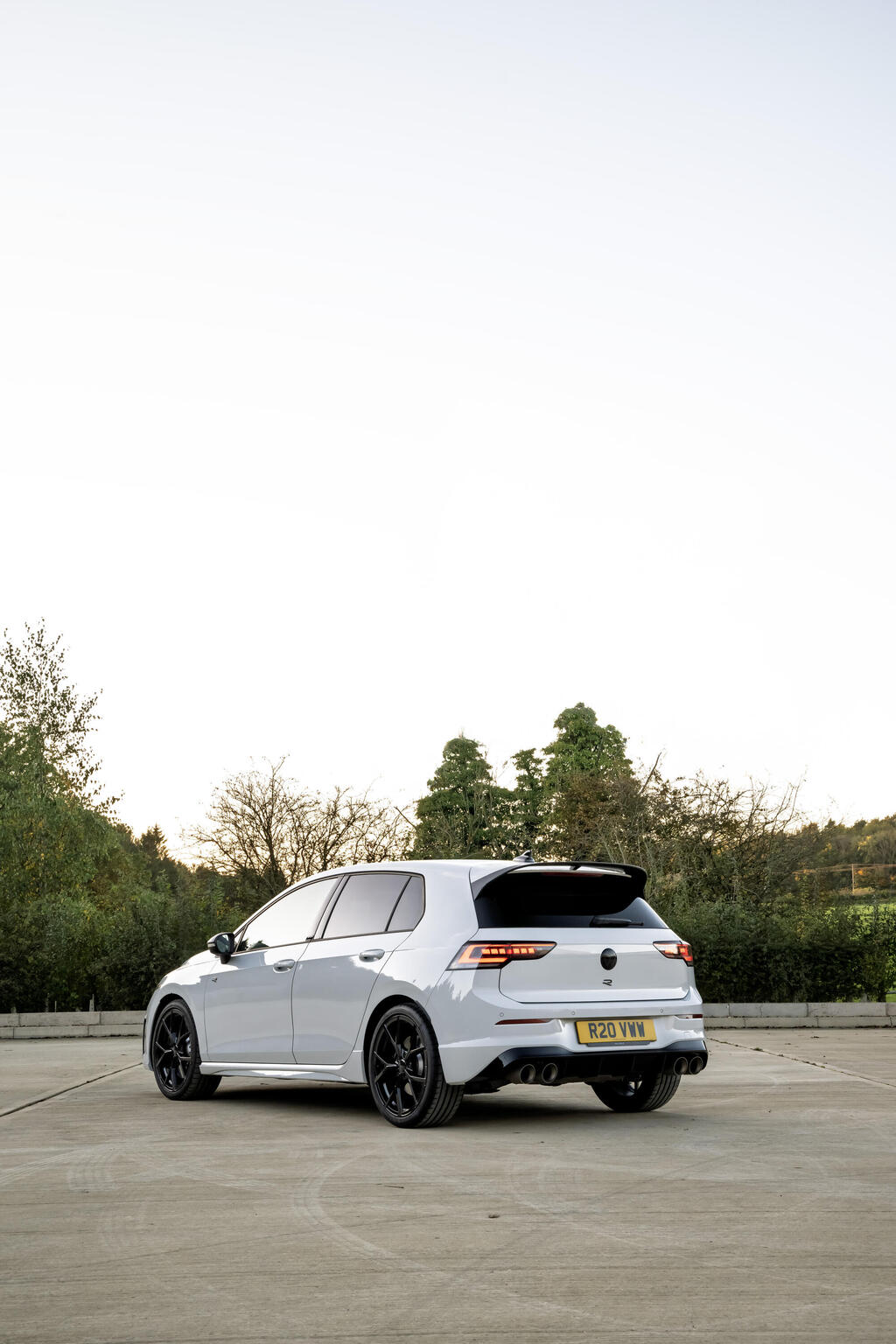
This is the kind of car that, once debadged, won’t give away how much it costs or what it can do. And that’s always a plus when it comes to avoiding thieves, nosy neighbors — or the in-laws, if you want to sound a bit bourgeois.
In my opinion — and in the opinion of just about everyone who’s driven one — this is the ultimate Golf. It excels in every area, even if it’s not the best in each. There are faster cars. More comfortable ones. More luxurious and better equipped. But I can’t think of a compact car that’s as versatile, usable and performance-capable as this one.
My host was thrilled to get it back. “Want to drive a real sports car now?” he asked, taking the keys from me. There’s always another level.
Specifications:
- Engine: 2.0L turbocharged 4-cylinder gasoline
- Power: 333 hp @ 6,500 rpm
- Torque: 42.8 kgm @ 2,100 rpm
- Transmission: 7-speed dual-clutch, all-wheel drive
- Length: 429.6 cm
- Width: 178.9 cm
- Height: 145.4 cm
- Wheelbase: 262.9 cm
- Curb weight: 1,550 kg
- Trunk volume: 341 liters
- 0–100 km/h: 4.6 seconds
- Top speed: 270 km/h (after limiter removal)
- Fuel economy: 12.1 km/l
- CO₂ emissions: 186 g/km
- Airbags: 9
- Safety rating (Euro NCAP): Five stars
- Estimated price (Israel): ₪400,000