

Spain’s victory in the 2026 World Cup left little room for doubt among the world’s major media outlets. The 1-0 win over Argentina after extra time, sealed by a Ferran Torres goal, was presented almost everywhere as a triumph of soccer played on the attack over the cautious and aggressive approach of the outgoing world champion. While Spain celebrated “the second star,” media outlets in England, Italy, Germany and France showered praise on La Roja — and did not spare Argentina criticism.
In England, it was the media that took the sharpest line. The Telegraph headlined its coverage: “Football’s victory over Argentine crime,” adding: “Football 1 — criminals 0. It required extra time, but thankfully the sport won.” The newspaper harshly criticized the Albiceleste’s style of play, arguing that Argentina “did nothing but commit fouls,” noting that in the first half it committed more fouls than completed passes in the final third.
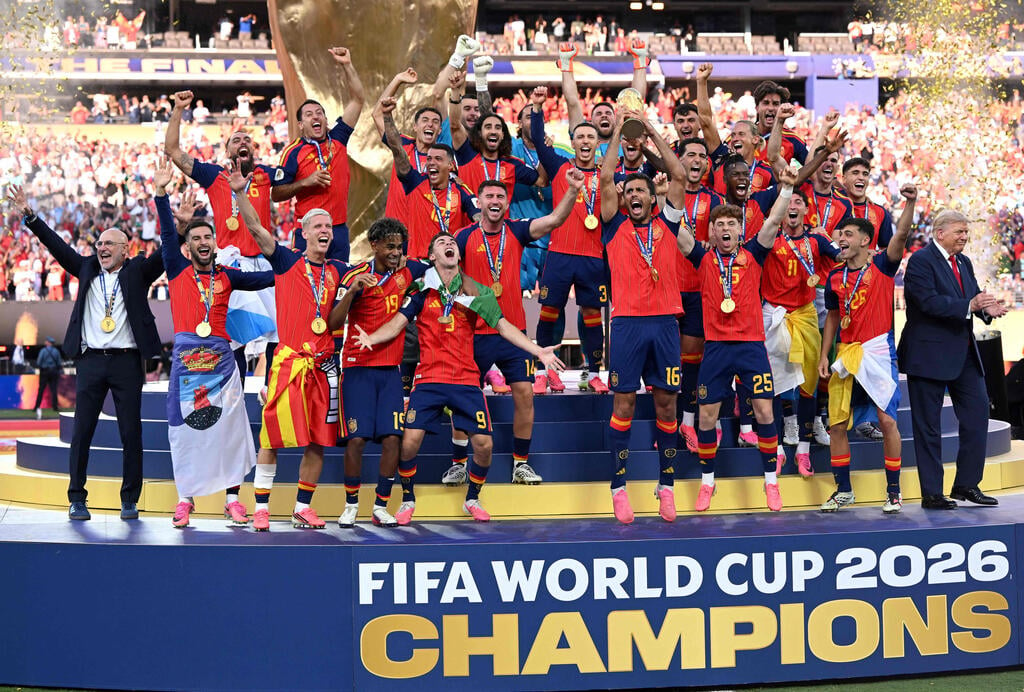
The Times also praised Spain under the headline: “Spain’s system overcame Argentina’s madness,” while the Daily Mail chose a wordplay — “Fight for the Title” — to describe the final, which was marked by physical battles and clashes between players even after the final whistle.
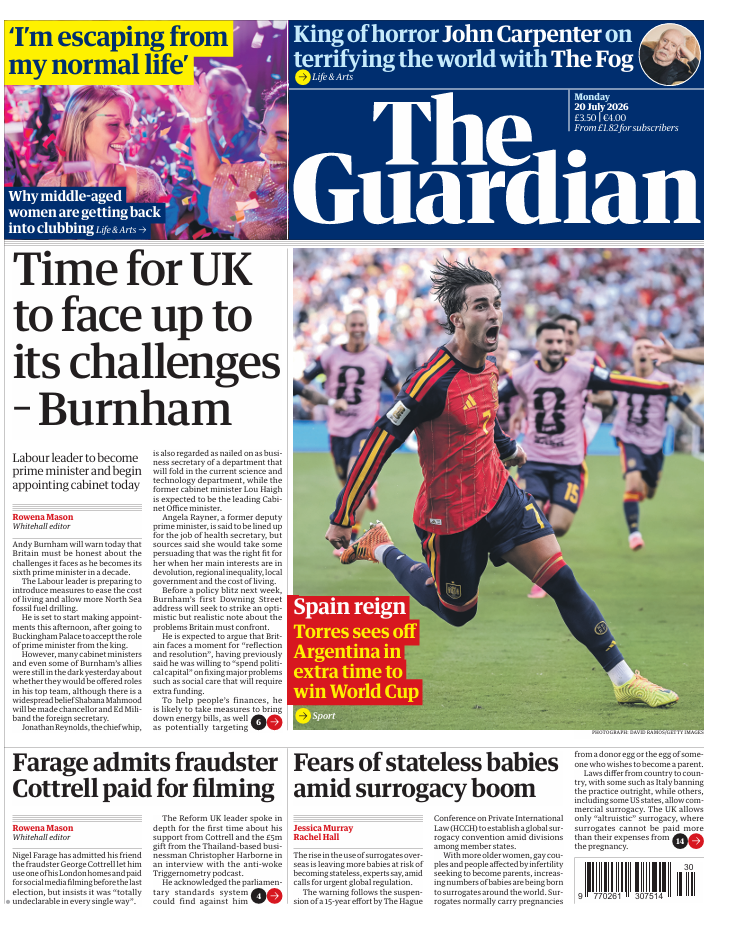
The Guardian hailed the new champion, writing that “it was a victory of an idea, of identity and of uncompromising belief in a path.” It added that Spain was the only team that met expectations in the final, while Argentina “was doomed by its lack of ambition,” stressing that the outgoing champion failed to register a shot on goal for most of the match. The BBC also summed it up as “a deserved Spain triumph in a very disappointing final.”
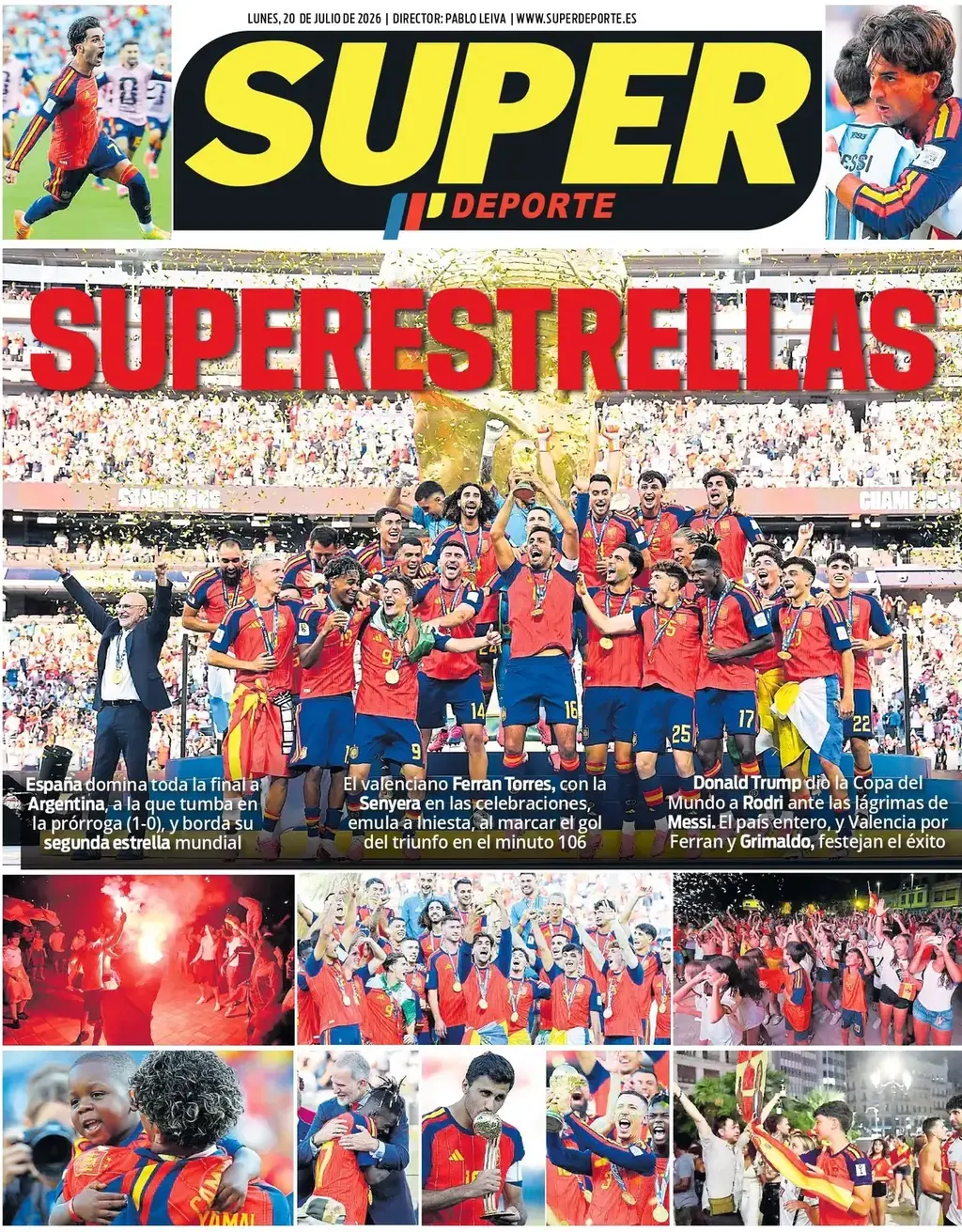
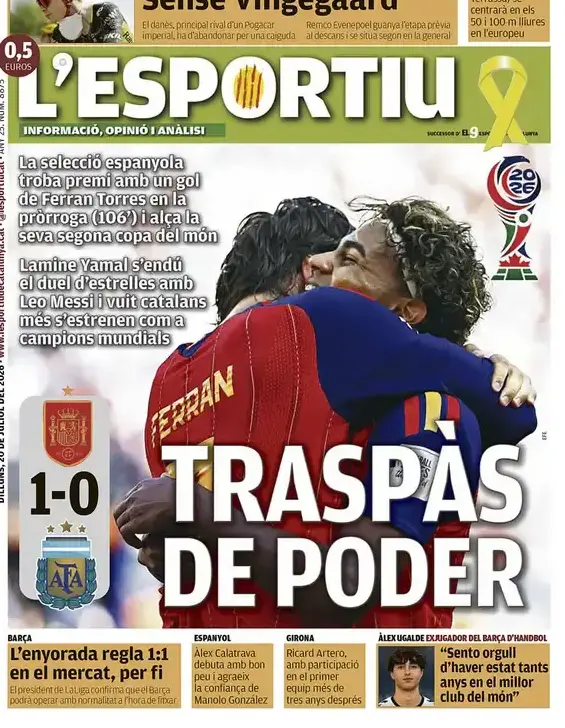
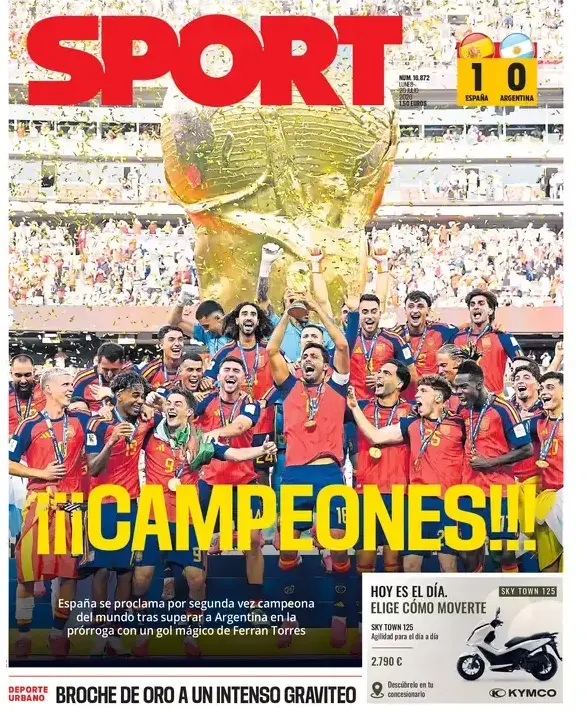
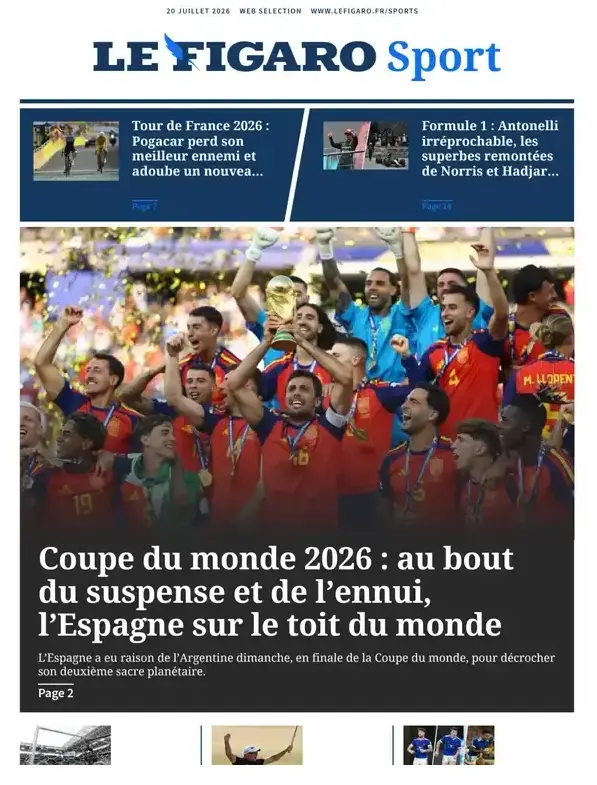
Surprisingly, even in Argentina, commentators acknowledged the opponent’s superiority. Olé wrote that “Spain was better, controlled the game and was a worthy champion,” while Clarín led its coverage with the headline: “Messi’s last dance journey ended in tears,” noting that Luis de la Fuente’s team was clearly superior throughout the match. La Nación also acknowledged that Spain imposed the tempo from the opening whistle and deserved to reclaim the World Cup after 16 years.
In Germany, the focus was on the generational shift. Bild described the moment in which “Lamine Yamal won the intergenerational duel against Messi.” Kicker also called Spain “a worthy world champion,” noting that Argentina failed to threaten the goal until the closing stages.
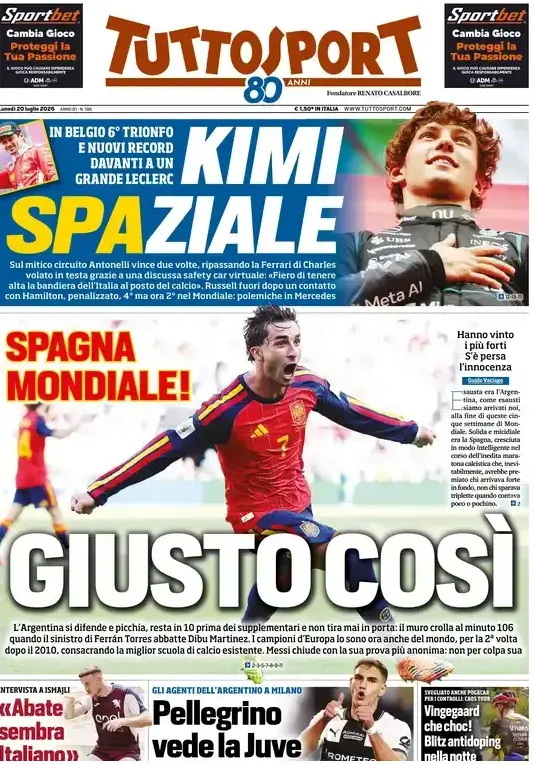
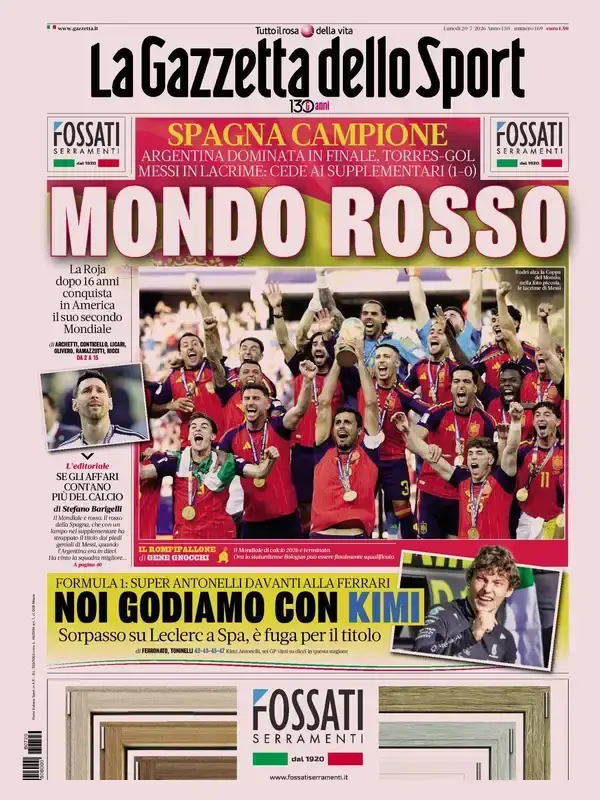
In Italy, the Spanish style of football also drew praise. La Gazzetta dello Sport wrote that “Spain had to win, because any other result would have been an insult to football.” The newspaper added that La Roja remained faithful to its footballing philosophy throughout the tournament, while Argentina “systematically chose not to play.” Tuttosport chose the headline “Argentina cries,” while Il Messaggero described the win as “a victory for beautiful football, ideas and organization.”
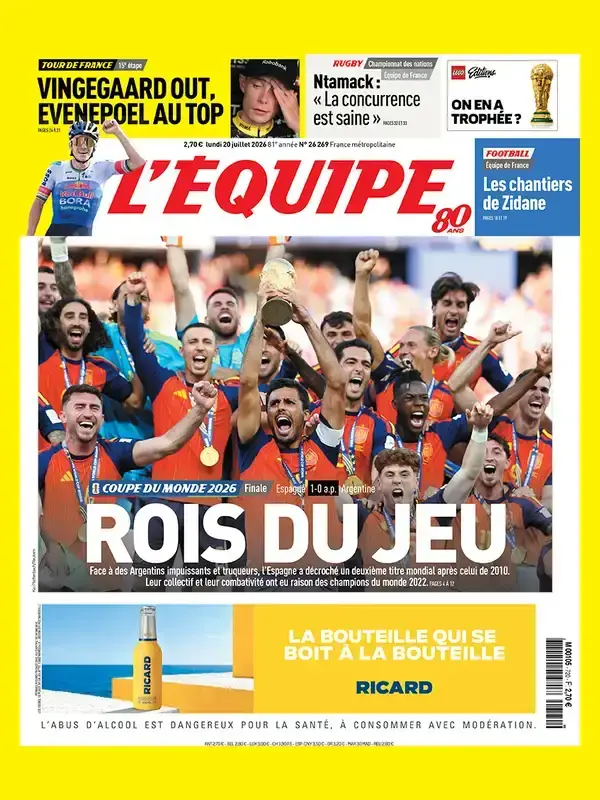
In France, too, Spain’s superiority made an impression. L’Équipe crowned Luis de la Fuente’s players “the kings of the game,” writing that “Spain controlled the rhythm, the ball and the initiative, without giving up its style of play for a moment.”
First published: 09:04, 07.20.26