

Morocco was selected on October 4, 2023, to co-host the 2030 World Cup with Portugal and Spain, sparking celebrations after five failed bids since 1994 and following the national team’s historic run to the semifinals in 2022, the first by an African side. Officials see the tournament, alongside the Africa Cup of Nations beginning Sunday, as a chance to showcase Moroccan culture, hospitality and ambitious development.
Plans include nine new or renovated stadiums, led by the $500 million Hassan II Stadium, set to be the world’s largest with 115,000 seats, as well as luxury hotels, rail upgrades and new transport infrastructure. But preparations have already displaced low-income coastal residents and street vendors, raised concerns over funding and prompted Morocco to issue 2 billion euros in government bonds in March, its first such sale in five years, at an expected high cost.

The Protest that faded
But Morocco faces deeper and more pressing problems. Its health and education systems lag behind: the country has just 0.73 doctors per 1,000 residents, compared with a global average of 1.71 and 4.12 in the European Union. Preparations for the World Cup are expected to further strain services outside major cities. Unemployment stands at 13 percent, nearly three times higher among young people, and a recent survey found that one-third of Moroccans want to leave the country for economic reasons.
For many, the gleaming stadiums and luxury developments are not meant to attract investors so much as to conceal widespread poverty, homelessness and severe social deprivation. Victims of the earthquake near Marrakesh are still living in tents two years later, awaiting compensation, while nearby at the Four Seasons resort a can of Coca-Cola costs 8.60 euros. While many hope the World Cup will bring an economic boost, others fear what will come afterward, and how Morocco will use its new infrastructure, including a 115,000-seat stadium.
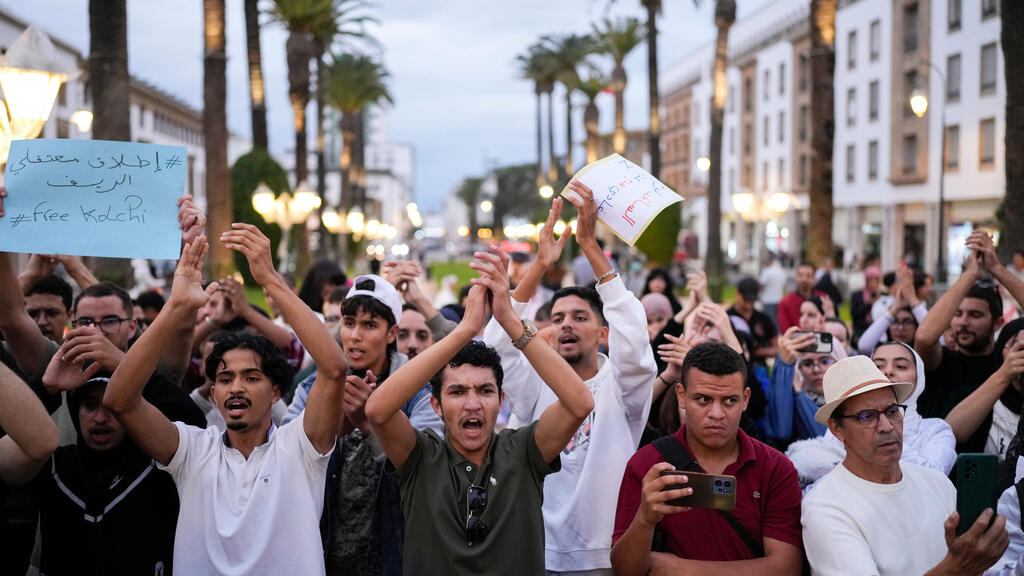
Hospitals, not soccer stadiums
(Photo: AP Photo/Mosa'ab Elshamy)
More than 50 percent of Morocco’s population is under 35, and anger was bound to erupt, driven by inequality and corruption, as well as heavy investment in soccer while citizens’ basic needs were neglected. In September, after eight women died during childbirth at a single hospital in Agadir, crowds took to the streets carrying signs reading, “We want hospitals, not soccer stadiums.” Three people were killed by security forces and hundreds were arrested. Protesters dubbed the movement “Generation Z 212,” a reference to Morocco’s country calling code.
The arrests and violence intimidated many young people. On October 14, Morocco defeated the Democratic Republic of Congo 1-0 in World Cup qualifying, and public attention shifted back to soccer. The uprising subsided. Authorities, critics say, could then return to more mundane matters — including dealing with stray dogs.
Mass killings
As Morocco prepares to host the 2030 World Cup, the stated goal is to rid the country entirely of stray dogs and other street animals. Pets are rare in Morocco; under prevailing religious views, dogs are often considered impure and a real threat. There are virtually no animal shelters and few veterinarians. Hosting the Africa Cup of Nations served as a dry run for removing dogs from city streets. In recent months, thousands of dogs have been killed across the country in what animal rights groups describe as brutal and disturbing ways.
Hundreds of dogs have been shot, hundreds poisoned or burned alive. In the most extreme cases, packs of dogs were taken to fenced enclosures, left without food and died after turning on one another. The killings are aimed at “beautifying” Moroccan cities ahead of the Africa Cup of Nations and the World Cup. International animal rights organizations estimate that up to 1 million of Morocco’s roughly 3 million stray dogs could be killed by the time the 2030 World Cup begins. Authorities offer a more “optimistic” forecast, saying 99 percent of stray dogs will be eliminated.
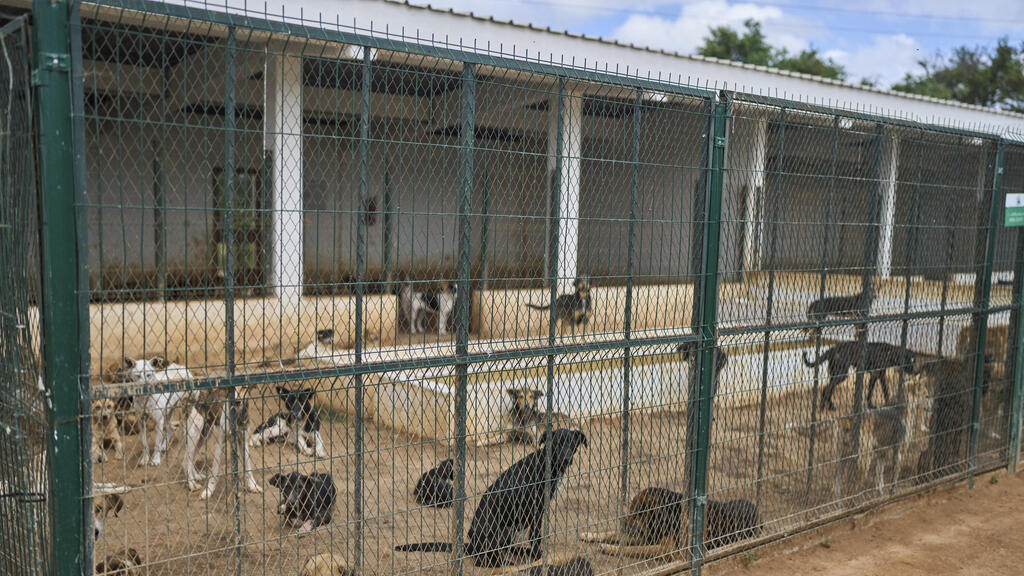
Stray dogs at a spay-and-neuter and vaccination center on the outskirts of Rabat
(Photo: AP Photo/Mosa'ab Elshamy)
Animal welfare groups have called on FIFA and major sponsors to intervene and threaten sanctions if the mass killings continue. FIFA has said Morocco committed to ensuring animal welfare as part of its World Cup bid, but since the scale of the killings became clear in recent months, the organization has issued no public condemnation. Critics say commercial interests may explain the silence, with sponsors reluctant to engage. Even if they did, many doubt it would change the animals’ fate.
Ultimate authority in Morocco rests with the king. While the country has a parliamentary government and a prime minister appointed by the king from the winning party, the monarch is the final arbiter on matters of real importance. When the king chose to intervene in the past, he involved cabinet ministers, promised reforms and insisted that tournament preparations not come at the expense of investment in infrastructure and young people — moves that helped bring protests to an end in October. A royal decree issued in 2019 bans the killing of stray dogs, but it is largely unenforced. If the king were to intervene again, animal rights advocates say, more dogs could still be saved.
Puddles of blood on the way to school
The brutal killings carried out in the name of soccer are taking place in public, in full view of passersby — including children. Morocco’s education and welfare services, along with international animal rights groups, have reported several cases of children abusing animals, including three incidents in which children tore dogs’ legs from their bodies. “Every day on my way to school there were puddles of blood along the road,” a Moroccan student told CNN in June. “Over the past year it has become a sport. People systematically hunt and shoot dogs in large numbers, like hunters shooting ducks.”
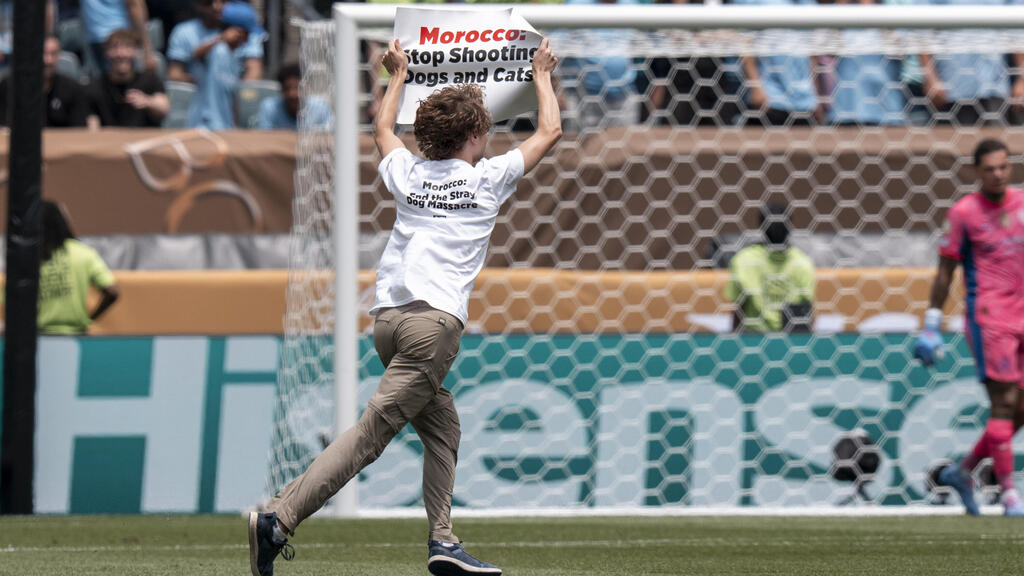
A protester against the killing of dogs runs onto the field during a match
(Photo: AP Photo/Chris Szagola)
Moroccan authorities are seeking to blunt growing international criticism, saying stray dogs pose a public health hazard because many carry rabies. Officials say about 100,000 people were bitten by dogs in Morocco last year, 40 percent of them children under 15. But those figures do little to explain the scenes being reported: people going out at night with weapons to shoot dogs, others tying dogs with metal cables and throwing them into the backs of pickup trucks or trucks already filled with dog carcasses. Some dogs are killed by poisoning with strychnine, a substance banned in many countries because of the extreme suffering it causes.
Responsibility for dealing with stray dogs does not lie with the central government but with individual cities, each using its own methods. In one city, officials have praised a company for eliminating 20,000 dogs over the past year. In another, cash rewards are offered to anyone who proves they have removed dogs from the streets. When children are involved, the reward is sometimes a free meal.