

German soccer paid tribute to Holocaust victims on Saturday with a series of memorial events across the country’s professional leagues, part of an annual initiative surrounding International Holocaust Remembrance Day on Jan. 27.
Matches across the Bundesliga and second division opened with a moment of silence and were dedicated to the global #WeRemember campaign, led by the World Jewish Congress. This year’s commemorations mark the 81st anniversary of the liberation of the Auschwitz-Birkenau extermination camp in 1945.
Gallery
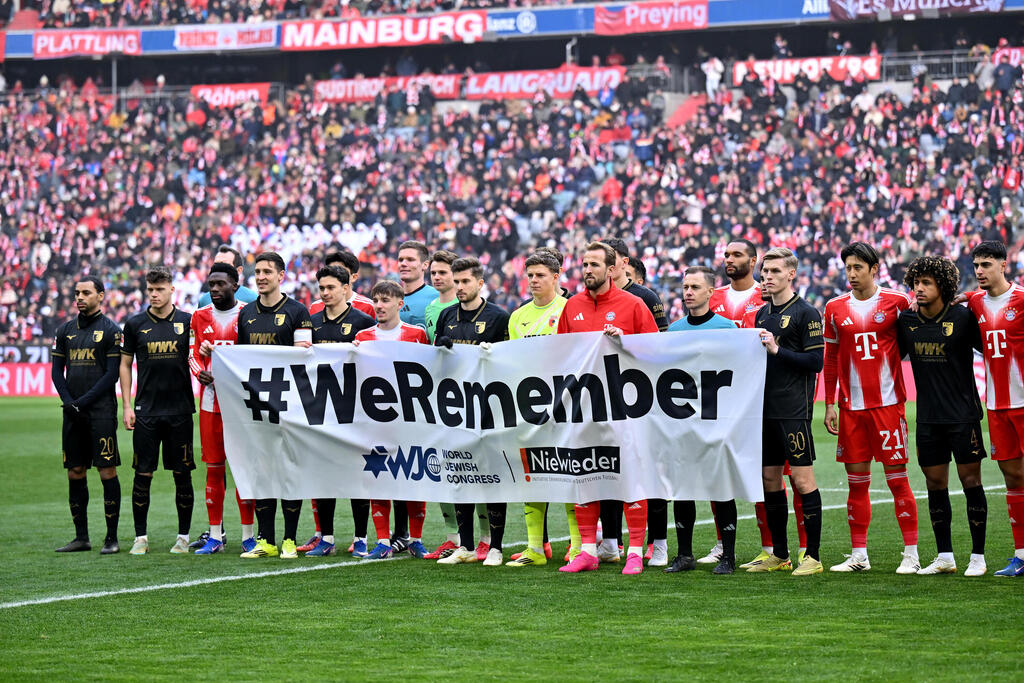
Players hold a commemorative sign in support of the #WeRemember campaign before kickoff, marking International Holocaust Remembrance Day
(Photo: Sebastian Widmann/Getty Images)
Organizers of the campaign described it as “a clear and unequivocal message of memory, responsibility and commitment — to remember the atrocities committed during the Nazi regime and to remind the world: this history must never repeat itself.”
All Bundesliga and 2. Bundesliga clubs were invited to take part in the memorial activities, which are held annually during a match week close to the Auschwitz liberation date.
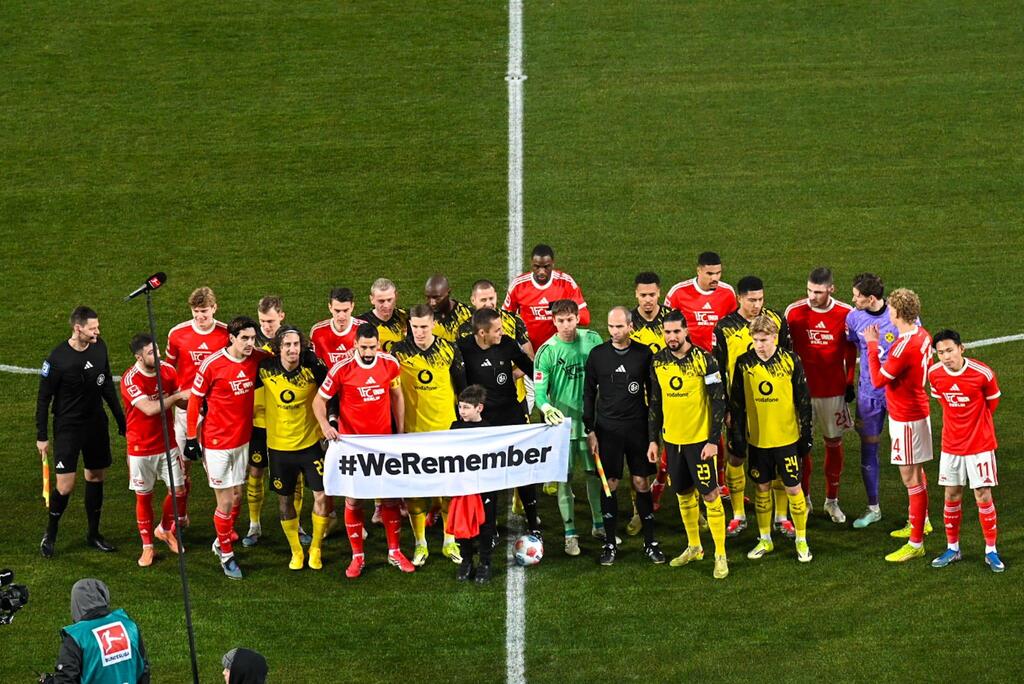
(Photo: Shahar Azran/WJC)
During Nazi rule, sport was heavily used as a political tool to promote discipline, prepare youth for military service, enforce cultural conformity and, most prominently, to spread propaganda. The clearest example was the 1936 Berlin Olympics, which served as a global stage for Nazi ideology.
Soccer, too, was not immune to antisemitism and persecution. Jewish figures such as Walther Bensemann—a founding father of German soccer, co-founder of the German Football Association (DFB) and founder of the soccer magazine Kicker—were marginalized and silenced. Jewish players, including Julius Hirsch, a 1910 German champion with Karlsruhe and a member of the national team, were expelled. Hirsch was murdered at Auschwitz in 1945.
In many cases, soccer clubs actively participated in the exclusion of Jews, even without direct coercion by the Nazi regime.
German soccer’s official Holocaust remembrance tradition began in 2005, following a 2004 initiative held at the Dachau concentration camp memorial site.