

Rotem Gafinovitz has already fulfilled her Olympic dream, but she now finds herself at one of the most difficult crossroads of her career. The 34-year-old road cyclist, who represented Israel at the 2024 Paris Olympics and was recently crowned a masters world champion, still does not know where the road will take her over the next two months. On one hand, her passion for competition burns as strongly as ever, and she dreams of reaching Los Angeles 2028. On the other, thoughts of retirement accompany her on every ride, refusing to disappear no matter how many kilometers she covers.
With the start of the Olympic qualification period, the clock is ticking. But unlike a time trial, where she knows exactly what is required of her, this time her fate does not depend solely on her performance on the road. If she cannot secure the financial backing needed to compete in races around the world, she will have to retire. Age, she stresses, is not the obstacle. The problem is the personal toll and energy required to keep competing under the current conditions.
Gallery
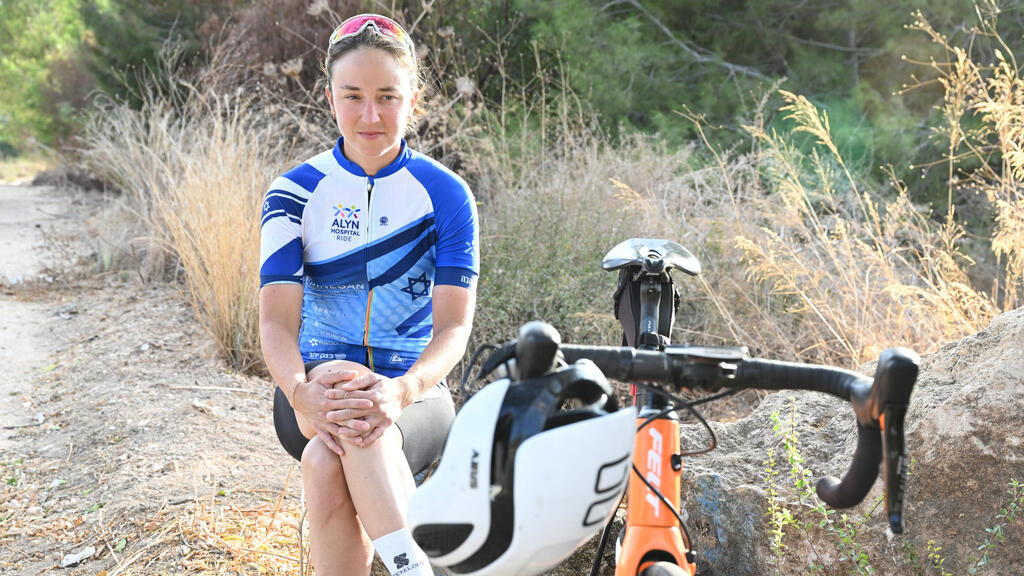
Facing one of the toughest crossroads of her career; Rotem Gafinovitz
(Photo: Jorge Novominsky)
"I realized what was required of me, and that's what brought me to this crossroads," she says. "It's not just the sacrifices, but also knowing what I need in order to succeed. Making it to the Olympics is amazing, but I don't want to go to another Games just to say, 'I did it.' I want to achieve something. I finished 77th in Paris. I did everything I could to meet the federation's qualification criteria, and now I know I can do more. I went through a major crisis after Paris."
Driven by a goal
Unlike sports in which athletes can qualify for the Olympics individually, road cycling quotas are determined primarily by countries' positions in the world rankings. The Union Cycliste Internationale (UCI), cycling's international governing body, allocates places to national Olympic committees, while national federations select their representatives. In May 2024, Gafinovitz was chosen to represent Israel in Paris based on her achievements as Israeli champion, her status as the country's leading female cyclist and her experience in professional races across Europe.
Did you have enough time to prepare in the two months between being selected and the Olympics?
"I had been working toward that goal all year, but at the same time, I was still carrying the disappointments of Rio and Tokyo. I came second twice, but I still didn't give up. Once you've got that Olympic rings bug, it doesn't let go so easily. Being an Olympian is a dream. There's something special about it."
Even more than the women's Tour de France, which you competed in?
"They're both enormous achievements. I can't even explain what it was about the Olympic Games that attracted me so much. I started competing professionally toward the end of 12th grade. I went to stay with a Dutch family for six months and competed in local junior races. I left home with my parents' support. My mother said that if this was what was right for me, she wouldn't stand in my way. When I got my first smartphone, I made the Rio 2016 Olympics logo my wallpaper."
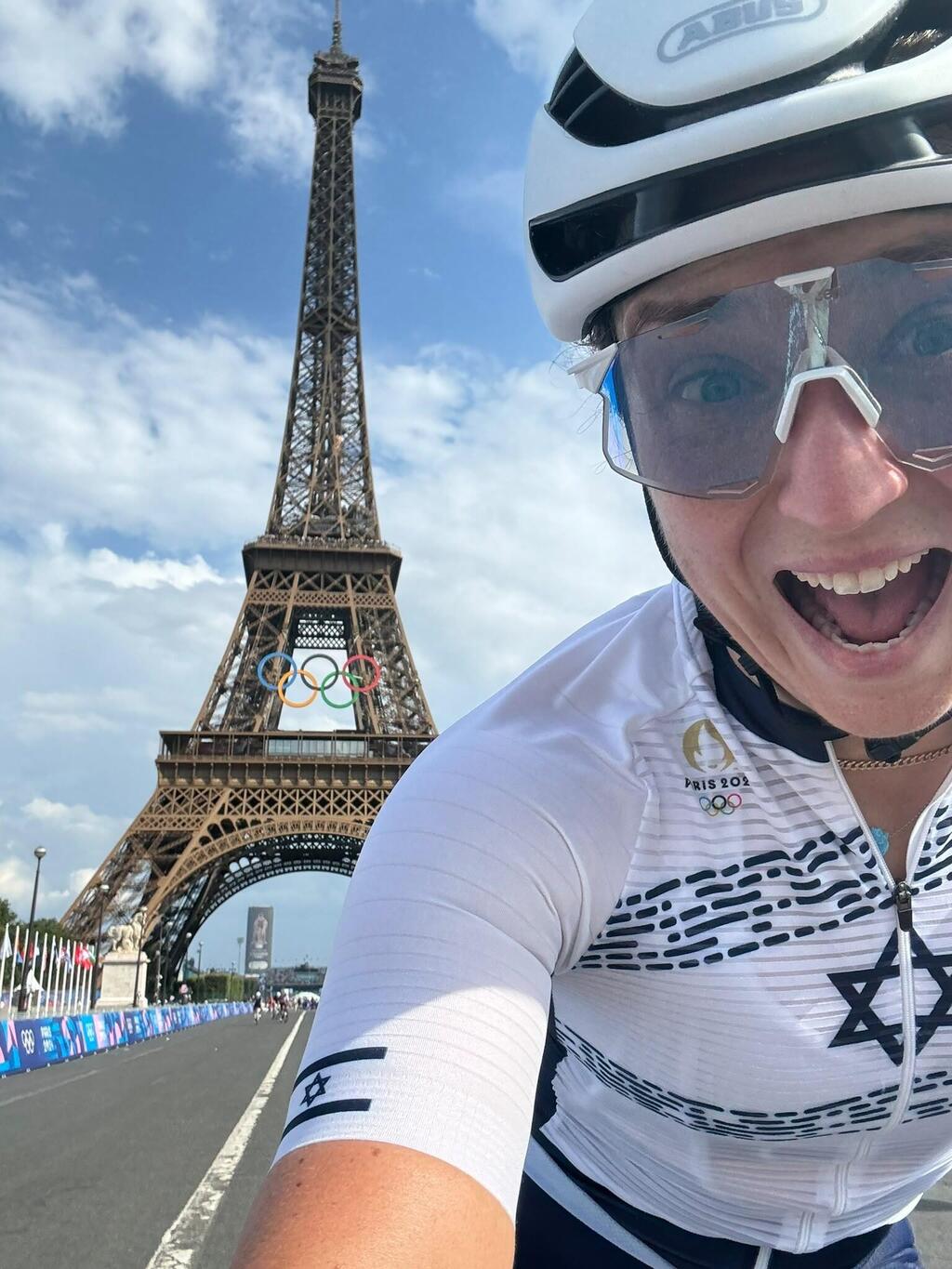
'I went through a major crisis after Paris'
(Photo: Courtesy of Rotem Gafinovitz)
And eight years later, you fulfilled that dream.
"It was an incredible experience. As Israelis, we arrived with a greater sense of mission because of the situation our country was in. My family was there, as was Lior, my partner. After the year we'd been through, seeing that happiness and being part of it was an enormous source of pride. But throughout the week of the Games, I had to hide. We couldn't spend much time outside the Olympic Village. Cyclists train outdoors, but we weren't allowed to ride with an Israeli flag, unlike athletes from other countries who went out proudly wearing their new uniforms. I was under close security protection. The security guards actually rode alongside me."
How did you feel going into race day?
"I felt good. The course included one big loop and then a return to the city for three more laps. I was caught behind a crash involving other riders that opened up a gap, and that's where I lost my chance at a better result. I wouldn't have finished in the top three, but I wouldn't have been down around 70th place either. Afterward, I told Lior I wanted to return to the Olympic Village, but this time with support."
What do you mean?
"I did most of it alone. When I was selected, I received minimal support from the Olympic committee. I traveled alone to a high-altitude training camp without my coach. He had prepared a structured training program for me, but I didn't even have a physiotherapist or anyone accompanying me. I rented a car and drove myself. I competed in races with the British team I was riding for, HESS Cycling, that I thought would be suitable preparation. There, too, I handled all the administrative details myself, from registering for races to asking for help. I spent energy on things I shouldn't have had to deal with. In the end, I made it, but it wasn't until I reached the Olympic Village that it really sank in that it had actually happened, and just how much energy I had spent along the way."
Energy that was wasted?
"I don't know if I'd describe it that way, but there were so many worries. When I got there, I was on an unbelievable high. I had fulfilled a dream I'd worked toward for nearly 20 years. I did it, and no one can take that away from me. It's just that I went through quite a lot on the way to the Olympic Village."
Such as?
"I competed on October 14, 2023. On October 7, I was in Spain, and the following week was incredibly difficult. On one hand, I was far away from all the turmoil, but on the other, I felt like I was right in the middle of it, constantly on the phone with my family. My mother, Maya, worked in health care, and I wanted to come home. Sylvan Adams was in Girona that week, and I sought his advice. He convinced me to race in memory of those who had been murdered, to show that we weren't stopping. It was very hard. I started the race wearing my Israel kit, with a huge Star of David, and I was crying. I finished 19th, which brought me closer to meeting the Olympic qualification criteria. Sylvan still supports me at certain points along the way. For example, at the World Time Trial Championships two months ago, I raced on one of his bikes."
Her body gave out
Gafinovitz estimates that she completed about 85% of the journey to Paris on her own. Even when other cyclists joined the competition for Israel's Olympic berth, she did not see them as a threat. However, she made it clear to the Israel Cycling Federation that she expected her efforts to be taken into account. "I proved I was the best, but I wanted them to show me that it worked both ways. That they wouldn't trample on me, that there wouldn't be politics in sports."
A day after the race in Paris, her body began showing signs that it could take no more. "I came down with a severe stomach virus, something I knew was also connected to my mental state. My body simply collapsed once the tension was gone. It took me a while to recover, but two weeks later I was already preparing for the European and World Championships. Before the World Championships, I got a call from my agent about the British team. I still had another year on my contract, so I couldn't understand what had happened."
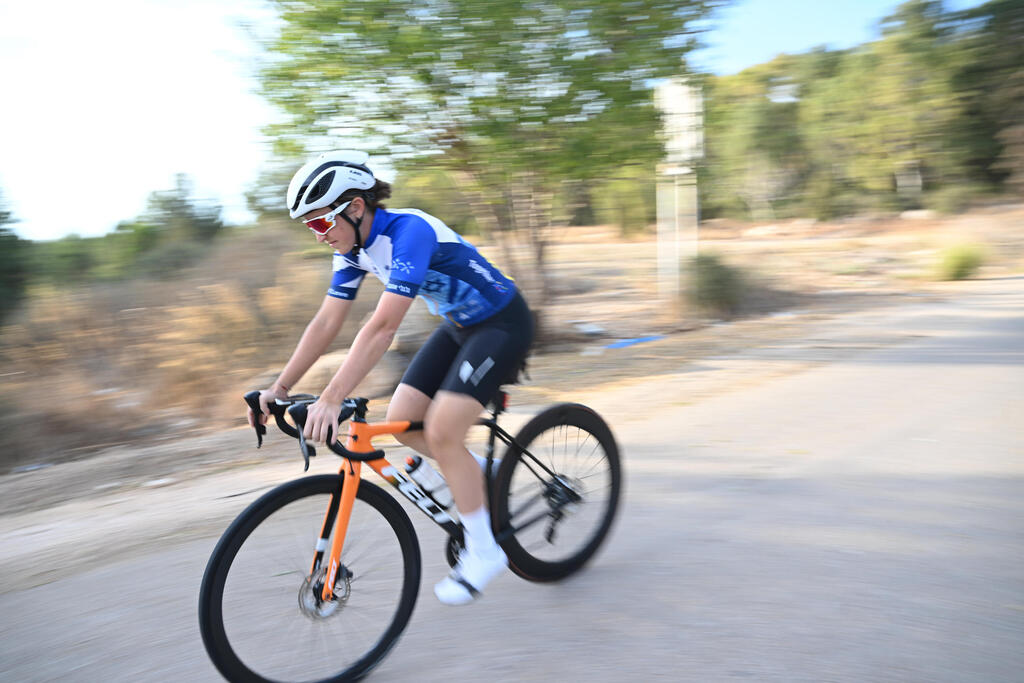
'I proved I was the best, but I wanted them to show me that it worked both ways'
(Photo: Jorge Novominsky)
That doesn't sound good.
"He immediately told me they wanted to cancel my contract. I didn't understand why and tried to find out. At first, he was afraid to tell me the truth because he himself is completely pro-Israel. After I pressed him, he admitted it was related to my Israeli passport. I immediately said I wouldn't stay with a team like that. I knew something like this could happen, but those words closed every door for me."
How did the other riders react?
"They're employees just like me. They don't really have the power to change things. They were very disappointed that this is how things work, and they weren't the only ones. Everyone who knows me in the sport reacted the same way when they heard what happened. It took me a long time to process being pushed out of the team for that reason. It hurt me professionally, too. I needed to disconnect from everything, and in the end I didn't compete at the World Championships that took place that week. Since then, I haven't been able to find a new team, and that only adds to my thoughts of retirement."
Are you already preparing for life after cycling?
"I've taken courses at the Open University and a coaching course at Wingate, and I've started working on a project in Paralympic sports. But I still haven't given up on my Olympic dream. Los Angeles is on my mind. I need at least 200,000 euros to continue, and that's not realistic. I now know exactly how much money is required. You can get to the Olympics with 30,000 euros, but what have I achieved? Did I get there just to say I got there? I've already done that. I don't want to do things halfway. If the financial support doesn't come, I'll let it go. It's very hard for me to say that out loud."
What really matters
Gafinovitz came to Israel to vote in the Knesset elections, but that was not the only reason for her visit. For the second consecutive year, she is taking part in Wheels of Love, a charity cycling event set to begin on November 8 to raise funds for ALYN Hospital, a children's rehabilitation hospital. Last year, she rode alongside children receiving treatment, saw the hospital's work firsthand and learned about the important role cycling can play in rehabilitation. The experience left a deep impression on her, and this year she is returning to take part.
"It's a very moving event," she says. "There's music, the children are given medals, and the atmosphere is wonderful. People of all skill levels ride all kinds of bicycles, including mountain bikes. The donations raised through the ride help the hospital continue its important work."