

Dictatorships have always had a soft spot for major sporting events. They attract massive audiences and offer a form of soft propaganda, a convenient way to project messages abroad while shaping perceptions at home.
Italy buys influence
Benito Mussolini's movement, which came to power in Italy in 1922, was among the first regimes to use sports as a tool of international politics and as a distraction from the dangerous changes taking place inside the country. Mussolini promoted sports as a means of improving public health, military readiness and, above all, national identity. He appeared on magazine covers in sleeveless shirts under headlines such as "The Sporting Dictator," built stadiums and linked calcio to the ideal of the "new Italian." The revamped league was meant to establish Italy as a force in world soccer.
Gallery
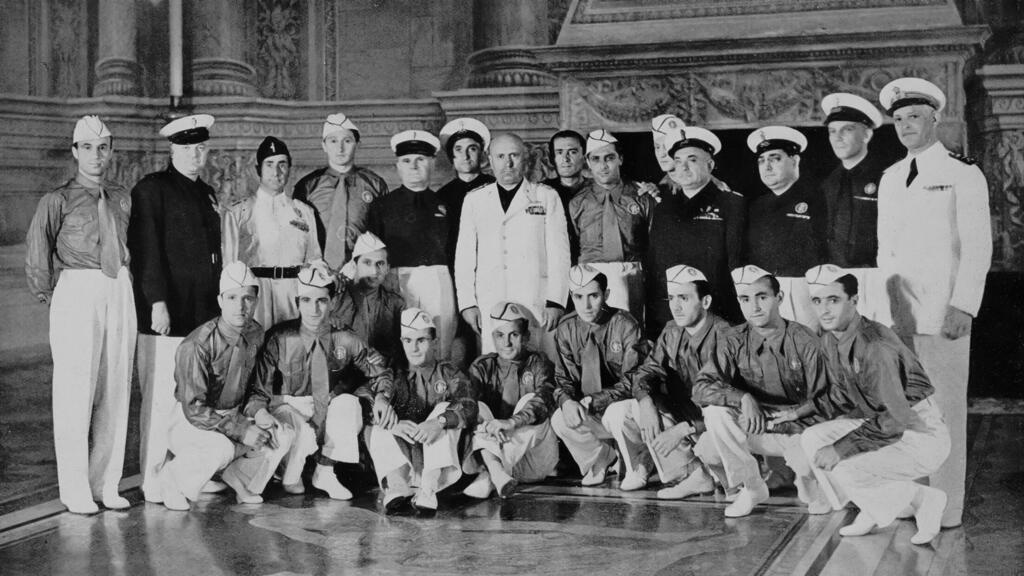
The Italy national team at the 1938 World Cup
(Photo: DE AGOSTINI PICTURE LIBRARY-DeA/Biblioteca Ambrosiana)
Sweden, which competed with Italy to host the 1934 World Cup, had far better infrastructure and economic conditions for staging the tournament. It never had a chance. Mussolini and his officials understood the reputational laundering and propaganda value that hosting such an event could provide. Faced with that opportunity, no bribe was too large and no level of threats or violence was off limits in securing the tournament. The regime wanted to present sports, and soccer in particular, as a fascist ideal.
And it worked. "This tournament was organized by Mussolini, not by FIFA," said Jules Rimet, FIFA's president at the time. According to numerous accounts, Mussolini and his officials threatened and bribed their way through the competition, culminating in a geopolitical final between fascist Italy and communist Czechoslovakia. Italy won, and Mussolini awarded the Italian captain not only the World Cup trophy but also the Coppa del Duce, a trophy so large it dwarfed the original.
Germany annexes
Four years later, France hosted the World Cup. Nazi Germany, having annexed Austria, sought to absorb Austrian players into its national team. Austrian star Matthias Sindelar, the Pelé of the interwar years, refused and was found dead in his bed several months later.
Germany, attempting to emulate Mussolini's success in marketing fascist dictatorship through sports, was eliminated by Switzerland. Italy advanced to the final against Hungary. On the night before the match, the team reportedly received a message from Mussolini: "Win or die." Italy won 4-2, prompting Hungarian goalkeeper Antal Szabó to deliver one of the most famous lines in World Cup lore: "I may have conceded four goals, but I saved their lives."
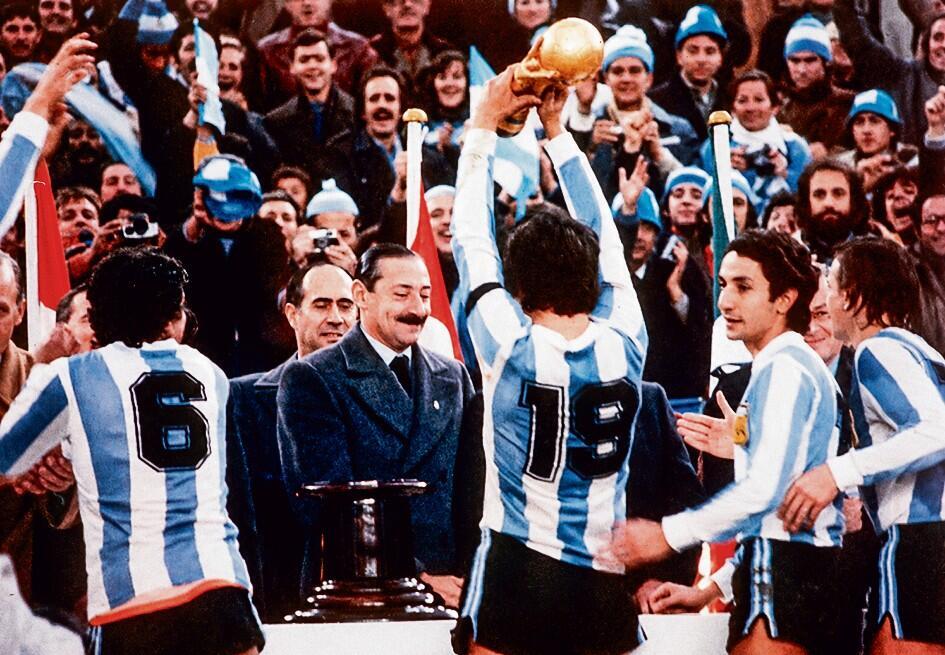
Argentina's national soccer team in 1974
(Photo: HEINZ DUCKLAU/AP)
Brazil controls the narrative
Brazil won back-to-back World Cups in 1958 and 1962, two years before the military coup. These were the years when Pelé, and with him the Seleção, flourished. Gen. Emílio Garrastazu Médici, who came to power in 1969, was a soccer fanatic who understood the political power of the sport. Within weeks of taking office, he produced a massive television spectacle celebrating Pelé's 1,000th career goal.
Médici persuaded Pelé to return from retirement and help Brazil win the 1970 World Cup in Mexico, removed a coach viewed as hostile to the regime and adopted the championship anthem, "Forward Brazil," as a political slogan. The government's motto, "Nobody Can Stop Brazil Now," appeared on hundreds of thousands of posters and postcards featuring Pelé.
Pelé declined to return to the national team in 1974. In a 1999 interview, he explained why: "By then I had already heard about the political prisoners, the torture and the murders, and I couldn't continue cooperating with that."
Argentina spins its image
In July 1966, Argentina experienced a military coup, its third in 11 years. A week later, FIFA announced that the country would host the 1978 World Cup.
Two years before the tournament, after a brief democratic interlude, another military coup plunged Argentina into the "Dirty War," during which thousands were killed, thousands more disappeared and tens or hundreds of thousands were imprisoned and tortured as part of the regime's campaign against political opponents.
Junta leader Jorge Rafael Videla understood that FIFA had handed him a gift: an international tournament that could serve as both a smokescreen and a public relations machine. As media criticism mounted and calls for a boycott grew louder, the junta produced promotional films and invited celebrities on carefully choreographed tours.
Expecting FIFA to intervene and stop a regime from exploiting the tournament while murdering citizens, systematically violating human rights and mocking everything the World Cup was supposed to represent was unrealistic in that era. FIFA President João Havelange of Brazil maintained close ties with senior figures in the Argentine junta.
Videla used the tournament to deliver cynical speeches about freedom and friendship while, beyond the stadiums, his soldiers were throwing citizens from helicopters into the sea. The competition was dogged by allegations of bribery and political interference involving FIFA officials and referees. Argentina won the tournament after defeating the Netherlands in extra time, while also escaping international isolation and boycotts. Videla received a political lifeline. Only seven years later was he sentenced to life in prison for his crimes.
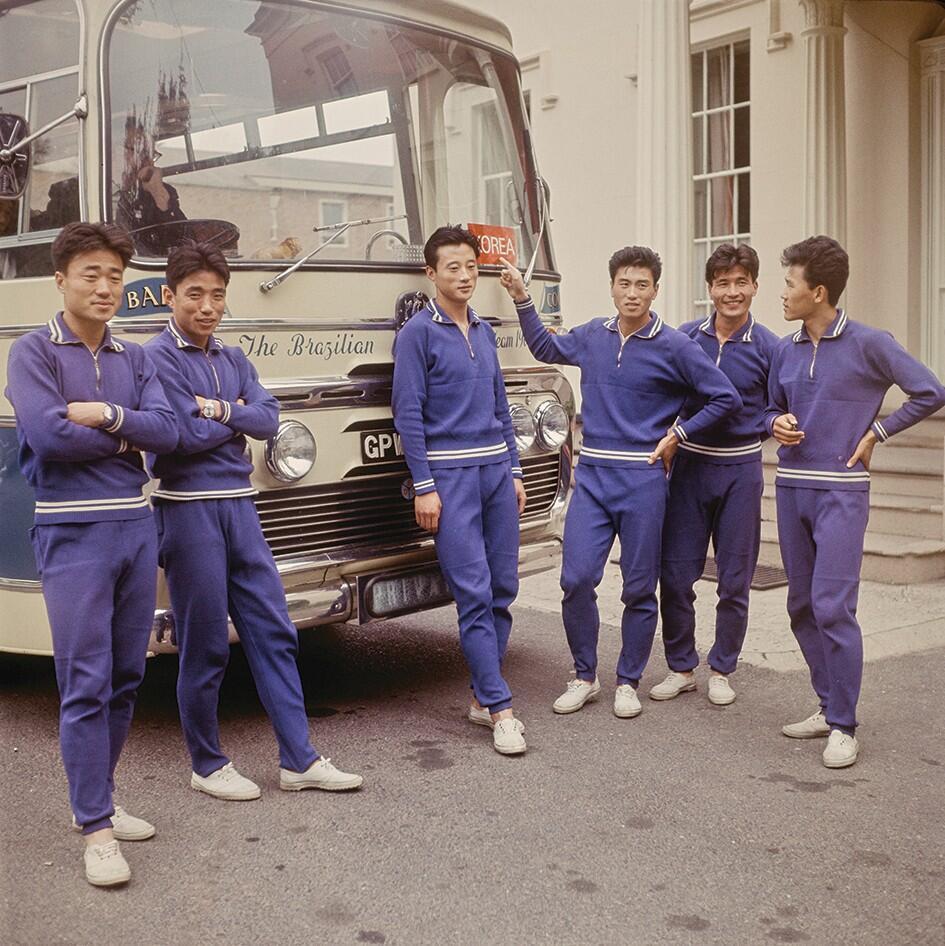
North Korea's national soccer team at the 1966 World Cup
(Photo: Central Press/Getty Images)
North Korea surprises the world
Kim Il Sung, North Korea's leader, was a busy man. When the national soccer team visited his residence before a two-match playoff against Australia to determine qualification for the 1966 World Cup in England, he reportedly reduced his motivational speech to four words.
The subtext — if you don't win, you'll find out what a gulag looks like from the inside — may have helped. North Korea won 9-2 on aggregate and qualified.
The achievement created a headache for organizers. Britain, which had fought in Korea alongside the United States, did not recognize the Democratic People's Republic of Korea. That raised an awkward question: How do you host a team from a country whose existence you do not officially acknowledge?
FIFA threatened to move the tournament if England barred any qualified team. The British opted for a compromise. They referred to the team simply as "North Korea" and decided that official ceremonies, including national anthems, would be held only at the opening match and final, assuming North Korea would not reach either stage.
The North Koreans had other plans. They stunned Italy in the group stage in Sunderland, becoming the first Asian team to advance beyond the first round. In the quarterfinals against Portugal, they led 3-0 after just 25 minutes. Only a masterful performance by Eusébio, who scored four goals, produced a comeback and a 5-3 Portuguese victory in a match officiated by Israeli referee Menachem Ashkenazi.
Forty thousand fans packed Goodison Park that day, and millions watched on television. Eleven days of soccer between Sunderland and Liverpool gave the North Korean regime more international propaganda value than any official policy statement ever could. "Run fast and pass accurately" became one of the enduring slogans of World Cup folklore.
Selling communism
Many Eastern European teams qualified for the World Cup, and some advanced deep into the tournament. Poland's golden generation finished third twice. The communist regimes used both the World Cup and the Olympics as international propaganda tools, promoting communism abroad while maintaining social calm at home.
The most memorable performance by a team from behind the Iron Curtain came in 1974, when East Germany defeated West Germany in the group stage on West German soil — one of the greatest upsets in World Cup history.
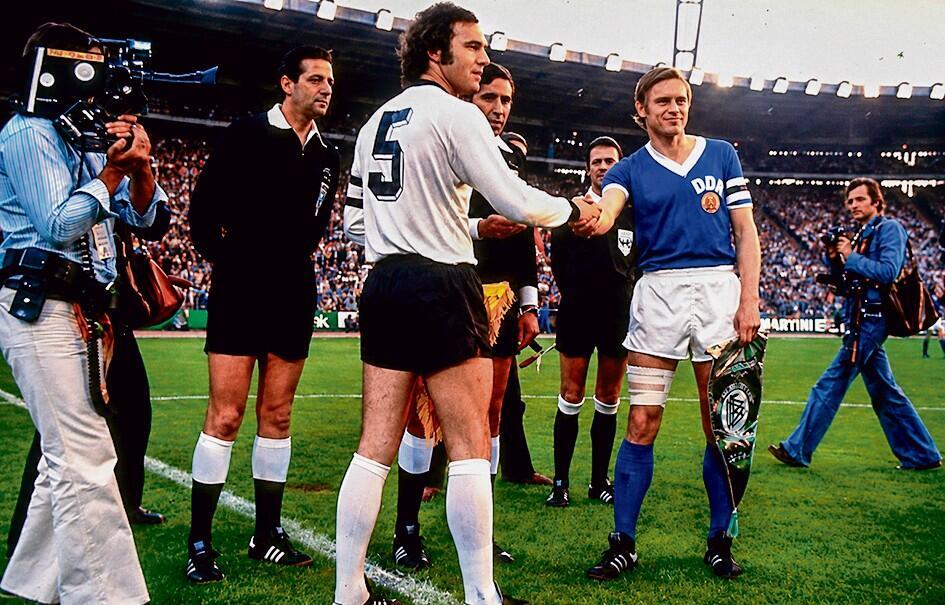
East Germany vs. West Germany, 1974
(Photo: Allsport/Getty Images)
Saddam's Iraq
Iraq returns to the World Cup after a 40-year absence. Remarkably, the golden era of Iraqi soccer, including the country's last appearance at the tournament, in Mexico in 1986, came under the rule of Saddam Hussein, who appointed his son Uday to oversee both the national team and the country's Olympic committee. Even more remarkably, those successes came during the height of the long war with Iran.
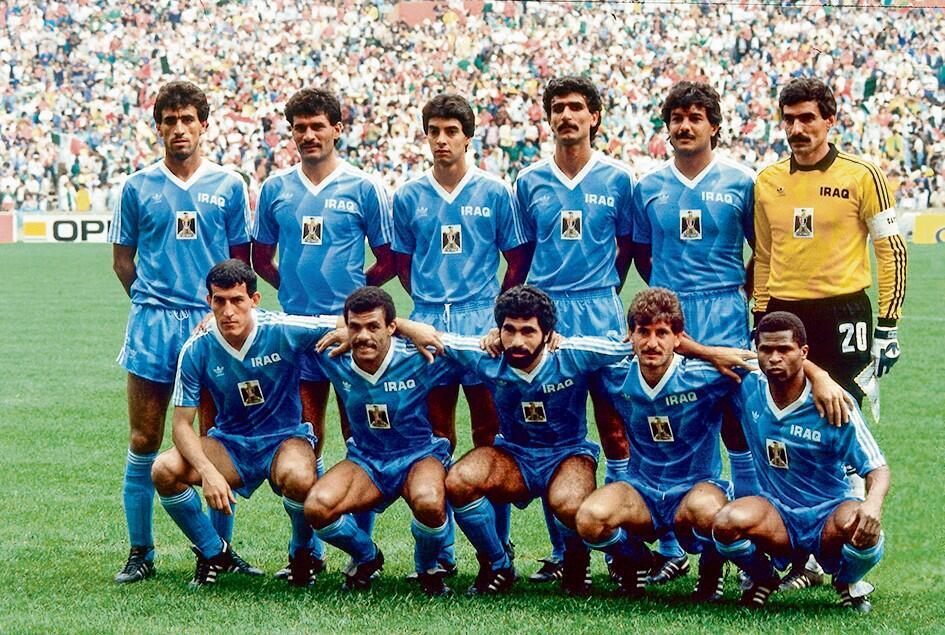
Iraq's national soccer team at the 1986 World Cup
(Photo: Schlageullstein bild via Getty Images)
Saddam and his son fully understood the power held by whoever controlled the country's most popular sport. Soccer was a drug, its most devoted fans were addicts and the Iraqi regime was their ruthless dealer.
Victories on the field helped people cope with casualties and setbacks at the front, economic hardship and the chaos of daily life. The national team's success provided an overdose of patriotism. Results were immediately linked to the regime: victories proved its strength and legitimacy, while defeats often led to severe punishment for coaches and players, including torture at the hands of Uday Hussein.
Players understood the reality. They were not simply representing their country, its citizens, flag and anthem. They were also an extension of the regime itself, expected to bring it honor. None of them had a choice. Refusal was not an option.
Iran and the Great Satan
Which brings us, naturally, to Iran in 2026. This is Iran's seventh World Cup appearance and its fourth consecutive qualification. The country's first appearance came in 1978, a year before the Islamic Revolution. Its most memorable match remains the 2-1 victory over the United States at the 1998 World Cup in France.
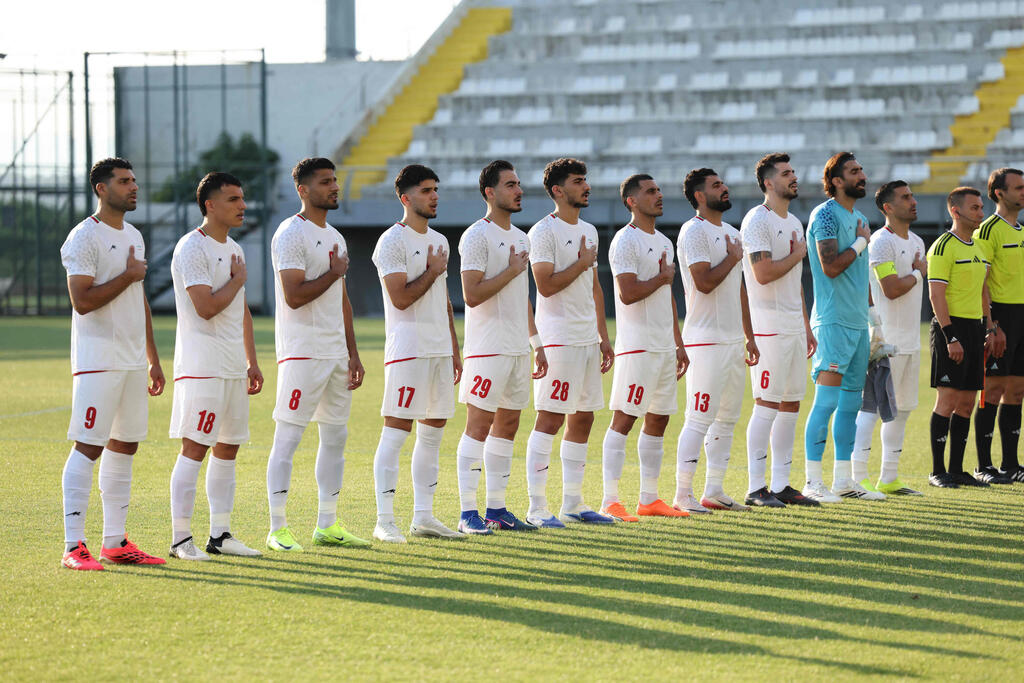
Iran's national soccer team
(Photo: Oner SAN / AFP)
This time, however, the circumstances are entirely different.
Iran and the United States remain bitter rivals, symbolizing the broader ideological conflict between Iran's Islamic dictatorship and American democracy. But while the 1998 meeting was largely symbolic, Iran's 2026 appearance comes after weeks of U.S. airstrikes on targets inside Iran, with the prospects for renewed conflict still uncertain.
The Iranian regime demands patriotism from its players and expects total loyalty to the flag, but it does not generally threaten punishment for poor performances. Its primary concern is ensuring that players do not embarrass the Islamic Republic or its symbols — and that none attempts to defect during the tournament, as some Iranian female athletes have done abroad.
As if that were not enough, two of Iran's group-stage matches will be played near Los Angeles, home to one of the world's largest Iranian exile communities. Many members of that community are planning large anti-regime demonstrations during the tournament.
And there is more. On June 27, Iran — a country whose laws strongly oppose the public expression of homosexual identity — is scheduled to face Egypt in Seattle in a match being marketed as a "Pride Game."