

Drivers who feel that basic functions have become harder to operate in their new cars are not imagining it. The growing dominance of large touchscreens across vehicle dashboards, often at the expense of traditional physical buttons, is harming not only convenience but also road safety.
Some automakers have acknowledged the problem and begun restoring physical controls, while safety organizations have issued warnings and tightened their testing standards. Yet a new Swedish study suggests that touchscreen safety is continuing to deteriorate.
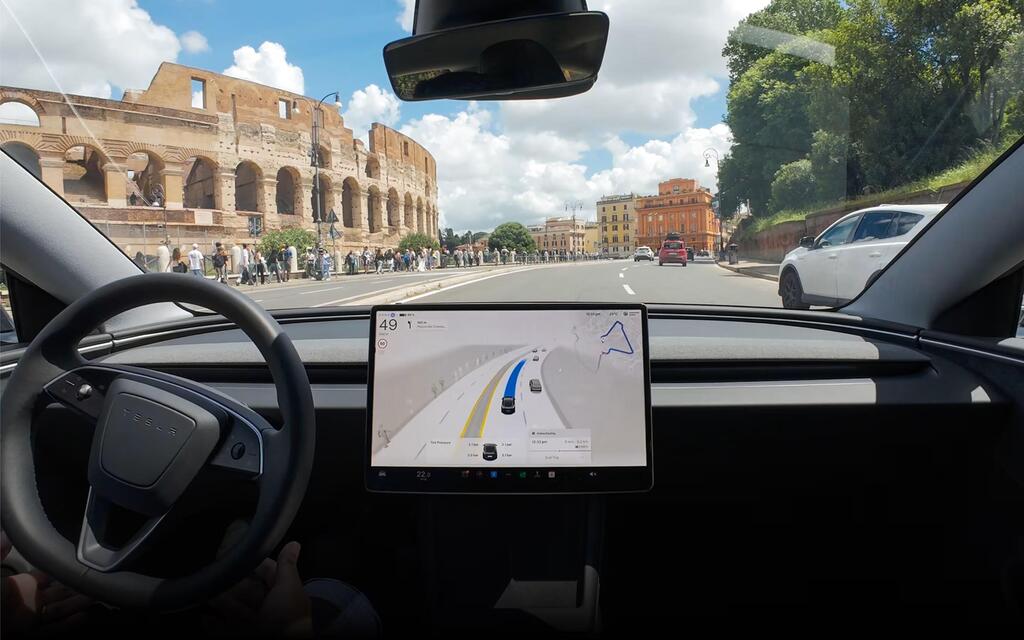
A driver-distraction test conducted across a range of new vehicles found that operating their systems required drivers to look away from the road for longer than in an identical test conducted four years ago.
According to the Swedish consumer publication that conducted the test, drivers traveled an average of 813 meters (about half a mile) on an open road before completing a series of basic operating tasks. In the previous test, conducted four years earlier, the average distance was 756 meters (about 0.47 miles).
The contrast with an older vehicle was even more striking. In a Volvo V70 manufactured about 20 years ago, which had no touchscreen and relied entirely on physical controls, the same tasks were completed over a distance of just 300 meters (about 0.19 miles).
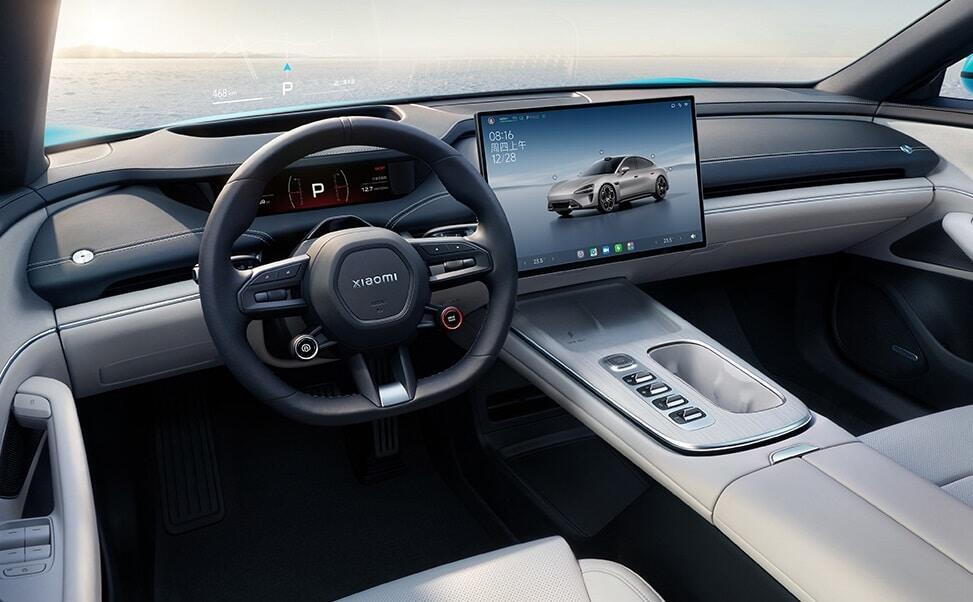
The test required drivers to adjust the climate control, change the radio station and alter the brightness of the instrument display. Drivers were given sufficient time to familiarize themselves with each vehicle’s system before the test, meaning they were not operating unfamiliar controls without preparation.
The vehicles were driven at 110 kilometers per hour, or about 68 mph. Testers measured both the time required to complete the tasks and the distance traveled while the driver was not looking at the road.
(Photo: Nir Ben Zaken)
According to the testers, the results mean that the average modern vehicle now requires two additional seconds of driver distraction compared with four years ago. At 110 kilometers per hour, that amounts to approximately 60 meters (about 197 ft) traveled without the driver seeing the traffic ahead, potential hazards or even the direction in which the vehicle is moving.
The Mazda CX-60 produced the worst result, requiring 1,137 meters (about 0.71 miles) to complete the tasks. The Mercedes CLA and Toyota Corolla Cross performed only slightly better, at 1,116 meters (about 0.69 miles) and 1,026 meters (0.64 miles), respectively.
Tesla has faced considerable criticism for helping popularize the touchscreen-dominated dashboard when it introduced the trend in 2012. However, the current Model Y required 608 meters (about 0.38 miles) to complete the tasks, roughly half the distance the Mazda covered.
Volvo provided some reassurance for buyers of newer vehicles. The Volvo XC60 delivered the best result among the modern cars tested, requiring 485 meters (about 0.30 miles), the closest performance to that of the older vehicle equipped with traditional buttons.
Volvo also led the previous test in 2022, when the C40 required slightly more than 400 meters (about 0.25 miles).
Rankings from worst to best
Mazda CX-60: 1,137 meters (about 0.71 miles)
Mercedes CLA: 1,116 meters (about 0.69 miles)
Toyota Corolla Cross: 1,026 meters (about 0.64 miles)
2016 Volvo V60: 863 meters (about 0.54 miles)
BYD Seal U: 819 meters (about 0.51 miles)
Nissan Qashqai: 813 meters (about 0.51 miles)
Kia EV3: 812 meters (about 0.50 miles)
Citroën C3 Aircross: 774 meters (about 0.48 miles)
Tesla Model Y: 608 meters (about 0.38 miles)
Škoda Kodiaq: 542 meters (about 0.34 miles)
Volvo XC60: 485 meters (about 0.30 miles)
Volvo V70: 300 meters (about 0.19 miles)