

The Finish Line at the 1999 Rally Finland. Juha Kankkunen, the race winner and one of the most successful rally drivers of all time (four WRC world championships, a Dakar win), is giving a television interview. The reporter wants to know what tires the Finnish phenomenon chose, and the answer, delivered in classic dry Finnish humor, is: “Black and round.”
Kankkunen, of course, was joking—because choosing the right tires is absolutely critical to the chances of success in any type of race, especially rally. Still, “black and round” is about all most drivers can say about the tires meant to get them home safely—or help them enjoy the ride. Ideally, both.
The sporty one gets an update
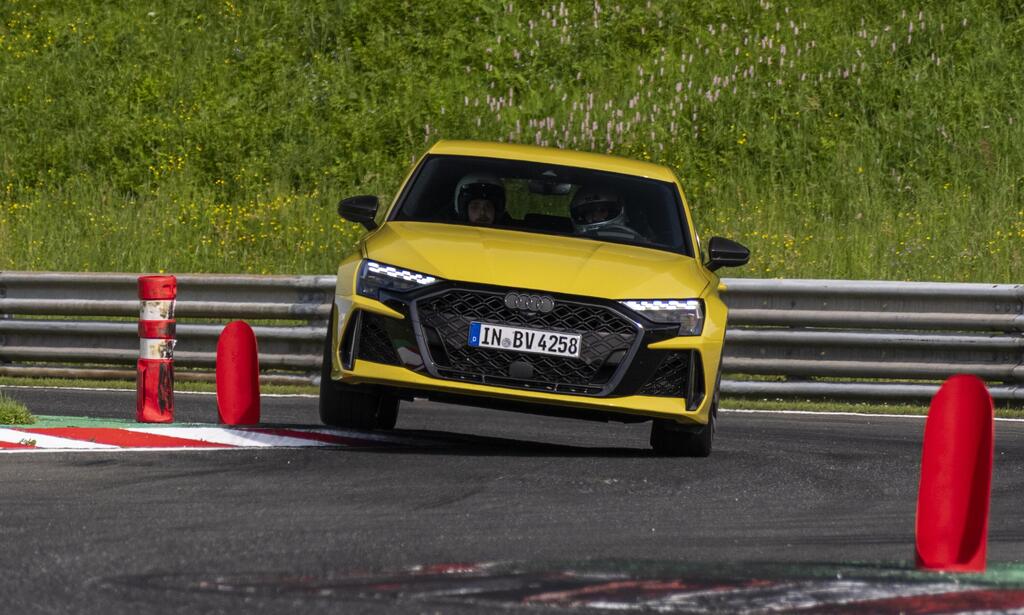
Before we get to the black and round, a quick explainer. Audi recently invited us for a first-drive impression of the updated RS3, one of the standouts in the hot compact sedan category—two tiers above the Volkswagen Golf GTI, widely considered the founder of performance family cars. The modestly sized Audi packs all the know-how and experience of Audi’s performance division into a family-friendly package. And in its current third generation, it’s become something truly unique in the automotive world.
Audi did invite us to drive it again—but didn’t change much. The same distinctive five-cylinder engine with 400 hp, the same ultra-advanced permanent all-wheel-drive system, and the same performance: 0–100 km/h in 3.8 seconds, and a top speed electronically limited to 250 km/h—or 290 km/h, if you're a hooligan.
(Photo: Tobias Sagmeister)
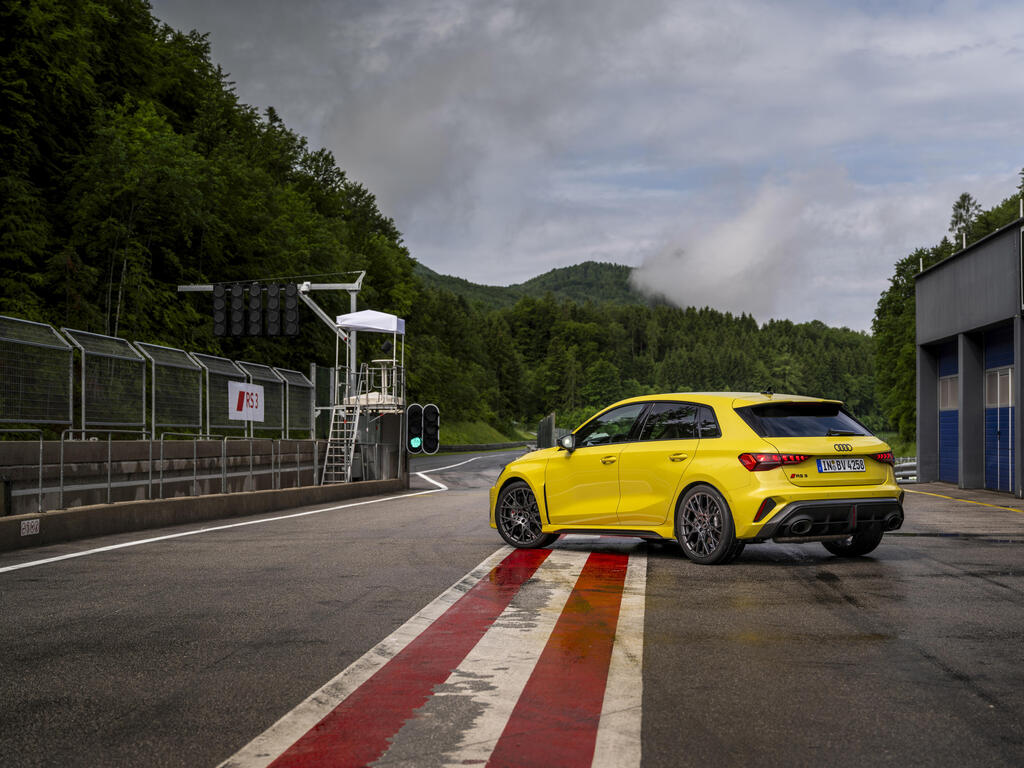
So what’s new? Upgraded bucket seats with improved support, a new and faster computer managing the cluster of mechanical systems. And if, by chance, your name is Frank Stippler—Audi’s race car driver and the man behind many Nürburgring lap records—you can shave 7.6 seconds off the previous model’s lap time, hitting 7 minutes and 33.1 seconds. If your name is Nahorai Bashan, you cannot.
Because it’s doubtful you’ll even notice the upgrade. On the other hand, if you’re invited by Audi to drive the updated RS3 with the two tire options it offers European customers, you definitely will. Yes, even you, Mr. Bashan.
Choosing the right shoes
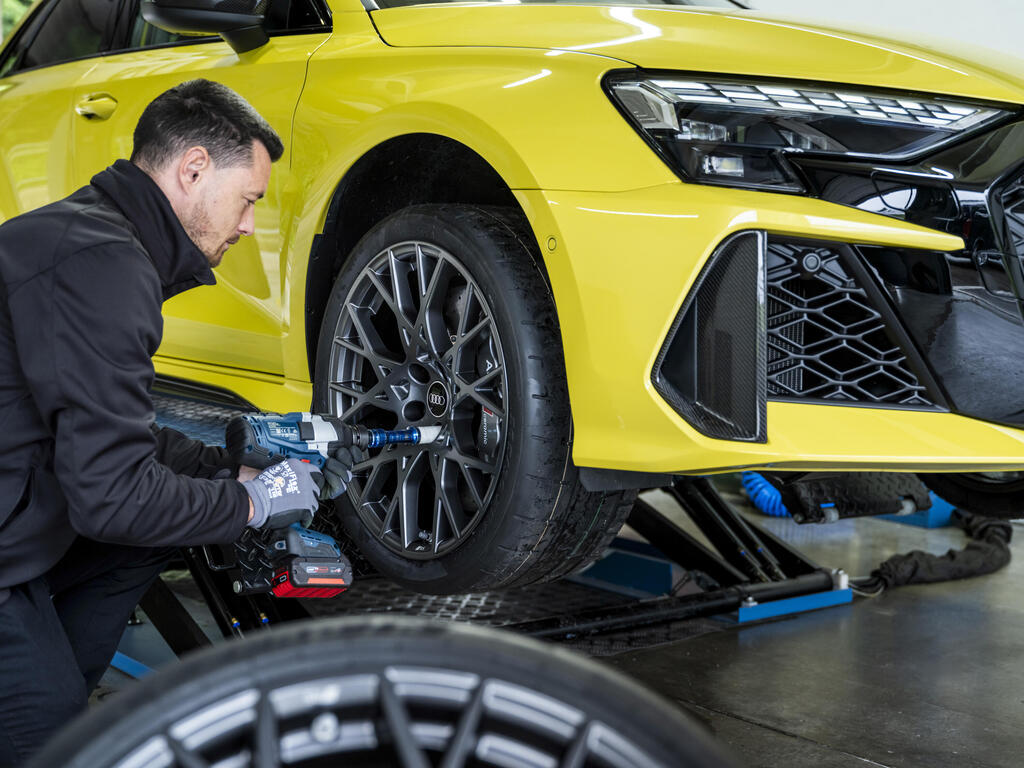
There’s a strong resemblance between shoes and tires—both are gear designed to connect you to the ground. But it’s safe to assume most readers spend far more time and energy choosing their next pair of shoes than selecting the tires they’ll be rolling on for tens of thousands of kilometers, often with their beloved family inside. Because Mr. Israeli, much like his counterpart in Europe or in the significantly cheaper U.S., mainly wants to know what’s the cheapest tire the nearest tire shop can offer.
(Photo: Tobias Sagmeister)
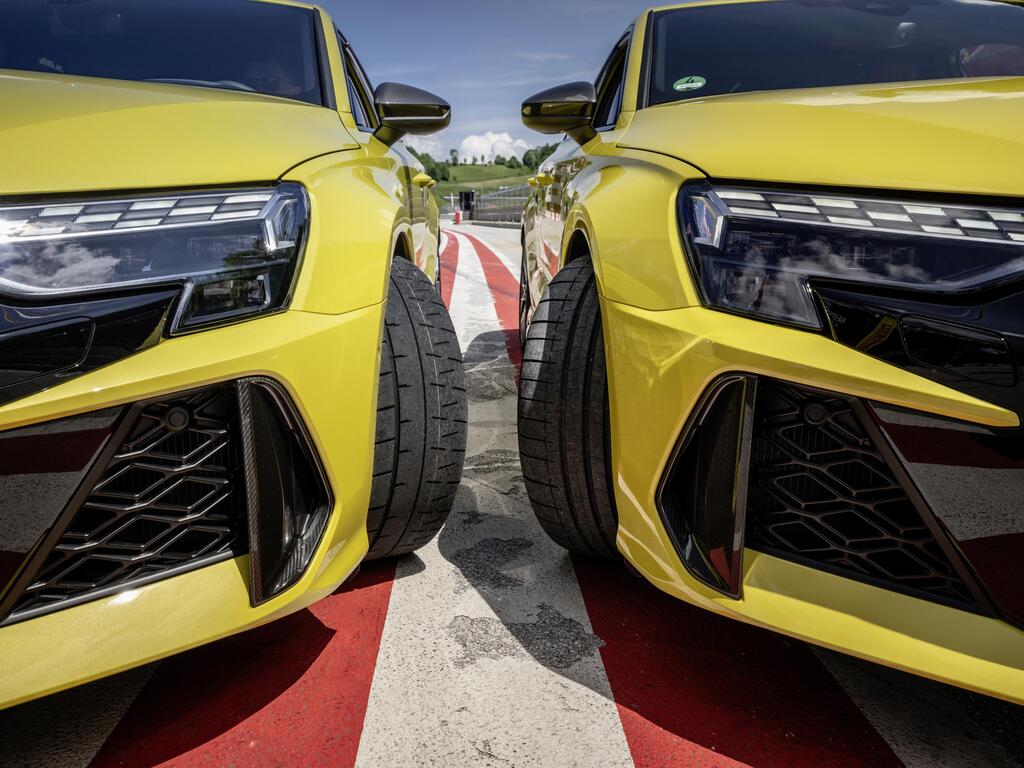
Back to the Audi RS3 on the track. The two tires available for comparison are not your everyday rubber—and they’re among the most expensive you can get. The Pirelli P-Zero R comes standard on the hot hatch, replacing the older P-Zero (no R). It’s a super sporty, ultra-sticky tire.
The Trofeo R, on the other hand, brushes up against full-blown racing tires—but with a license plate. It has more surface contact with the asphalt thanks to smaller tread grooves. Those same grooves, meant to displace water, aren’t much needed here. What is? It heats up faster, grips harder, brakes better, slides less—and wears out much quicker.
On the track
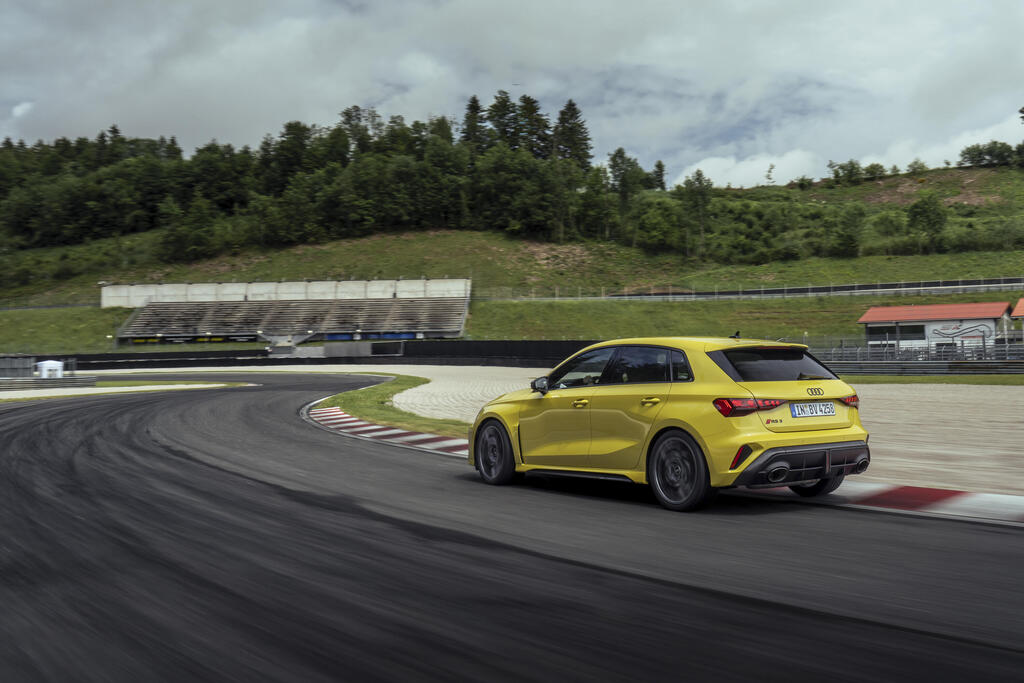
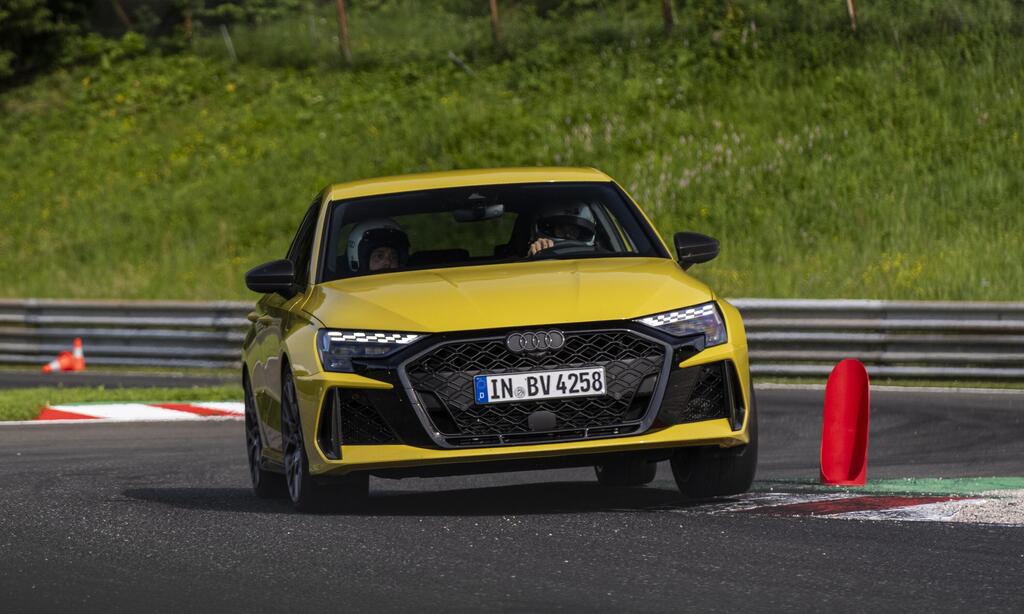
Now for the practical part. To experience the difference between the tires, I was invited to lap the Salzburgring racetrack in Austria. The first session—four laps—was done on the standard P-Zero R tires. And with these “shoes,” the RS3 performs superbly: razor-sharp handling, excellent precision, and a high sense of confidence even at the limit, with remarkable forgiveness for minor driver errors. This is the kind of fantastic capability we’ve come to know in the current RS3 generation, and it hasn’t gone anywhere in the latest update.
(Photo: Tobias Sagmeister)
Then I switch to the Trofeo R—and you really have to experience it to understand just how drastically a tire can change everything you thought you knew. Every component suddenly feels better: grip, steering response, braking power, and acceleration. The performance envelope expands—you can brake later, harder, and get back on the throttle earlier. It feels like a much sportier car altogether.
Curious to see how far each tire type can be pushed, I ask Audi Sport test driver Mike Duesener to take me on a hot lap and give it his all. Even from the passenger seat, the advantage of the semi-slicks is clear. Lateral G-forces are more intense, corner entry speeds are higher. Duesener estimates that the Trofeo R could shave five to seven seconds per lap on this track—that’s roughly the performance gap between an S3 and an RS3.
(Photo: Tobias Sagmeister)
(Photo: Tobias Sagmeister)
Finish line
You can’t overstate the importance of tires—yet far too many people do, far too often. That’s not to say we’re against reasonably priced tires. We also believe tire prices in Israel—quality or otherwise—are scandalous. But their impact is so critical that price needs to be viewed from a different perspective. Remember that the next time you’re replacing tires on your car.
- The writer was a guest of Audi.