

After 13 years as a quiet partner in Maccabi Tel Aviv, Richard Deitz, 61, is no longer content to simply voice his opinions around the owners' table. Amid a power struggle at the club and an arbitration process that will determine his rights in the ownership dispute, Deitz explains in an exclusive interview with ynet and its parent newspaper Yedioth Ahronoth when he lost faith in his partners, why he opposes Jason Levin's entry into the club and what he would change at Maccabi if he prevails.
"When you start misleading your partners, you cross a line," he says. The remark perhaps best explains how a man who says he tried to bridge the divisions within the ownership group became an adversary of people he had worked alongside for years. Deitz alleges that information was withheld, questions the process through which Levin was brought into the club and argues that Maccabi has wasted valuable time while European basketball has moved forward.
One-on-one with Richard Deitz
(Video: Oz Moalem)


"I spoke with Shimon this week in Belgrade," says Deitz, who last weekend released internal correspondence with sporting director Claudio Coldebella to the media and now explains his reasons for doing so. "My message to him was simple: We're facing a crisis at the club, from the ownership to what's happening on the court. We need to take responsibility and fix the situation. We need a strong ownership structure that can take the club forward and bring us another EuroLeague title. I have no ego. But we have to carefully examine what it takes to succeed in today's world of modern basketball and business, and bring in the right partners.
"We lost to Paris on Thursday. This is a club that's only eight years old. Historically, there's no comparison with Maccabi. But in a very short time, they've managed to build something impressive, and they haven't done it with enormous budgets. They have a system, an approach and an organizational culture. It's no coincidence that two of their coaches have already made it to the NBA. It's a perfectly legitimate question for our fans to ask: What has Maccabi done over the past eight years while Paris built a team from scratch that can compete at a high level in the EuroLeague?
"So far, Shimon Mizrahi hasn't responded. As for what's happened over the past 24 hours, if the majority shareholder wants to sign a player, does anyone really believe I'm in a position to stop it? Why is the other side putting energy into leaking fake news instead of working with me constructively to build a better future for Maccabi?"
From Madison Square Garden to Menora Mivtachim Arena
For the many Maccabi fans who know little about him, some background is in order. Deitz, whose fortune is estimated at approximately $2 billion, grew up in Washington in a Jewish, Zionist family and began working on Wall Street at 22. In 1994, he moved to Moscow, where he later established an investment bank with several partners that grew from five employees to 300 within two years. Following Russia's 1998 financial crisis, he left to establish VR Capital, the investment management firm he still runs today.
So how did he end up at Maccabi Tel Aviv? In 2012, Deitz and his wife, Marina, with whom he has three sons, were considering moving to Israel. They spent four months in the country, during which friends recommended that they attend a Maccabi game.
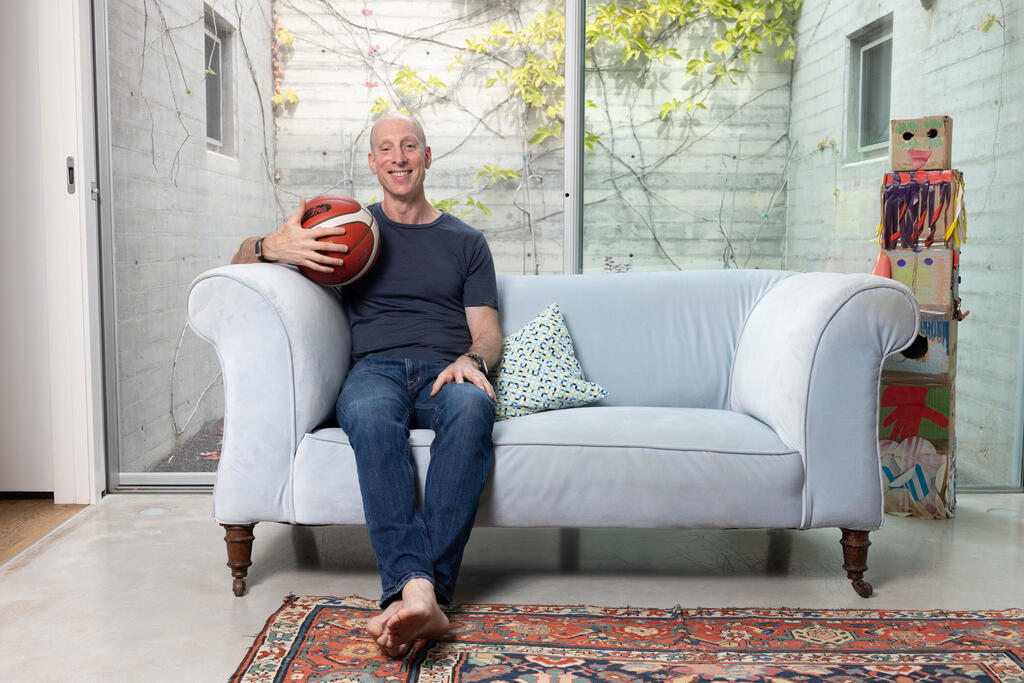
"When I lived in Moscow, I went to EuroLeague games involving CSKA and Khimki, and of course Maccabi played against them, but I didn't know the club particularly well," Deitz recalls. "It was against Fenerbahce. A classic Maccabi game: They were eight points down in the fourth quarter and then staged an incredible comeback.
"Before leaving the United States, I used to go to Knicks games during their glory years. The atmosphere at Madison Square Garden during the playoffs was electric, but here, at a regular-season EuroLeague game, it was something else entirely. If the atmosphere at the Garden was a 10 out of 10, at Maccabi it was a 15."
What happened after that game?
"We walked out, and I was so excited that I told my wife, 'If we move to Israel, I want to buy this team.' She laughed at me. A week later, completely by chance, she met Adi Federmann (son of Maccabi co-owner David Federmann). She didn't know who he was or that his family was involved with Maccabi. She just saw a photograph of the fans on the wall.
"My wife pointed to it and asked, 'Is that Maccabi Tel Aviv?' They started talking, and when he told her his family owned the team, she said, 'That's interesting, my husband wants to buy the team.' They laughed, we started talking and that was the first step."
You want to change the club, but you've been one of its owners for 13 years. What responsibility do you bear for the current situation?
"I don't want to make this dispute personal. I want to talk about the problems and how to solve them. My first season was that magical season in Milan, when everything seemed pretty easy. Then came some very difficult years. We went from being a EuroLeague team to a EuroCup team playing in Nizhny Novgorod. That's a long way down.
"For the first two years, I mostly observed and tried to learn, offering my opinion occasionally. What I saw was that the club wasn't really being run as a business."
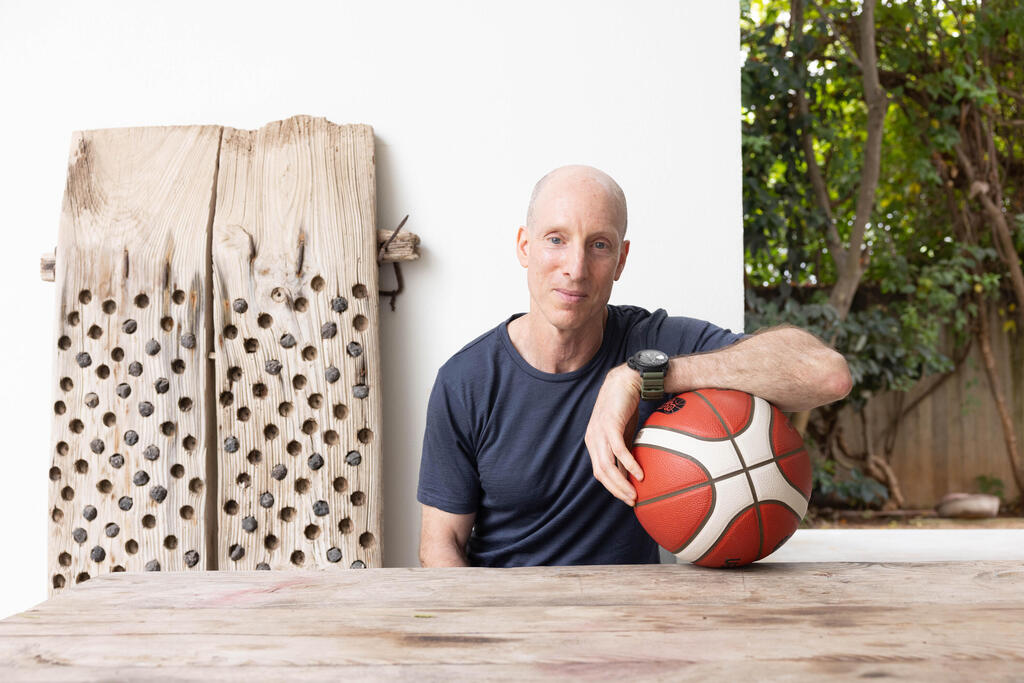
Richard Deitz
(Photo: Oz Moalem)
What do you mean?
"We had a very good scouting department. We talked a lot about data analysis at the time, but I realized there was a lack of understanding about how to put it into practice. Basketball people and data scientists are different.
"I realized we needed outside expertise. I found a professor at Syracuse University who specialized in sports analytics, and we began working with him and thinking about how to build a roster based on that analysis.
"The process began producing results and continued through the period leading up to COVID. After that, a lot of things fell by the wayside, including this."
What happened next?
"Eventually, Nikola [Vujcic — former Maccabi Tel Aviv sporting director] wasn't there and we entered into what I think is the period that became for me most problematic. It was consumed by some kind of internal conflict, which frankly never made sense to me. I don't think it was based on logic. I don't think in many cases it was based on facts, and in fact I think it was based in many cases on falsehoods.
"I spent those years really trying to bring people together and saying to all the owners, listen, we need to start from the basis in this partnership that all of our partners are people of good faith. Let's work together. Let's not accuse people of things, particularly if we don't have facts to back them up. If there are problems, let's identify the problems and then move forward. Let's solve them rather than try to figuratively kill people.
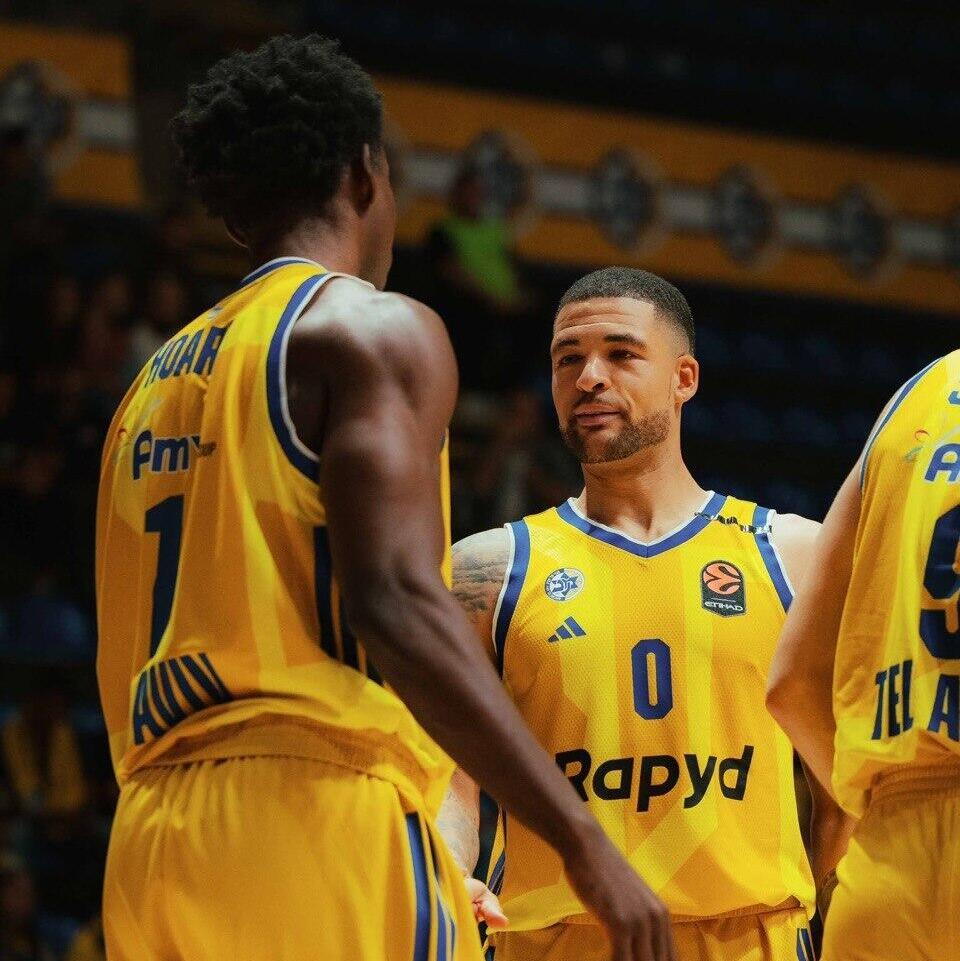
Maccabi Tel Aviv in action
(Photo: Georgia Kostic)
"I think that's really where the club lost its way because until then I think we were on a good track."
How does the Maccabi you joined compare with the club today?
"If I look at where Maccabi is today and how it's run and where it was when I came in 13 years ago, I can point you to some areas where I think there's been some improvement, even some areas where I'd say there's significant improvement, but by and large, the distance that we've covered in those 12, 13 years is very small.
"And if you take those same 12, 13 years and say how much has the game of basketball evolved? A lot. How much have other EuroLeague teams evolved? I don't know. I'm not inside the management of each of them, but I suspect, given the success that they've had, and I'm not just talking about the powerhouse clubs.
"You've had teams like Paris, teams like Valencia, who come in, play an innovative style, are clearly doing something right in the front office to build the club in the right way. I think it's obvious that we're lagging."
Did Mizrahi and Oudi Recanati allow you to get involved?
"Yes and no. Over the years, until the past few months, everyone would have described me as positive, someone who tried to bring everyone together and always provided the financial support the club needed.
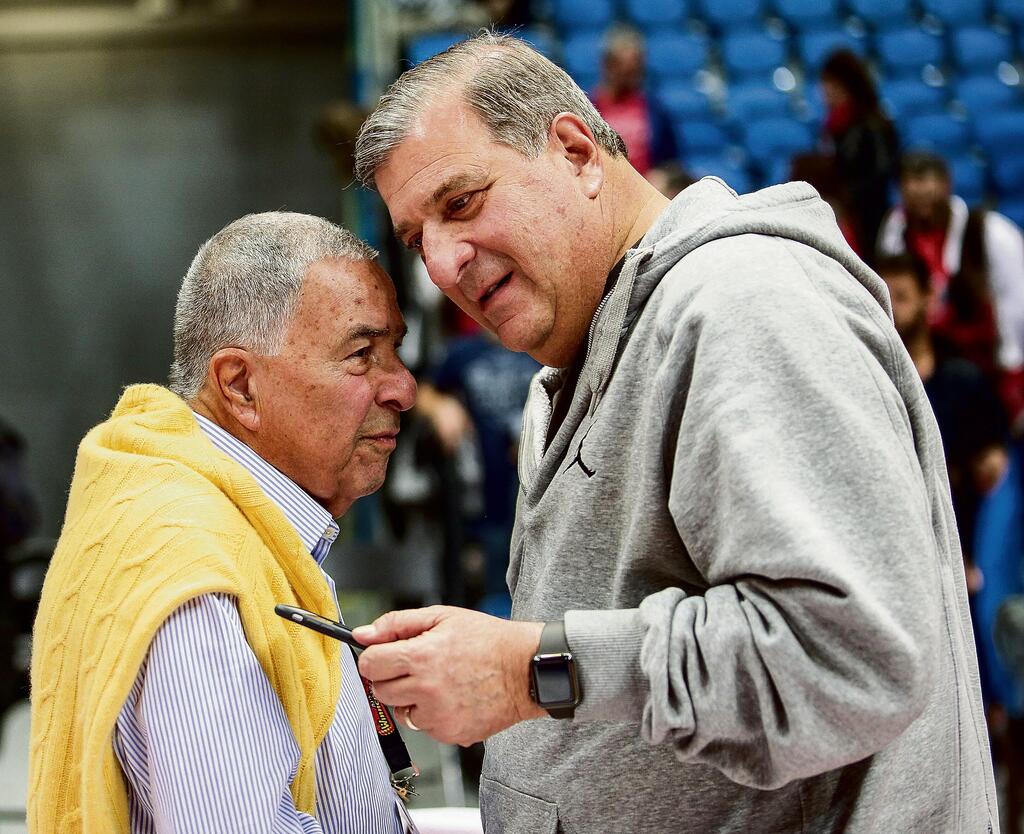
Shimon Mizrahi and Oudi Recanati
(Photo: Oz Moalem)
"When it became an ownership of camps, and I think we understand what the two camps were, I think there was some disappointment from Oudi that I wasn't in a camp. I was very clear: I'm not in anybody's camp. I'm in Maccabi's camp.
"When I think what you're doing is right, I'm going to support it, and when I think what the other side is doing is right, I'm going to support them. I'm always going to support what I think is in the best interest of Maccabi.
"So I think somehow, wrongly in my view, they viewed that as, not disloyalty, but a question mark over loyalty. I'm nobody's yes-man."
Were your proposals implemented?
"Very rarely. I don't think they have the ability to change to the extent the club needs.
"I proposed things that the professional staff very much wanted. They were either ignored or dismissed as too expensive.
"In my view, it would have been cheaper in the long run. It's better to do things right the first time than to have to do them again and pay for mistakes."
'Gross Irresponsibility'
When did you realize the relationship had broken down?
"In mid-August. I knew that Shimon and Oudi weren't happy about Arik Shtilman. They refer to him as 'that guy.' They don't say his name, which maybe says something.
"I think they didn't like him because he's loud, which he is, and aggressive, which he is. He was too aggressive, which I think he was. So I think they had reasons for feeling that way.
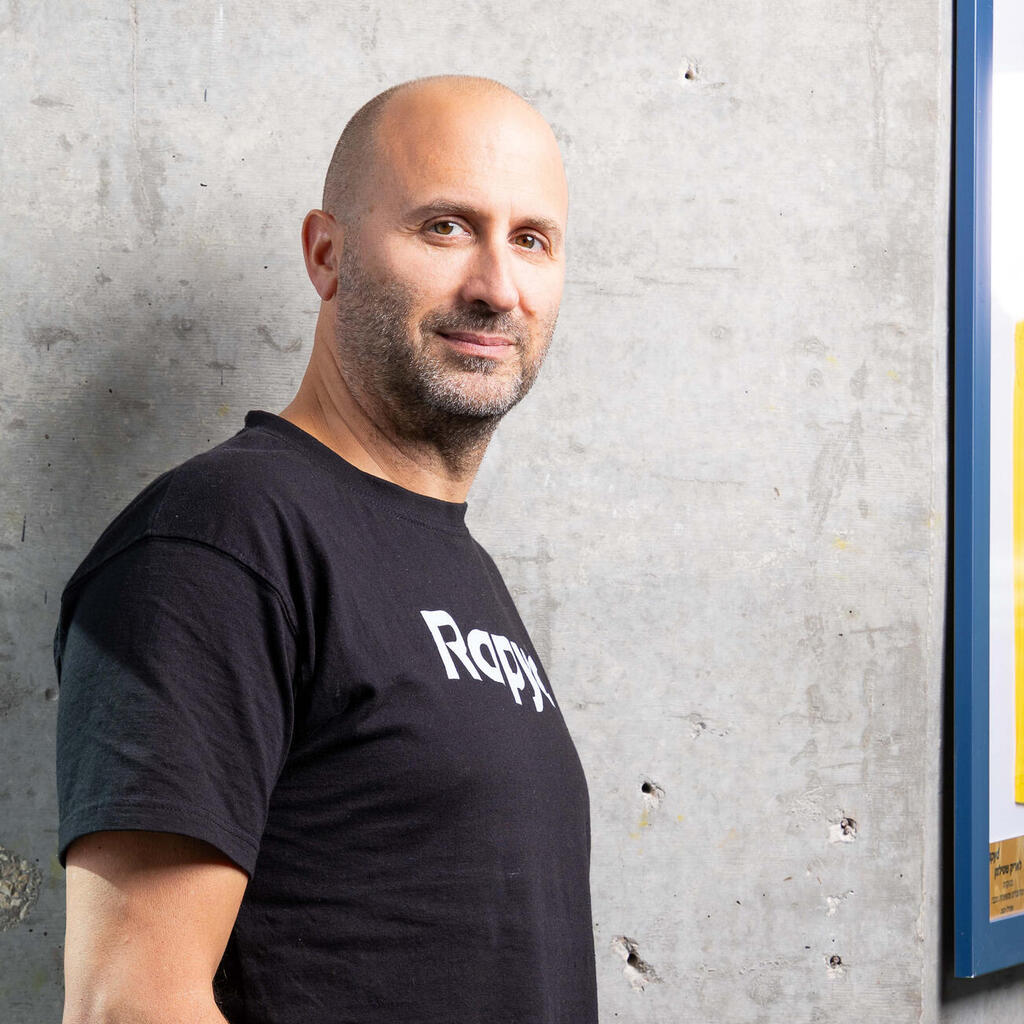
Arik Shtilman
(Photo: Tal Shahar)
"I had mixed feelings about the way Arik entered the team, particularly from the media perspective. I thought that was not the right way to enter. But my view was, well, this is the decision. We work with the guy. He has strengths as well, so we try to work with him, cultivate and benefit from those strengths, and where the rougher edges need to be sanded, we work on sanding them down.
"Shimon and Oudi had a different view. It was more existential, I think, for them."
Then Recanati exercised his right of first refusal when Shtilman moved to acquire shares.
"I didn't expect it. He sent an email and then called me and said, 'You're about to get an email.' I told him I'd already received it.
"I asked what he was planning. He said they didn't want Arik and didn't think he was the right person for the club. I pointed out that he was now the majority shareholder.
"He said, 'For now, yes, but not for long. We'll find a good shareholder who will be acceptable to all of us.'
"A few weeks later, he suggested that I speak with Jason Levin. I started a series of conversations with Jason and Oudi, discussing various things, and at some point along the way, it became clear to me that people weren't telling me the truth. Things were being concealed from me."
Why did you think they were withholding information?
"You might ask a different question, which is that if they want to bring in another shareholder, why don't they first come to me?
"I'm a partner. I've been their partner for 13 years. They know me pretty well. I think they would have a hard time doubting my integrity, doubting my commitment to Maccabi, doubting my financial capacity or doubting my willingness and readiness to work in a spirit of partnership.
"Why they didn't, I don't know. My speculation is that what they really want is to reduce their financial commitment to the club.
"They never asked me whether I was interested. And frankly speaking, I would not have been interested in just buying 29% and becoming a 46% shareholder if I wasn't going to have control. To take on that commitment and be the largest shareholder, but not have control, doesn't really make a lot of sense."
So why did you ultimately exercise your own right of first refusal?
"At the beginning of August, Oudi announced that he was selling shares and provided the name of a company. We still don't know whether Jason is actually the buyer or who is backing him financially. That information has never been disclosed.
"I asked for all the information I was entitled to under the shareholders' agreement so I could evaluate the transaction, but it became clear that they were refusing to provide it.
"In effect, the intention was to transfer control to a new person whom none of us knew, who had no previous connection to Maccabi and whose background and track record had not been thoroughly examined.
"That raised red flags for me. At that point, I realized the only way to stop it was to take responsibility and exercise my right of first refusal."
What did you discover when you conducted a background check on Levin?
"I don't want to disparage anyone, but there's a history of sporting results and organizations he's been involved with that needs to be examined.
"When someone comes to me and I'm considering hiring them, I look at every stop along their career. I don't think Oudi or Shimon really made an effort to investigate these things thoroughly.
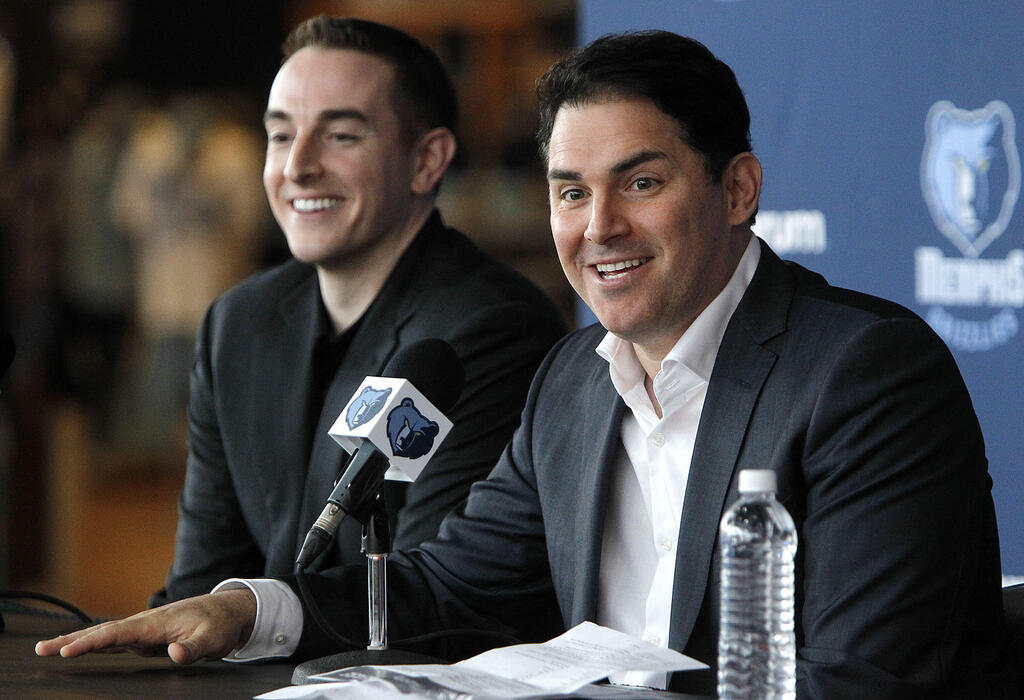
Jason Levin
(Photo: AP Photo/Lance Murphey)
"You're talking about Maccabi Tel Aviv. We're talking about something that's extremely important to our fans. It's extremely important to the State of Israel. To put that club in the hands of someone who hasn't been thoroughly vetted, when there are legitimate questions that people should ask, and without asking those questions, I think that's very irresponsible."
Is your problem with Levin himself or with the way they're trying to bring him into the club?
"With the process, because it wasn't honest or straightforward.
"As for Jason himself, when you look at his background, there are questions that raise concerns.
"In one interview, he said something along the lines of, 'In sports, you win some games and you lose some games, but the teams I've owned have won a lot more than they've lost.'
"When I heard that, I was surprised because it didn't fit with what I knew, so I went and checked.
"If you look at the records of the soccer and basketball teams he owned during the periods he owned them, not one of them had a winning record.
"In my view, when you don't stick to the facts, you ultimately mislead not only other people but also yourself. And that's very dangerous."
Were you disappointed in Mizrahi and Recanati?
"Yes, in their behavior. I think integrity is extremely important in a partnership. When you start misleading your partners, you cross a line."
Were you surprised that they preferred to bring in someone from outside rather than offer you the opportunity to buy the 29% stake instead of Levin?
"Yes and no.
"No, because if their objective is to reduce their financial commitment to the team because they can no longer afford the costs of running it today, but they don't want to give up control, then the only way to do that is to bring in someone from outside who doesn't know the club, can't really run it himself and will be dependent on them.
"On the other hand, it is surprising if what's really guiding them is Maccabi's best interests.
"Shimon has more to lose than anyone else because what happens over the next 20 years will affect his legacy.
"Let's just say in the next 20 years we win the EuroLeague three or four times, or we have five Final Four appearances. We're a regular top team in the EuroLeague. People will talk about this as the club that Shimon built.
"But if we don't, and we falter, I don't know how they're going to talk about Maccabi, but it won't be in those same terms.
"So from his perspective, I think he has a lot at risk, and I think he's putting his legacy at risk with the way he's approached it."
What's your personal opinion of Mizrahi?
"Shimon has dedicated his life to the club. He's one of a kind. There will never be another Shimon Mizrahi.
"The success speaks for itself. We have six European championships, and I have enormous respect for him."
And Recanati?
"Frankly speaking, Oudi is a much more difficult person for me to understand.
"I think he loves Maccabi. I wouldn't doubt that. He's not a basketball person. I think he would admit that.
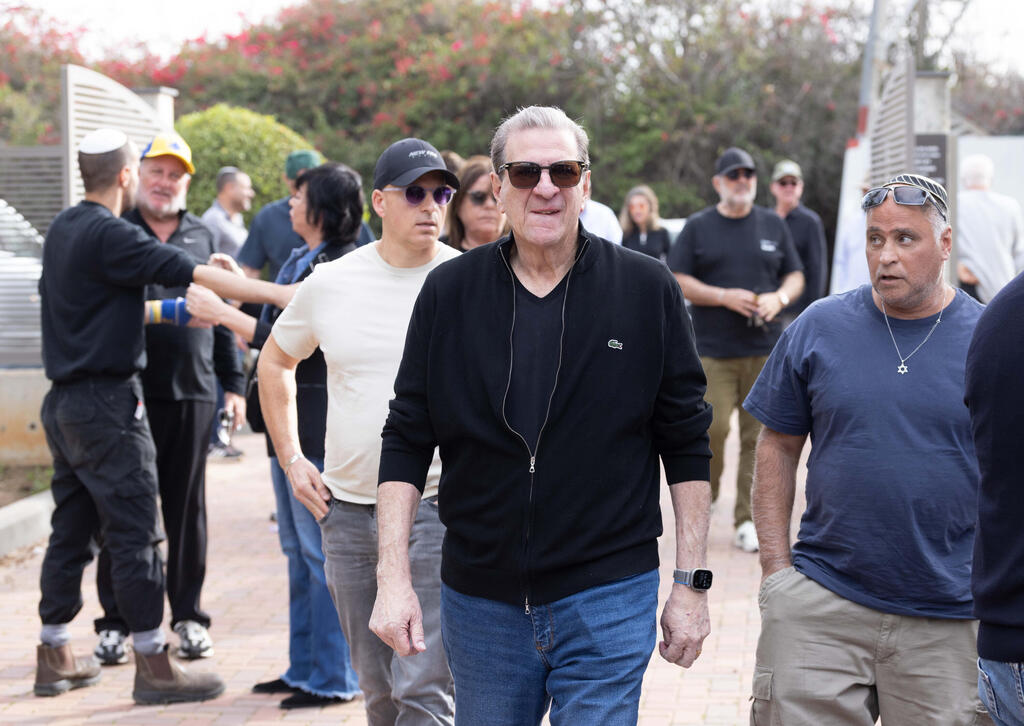
Recanati
(Photo: Oz Moalem)
"He doesn't bring a critical view. That's my real issue. It's not enough to say, 'Yes, I support this. Yes, I do that.' You actually have to ask questions. Ask why, ask why not, ask what we can do better.
"I've never really seen that kind of self-reflection.
"Oudi will say to me, 'We make so many mistakes. We've made so many mistakes.' But if I ask him, 'Oudi, can you tell me what mistakes you think we've made?' he'll say, 'I don't know, just a lot of mistakes.' Nothing specific.
"If you can't really name those mistakes, you can't begin to fix them."
The Shtilman Problem
The owners are expected to inject additional funds into the club in November. How will the dispute affect that?
"Oudi held 29% and now holds 58%, and that's how things will remain until the proceedings are resolved, probably for many months. The club will need additional funding, and he'll have to cover his share.
"At precisely the moment he wanted to reduce his financial commitment, he dramatically increased it. That's not a good situation for the club. The majority shareholder has made it clear through his actions that he doesn't want that financial responsibility.
"In the meantime, decisions have to be made, and that could lead to a slow decision-making process influenced by considerations that don't always align with the club's best interests."
Has that delayed the signing of a player?
"It hasn't blocked a signing, but last year, when there was no majority shareholder and we were working with the Federmann family, we would discuss the options more quickly.
"I felt that very little had happened for several days, and Coldebella wasn't sure what direction the owners wanted him to take, so I stepped in to move the decision forward."
If you prevail in the ownership dispute, what's the first thing you'll change?
"The organizational culture. I want accountability, self-examination and analysis.
"I support Claudio and Oded Kattash, but we're missing certain processes. We lost our scouting department, which became a casualty of the ownership dispute, and we need to rebuild it.
"Good things are being done on the basketball side, but there's room for improvement there, as well as on the business side."
How much are you prepared to invest?
"I'm not going to name a figure because the fans will hold me to it, and if we're one shekel short, there will be an uproar.
"We need an organization that understands what's required to put together a team capable of achieving the success we want, and then we need to provide the necessary budget."
Is the goal to win the EuroLeague?
"Of course. Maccabi should be a team that's expected to reach the playoffs every year, with a very realistic chance of making the Final Four."
Would you bring in partners?
"I think that, for me financially, there's not a need to bring a partner. So the question is, why would I bring a partner?
"What I would bring partners for, and I think it's quite plausible to do that, is where those partners can bring strategic value to the club, can bring strategic value to the basketball side of the club, to the business side of the club or both.
"But to bring another partner just to share a financial burden, that's not in my plans."
So Shtilman isn't an option?
"In the media or social media, many people say 'Deitz-Shtilman,' 'Shtilman-Deitz,' as if we're a unit. I haven't said that. Arik, I don't think, has said that.
"Arik supports me. I understand why he supports me. It's logical that he supports me.
"Would he be part of a team? I think that's to be decided later.
"He has many great characteristics, which I see. He sometimes operates a little more on his own. I think we need to have a partnership group that's also very, very cohesive.
"So I think that would be a question to ask and address at that time, but I'm not really thinking about that issue right now."
Responses
Shimon Mizrahi and the Recanati family issued the following statement:
"The timing of the article's publication, on the day of a derby game, is clearly calculated. It is deeply regrettable and painful that a partner in the club's ownership sees fit to publicly release internal correspondence between club officials. Such conduct is unacceptable and contrary to all established standards of behavior.
"As for Mr. Jason Levin, every possible background check was conducted, and he was found to be a suitable partner. He is also highly regarded because of his close relationships with the management of both the EuroLeague and the NBA."
Associates of Levin said in a statement:
"Deitz's track record in sports amounts to a single, limited involvement as a shareholder, coinciding with the worst period in the club's history. His behavior is sad and desperate, and certainly serves neither Maccabi's interests nor his own."