

Pressure on Ireland’s national soccer team to cancel its upcoming matches against Israel is intensifying, with protesters gathering outside the squad’s Dublin hotel and one of the country’s leading newspapers calling on the Football Association of Ireland to pull out of the fixtures.
About 100 protesters assembled outside the hotel Monday night, calling out the names of Ireland players and urging them not to take the field against Israel. “Don’t play,” they chanted.
The campaign gained further momentum Tuesday when The Irish Times published an editorial arguing that the soccer association should follow the example already set by Ireland’s public broadcaster over Eurovision.
“The Irish association should finish the job and cancel the match against Israel,” the editorial said. “How is this different from Eurovision? Is it reasonable that there we cancel our participation because of Israel, but in football we play against it?”
RTE announced over the weekend that it would boycott the 2027 Eurovision Song Contest, after also staying out of the competition last year. The broadcaster said its position “remains unchanged,” citing “the humanitarian crisis in Gaza and the loss of life.”
The growing boycott campaign comes amid a separate dispute sparked by Ireland coach Heimir Hallgrimsson, who framed the upcoming games as opposition to Israel rather than cooperation with it.
“I’ve said before that we are not playing with genocide, we are playing against genocide,” Hallgrimsson said. “Therefore we are playing against Israel, we are not playing with Israel.”
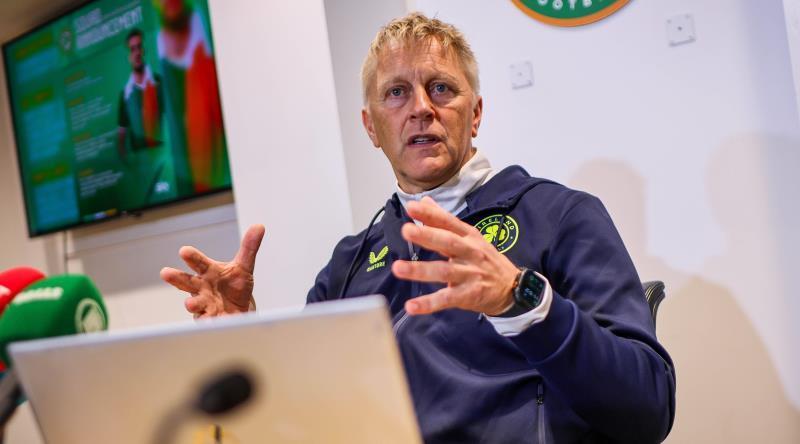
Ireland coach Heimir Hallgrimsson
(Photo: IMAGO)
The Israel Football Association responded sharply to the remarks.
“We have managed to contribute to the world in many fields, including an impressive number of Nobel Prizes,” the association said. “Unfortunately, we have yet to find a cure for stupidity, ignorance and hypocrisy such as that displayed by the Ireland national team coach. We are not playing with ignorance, hypocrisy and stupidity, but against those who represent them as a coach.”
Israel and Ireland are scheduled to meet on September 27 and October 4, but neither game will be played at the national teams’ home stadiums.
The first match is set for Debrecen, Hungary, while the second will be played in Bačka Topola, Serbia, behind closed doors.