

At the end of a rugby practice in Tel Aviv, the word “Zionism” takes on a different meaning.
On the grass of a city sports park, players from Italy, the United States, Canada, Australia, Chile and France share water bottles and bruises. What unites them is not only rugby. Many left comfortable lives abroad, immigrated to Israel and enlisted in the Israeli military. Since the Hamas-led attack of Oct. 7, several have rotated through repeated reserve duty, with no clear end in sight.
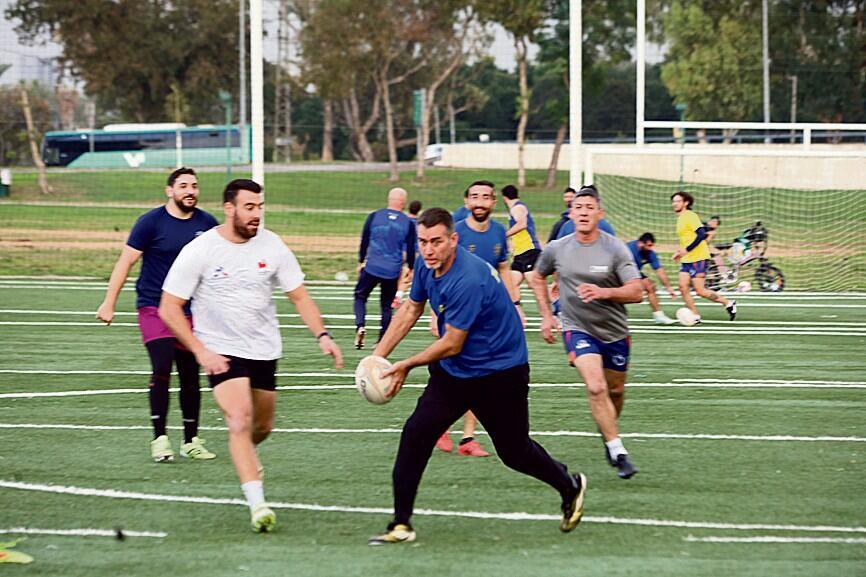
During a short break in training — between deployments to Gaza and returns home — Israeli-born players watch with disbelief as teammates explain why they chose to serve a country they once knew only through stories told in the diaspora.
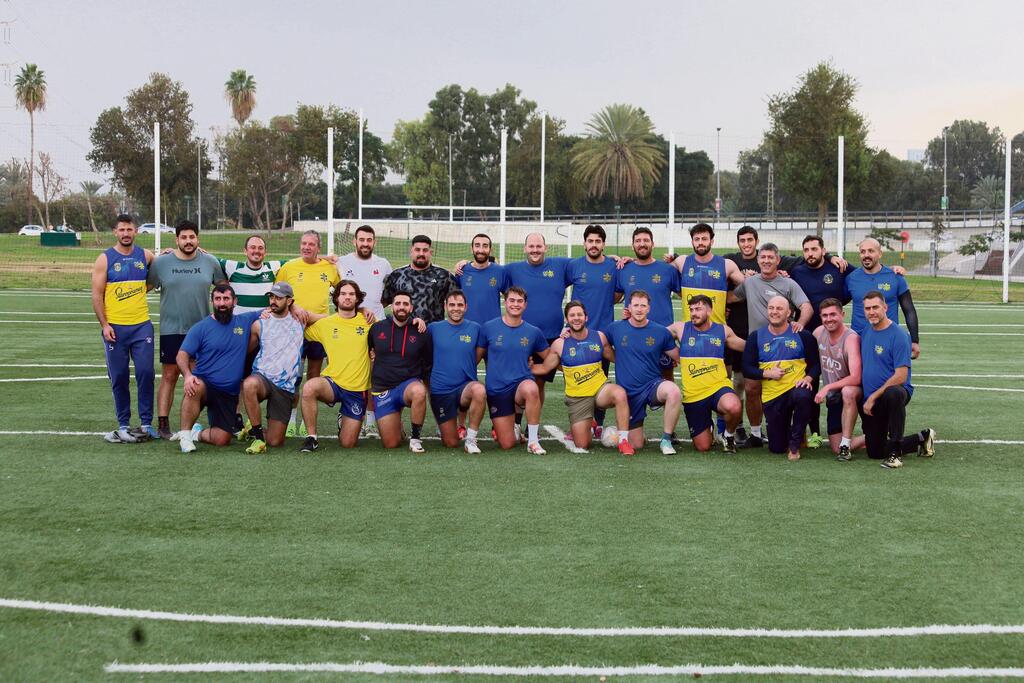
The Maccabi Tel Aviv rugby team also includes Jewish players from Mexico, Georgia and Argentina who came to Israel for work, as well as two Ukrainians who fled Russia’s war and say they found a safer home here despite Israel’s security challenges.
Rugby, they say, is a reminder of home. Practices are squeezed between full-time jobs, mostly in the evenings and on Fridays. The latest session ended in Tel Aviv’s Sportek park, where players lingered afterward. Among them sat Bolt, a dog eagerly collecting pats from teammates.
Bolt belongs to Tomer Danino, 30, who says he is on his fifth or sixth round of reserve duty since Oct. 7 — he has lost count. What he does remember is finding the dog during his first deployment in Gaza, when Bolt was still a puppy.
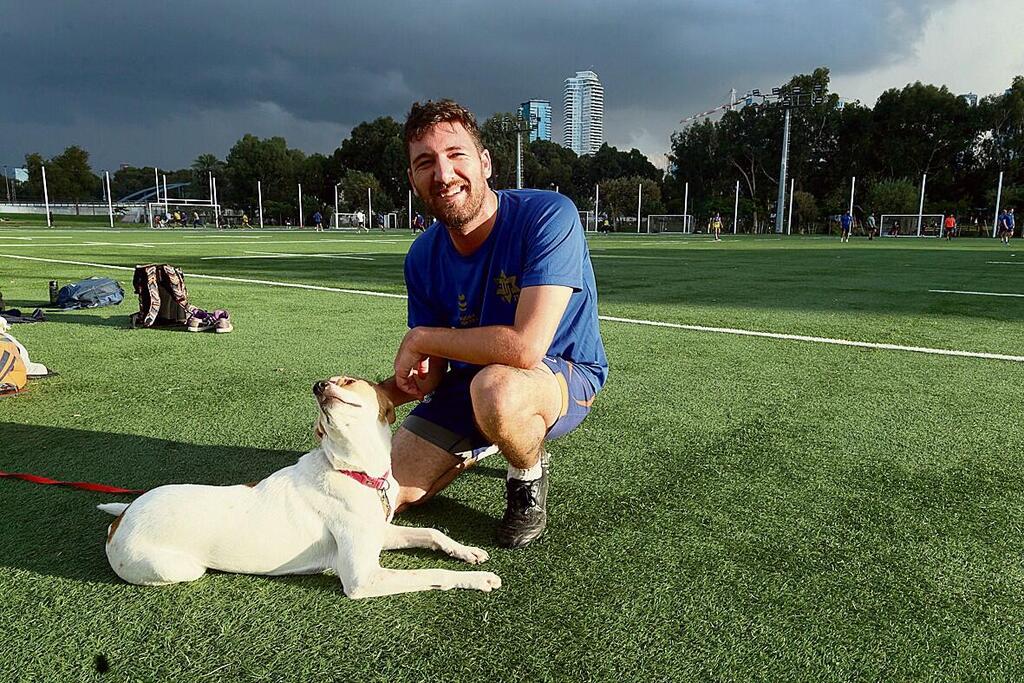
(Photo: Mickey Schmidt)
Danino was born in Chicago and immigrated to Israel through Garin Tzabar, a program that helps young Jews from abroad move to Israel and serve in the military. His parents are Israeli, and family visits planted the idea early.
“I saw my cousins in uniform and at some point decided that’s what I wanted,” he said.
He moved to Israel at 21, served a full term in the Combat Engineering Corps and was discharged in 2019. Even his post-army travels revolved around rugby.
“No matter how many hits I take, it’s fun,” he said. “It’s addictive.”
Nearly a decade ago, he found Maccabi Tel Aviv through Facebook. The training schedule fit his work in security and maintenance, and he stayed.
On Oct. 7, Danino was on a morning shift. After helping civilians reach a protected area, he began receiving messages about an impending call-up. Hours later, the official order arrived.
His unit was initially deployed in the north, then moved south and entered Gaza in the first ground incursion near the Philadelphi Corridor. He said his unit operated close to the area where hostage Noa Argamani and three others were later found.
By late December 2023, losses mounted. The death of Konstantin Sushko, a fellow soldier, hit him hardest. Danino tattooed a small illustration of a coffee pot and cup on his thigh in his memory.
“We got stuck somewhere and passed the time making coffee,” he recalled. “I couldn’t drink coffee for a few days because of stomach problems. When I finally could, he was so excited. He said, ‘I want to drink with my friend.’ I never got to drink that last cup. I told him no. I regret it.”
Bolt was found around the same time, near Juhor al-Dik. The unit pulled the puppy from a pit and carried her out in a cabinet they found. She stayed with the soldiers in Gaza for several days. After returning to Israel, a veterinarian asked who owned the dog. A friend pointed to Danino.
Days later, new regulations barred adopting animals from Gaza.
“I got lucky,” Danino said.
(Photo: Mickey Schmidt)
As Danino returned to reserve duty, teammate Joseph Ludmer was finishing a 450-day stretch in uniform. Ludmer was born in Bologna to an Italian mother and French father and moved to Israel 17 years ago to enlist. He now works to expand rugby’s reach through social media.
The team’s coach, Nimrod Kaplan, is Israeli-born but grew up seeing how deeply sport shaped life in Kibbutz Yizre’el.
“Rugby was part of everyday life,” he said. “My father is South African. British influence played a role. Jews brought the culture here. The league in Israel grew out of kibbutzim and universities.”
Kaplan played abroad but later chose a civilian career and now manages an event complex in Jaffa. In his spare time, he is back on the field.
“Rugby is a bug,” he said. “Israelis don’t really know it yet, but those who do fall in love with it.”
Rugby sevens will be part of the 2028 Los Angeles Olympics, but Israel is far from qualifying. Its national team competes in the second tier.
“It’s not something we’ll see soon,” Kaplan said. “There’s desire and planning, but also reality. The infrastructure still needs work.”
Israel will have local representation at the Maccabiah Games this summer. One Maccabi Tel Aviv player, Jack Sher, will even line up for Britain, using his passport, against some of his own teammates.
Sher moved from Canada several months ago through his job at Deloitte, which has offices in Israel. He said the rise in antisemitism abroad since Oct. 7 pushed him closer to making aliyah.
“I lived here for a year before the war,” he said. “Watching everything from afar was very hard. Friends back home showed antisemitic views. After two years of planning, with work and studies, I officially moved.”
The team, he said, quickly became family.
“We’re from all over the world,” Sher said. “Different ages, different religions — Jews, Christians and Muslims. I was invited to Shabbat dinners, then to weddings. We became a family.”