

Catchball has emerged in recent years as one of the most prominent women's sports in Israel. The social-sports organization Mamanet is only part of the story. Alongside it are recreational and competitive leagues, youth competitions and teams that participate in international tournaments. What began as a grassroots movement has come a long way, but the struggle for funding, facilities and recognition continues.
One example of the sport's success is Dora Kfar Saba, which won the Club World Cup in Amsterdam in 2025. This year, catchball also made its way into prime-time television with the Kan 11 broadcaster's drama series "All Mothers Lie." Even former government minister Ayelet Shaked is among the women who have played the sport. But for those dedicated to its competitive side, the growing exposure does not always reflect what actually happens on the court.
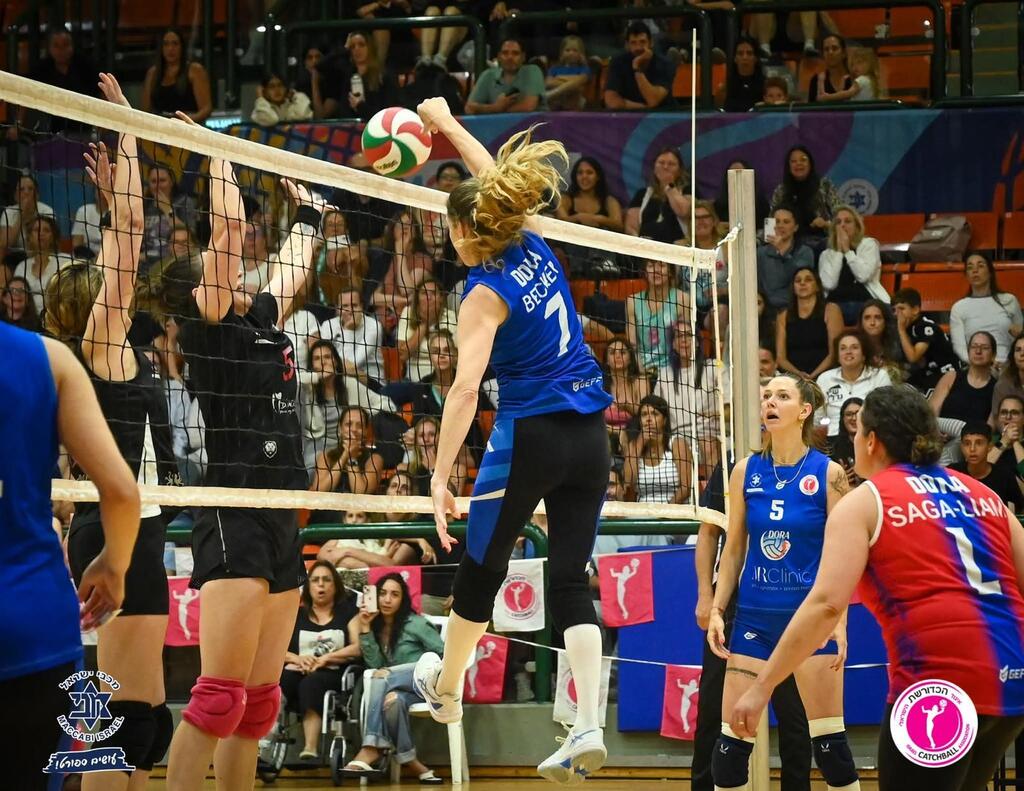
'A passion for competition'
One of those women is Shiraz Saga-Liam, 37, a physiotherapist, player, sports entrepreneur and coach of Dora Kfar Saba. She is a prominent figure in Israeli catchball and has played a significant role in its development from a recreational activity into a sport with serious competitive ambitions.
"I'm a physiotherapist by profession, and I've been coaching catchball for the past 19 years," she says. "I grew up playing volleyball for Hapoel Kfar Saba. By the age of 18, I had already started coaching volleyball and catchball, and I fell in love with the game. What I enjoyed most was meeting women who had an extraordinary passion to become stronger and more competitive. I had the opportunity to help build competitive catchball in Israel.
"My dedication to the sport grew out of the hunger I saw in the players. After three years, I began running workshops for them, and after another two years of work, I built a professional support system like those found in other sports: a fitness coach, a nutritionist, a sports psychologist and training at the highest level. The Israel Catchball Association established a league here, and we've been playing in it for many years.
"I've been a member of the association's professional committee for many years, and I'm also active in the international federation, which originated here in Israel, providing professional support to teams abroad. We exported catchball to the world. The game is also used to prepare players for volleyball: When teaching children, you start with the basics of catching and passing. In Israel, we took it much further."
'Among the highest standards in the world'
The game's roots can be traced to the United States in the late 19th century. In 1895, Clara Gregory Baer, a physical education instructor in New Orleans, developed a game called Newcomb ball, from which various forms of catchball eventually evolved. In Israel, however, the sport took on a character of its own.
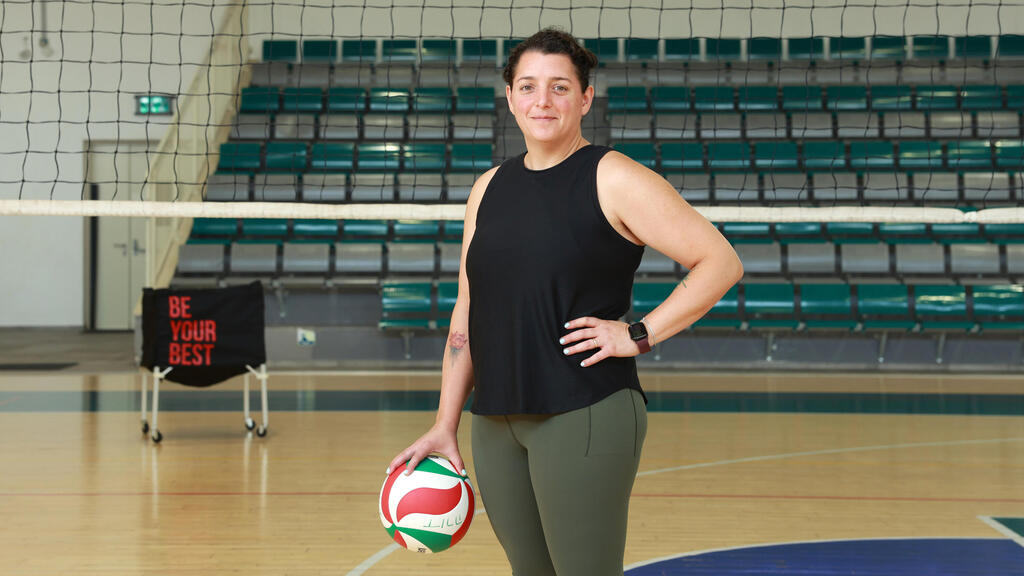
Shiraz Saga-Liam, a physiotherapist, player, sports entrepreneur and coach of Dora Kfar Saba.
(Photo: Dana Kopel)
"In the 1980s, the late Haim Borovsky began promoting catchball as a competitive sport," Saga-Liam explains. "He wanted to create a framework in which women could serve as role models for children through good sportsmanship. The activity began in northern Israel, in Nazareth Illit, and from there spread to Kfar Saba and other places.
"When I tried to figure out where I wanted to take my team, there was nowhere to look for inspiration. Everything started from scratch, and that's an incredible privilege. Today there are countless leagues and teams, and tens of thousands of women play catchball. There are programs in elementary schools, specialized catchball tracks and leagues for teenage girls. The sport is developing," she says.
Saga-Liam has witnessed Dora's progress firsthand at every practice.
"This is my 17th year coaching the team, and we've been Israeli champions for the past four consecutive years. At first, we competed in the European Championship, and later in the World Cup, where teams from the United States, Mexico, Greece, Romania and the Netherlands participated. We represented Israel in Amsterdam, and winning the title was a tremendous privilege," according to Saga-Liam.
"In the semifinal, we beat the team representing the United States, and in the final we faced an Israeli team from Haifa that plays in the workplace league. For me, that proved that the standard of catchball in Israel is the highest in the world. Competitive catchball internationally is still in its infancy, but here we've already refined and developed it."
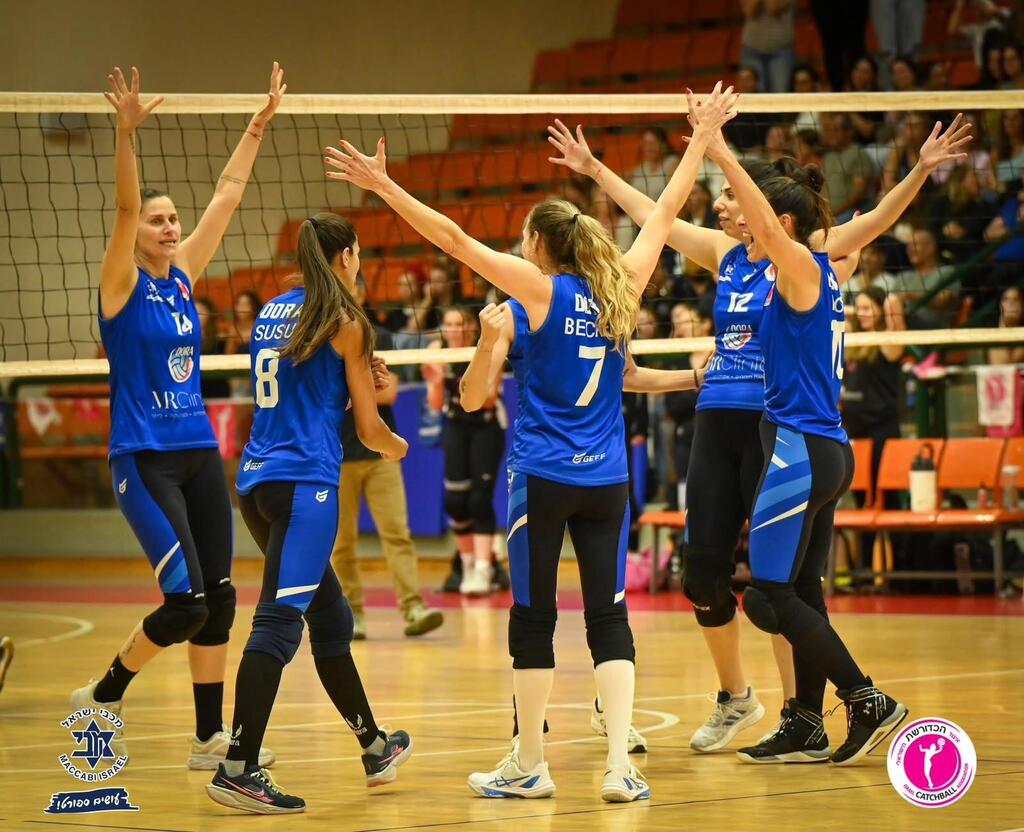
Celebrating victory: Dora Kfar Saba
(Photo: Catchball Association)
With success has come a determination to change the sport's image. Saga-Liam welcomes the growing attention but takes issue with how catchball is sometimes portrayed.
"We are professional athletes in every sense," she says. "The series 'All Mothers Lie' may have helped the sport by giving it exposure, but it doesn't really reflect what we experience. Anyone involved in competitive catchball would say the series did us a disservice. Those who play recreationally might relate more to the sense of community and friendship. Even Adir Miller's joke about going out for pizza instead of practicing couldn't be further from our reality.
"At Dora, everything operates like a professional team at the highest level, even though the players receive no funding and pay out of their own pockets. Over the years, there have been major battles to secure financial support. One of the goals behind establishing the international federation was to promote recognition of catchball as an official sport. It has 25 member countries, and the ambition is to reach the Olympics through cooperation with the United States and other nations.
"Unfortunately, perhaps decision-makers in Israel see catchball as stepping on volleyball's toes. There's a fear that we'll take players away from volleyball. But other women's sports are also underfunded, and apparently allocating another share of the budget to catchball is too much for them. As far as I'm concerned, I'm here for any player who wants to develop. Catchball is a kind of therapy court for so many women. What happens to us on the court happens to us in life, too."
For Saga-Liam, the connection between the court and everyday life is also central to her family story.
"I met my wife, Yali, through catchball, during my first project to promote female players, the Saga Project. She was a mother of three children from a previous marriage to a man, and we fell in love on the court. Today we have four children, after Nevo, who is now a year and seven months old, joined the family. Ever since, she's been with us on the court, too.
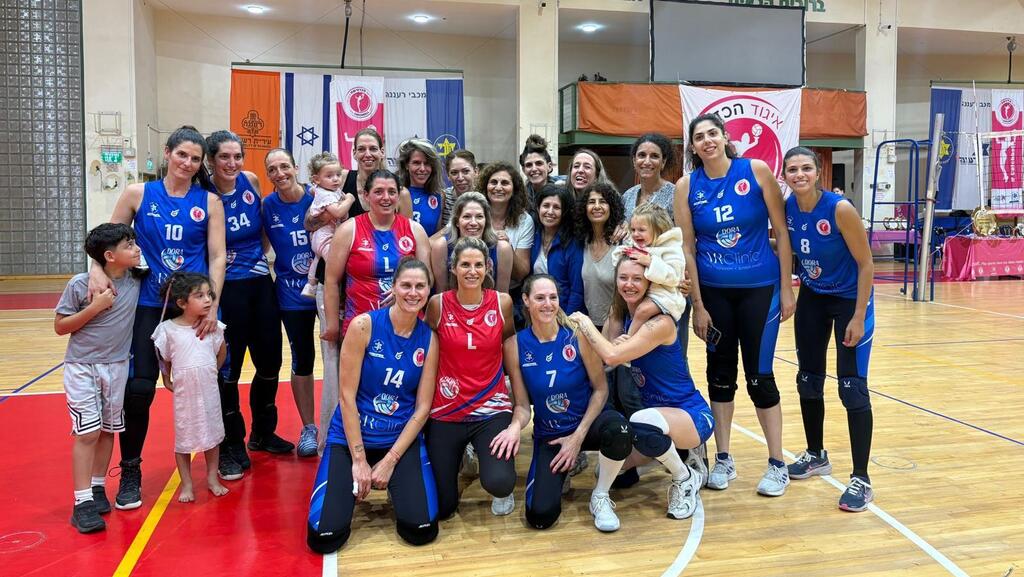
The team is also a family
(Photo: Catchball Association)
"We were supposed to travel to a tournament in Eilat, but I had to give it up because I needed a cesarean section. When Nevo was two weeks old, I was already taking her to practices in a baby carrier, and I continued doing that until the end of the season. She was also with us at the Israeli championship final, and there's a photo of her with the championship trophy after our victory over Bnot Gurion from Kfar Saba."
Her family, career and team are closely intertwined with her approach to coaching.
"Catchball is a calling for me. I watched a series about successful women in business, and the CEOs said they don't focus on the fact that they're women. At some point, they encountered the significance of being women, but what drives them is professionalism and the desire to be the best they can be.
"It's no coincidence that my slogan is 'Be Your Best.' Seeing a woman who manages a home and a career, rises to the challenge and also wins the national catchball championship is something extraordinary. There is a struggle for women's sports here, but that isn't what drives me. It's a result of doing things the right way.
"I tell my players that winning isn't the goal. There's a process, values and rules: how we speak to one another, how we handle a crisis and how we maintain our concentration. If we stick to those principles and act without ego, the victories will come, too."