

Soccer is by far the most popular sport in Turkey, commanding the biggest budgets, the largest audiences and fiercely devoted fans. Basketball comes a distant second, followed by the country's volleyball teams, particularly the women's national team, whose international success has become a source of national pride. Yet none of these sports holds the distinction of being Turkey's traditional national sport. That honor belongs to something far less familiar outside the country: yağlı güreş, or oil wrestling.
The sport involves two wrestlers competing on an open grass field, with no standardized dimensions, their bodies covered in generous amounts of olive oil. At this year's Kırkpınar festival, held over three days in the northwestern Turkish city of Edirne, organizers supplied two metric tons of olive oil for the competition.
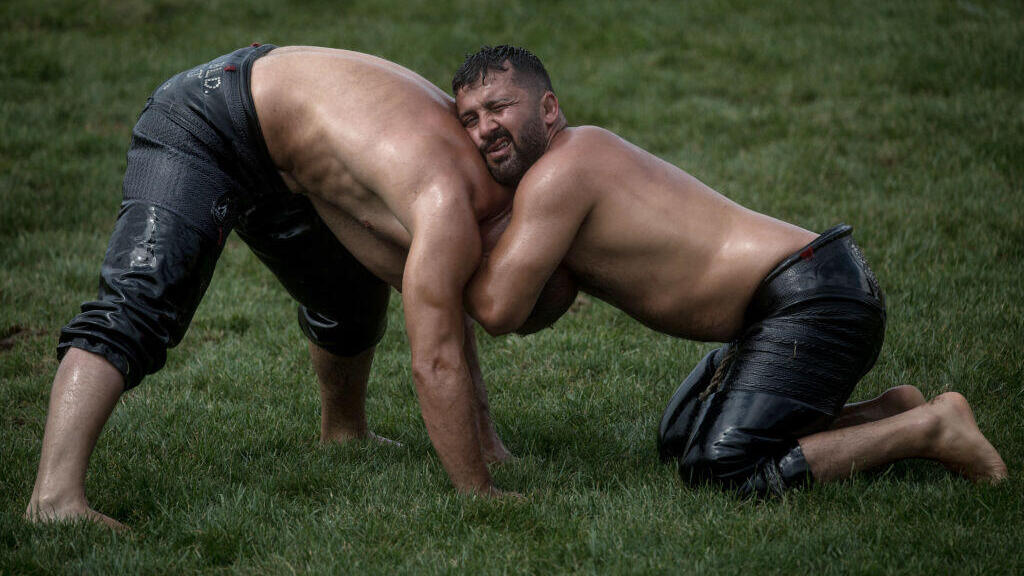
The rules allow wrestlers to push, grab, trip, throw or lift their opponents off the ground. Victory can come by forcing an opponent's back or side onto the grass, even momentarily, or by lifting the opponent completely off the ground and carrying him three steps.
Competitors wear little more than tight leather trousers known as kıspet, traditionally made from water buffalo or cowhide. Weighing between 2.5 and 3 kilograms, the trousers are secured around the waist with a cord. Because the waistband provides one of the few places where wrestlers can establish a firm grip, that area is also heavily coated with oil, making it especially difficult to maintain a hold.
Striking, biting and other prohibited contact are forbidden, but wrestlers are permitted to use a range of holds involving their opponents' leather trousers. The slippery conditions make conventional wrestling grips unreliable and force competitors to rely on a combination of technique, explosive strength, endurance, speed, agility and balance. Height and raw physical power alone rarely determine the outcome.
The sport's origins are often traced to ancient Greece, but it became deeply rooted in Turkish culture during the early 14th century, shortly after the emergence of the Ottoman Empire. Initially, wrestlers used ordinary oil rather than olive oil. The practice was intended to improve Ottoman soldiers' combat techniques, strengthen camaraderie and mutual responsibility, and develop physical and mental resilience, including the ability to withstand hardship if captured.
For many participants, the wrestling grounds and training centers have traditionally been more than places to compete. They also serve as spiritual and communal spaces, where values such as discipline, respect and loyalty are passed from one generation to the next.
Oil wrestling is considered one of the world's oldest surviving forms of competitive wrestling. Its most prestigious event, the Kırkpınar festival, traces its history to the 1360s and is widely described as the world's longest-running sporting competition. The tournament has been associated with Edirne since the Ottoman era and has taken place in the city in its modern form since the establishment of the Turkish Republic. In 2010, UNESCO added the festival to its Representative List of the Intangible Cultural Heritage of Humanity.
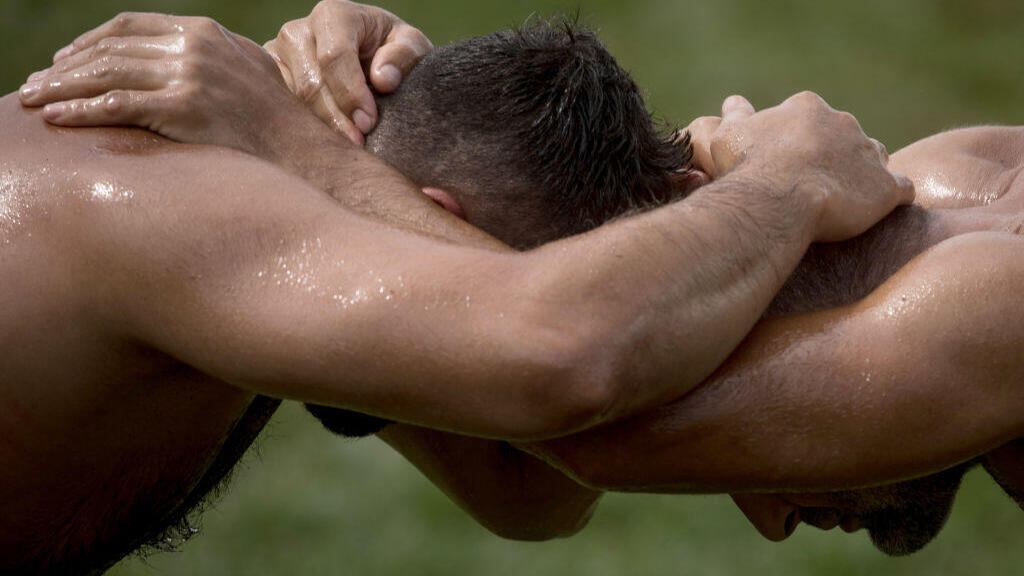
Oil wrestling is one of the world's oldest forms of wrestling still practiced today
(Photo: Chris McGrath/Getty Images)
According to legend, the tradition began when Suleyman Pasha and 40 Ottoman soldiers established a camp in a village and began wrestling among themselves. Two of the soldiers reportedly fought for 24 hours without either emerging victorious, eventually collapsing and dying from exhaustion. Their struggle became the founding legend of a competition that has survived for centuries.
Three days of wrestling, rituals and music
Although Kırkpınar is fundamentally a sporting tournament, its designation as a festival is no accident. The event combines three days of competition with elaborate ceremonies, processions and traditional music, attracting thousands of spectators to Edirne. Food stalls, entertainment areas and activities for children turn the surrounding grounds into a major public celebration.
Hundreds of wrestlers compete across different divisions. The festival traditionally opens with a procession through Edirne's streets, accompanied by dancers and other participants. The previous year's champion carries the festival flag, symbolizing the continuity of a competition passed down through generations.
Before each bout, the wrestlers perform a traditional warm-up ceremony known as peşrev, a carefully choreographed sequence that resembles a ritual dance. The competitors advance toward and face their opponents, repeating the movements three times. They then kneel on the left knee, place the right hand on the ground and touch their knee, lips and forehead before letting out a shout of encouragement. These actions are also repeated three times.
The wrestlers and their assistants then pour olive oil over their bodies from large containers. The master of ceremonies, known as the cazgır, introduces the competitors and leads traditional prayers. Throughout the bouts, groups of drummers and musicians playing the zurna, a traditional wind instrument, provide a soundtrack of festive Turkish folk music.
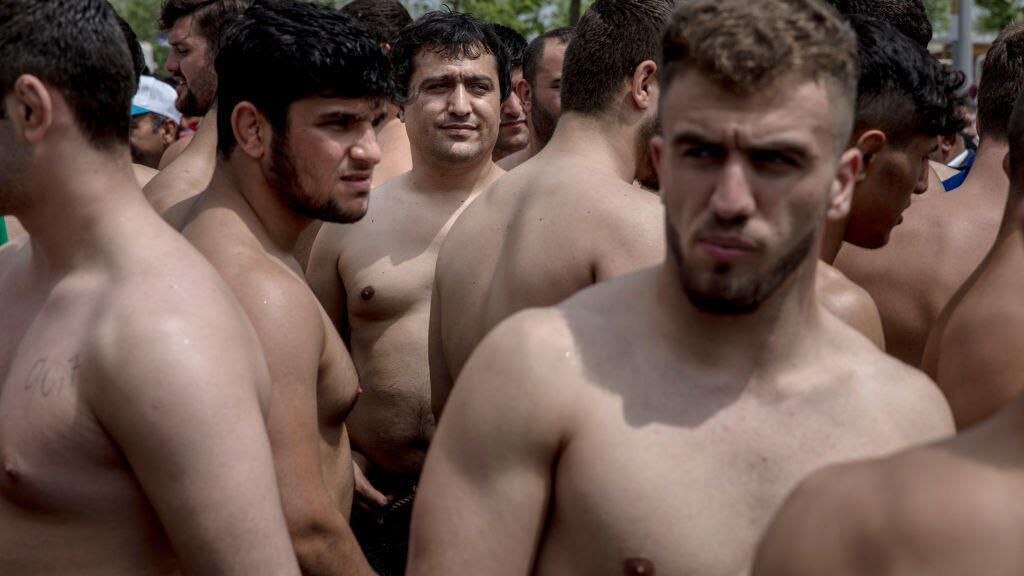
Before each bout, wrestlers perform a traditional warm-up ritual known as peşrev
(Photo: Chris McGrath/Getty Images)
Until 1975, wrestling matches had no formal time limit, meaning a contest could continue for hours or, in exceptional cases, even days. Modern competitions impose time limits, with the duration varying according to the division and tournament. When a bout is not decided during regulation time, the wrestlers enter a scoring phase in which technical moves can determine the winner.
At the 2026 Kırkpınar tournament, 817 wrestlers competed across 14 divisions, culminating in the championship contest. The winner of the most prestigious category receives the coveted golden belt, a substantial cash prize and, perhaps most importantly, the title of başpehlivan, or chief wrestler, which carries enormous prestige in Turkish sporting culture.
This year's champion was Erkan Taş, who defeated Feyzullah Aktürk in the final to claim the golden belt. The first-place cash prize was 1.655 million Turkish lira, a substantial sum in a country struggling with inflation. But for many wrestlers, the prestige associated with the title remains more important than the money.
Erdogan's dream of taking oil wrestling global
The sport's popularity, its relatively modest financial rewards compared with professional soccer and its accessible, community-based character have helped establish it as a major part of Turkish popular culture.
President Recep Tayyip Erdogan has embraced the tradition, referring to it as "the sport of our ancestors" and making a point of appearing at major competitions, including the President's Cup. For Erdogan, oil wrestling is more than an athletic contest. It is also a symbol of Turkish identity, national heritage and cultural continuity.
The conservative and nationalist atmosphere surrounding the sport is visible at many wrestling venues. Turkish flags hang alongside portraits of Mustafa Kemal Atatürk, the founder of modern Turkey, and Erdogan. Portraits of local mayors also appear at some events, particularly when the officials belong to Erdogan's political party.
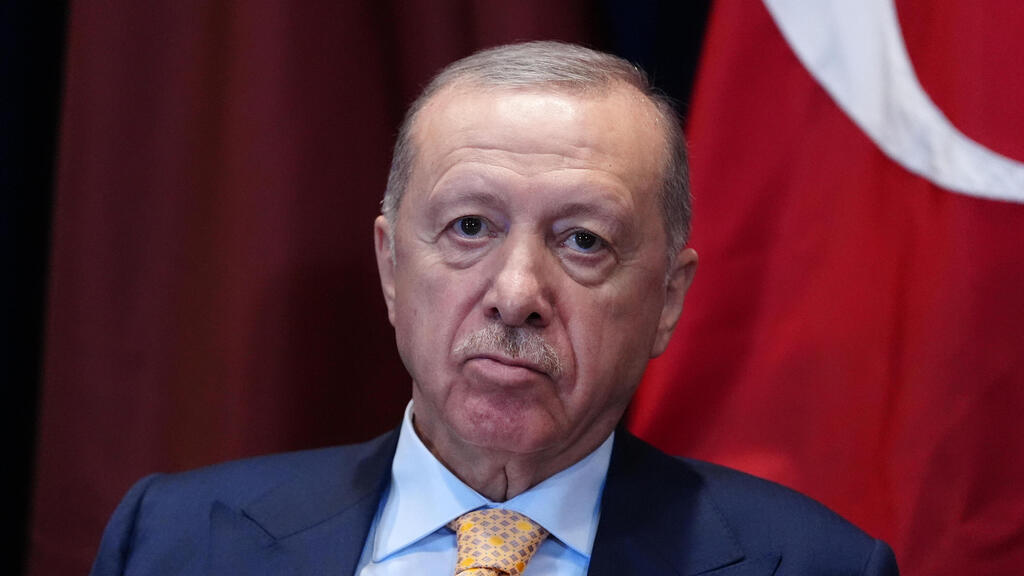
Turkish President Recep Tayyip Erdogan regularly attends major oil wrestling tournaments
(Photo: AP Photo/Julia Demaree Nikhinson)
The Turkish president's interest in preserving traditional sports is also reflected in the World Ethnosport Confederation, an organization established in 2015 that moved its headquarters to Istanbul in 2017. The organization promotes traditional sports and games as part of broader efforts to protect cultural heritage and strengthen national identities.
The confederation is headed by Erdogan's son, Bilal Erdogan, and oil wrestling is among the traditional disciplines it seeks to preserve and promote internationally. The physical culture surrounding the sport, its ceremonies and its emphasis on strength and mutual respect fit closely with the organization's vision.
Erdogan has long harbored ambitions to expand the tradition beyond Turkey and other countries where it has historical roots, including Iran and parts of the Balkans. His goal is to establish oil wrestling competitions around the world and introduce international audiences to a sport that combines athletic competition with centuries-old rituals.
In Erdogan's vision, oil wrestling offers something different from modern commercialized sport: a competition in which participants honor the crowd, their opponents, the land and nature itself. Its supporters emphasize the values of equality, respect and spiritual discipline, portraying the tradition as an expression of cultural identity rather than simply a test of physical strength.
Whether oil wrestling can achieve the global recognition Erdogan envisions remains uncertain. But in a country where soccer dominates television screens and stadiums, a contest involving leather trousers, two tons of olive oil and a golden belt continues to occupy a unique place in the national imagination.