

Asaf Yasur’s rise to the top of European taekwondo has long transcended sports. It is the story of a boy who lost both hands in a devastating accident, a teenager who refused to accept the limits placed before him and a champion who became a national symbol of determination.
In Munich on Tuesday, with huge expectations shadowing every competition, Yasur delivered again, winning his second European championship in Paralympic taekwondo.
Gallery
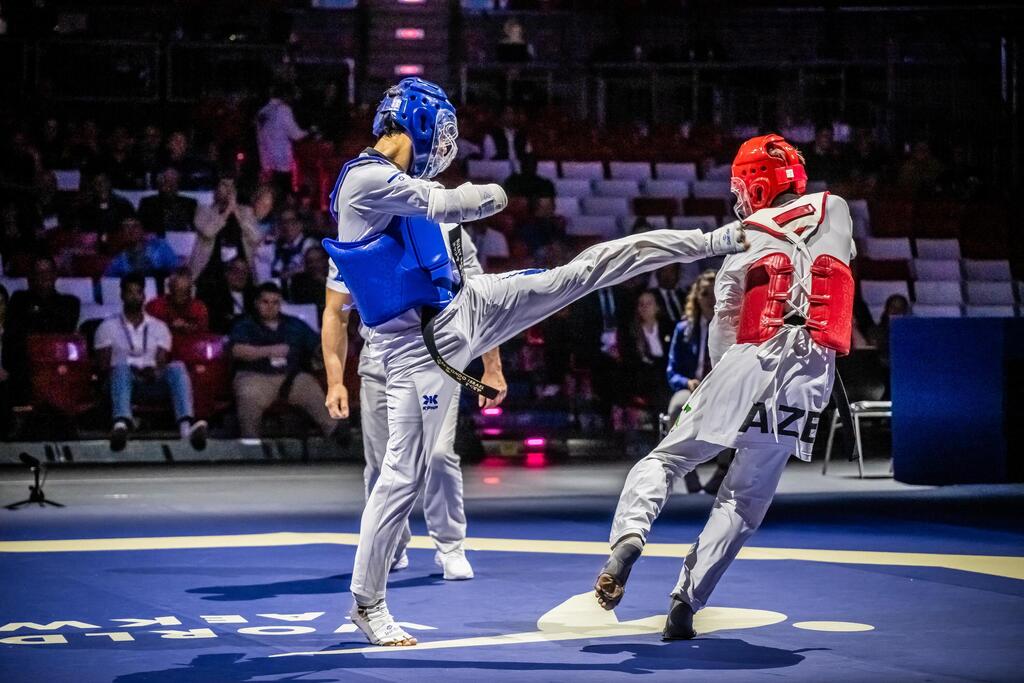
Asaf Yasur against Zeynalov in the European Championship final in Munich
(Photo: Israel Taekwondo Federation)
It came after a perfect day of fights. The world No. 1 in the under-58 kilogram weight class entered the tournament only in the semifinal, an advantage reserved for the sport’s best competitors. Facing him was Turkey’s Hamza Tarhan, who pushed him hard, but Yasur ultimately won 2-1 in rounds (13-12, 14-18, 8-17).
But everyone knew the real story awaited in the final. On the other side of the mat stood the surprising Azerbaijani fighter Sabir Zeynalov. After a tight, intense and dramatic fight, Yasur showed why he has held the top spot in the world rankings for more than three years, winning with a precise kick in the final second of the third round. He took the fight 2-1, 7-8, 13-11, 17-19, before running to wrap himself in the Israeli flag.
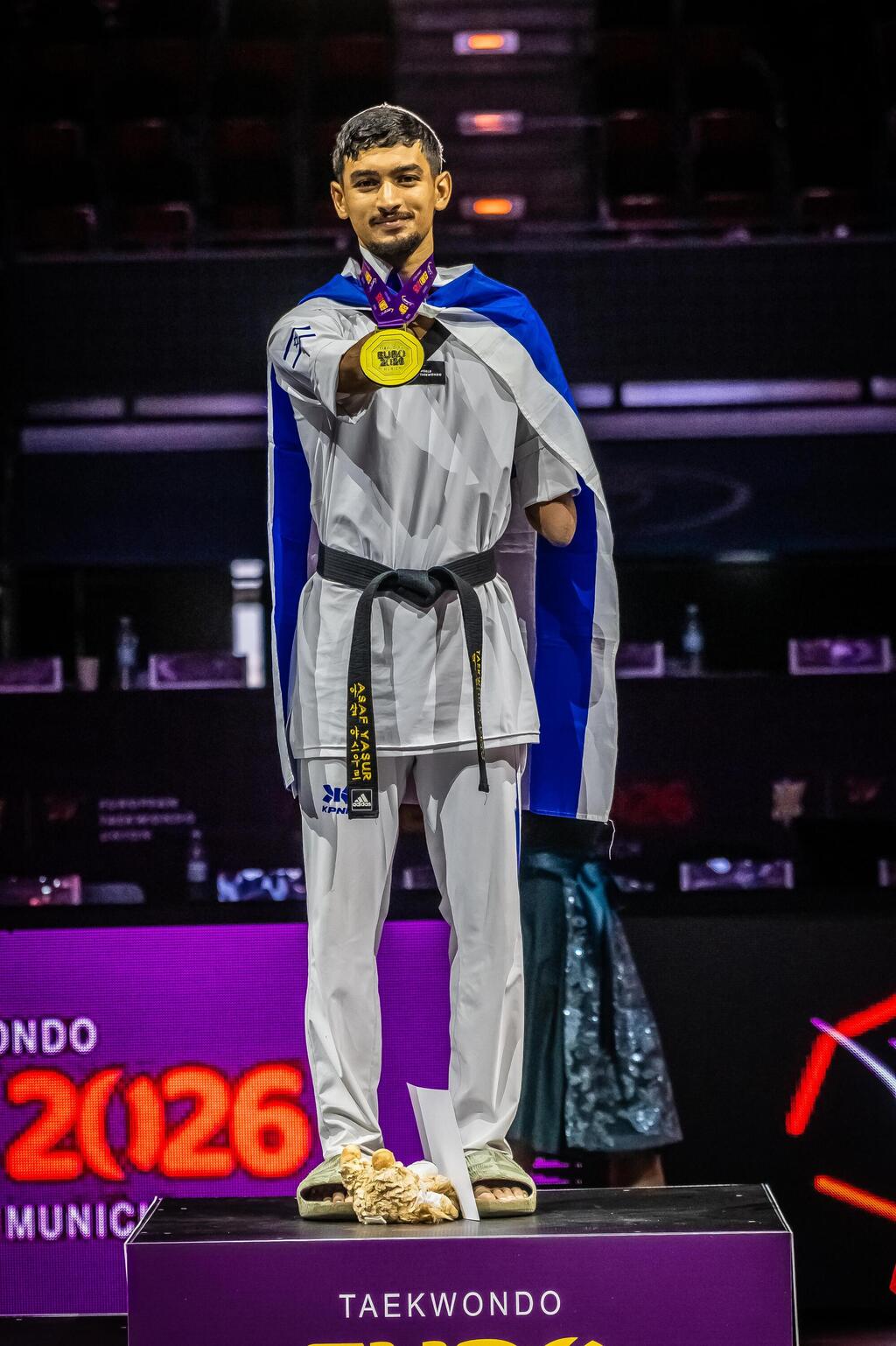
Yasur with the medal
(Photo: Israel Taekwondo Federation)
“The feeling is amazing, the best there is. It’s crazy,” Yasur told ynet. “I’m an athlete, and 11 years ago I set myself the goal of being the best at what I do and the best athlete I can be. That’s what I do in every competition. I prepare as well as I can and try to deliver the best results. I’m happy to do it again and finish with the gold medal, with ‘HaTikvah’ and the flag.”
This time it was against an opponent from Azerbaijan.
“I know him. He’s a strong opponent, and this was our third meeting, though we hadn’t faced each other in recent years. In the end, I stay focused on my own performance and what I need to do.”
The fight was decided in the very last second.
“I can’t stop watching the video of those final seconds of the fight. The kick I landed, the one that won the fight, came with 0.6-something seconds left. There’s no real time to think. I just knew I had to give everything, throw as many kicks as possible and try to hit the protector. In the end, he was leading. He thought he had already won. With 0.6 seconds left, I managed to sneak the kick in, hit his protector, get the point and win.”
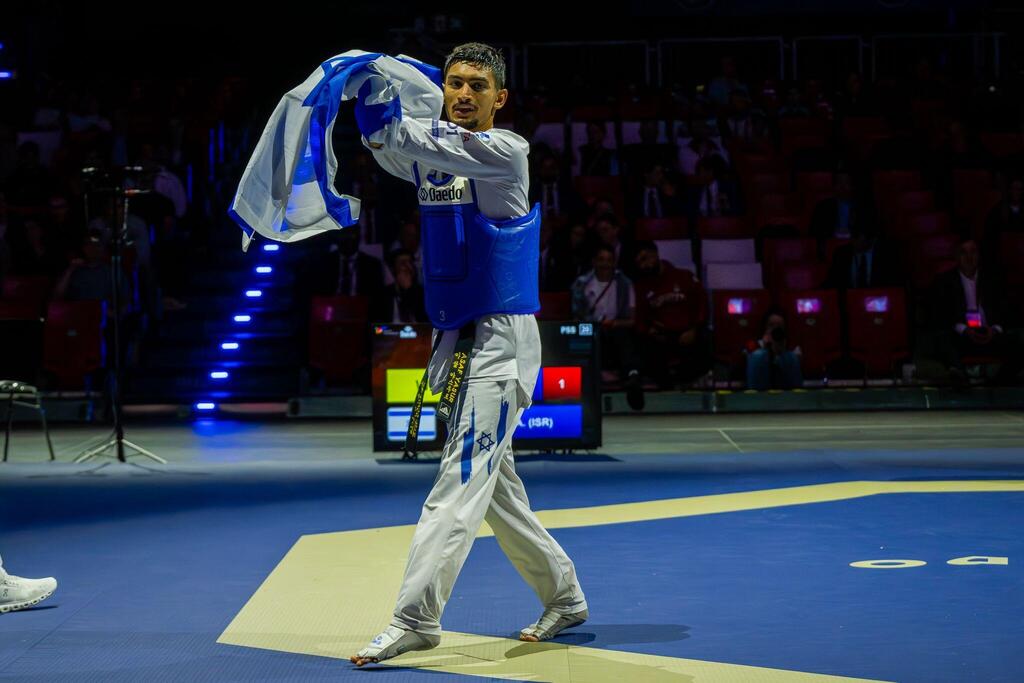
Yasur wins and runs to embrace the flag
(Photo: Israel Taekwondo Federation)
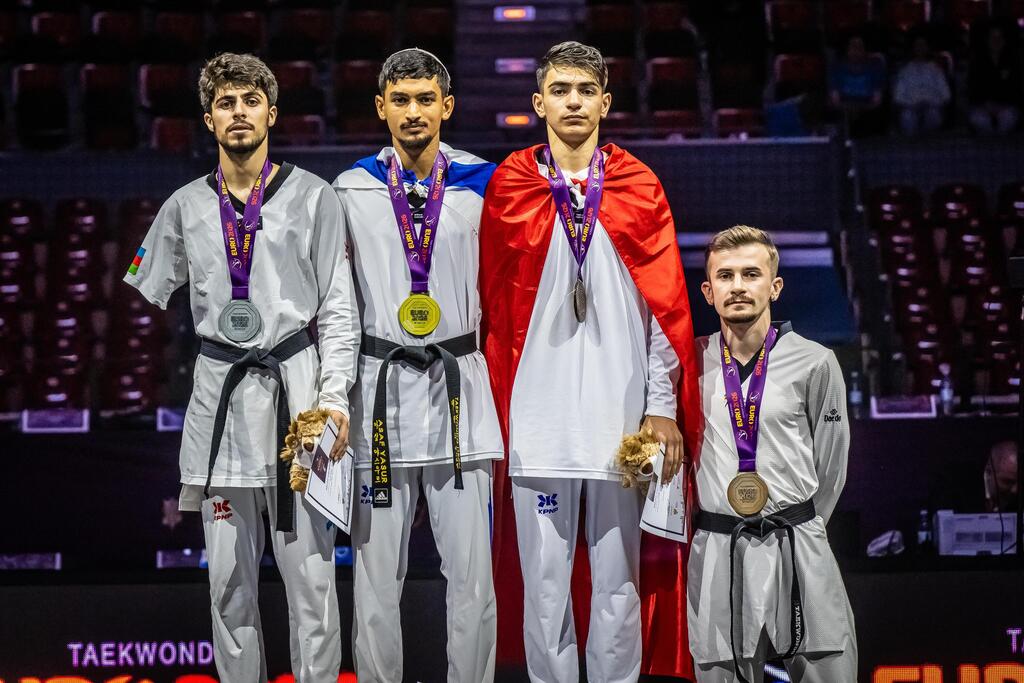
On the podium
(Photo: Israel Taekwondo Federation)
You lost both hands at 13 in an electrocution accident, a story many Israelis know well. In the past two and a half years, soldiers and terror victims wounded on and after October 7 have joined the circle of those coping with life-changing injuries. How has your experience helped them?
“I was in China on October 7, when the war broke out, and I told myself that as soon as I returned to Israel, I would visit wounded soldiers and injured civilians. They see plenty of doctors, medical staff and visitors, but I remember lying in the hospital and wanting to meet someone without both hands, someone I could ask questions, because only a person like that could truly understand what I was going through.”
“In that context, two more athletes have joined Israel’s Paralympic team. One is Omer, who lost an arm in the war. He has been training with us on the mat in Ramla for some time and should soon be ready to compete.”
Did October 7 intensify your drive to win?
“It was always there, but after October 7, the desire to bring even a small measure of pride became much stronger. The image of wrapping myself in the flag, standing on the podium with a kippah on my head, the Israeli flag and ‘HaTikvah,’ gives you a powerful push to win. I think that is an advantage we have as Israeli athletes: We are deeply connected to our country and our flag.”