

The picture of LeBron James crying on the court after the Game 7 victory over Golden State and Cleveland’s 2016 NBA title is one of the most moving images world sport has seen in the first quarter of the 21st century. It’s the perfect American dream — a kid born in a place where his odds of ending up in prison were hundreds of percentage points higher than of becoming an NBA player, who rose to become one of the best athletes in the world, a global icon, and who then brought a championship to the people at home.
There really was no way to treat that moment cynically; it personally turned me into a huge LeBron fan — not only because of his unprecedented greatness on the basketball court, but because of his life story, his social courage, because he has faced double standards his whole life and justified every bit of the impossible hype around him.
Gallery
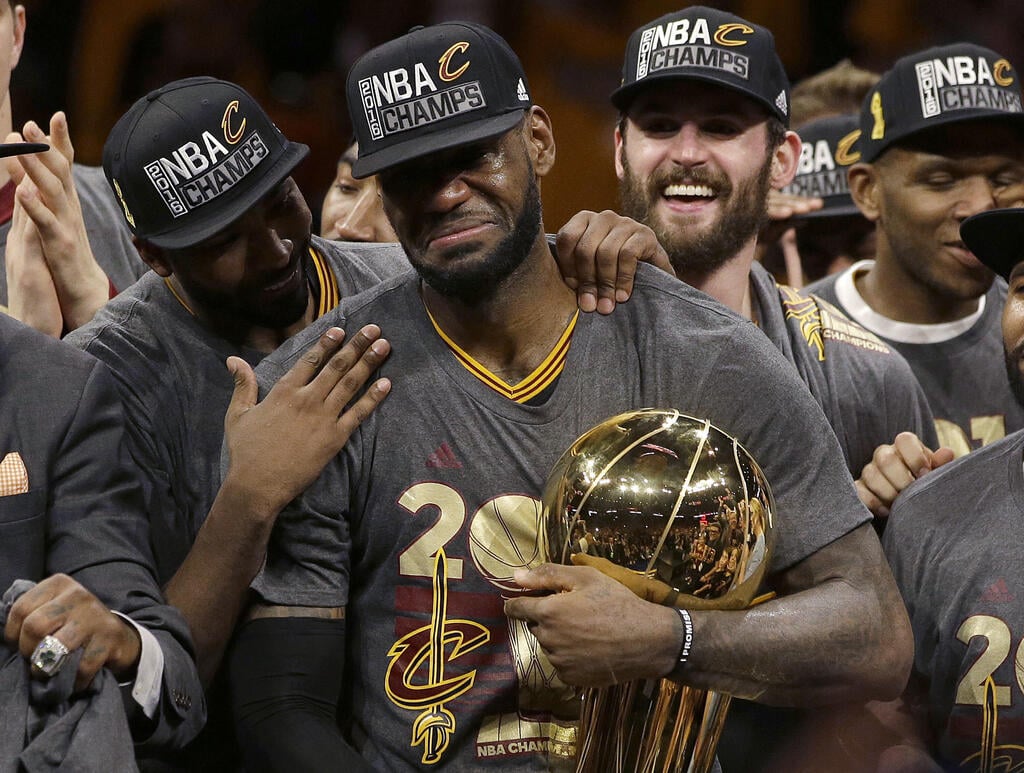
LeBron James cries on the court after the Game 7 victory over Golden State and Cleveland’s 2016 NBA title
(Photo: Marcio Jose Sanchez/AP)
Hating LeBron always seemed to me to say more about the hater than about King James himself, and so it made me very sad this week to get off LeBron’s train.
You can assume that almost anyone who knows LeBron or the NBA a little knew that the “second decision” he promised to announce this week would be just another commercial in a very long line of brands James has added to his portfolio in the past two or three years. What nobody could predict was how embarrassing the whole event would be.
The promo for the “decision of all decisions” looked as if LeBron were preparing a retirement announcement, or an announcement of a farewell season. Journalists who cover the Lakers and LeBron were quick to clarify that this was not the case, but if it wasn’t that — what else could prompt the star to generate a full day of such enormous expectations?
The last time LeBron did this, in 2010, he left Cleveland for Miami in a special televised broadcast watched by 13 million people — more than the average viewers of last season’s NBA Finals. A controversial, problematic event in many respects, but at least it was an impressive display of the media power that young 25-year-old LeBron already wielded, even before he had won a championship.
So LeBron also knew that when he promised another “decision” this week, he would truly trigger NBA fans. Ticket prices for the upcoming Los Angeles Lakers season surged within hours into the thousands of dollars, because people thought he was about to retire. If he had indeed used “The Decision” again now, this time to announce the end of his career, it would have been both a charming bit of self-deprecating humor and an honest way to close the circle from that moment when the LeBron we know today was essentially born.
What will happen to his legacy?
The big problem with what LeBron did this week is that it is not a one-off; it didn’t happen in a vacuum. He’s been spending recent years not as a man with the greatest basketball career in history, but as a narcissist afraid of aging, terrified that he’ll be forgotten after retirement — even though no one disputes his greatness; some will claim he is the greatest basketball player ever. They’re wrong, but that’s not a baseless claim — it really feels like he doesn’t get enough respect. A 40-year-old with a graying beard, four championship rings, more than a billion dollars in the bank and records that will stand for decades, is constantly tugging on people’s sleeves asking them to pay attention.
After his 2010 decision it took LeBron years to repair his reputation. He completed that work with the spectacular Cleveland championship, but also through the way he conducted himself off the court and by distancing himself, for example, from Michael Jordan. He led a movement of player empowerment in the NBA, opened a school in his hometown, co-founded an organization that encouraged Black youth to vote. When a Fox host told him “shut up and dribble,” he immediately replied: “We will not shut up and dribble, I have a platform too big to be silent.”
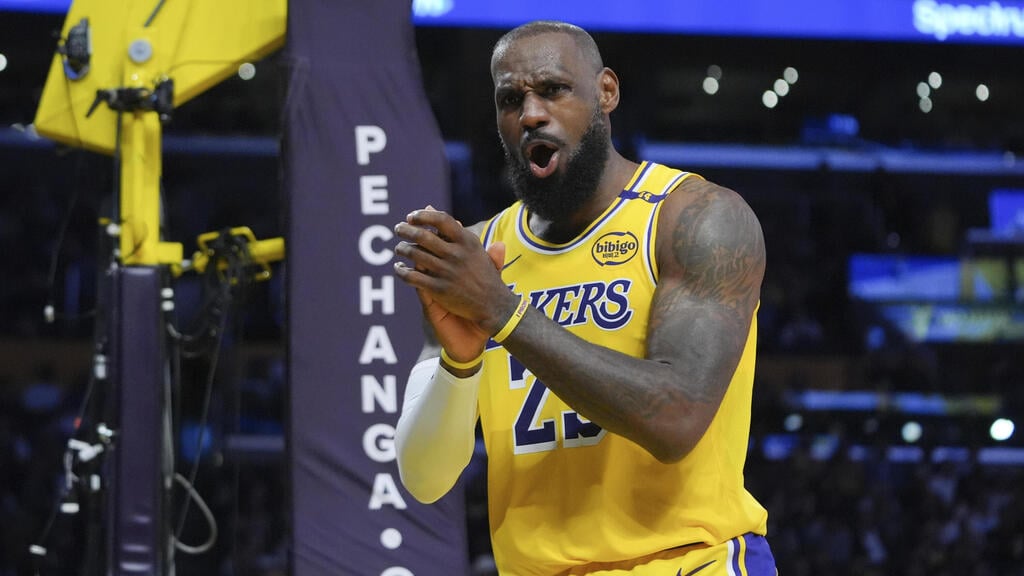
Los Angeles Lakers player LeBron James
(Photo: Jae C. Hong / AP)
He understood his status, the responsibility he carries, his place in history. He wanted to be remembered in the same breath as Muhammad Ali, Bill Russell and Kareem Abdul-Jabbar. That should be his legacy as well: a boy whose single mother gave birth to him at 16, who by age 13 had lived in 10 different homes, who faced the highest possible hurdles and then saw them raised even higher, and who despite being a once-in-a-generation talent was not spared racism, became one of the greatest athletes of his generation, a cultural icon, a truly important person.
All of that LeBron has been throwing away in recent years because he doesn’t really know how to finish his career and is terrified of what comes afterward. Until a few years ago, LeBron used his platform for activism, for leadership, to elevate important issues; but the current LeBron is just a marketing machine. He gets into stupid confrontations with journalists, he arranged a spot for his son on the Lakers that he didn’t earn, he wages odd wars with the ghosts of the NBA’s past, and his social feed is now devoted only to making money.
Here and there he still has something to say about sport. None of this is as important or meaningful as many of the things he said in the past; now everything is aimed at clicks and income. It’s not entirely mercenary — LeBron will always carry the chip on his shoulder from childhood trauma. Becoming a billionaire who gets richer and will eventually own an NBA team is his way of dealing with the past and building intergenerational wealth.
It’s all legitimate — after all, that’s the essence of the American dream as depicted in films and books — but he could have achieved all that without choosing to end one of the greatest sporting careers ever as a marketing content machine, an exhibitionist who can’t do without attention, a super-superstar aging man who has everything and yet it’s still not enough.