

Three years ago, Nir Golan did what he calls “something crazy”: he took his nephew on a bar mitzvah trip—eight NBA games in 19 days. “At some point Deni Avdija noticed us and asked, ‘Are you guys crazy? Are you following me?’ We really were in a different city every two days,” recalls Golan, 50, a devoted fan of the Israeli star. At one game he wore a Hapoel Jerusalem shirt. “Deni came over, gave me his wristband and said, ‘Even though you’re a Red—you deserve it, because every time you’re in the U.S., you come to see me.’” It’s just one example of the Israeli frenzy surrounding the Avdija phenomenon.
After his breakout season with the Portland Trail Blazers—and a significant leap in both performance and numbers—the 25-year-old is enjoying broader exposure and growing admiration among basketball fans and beyond. The excitement is only expected to intensify following his All-Star selection. But some have followed him religiously since draft night.
Gallery
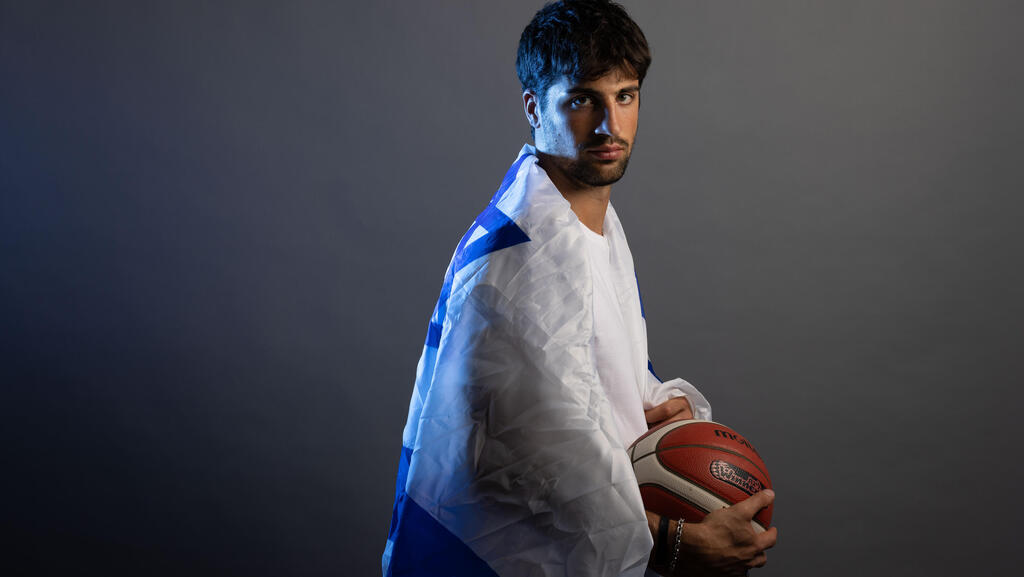
NBA player Danny Avdija prepares to leave for the European Basketball Championship with the Israeli team, Winner Shot
(Photo: Oz Moalem)
How religiously? Like Golan, who has already flown to the U.S. four times specifically to watch him up close. Others settle for waking up at dawn and not missing a single game—even if it means going to work bleary-eyed.
Over the years, Israel has produced many athletes with impressive overseas careers. Yet the affection surrounding Avdija is approaching record levels. It’s not just about Avdija the player, but about what he represents. People who have never met him speak passionately about his character, hang on his every postgame word, and have already crowned him the “national sweetheart.”
“There isn’t a single Deni game I don’t watch,” Golan says. “From the moment he left Israel, I followed every game. Thanks to him, I’ve visited cities I never imagined going to. I remember a game in Boston—we were surrounded by green jerseys. Deni hit a three, I jumped up and shouted, ‘Yes!’ A local fan—an Israeli who lives there—came over and said, ‘Brother, we’re Israelis too and we’re happy, but we don’t celebrate a Washington basket like that.’ I told him, ‘It’s not Washington’s basket—it’s Deni’s.’”
Patriot to the core
Golan belongs to a WhatsApp group called “Avdija’s Group,” with more than 90 members. “On the night of the trade, I wrote that Portland was a young, hungry team and Deni would become its leader, averaging more than 25 points. Everyone said 'no chance,'” he says. “But I thought it suited him—to be a leader. That’s why all of Israel is with him. His love for the country sweeps us along. I’ll never forget that on International Holocaust Remembrance Day he marked it on his shoes. He makes these small gestures that show he’s everyone’s kid. He’s so sweet.”
Danny Avdija speaks at All-Star Media Day
(Video: Ayala Or-El)


Beyond his on-court ability and the persona he projects, part of the surge in admiration is tied to the events of October 7 and the fact that he has never hidden his Israeli identity. He has spoken openly about it at every opportunity and repeatedly sent warm, comforting messages to the public back home.
He also enlisted in the IDF despite being projected as a high draft pick just months later, completing his service as an elite athlete through community and embassy activities in the U.S. Upon enlisting, he said: “I’m happy and proud to join the IDF as expected of every citizen my age. Like on the court, I’ll do whatever is required of me in this mission.”
Add to that his unwavering participation in Israel’s national team campaigns—including two gold medals with the U20 squad—and you get a figure many can identify with, especially in a time when moments of escapism offer comfort.
“We’re in a kind of national post-trauma,” explains Professor Yair Galily, head of the Sport, Media and Society Research Lab at Reichman University. “We’re looking for a reason to be happy. Deni’s success gives us a sense of returning to life. Over the years, many athletes avoided expressing any stance. Deni chose to openly present his Israeli side, and that inspires admiration.”
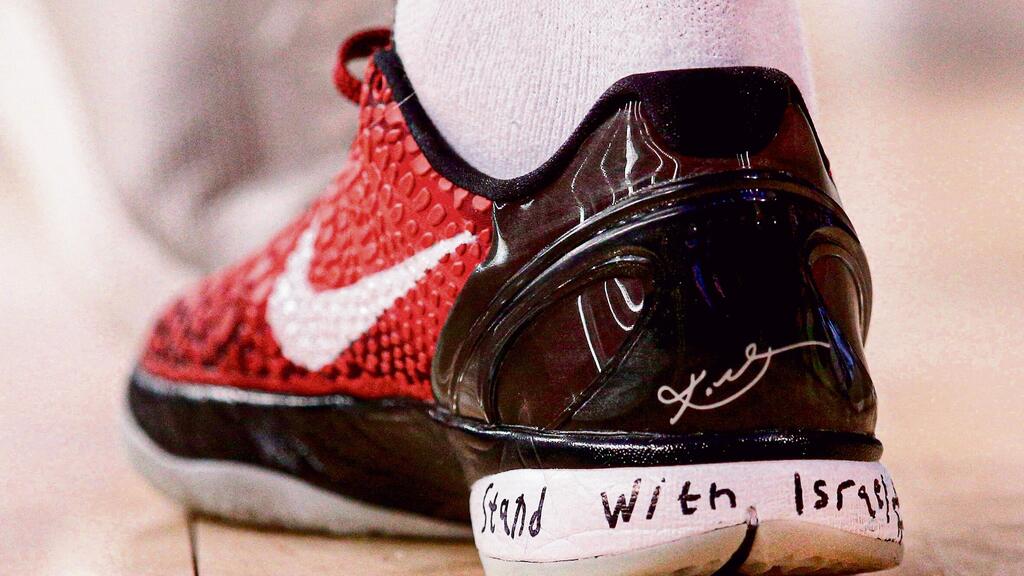
Deni Avdija's shoes after October 7
(Photo: Brad Penner/ Reuters)
Oren Levy, 41, has followed Avdija since he arrived at the NBA. “It’s great to see him stand at the microphones and talk about the country," he said. "Even when he was selected as an All-Star, he thanked the people of Israel—in English and Hebrew. Anyone here can connect to him and admire him. He’s a source of pride, no question.”
Dr. Alina Bernstein, a communications researcher at The College of Management Academic Studies, says that “Deni isn’t just a basketball player—he’s a kind of national emotional arena. Even after October 7, we’re still at war, and he’s an Israeli athlete succeeding abroad, offering a sense of pride that isn’t dependent on political positions. He’s one of ours operating on a global stage. An Israeli playing at these levels isn’t just a successful athlete—it’s proof that Israelis can be at the top of the world, not on the margins.”
She adds that his mixed family background allows different audiences to see something of themselves in him. “He’s ‘ours’ enough to feel a sense of belonging, so his success is perceived as shared success. Every time he expresses Israeli identity, it receives media resonance. It’s a story that comforts us as Israelis, especially when the country’s image is complex and sometimes hostile.”
A modern hero
Some fans saw Avdija as a teenager at Maccabi Tel Aviv; others wake up at dawn to watch him; some fly overseas to see him live. At most, they get a brief chat and a selfie. Yet if you ask them, they’re convinced they know him deeply—his personality, the warmth he radiates, the way he touches their hearts. It’s a familiar phenomenon of perceived closeness to a public figure, even without personal acquaintance.
“First of all, he’s stayed humble,” Levy says. “Even when he jokes about LeBron, it’s in good taste. Sometimes you want him to be a little more cheeky—he lacks a bit of that Luka Dončić edge. He’s just too good. I connect first and foremost to his character. He knows how to say the right thing at the right time in interviews. His past year has been incredible. I haven’t traveled to a game yet, but I just want to thank him for warming my heart.”
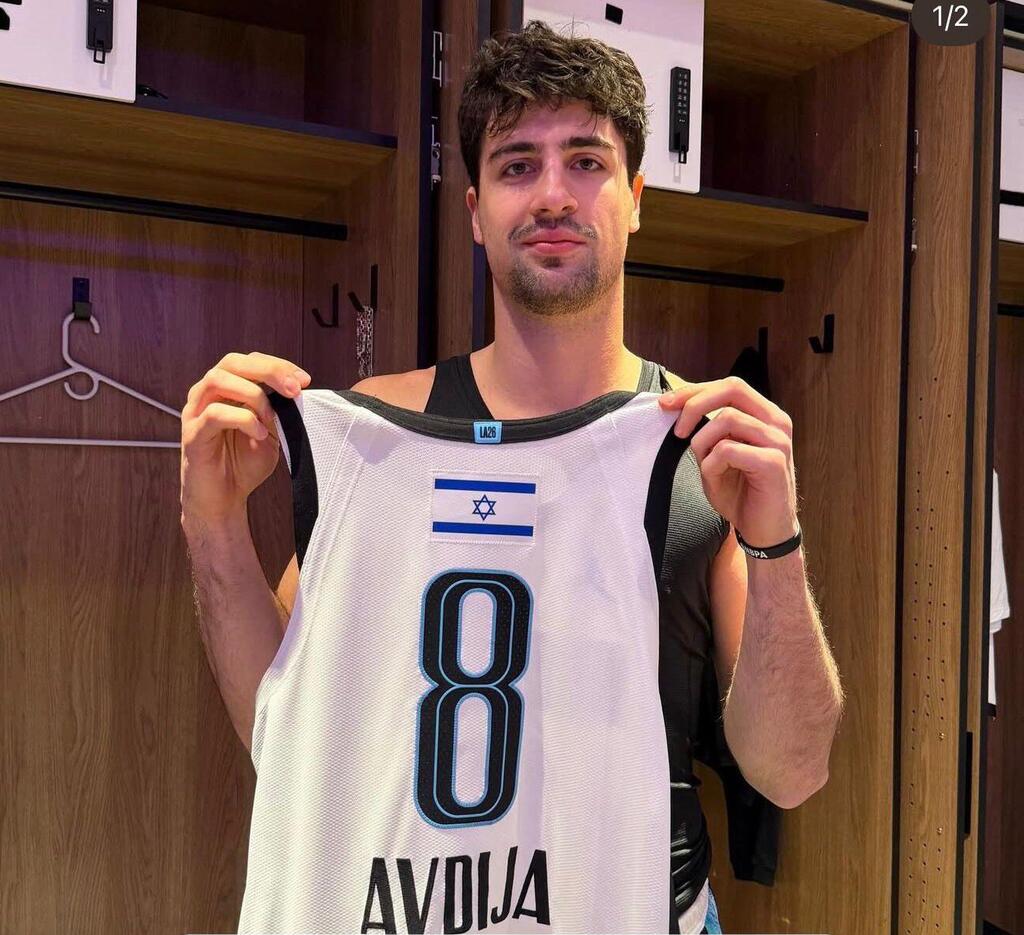
Deni Avdija with his All-Star jersey
(Photo: From the NBA's Instagram)
Galily explains: “Avdija is an example of a modern hero. Very accessible, unlike others. From a young age he liked the spotlight, and people around him understood that accessibility was an advantage. In the past there were many intermediaries—journalists, agents, parents. Today, in the social media era, the connection between player and fans is more direct, contributing to his high popularity.”
He adds that Avdija is perceived “like the neighbor next door—someone everyone ‘knows.’ He’s open to conversation even without cameras and projects authenticity. There’s no sense of coercion. His family background—a successful basketball-playing father and an Israeli mother—creates a story people love. Over the years he hasn’t been linked to scandals, and he’s taken the right steps toward becoming a consensus figure.”
Hagai Ozen, 48, an artist manager who founded the WhatsApp group, admits Avdija evokes unusual emotion in him. “He’s the player I’ve admired most since I was a kid idolizing Eli Ohana. I don’t know how at my age I still admire someone—he pushed my childhood button. My wife and kids feel like I have another child at home because of how closely I follow him. When someone says he’s not good enough, I take it personally. I work with singers and performers and see celebrities all the time—but anyone who meets Avdija? I’m jealous.”
Why did you start the group?
“I wanted updates on everything about him, so we gathered people who believe in him. We were there from the start, before he showed his full potential. We saw he had it. When I watch his moves, I tell myself: no way he grew up in Herzliya. Beyond ability, he has a pure look in his eyes. You understand that beyond the competitiveness there’s something very Israeli in him. He’s one of us, and he has star quality.”
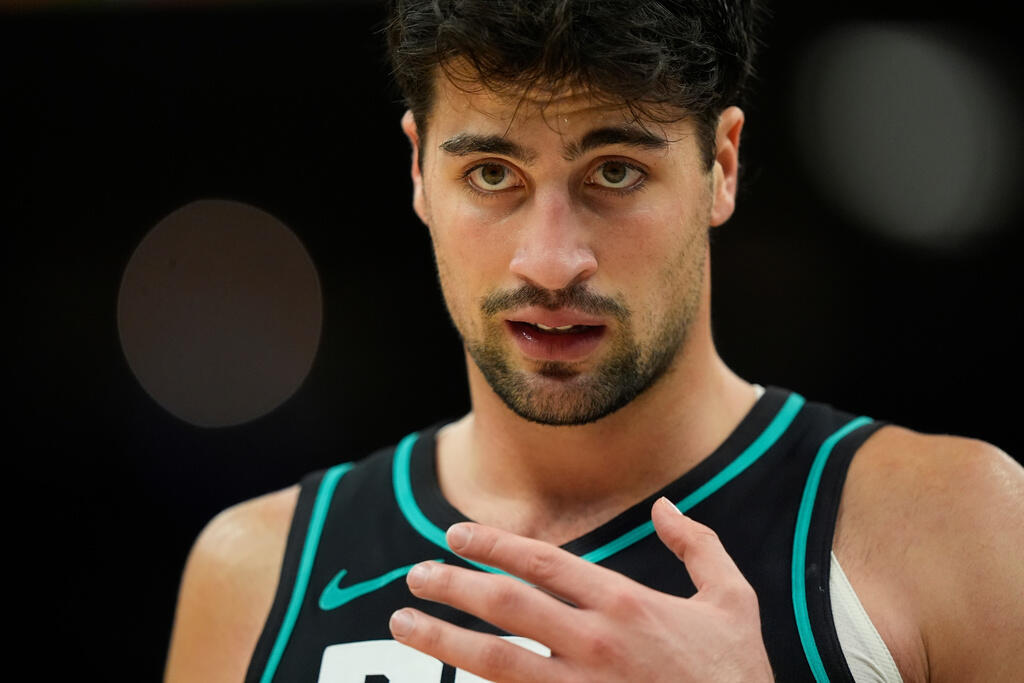
Deni Avdija in a Portland jersey
(Photo: Aaron Gash/ AP)
Ofir Majik, 43, shows similar devotion: “Right now I’m a Portland fan. Wherever Deni goes—I’m with him. I don’t even need an alarm clock; my body wakes up for the games. I met him in Ra’anana last year—he really is sweet. He represents hard work, commitment and values. For me, he’s an inspiration.”
The whole package
Avdija came of age during the rise of social media, allowing fans unprecedented glimpses into athletes’ lives. Beyond basketball, he showcases other interests: bold fashion choices, a love of vintage cars, and hobbies he recently described in an interview. “I live in a house on a lake and have a motorboat, so I take it into town to eat, sometimes fish a little. I built a studio at home—I make music, play and sing for fun. I also paint. I have lots of hobbies,” he said.
Bernstein concludes: “In the social media era, image is amplified. The way he presents himself creates a sense of immediacy. An imagined intimacy forms—but it feels authentic, and so the sense of ownership grows.”
“Athletes today are also brands and must build a distinct persona. The classic example is David Beckham. An athlete with unique style and identifiable hobbies—like Deni’s love of vintage cars—creates added value. The fact that Cristiano Ronaldo is the most-followed person on Instagram shows how far athletes can go when they offer content beyond on-field achievements.
“Avdija is good-looking, articulate and brings something extra—that’s a winning package. He didn’t come from nowhere, but the leap he made this season is highly impressive, almost a Cinderella story. From rookie to All-Star in a short time—that’s extraordinary. He handles it wisely, sets boundaries, and seems to know how to manage this arena.”