

The Marshall Islands, long considered the last country on Earth without a national soccer team, played its first official match this week — a 4–0 defeat to the U.S. Virgin Islands that officials nonetheless hailed as a historic achievement.
“Whatever the score, so proud of what was accomplished. Tonight, we made history,” the Marshall Islands Soccer Federation posted on X after Wednesday’s match, played at a high school football stadium in Springdale, Arkansas, with a capacity of 3,000.
The team’s debut came in the Outrigger Cup, a four-team tournament organized by the association and featuring two FIFA members — the U.S. Virgin Islands, ranked 207 in the world, and Turks and Caicos Islands (206) — alongside the Marshall Islands and the under-19 side of local club Ozark United.
Technical director Lloyd Owers, an English former semi-professional player who has led the project since 2022, described the occasion as “surreal.” He noted the program’s rapid progress in just two and a half years and its global attention, with coverage extending as far as the Financial Times front page.
The 20-player squad, which held just five training sessions before the game, blended experience and local talent, with ages ranging from 15 to over 40. Some players were based in the U.S., while others came directly from the Pacific islands.
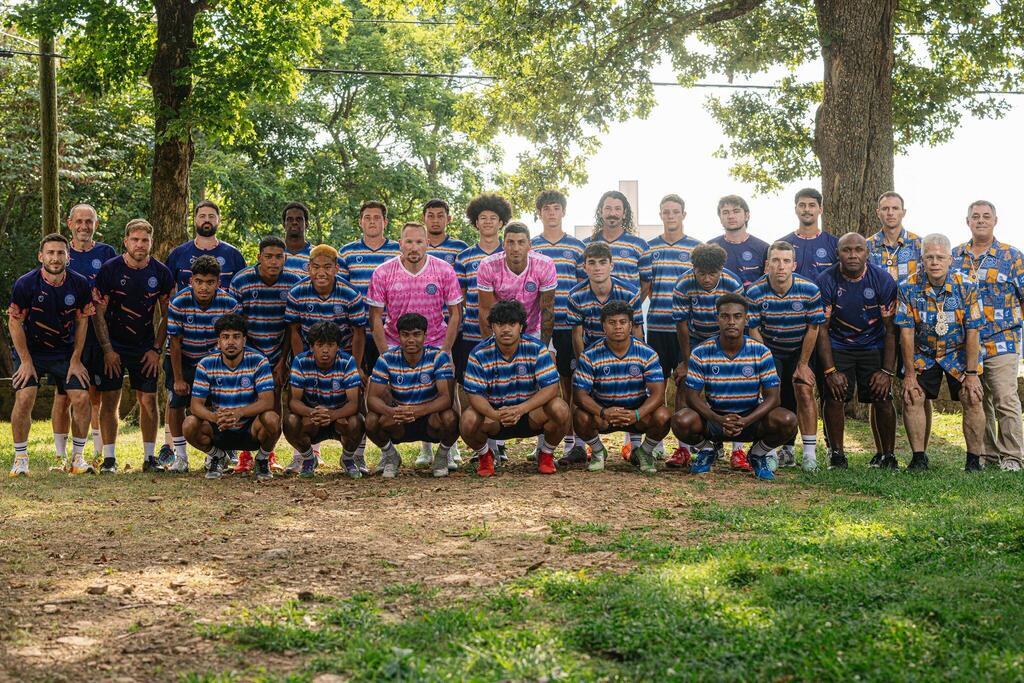
The Marshall Islands national soccer team
(Photo: from X)
Northwest Arkansas was chosen for the debut because it hosts the largest Marshallese community outside the islands, and provided a convenient meeting point for Caribbean opponents.
Founded in 2021 with the help of British volunteers and self-funding, the Marshall Islands Soccer Federation has its sights set on international membership. FIFA affiliation could bring up to $8 million in funding over four years, but the team must first join a continental confederation. A bid to join Oceania was rejected due to the lack of direct air connections. Officials are now weighing applications to CONCACAF, covering North and Central America, or the Asian Football Confederation.
The Marshall Islands, home to about 40,000 people in the Pacific, now joins the global soccer map with ambitions that stretch beyond its historic debut.