

After four years of preparation, Yotam Yizrael and Sagiv Nahon successfully climbed El Capitan in the United States, one of the most iconic and challenging climbing sites in the world.
It was far from easy: they considered giving up mid-climb, one suffered a sprained ankle and a surprise storm hit just feet from the top.
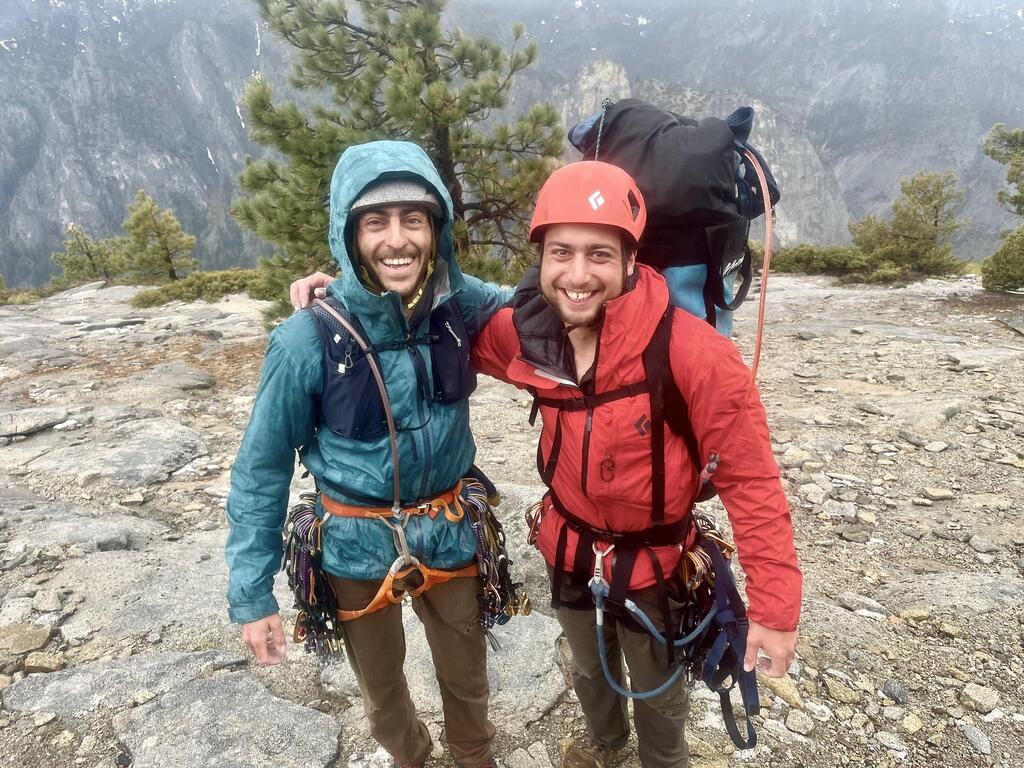
In a conversation with Ynet, they shared how they survived three days hanging from a vertical rock face, how they slept, how they managed their fears and what it felt like to stand at the summit. “I thought about the friends I lost, and even the ones I never knew.”
For 28-year-old Yotam Yizrael from Jerusalem, the idea first came to him four years ago. It quickly turned into a goal: to climb El Capitan – one of the world’s most famous and challenging cliffs to climb, with only about half of the climbers who attempt it actually reaching the top.
In 2025, after intense training, he made that dream a reality together with his friend, 23-year-old Sagiv Nahon.
El Capitan, located in California’s Yosemite National Park, is a massive granite monolith that rises about 914 m (3,000 feet) above the valley floor. It is considered one of the world’s ultimate challenges for rock climbing adventurers. Its sheer, smooth walls make it a legendary destination for “Big Wall” climbing, which requires several days of both physical and mental effort.
The site offers a variety of routes at different difficulty levels and is considered a pilgrimage site for experienced climbers.
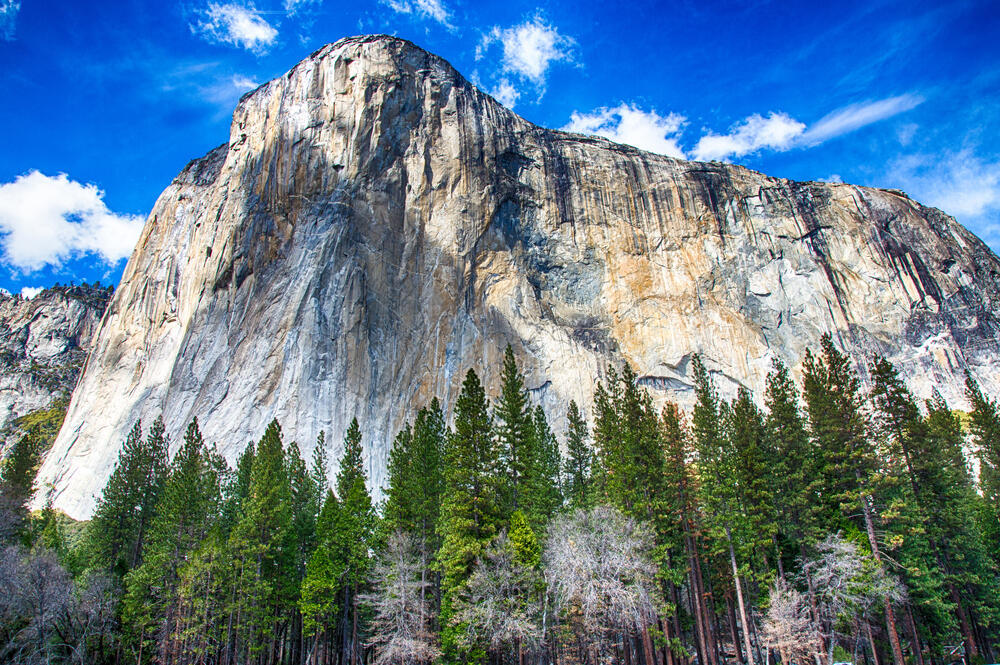
El Capitan. Every climber's dream
(Photo: Gary C. Tognoni / Shutterstock)
“The idea to climb with Yotam in Yosemite actually started when I was in Nepal,” said Nahon. “Yotam texted me and suggested we meet up in the U.S. and climb together. I knew immediately it was something I couldn’t turn down. We both knew you can’t go on a climbing trip without passing through Yosemite – probably the most famous climbing site in the world, which has shaped the sport as we know it today. And if you’re already in Yosemite, it’s a once-in-a-lifetime chance to fulfill a dream of us both: climbing El Capitan.”
‘You’re trusting your life to something you hammered into the rock’
Each year, between 600 and 800 climbers attempt to climb El Capitan, with a success rate of about 50 percent. The most popular route, known as The Nose, often hosts up to eight climbing teams at the same time.
Climbing El Capitan requires serious physical and mental preparation, and the route is considered challenging even for experienced climbers.
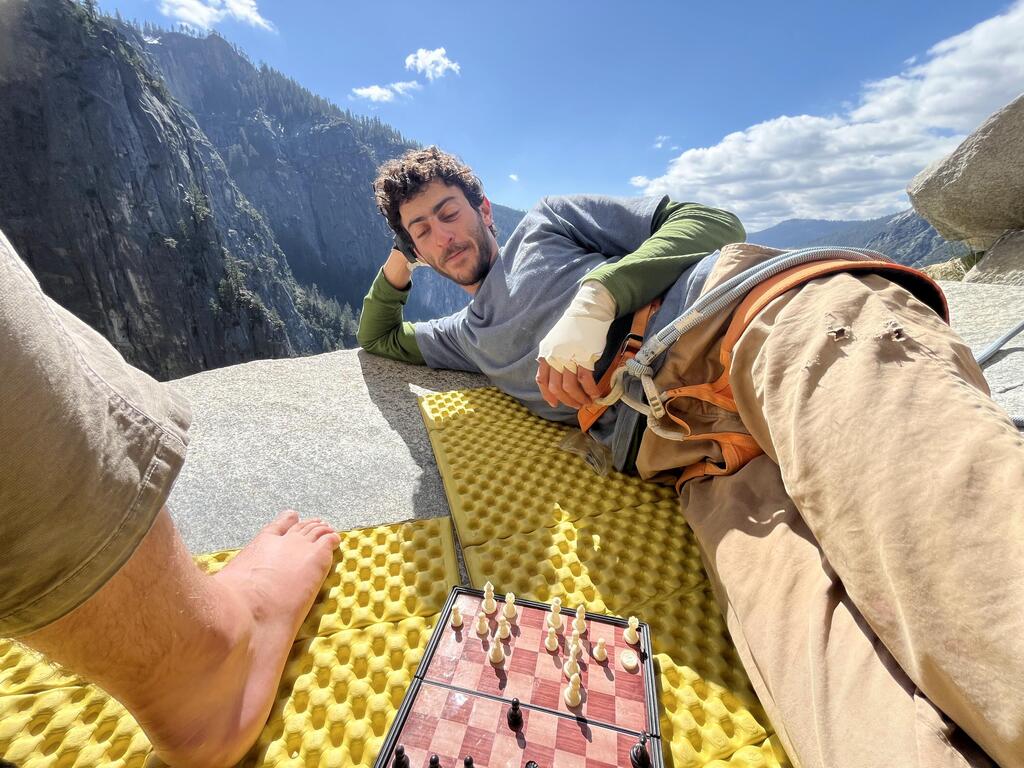
A moment of rest
(Photo: Private album)
“The idea came to me four and a half years ago, after I saw pictures, videos and stories from Yosemite,” said Yizrael, who has dedicated his life to climbing.
A year and a half ago, he completed a climbing instructor course and now teaches both in the field and at climbing gyms in Sde Boker and Jerusalem, at a gym called Allé. He also works for an agricultural company in the Negev, where he has spent the past five years.
“Historically, The Nose was the first route ever climbed on El Capitan. It was groundbreaking back in the 1950s when it was first ascended, and for me, it was an inspiration. It’s such a historic route that helped shape this sport. People pushed the limits of what humanity was thought capable of, physically, technically and creatively."
“Who would have thought to climb something like that in the 1950s? For me, it was a milestone moment. I hoped that one day I’d be able to do it and take part in the history of the field I engage in. So yes, it always inspired me and pushed me to get outside, to take on adventures.”
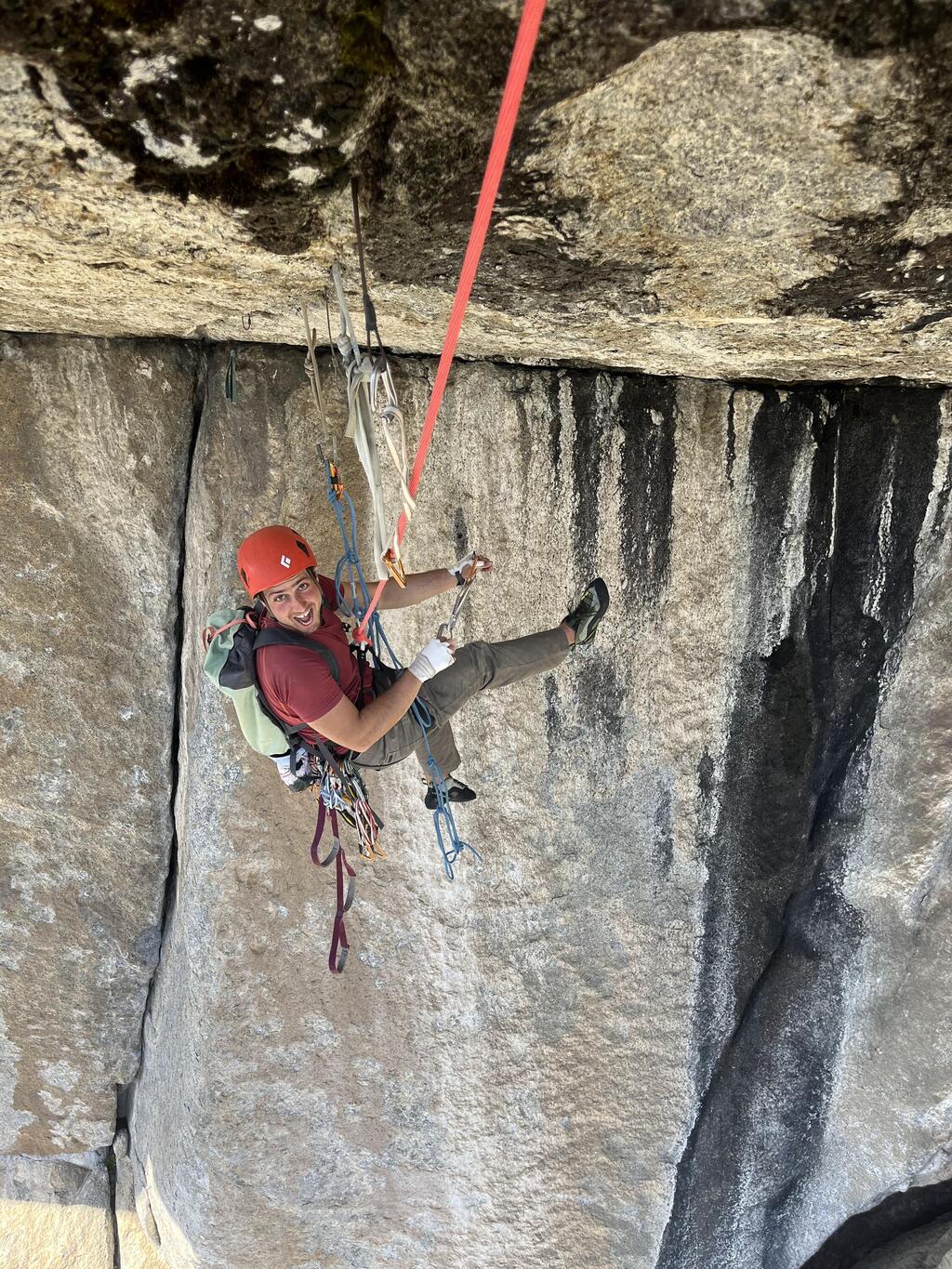
Four years of training
(Photo: Private album)
The Nose spans about 900 meters (3,000 feet) and consists of 31 pitches and is considered one of the most sought-after big walls in the world.
It combines free climbing with aid climbing, and presents both technical and psychological challenges. Since its first ascent in 1958, it has become a must-visit for climbers seeking one of the ultimate challenges in the sport.
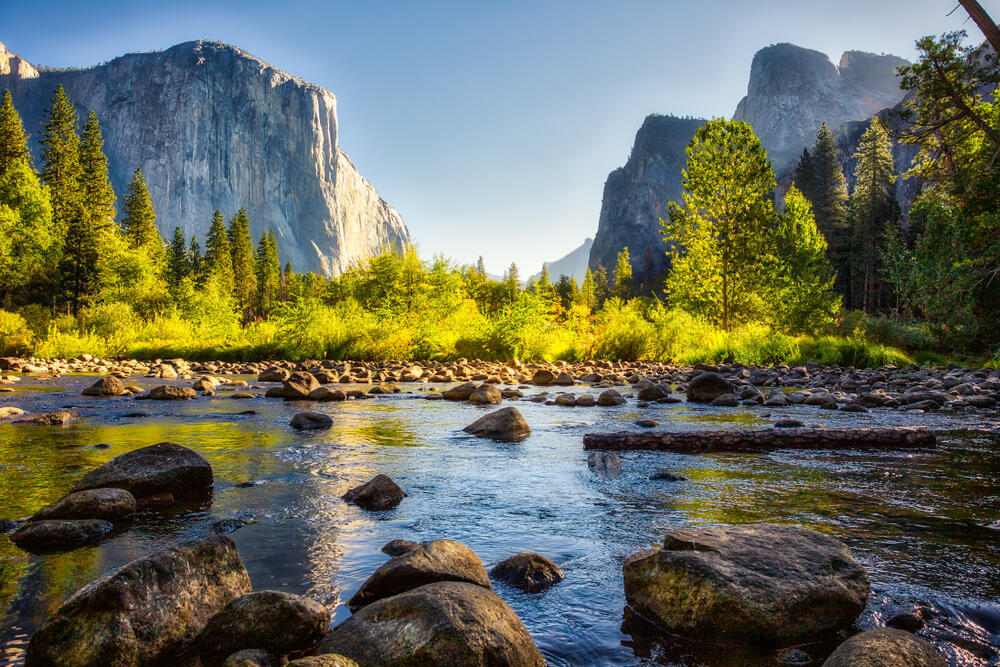
Yosemite National Park
(Photo: Stephen Moehle / Shutterstock)
When did it evolve from an idea to a real plan?
“Four and a half years ago. At some point, I told myself: That’s it, this is the goal, this is the dream I want to make happen. From that moment, it wasn’t just an idea anymore – it was a clear objective."
How did your family and friends react?
“There were a lot of worries. Even when El Capitan climbing was first conquered in the 1950s, it was seen as crazy, and it still sounds wild to people today. It goes against every instinct to head somewhere like that. So yes, there were concerns, but they also saw how important it was to me, for my own fulfillment. They know I’m experienced, that I take it seriously and don’t take risks lightly, and that reassured them a bit. My partner was very worried, but also very supportive. She tried to calm everyone else down – and herself – and that helped make it work."
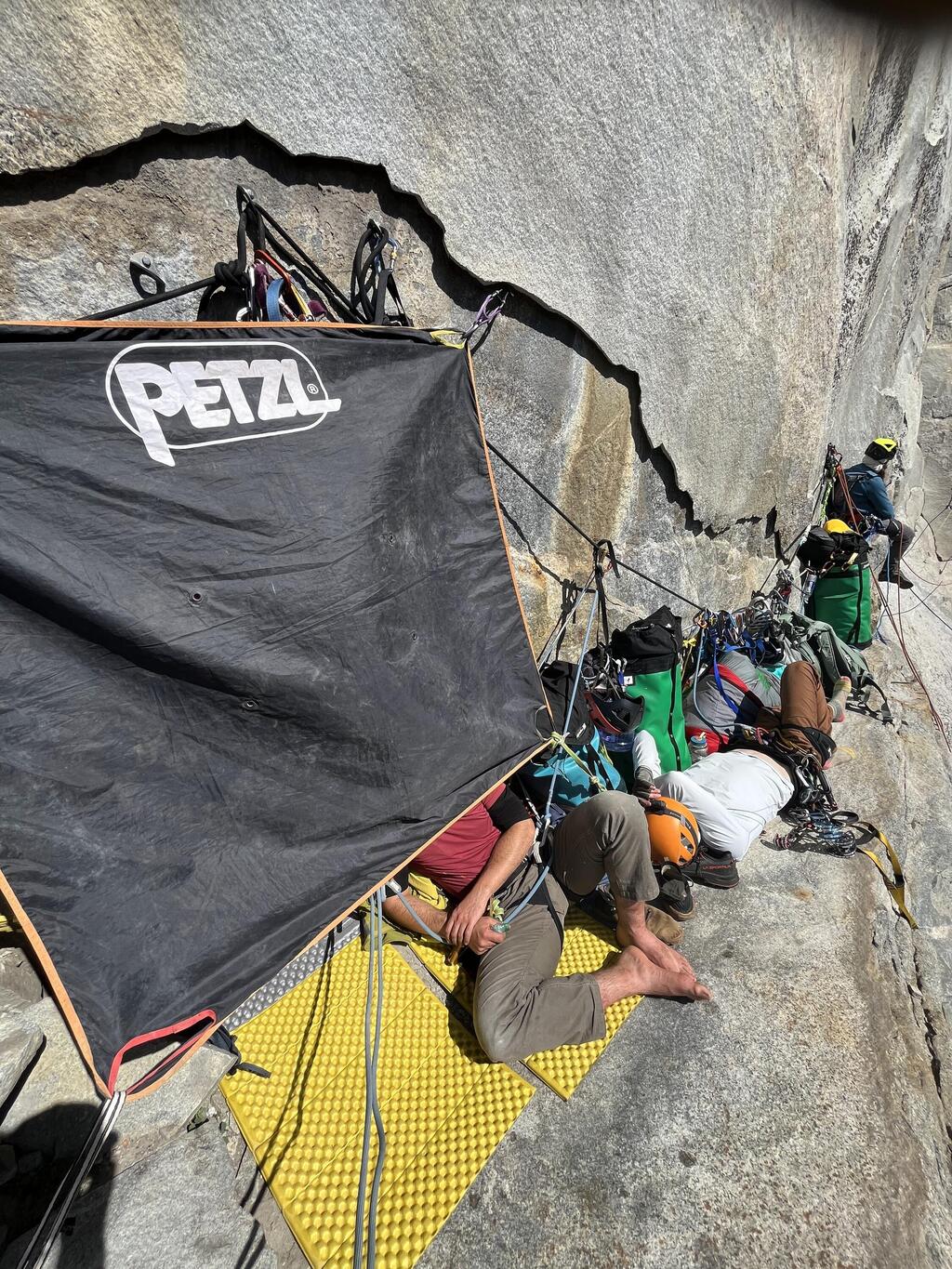
Sleping on natural rock ledges
(Photo: Private album)
How do you prepare for such an ascent?
“It’s not like training for a marathon, where you just add another kilometer each time,” Yizrael said. “There are three elements you have to train for at the same time: physical, technical and mental. Physically, you have to be able to complete the climbing moves along the route; it’s sustained exertion that requires high fitness.
"At the same time, the mental side is just as important, because this is a type of climb called ‘trad,’ short for traditional climbing. There are no pre-bolted anchors in the rock—you place your own protection along the way, using gear like cams and nuts. That’s a lot more stressful. You’re trusting your life to something you placed in the rock yourself, and if you didn’t place it right, it might not hold you. Sometimes there are big gaps between placements, too, which raises the fear level."
“Beyond that, you need to recognize the type of rock, in this case, granite. Each kind of rock behaves differently: limestone, sandstone, granite - they all have different holds, strengths and chances of breaking. To really understand how granite ‘talks’ to you, there’s no substitute for climbing on it, over and over. But there’s no granite in Israel, so I traveled a lot, looking for similar rocks. I climbed granite in Brazil, Argentina, Italy - each destination was carefully chosen to help me train and prepare for Yosemite."
Only 50% of climbers reach the top
(Photo: Private album)
So for four years, training was part of your routine?
“Completely. Even during the period that I worked in agriculture, I stuck to a training routine of three climbing sessions a week. Some of it was indoors, but mostly outdoors, on real rocks. In Israel, I focused on physical fitness, and abroad, I worked on the technical and mental parts. Over the past three years, I've traveled a lot. I spent three months in Europe, half a year in South America, a month in the U.S., and shorter trips to Italy, Austria and other places. Every opportunity I got was another step on the way to the mountain", tells Yizrael.
A dream come true. Yizrael.
(Photo: Private album)
Did you train for emergency scenarios?
“All the time. We prepared seriously, it’s like a battle drill, going on this route. We planned our gear carefully and went over what we’d do if we had to abandon the climb at any point; what it would take, where you’d rappel, what to do if we ran out of water or food, or if someone got injured. We had a first aid kit with us and also a satellite phone by Magnus, which let us check in and get weather updates."
‘Wow, what the hell am I doing here?’
Yizrael and Nahon began their ascent of El Capitan and reached the summit three days later - on the third day, at 4 p.m. “For the first time, and considering our level, that’s a very reasonable pace,” they explained. Some climbers take four days, while the most experienced can complete the climb in just two.
What does a day of climbing look like?
“You wake up really early, before sunrise. Pack your gear, eat something and at the first appearance of light, you start climbing. You don’t stop until you reach the next sleeping ledge. The only real rest is when your partner is leading the next pitch. Other than that, you’re just climbing."
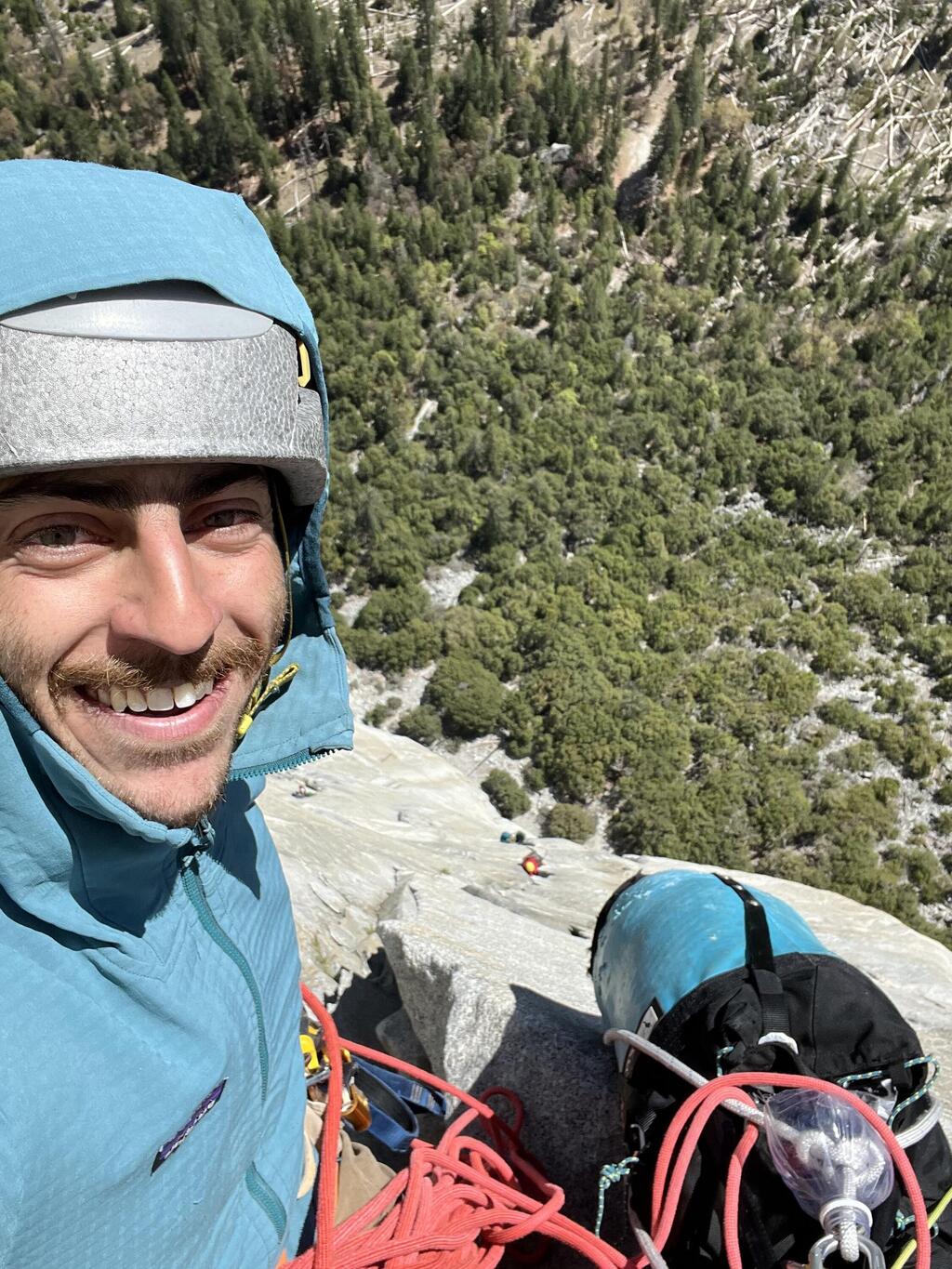
Hundreds of meters in the air
(Photo: Private album)
El Capitan is nearly vertical; how do you sleep?
“There are two options. One is to bring a special tent that hangs from the wall, creating a flat sleeping surface. But it’s heavy and very expensive. Instead, we slept on natural rock ledges along the route, ledges that climbers know are suitable for overnight stops. Some are tiny, about a meter and a half by 40 centimeters, and you sleep sitting up, two people. Luckily, we managed to get the more comfortable ledges. If you get to one and it’s already taken, you just keep climbing to the next one."
Is there a risk of falling off during the night?
“Yes, absolutely. It’s just a piece of rock - sometimes even sloped - and you sleep while clipped into a harness that’s secured to the wall, so you don’t roll off. But if you move around a lot at night, you could wake up finding yourself hanging in midair."
How do you handle food and water on the wall?
“You bring very little, only what you really need. A lot of energy bars, a few sandwiches, one for each day, and water with electrolytes. In the morning and evening, we cooked oatmeal with dried fruit. We also had pre-made meals. You calculate in advance how many calories you need per day, and that’s what you bring. Not more."
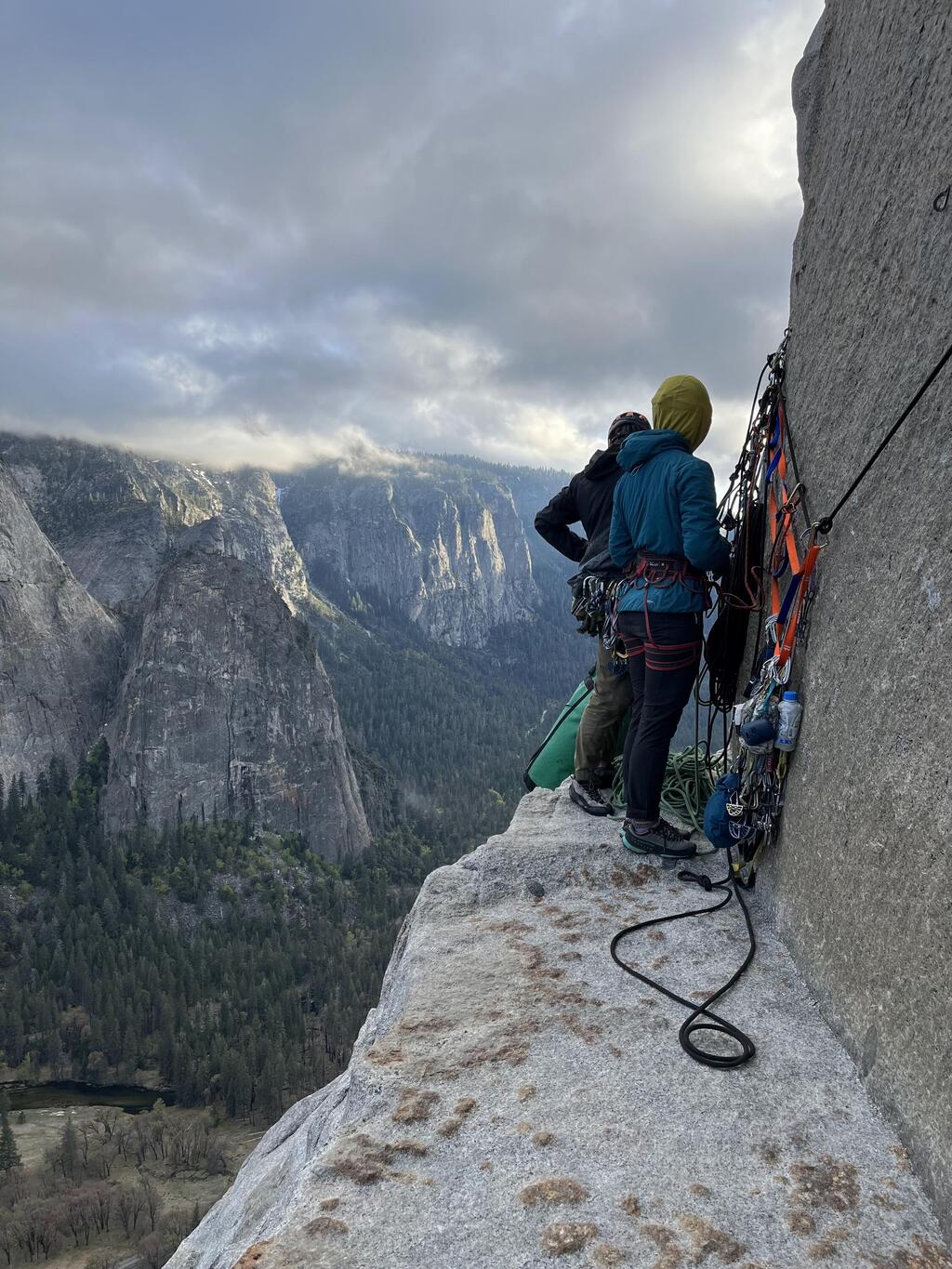
(Photo: Private album)
And what do you do when you need to use the bathroom?
“You use a bag. You can’t throw anything down - it’s dangerous and unethical, since there are hikers and climbers below. So, we prepare kits with bags and toilet paper, use them, and seal them in double bags. When the water jugs are empty, we cut them open, put the used bags inside, seal them, and carry everything with us until we finish the climb. Only then do we throw it away."
What’s the interaction like with other climbers on the wall?
“Friendships form, and there’s a real sense of camaraderie - we’re all in a dangerous place, doing this out of passion, and we are willing to help when needed,” said Yizrael. “At one point, an American climber near us got stuck just three meters below me without the gear he needed, so I threw him a rope, and he reached me safely. There was never a doubt whether to help or not; it was obvious. Later, those same climbers reached the summit before us and waited there just so we could descend together, because the way down is tricky and confusing. It includes both rappelling and ‘reverse’ climbing. That moment really proved how important mutual support is on a journey like this."
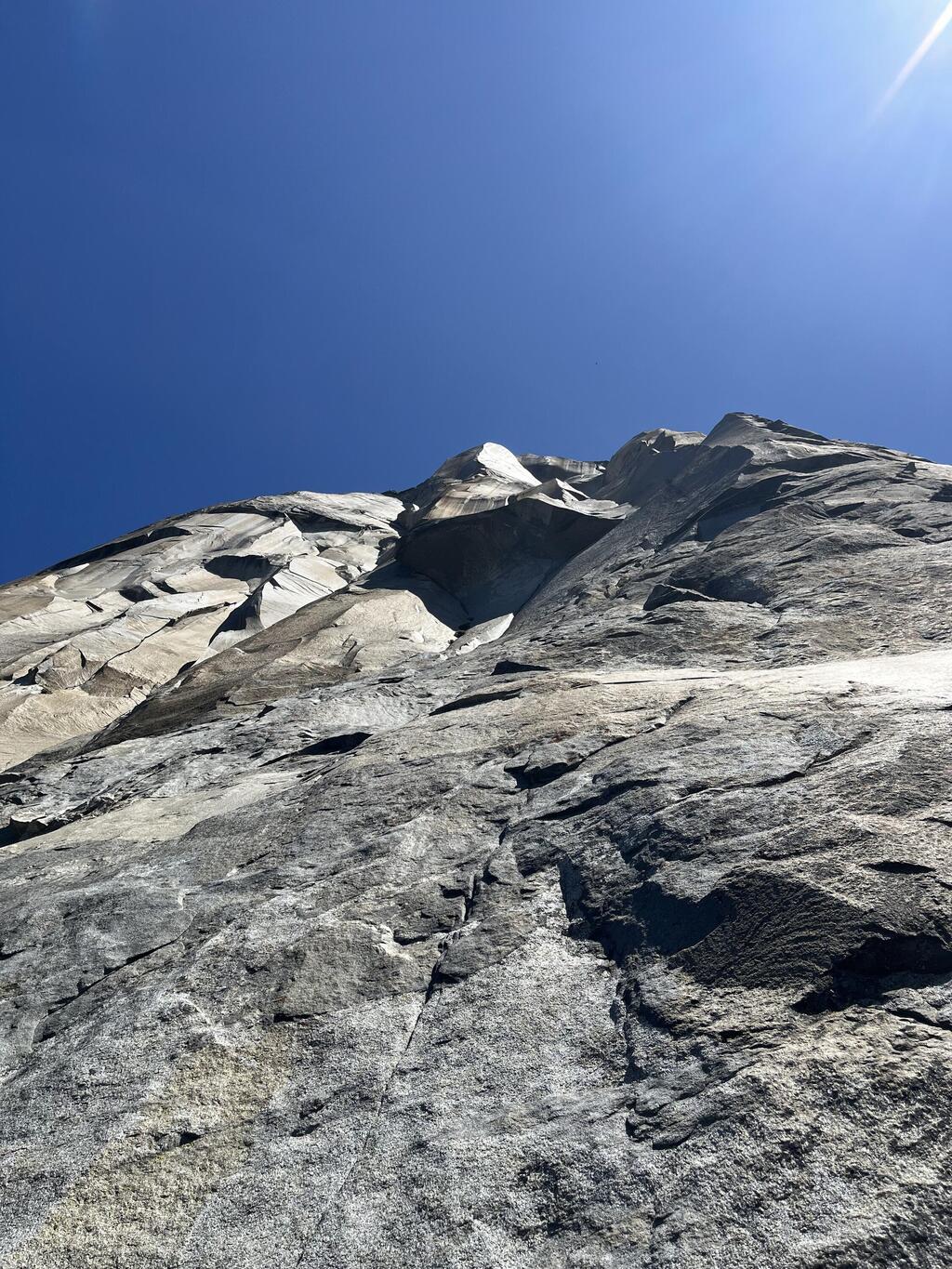
El Capitan, looking up
(Photo: Private album)
What goes through your mind at night when you’re sleeping hundreds of meters above the ground?
“Wow, I’m sure everyone would give a different answer. I looked at the stars. You see all of Yosemite Valley below - it's dark, the stars are blazing, you can see the whole Milky Way. And I thought, how lucky I am. It’s not something you can take for granted, being able to do something this big, to be in such a special place. It felt so good to be able to fulfill a dream. So every night, when I had that quiet time to myself, I just felt gratitude."
Was there a moment you considered giving up?
“On the morning of the second day, I sprained my ankle,” Yizrael said. “It happened on a section where, to move forward, you have to run sideways while suspended on a rope; it's about a 15-to-20-meter run, back and forth a few times to build momentum and grab a small piece of rock that lets you continue. It’s based on what the first climbers did here in the 1950s, when they ran out of holds on the wall, they started swinging side to side until they found one. It’s crazy. I swung too hard and slammed my foot."
“I don’t think I had a moment when I said, ‘I’m quitting,’ but there was concern. I thought that if I broke my leg, I’d have to descend. But I knew I was going to grit my teeth and keep going. I was in a lot of pain that day, but giving up wasn’t an option. It was a crisis, a really tough moment. When you’re hanging on the rope, holding your leg, and your partner is 20 meters below, asking, ‘Yes or no? Are we continuing or heading down? What’s your status?’ Then we decided to continue. Simple as that."
If you decide to quit, do you just head down? How does that work?
“You can quit, but it means rappelling hundreds of meters. Technically, it’s complicated, takes a long time, and it’s dangerous. Most climbing accidents happen during rappelling, not climbing. And those are the kinds of accidents that end in death. So it’s a very risky part, and you don’t want to get to the point where you have to rappel the whole route. It can take two days."
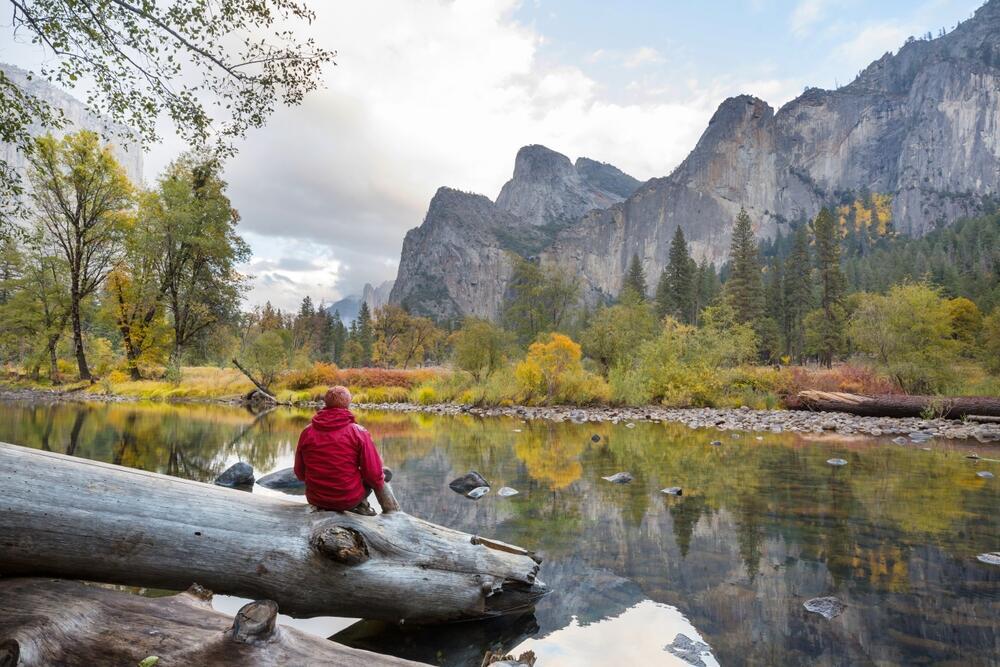
Yosemite valley
(Photo: Stephen Moehle / shutterstock)
Was there a moment of pure fear?
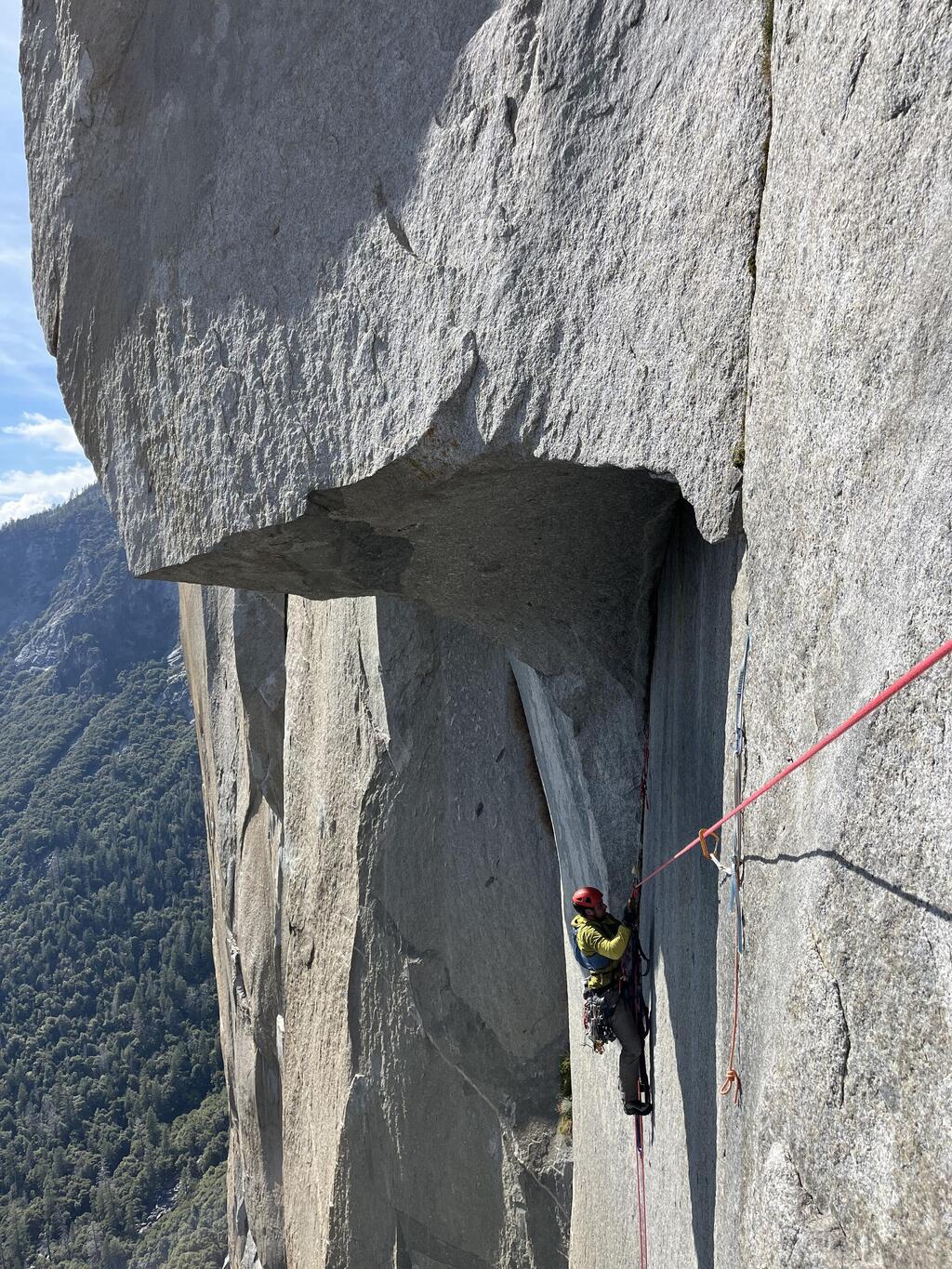
“The final section is a 'chimney' climb; you’re in this massive gap between two giant rocks. You can’t see the valley below at that point, but what you do see is the ledge you’re standing on, and you have to squeeze your way upward, back against one wall, feet and hands pushing against the other. It’s not a style I’ve done much. That section, about 17 to 20 meters, had no protection, nothing to clip into. If you fall, you hit the ledge below. I knew a fall there would be bad - broken legs, a complex rescue. That’s when I felt real fear, and I asked myself: ‘What the hell am I doing here?'
Did you carry your phones during the climb? Was there a reception?
“Yes, we had them in our pockets the entire time; they had all the route maps installed. There was a reception along most of The Nose, so theoretically you could check Instagram or the news before you go to sleep. In practice, the signal wasn’t strong enough for much, and we kept our phones on silent mode. It was a profound experience; you feel disconnected, even though you’re in one of the most famous national parks in the world, with rescue teams available. We also had a Magnus satellite device that could send updates and provide weather forecasts; this was especially helpful when clouds rolled in and the cell signal got weak."
A last-minute drama just before reaching the summit
What was that final moment like, those last seconds of the climb?
“Our original plan was to reach the top, relax in the sun, enjoy the view, maybe call our parents,” recalled Nahon. “But the reality was the exact opposite. The final 20 meters of the route suddenly turned dramatic. It started to rain, then quickly became heavy hail. I was climbing a narrow, slick section of wall that’s tough even when dry. Normally, it wouldn’t have been a problem, but in that moment, you had to be fully focused, as any slip could result in injury.”
“When we finally reached the summit, there was no time to rest. We packed our gear and immediately began the descent. Luckily, the climbers who had become our friends along the way were there waiting for us; they knew it was a complex trail down, hard to find, and dangerous. On the way back, we had to shelter under boulders as lightning struck nearby and the rain kept pouring. It was very dangerous. Still, it was the summit of the route, the summit of the dream."
When you reached the summit, did that hold special meaning for you?
“My dream had been to reach the summit and sit there for a moment alone, to think about my friends who were killed in the war, and even those I never knew. I wanted to dedicate that moment to them, to show that life goes on, that we keep fulfilling dreams, also for them. But then came the downpour, and the lightning, and the race for survival. Instead of a quiet ceremony at the top, we had to flee. It almost cost us our lives. It took us three and a half hours to get back down. So no, we didn’t have a 'memorial siren'. But we definitely kept those who fell in our thoughts."
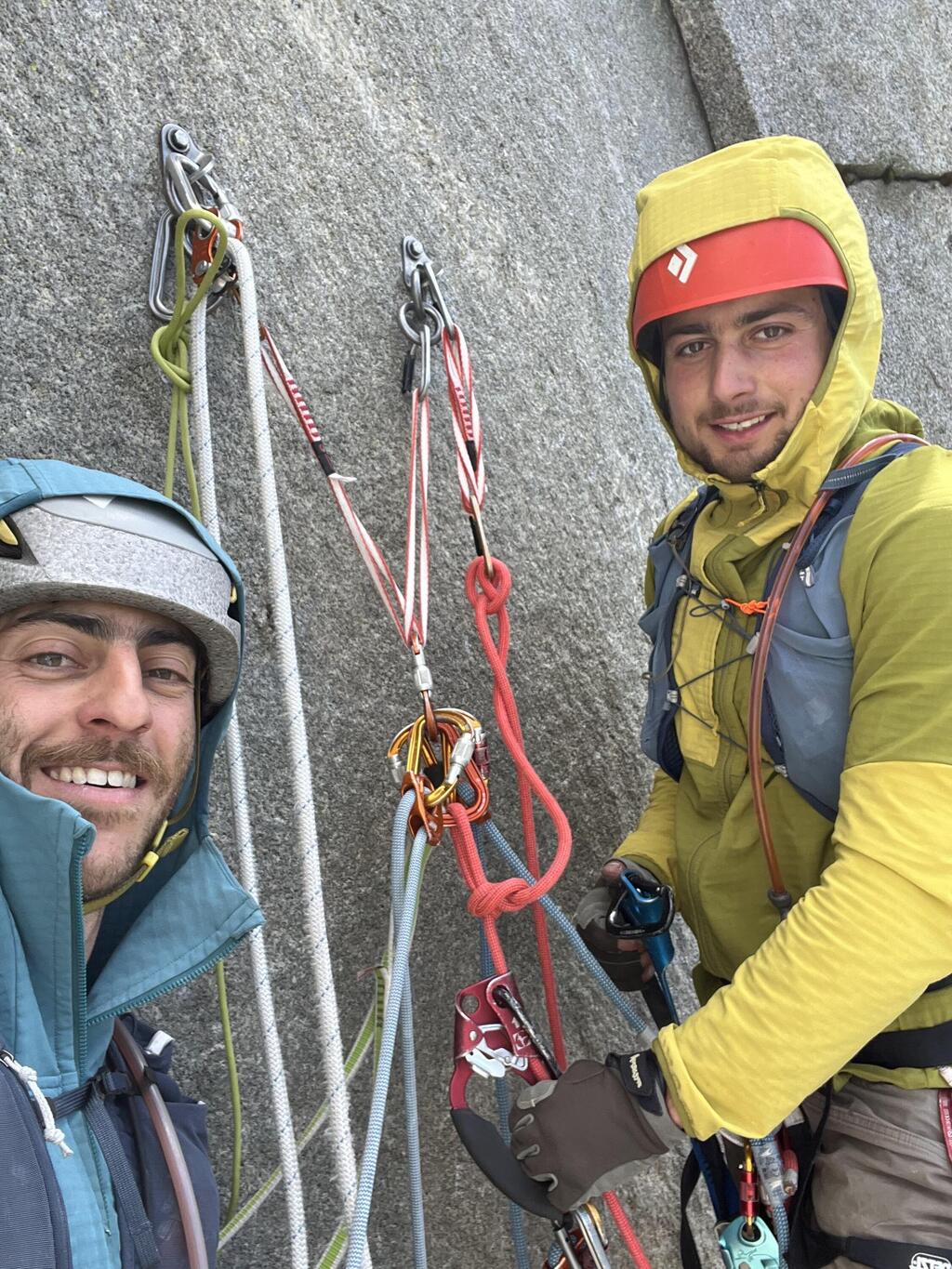
Sagiv Nahon and Yotam Yizrael. Plan to come back.
(Photo: Private album)
What moment will you remember most from the climb?
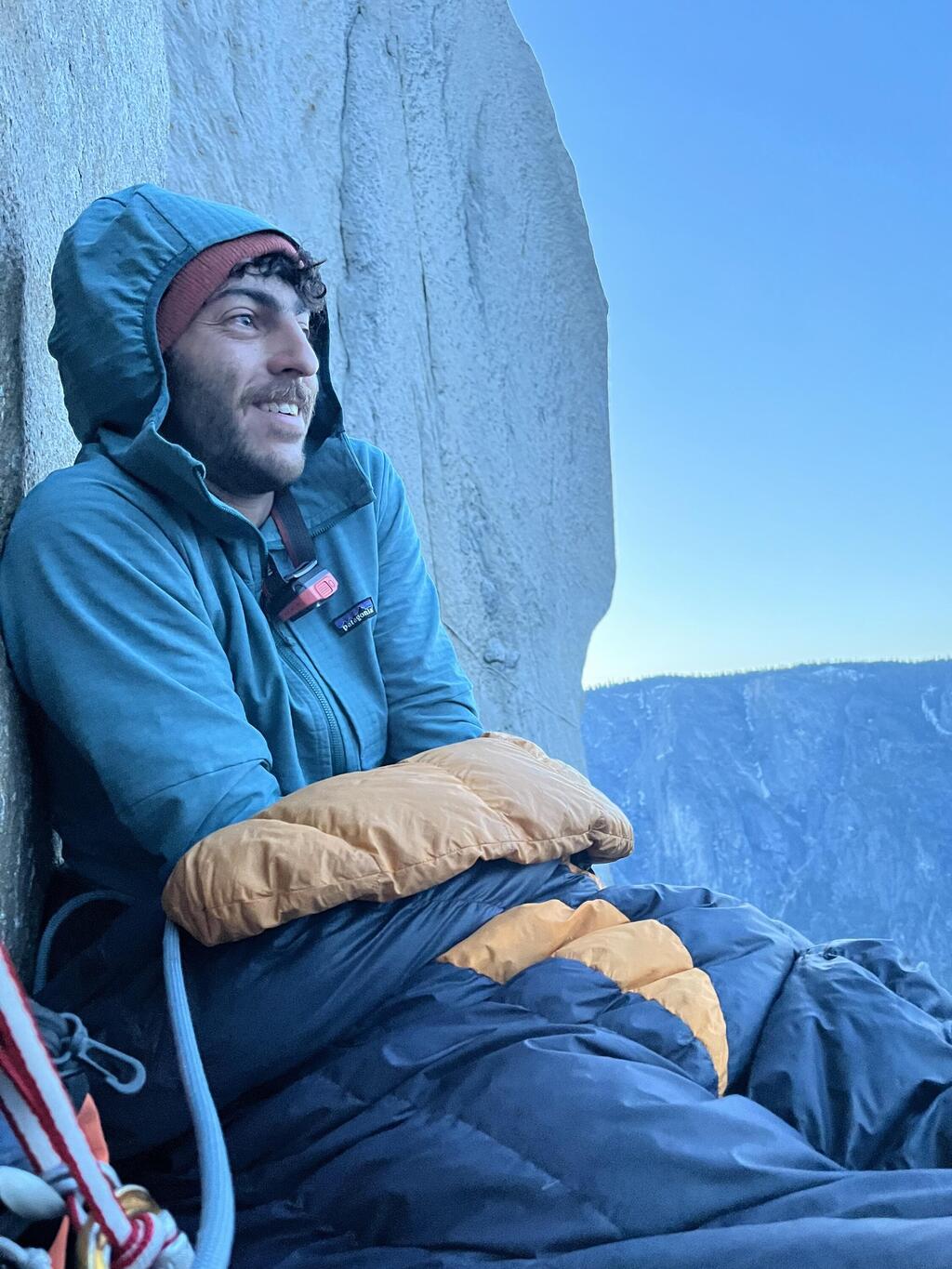
Nahon: “It might sound surprising, but the nights on the wall were some of the best parts of the whole climb. Sitting down for dinner and watching the sunset from hundreds of meters up, with the whole valley spread out beneath you, it’s a sense of peace that’s hard to describe. Everything feels so quiet. It really feels like a million-star hotel. On the second night, we slept on a sloped rock ledge about three meters by one, with all our gear; but seeing the stars, even if it’s because you woke up from discomfort, that’s a one-of-a-kind experience."
Yizrael: “I'd definitely say it was the moment I sprained my ankle. Three years of preparation, training myself mentally, physically, technically, and then something you can’t control just happens. That’s the moment you realize what matters, it’s not the body, it’s the mind. As long as your thoughts stay steady, you keep going. Even when your body hurts, even when you’re limping. Your mindset shapes your reality. That was a powerful lesson. I’ve always known I was determined, but that moment, it was a live demonstration that the mind sets the pace, not the body."
Do you already have your next climbing goal? The next dream?
“This summer I’ll be climbing in the Alps. There are a few major routes I want to do there. But even those, for me, are just another step on the way."
Will you go back to El Capitan?
“Absolutely. My dream is to do it in less than 24 hours. I want to go back to Yosemite and climb The Nose in ‘low mode’, meaning in about 14 hours. That’ll take climbing it another two or three times and training hard for it."
What about Everest? Is that included in your plan?
“It’s too expensive. Climbing Everest is a sport for the wealthy.”
Let’s say you get a sponsor and the funding, would you go?
“Honestly? Yes. If I had the funding, I’d go climb it."
Do you have any tips for someone who wants to climb El Capitan?
“Wow. First of all, you have to really want it. And I mean really. After I finished the route, I talked to another Israeli climber who did The Nose last year and helped guide me through my training. I told him that I can’t really recommend this route to anyone. It’s so grueling, so hard. You’re constantly carrying 10 to 12 kilos, climbing in an environment that screams, ‘You shouldn't be here.’ These are two things that are very frightening and dangerous. You just have to want it with all your heart. If you really want it, logistics and training are the easier part."