

Cape Verde arrived at its first World Cup as one of the tournament’s great underdog stories. On Monday, that story became even bigger.
The small Atlantic island nation stunned world soccer by holding Spain, the reigning European champion and one of the favorites to win the tournament, to a 0-0 draw in Atlanta. For Cape Verde, known as the Blue Sharks, it was more than a point. It was the greatest result in the country’s sporting history.
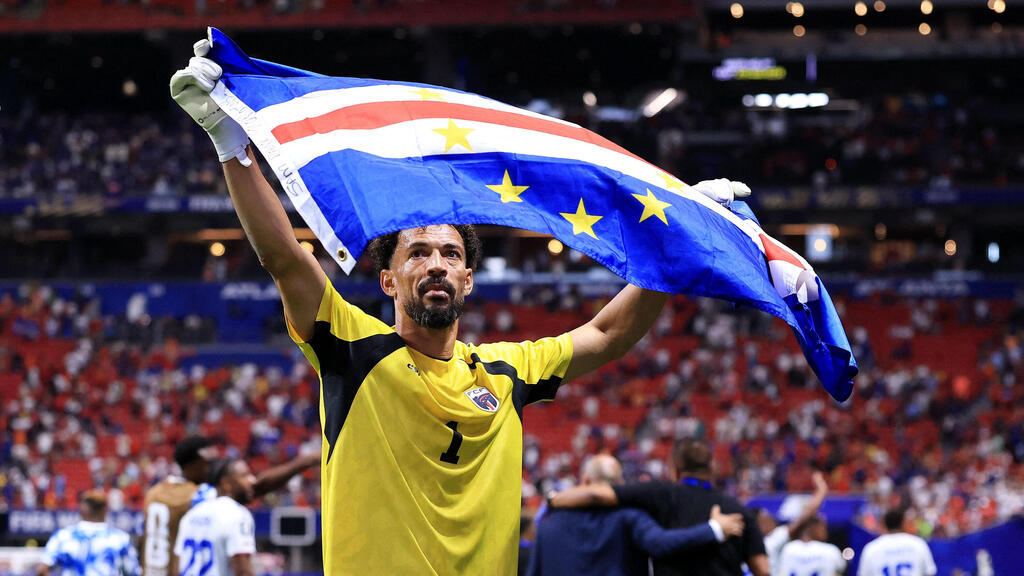
Spain dominated the match and recorded 13 attempts in the first half alone, but Cape Verde had a human wall in goal. Vozinha, the team’s 40-year-old goalkeeper, produced a string of outstanding saves, denied several clear Spanish chances and inspired the defenders in front of him with a performance that brought the crowd to its feet.
By the final whistle, Vozinha had become a national hero. Within minutes, he had also become something else: a social media phenomenon.
During the match broadcast on Brazilian channel Cazé TV, commentators urged viewers to follow the veteran goalkeeper’s nearly empty Instagram account and push him toward 100,000 followers. The response was instant. Within minutes, his account had surged past 220,000 followers. By the final whistle, it had reached 389,000. Five minutes later, hundreds of thousands more joined, and by the time the exhausted goalkeeper reached the dressing room, he had crossed one million followers.
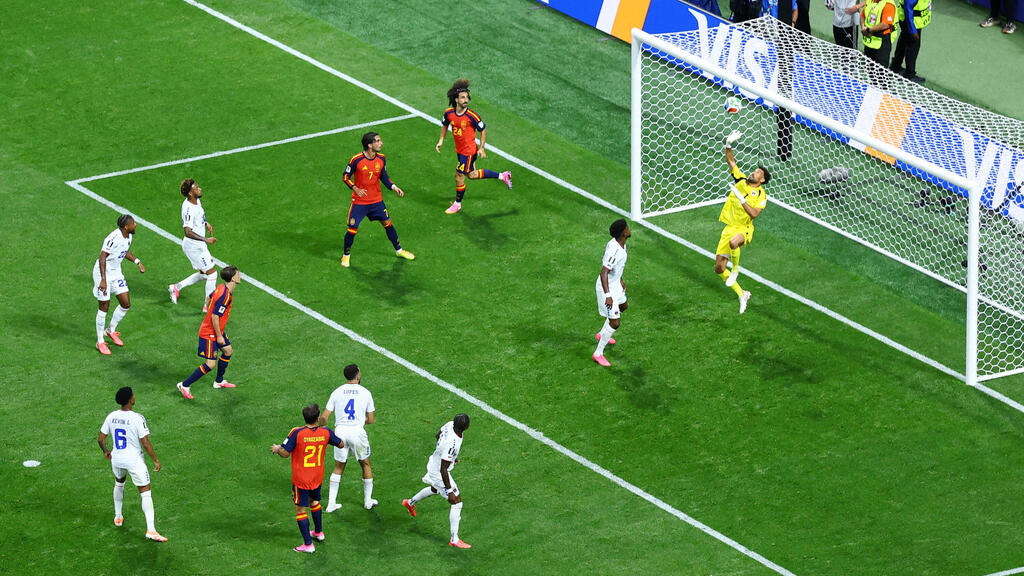
The match against Spain
(Photo: REUTERS/Bernadett Szabo)
Vozinha’s real name is Josimar José Évora Dias. His father named him after Josimar, the Brazilian right-back who starred at the 1986 World Cup. His nickname, Vozinha, means “the voice” in Portuguese, but he has said it came from his grandparents, who raised him while his father served in the army and his mother worked long hours to support the family.
The goalkeeper, who plays for Chaves in Portugal’s second division, turned 40 earlier this month. Since making his Cape Verde debut in 2012, he has earned 89 caps, the second-most in the country’s history, played in four Africa Cup of Nations tournaments and now delivered the defining performance of Cape Verde’s World Cup debut.
But Vozinha is not the only Cape Verde player drawing attention beyond the pitch.
Gilson Benchimol, the 24-year-old forward who wears No. 9 for the national team, has become a point of fascination for Israelis and members of the Moroccan Jewish diaspora because of the history behind his surname.
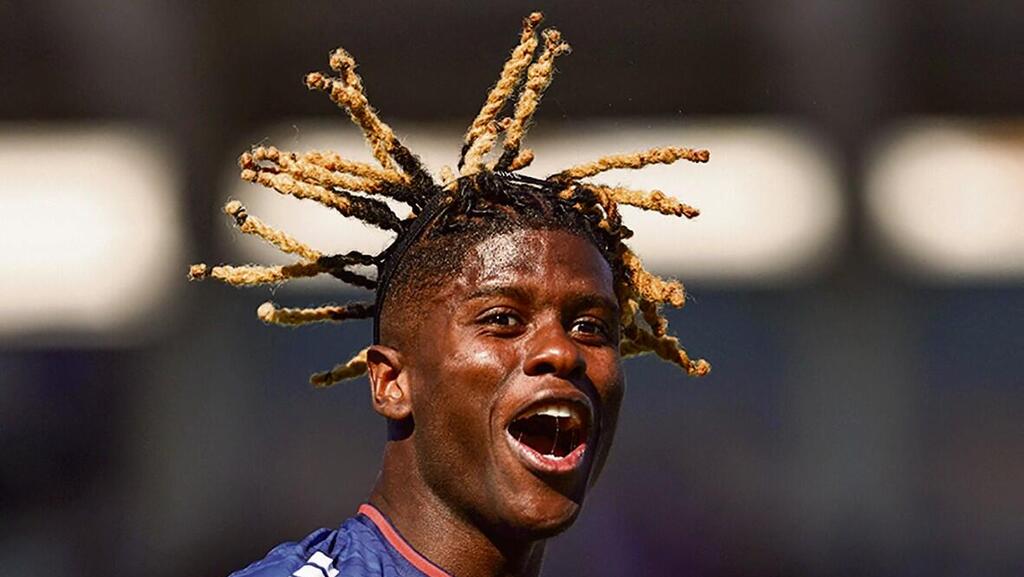
Gilson Benchimol
(Photo: REUTERS/Rodrigo Antunes)
Benchimol was born in Cape Verde, left as a teenager to play in Portugal, reached Benfica’s reserve team and now plays for Akron Tolyatti in Russia. He also scored in Cape Verde’s 3-0 warm-up win over Serbia earlier this month, another sign that the Blue Sharks’ rise was no accident.
Behind his name lies a little-known chapter in Cape Verde’s history. In the 19th century, Jews from Morocco and Gibraltar settled in the then-Portuguese colony, leaving a lasting mark on local families, trade networks and community life.
One of the best-known figures from that period was Hillel Benchimol, a merchant and landowner of Tetouani Jewish origin. Born in Oran, Algeria, to Jews from Tetouan, he later moved to Santiago, one of Cape Verde’s islands, for business. His grave in Santa Catarina remains a known heritage site in the country.
Carol S. Castiel, president of the Cape Verde Jewish Heritage Project, which works to preserve Jewish history and restore Jewish cemeteries in Cape Verde, says the Benchimol name is part of that legacy.
“All Benchimols in Cabo Verde are of Jewish descent,” Castiel said. “The Moroccan Jews assimilated to such an extent that there are no more practicing Jews. But anyone with that surname, and many others who are descended from female Benchimols who do not use the surname, are also of Jewish descent.”
Castiel said other surnames in Cape Verde, including Benoliel, Levy, Pinto, Auday, Anahory and Wahnon, also reflect the island nation’s Moroccan Jewish past. In many cases, she noted, the Jewish ancestry is through the father’s side, meaning it does not necessarily meet the traditional Jewish legal definition of Jewish identity.
So is Cape Verde fielding a Jewish player at the World Cup? Castiel is careful not to overstate it.
“I am sure the soccer player is somewhat cognizant of his Moroccan Jewish roots,” she said, adding that because Benchimol is young, it is difficult to know how much of that heritage was passed down through the generations.
What is clear, she said, is that the name has stirred excitement far beyond Cape Verde.
“The Moroccan Jews in Manaus are crazy for him,” Castiel said. “Many in the Moroccan Jewish community are fascinated by him and his name.”
Cape Verde’s squad reflects the global spread of its diaspora, with players drawn from the islands themselves, Portugal, the Netherlands and elsewhere. Another familiar name for Israeli fans is Hélio Varela of Maccabi Tel Aviv.
The draw with Spain gives Cape Verde hope in a difficult Group H that also includes Uruguay and Saudi Arabia. For Vozinha, it was the night he stopped one of soccer’s great powers and became an online sensation. For Benchimol, it was another step in a World Cup journey carrying both Cape Verde’s sporting dream and a surname that reaches back to the island nation’s Jewish-Moroccan past.