


Damian Lillard, perhaps the greatest player in Portland Trail Blazers history, was on the floor. So was Jrue Holiday, a two-time NBA champion enjoying an excellent night off the bench, coming close to a triple-double while shooting at a high percentage. But in the closing minutes of Portland's game in Denver early Tuesday, against the formidable Nikola Jokic and Jamal Murray, who poured in 35 points, the Trail Blazers were looking for just one man: Deni Avdija. From Israel.
Denver led for most of the game, but Portland kept fighting back until finally finding an opening in the fourth quarter and taking the lead. In the decisive moments, the 25-year-old Israeli calmly took responsibility: a basket plus a foul, though he missed the free throw, an assist on a Holiday three-pointer, another assist on a Lillard jumper, a shot that effectively put the game away, another point from the line and an uncontested layup at the buzzer that sealed a 118-110 victory. The win improved Portland's record to 5-1, one of the best starts in franchise history.
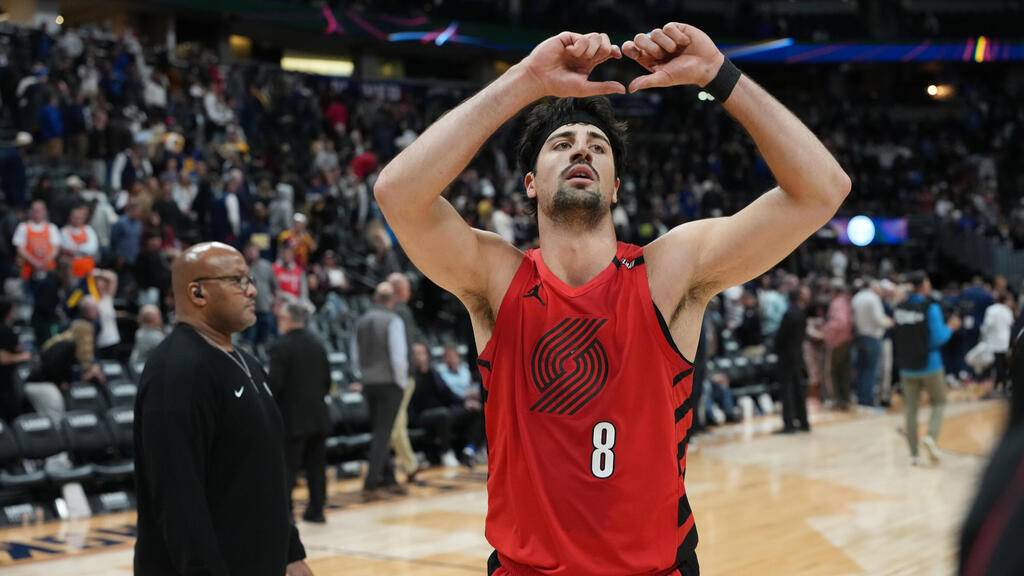
When Avdija began his late-game surge, with 4:22 remaining, Portland led 101-99. He scored nine of the team's final 17 points, finishing with 28, and was involved in all but one of the remaining baskets, a three-pointer by Toumani Camara.
Avdija's evolution in the NBA has reached a new peak in his seventh season. This is the same kid Washington used to hide in the corner and send to the bench after every mistake. Over time, he earned his place through defense and began showing flashes of his playmaking ability. When he became too good for the Wizards' plans, as Washington looked to keep losing and secure high draft picks, Portland made one of the biggest trades in its history, and within six months Avdija had become its leading player.
In his second season with the Trail Blazers, he grew physically stronger, almost as though he had been bitten by a radioactive spider, and developed a phenomenal ability to attack the basket. That transformation earned him a place in the World team's starting lineup at the All-Star Game, while he led Portland on a surprising run from the play-in tournament into the playoffs. Now comes the almost unbelievable next stage: an Israeli player leading a strong NBA team. Could a place on one of the All-NBA teams be next?
A stronger supporting cast
The first two weeks of the season have shown that Portland is considerably more talented than it was last year, when determination and aggression were major ingredients in its success. Lillard sees the game differently, creating scoring opportunities through drives and three-point shooting, while Ja Morant forces defenses to adjust with his athleticism and soft touch around the basket. Morant was injured in the loss to Memphis but is expected to return within a few weeks.
Camara has improved his three-point shooting and looks like the ultimate 3-and-D player, an outstanding defender who can also knock down shots at the other end. The game against Denver may have been the best of Donovan Clingan's NBA career, and not just because of his 17 points and 18 rebounds. It also featured plays such as the beautiful block on Jokic that left Avdija with an open path to the basket. Holiday has been reborn as a sixth man, and although the roster still lacks at least one more quality big man, the formula is working for now.

Ja Morant and Damian Lillard
(Photo: Steph Chambers / GETTY IMAGES NORTH AMERICA / AFP)
All that support is making life much easier for Avdija. Even last season, there was a case to be made that he was the No. 1 player on a good team, but the circumstances were very different. He often had to do everything himself, with drives followed by passes to the perimeter going to waste because Portland lacked reliable shooters. The fundamental change is that, for the first time in his career, and on an ambitious team, other stars are working for Avdija. That is a completely different world.
Instead of initiating every play in transition or relying on isolation possessions in which he must decide from the three-point line whether to drive or shoot, Avdija is increasingly finding himself in the role of finisher. As those final 4:22 against Denver demonstrated, he is also making the decisions when games are on the line. But Avdija himself has acknowledged that the burden on him has decreased because the team now has excellent guards who know how to put him in the best possible positions.
He receives passes while already moving toward the basket, and the playmakers know how to find him beyond the arc for the kinds of three-pointers he is more comfortable taking. He still struggles with shots he creates for himself. The entire offense now operates differently, in a way designed to make him its focal point. It is no longer a case of "take the ball and save us," but rather "get the ball where you like it and win the game for us."
That change has translated into greater efficiency. His overall numbers are not dramatically different from last season, with small, insignificant declines reflecting the arrival of additional stars. But one statistic has improved substantially and reveals a great deal: plus-minus.
During his first five NBA seasons, Avdija's teams were outscored while he was on the floor, partly because he lacked the tools to have a greater impact and the teammates who could help him do so. Last season, he recorded a positive plus-minus for the first time in his career, although it was a negligible 0.2 points. Through the first six games of this season, Portland has enjoyed a 10.2-point advantage with Avdija on the court. It is evidence of both a stronger roster and a more effective use of the Israeli forward.
More impact, fewer touches
A slight decline in some statistics is not necessarily a bad thing. For one, Avdija's statistical consistency demonstrates that he has maintained his standing alongside Lillard and Morant. And although touching the ball less has reduced his assists from 6.7 to 5.5 per game, it has also helped lower his turnovers from 3.8 to 2.2.
In any case, statistics are not where Avdija's greatest improvement can be found. It becomes apparent through watching the games and understanding how much his standing within the team has changed.
There is, however, one problem with two distinct aspects that cannot be ignored. For those inclined to see the glass as half full, both are areas he can still improve as he looks to take another step forward in his career. To put it plainly, Avdija is not shooting well from three-point range or the free-throw line.
Even in his excellent performance against Denver, he made only two of nine attempts from beyond the arc, including one possession in which he missed three consecutive open shots. Continuing a trend from last season, something appears to have changed in his shooting mechanics, with almost all his three-point attempts falling short. This was already a concern before the season began, when there was hope of improvement. But an increase from 31.8% to 33.3% is marginal and still leaves him an unreliable outside shooter. His offensive development will stall unless he can move his percentage closer to 40% relatively quickly.
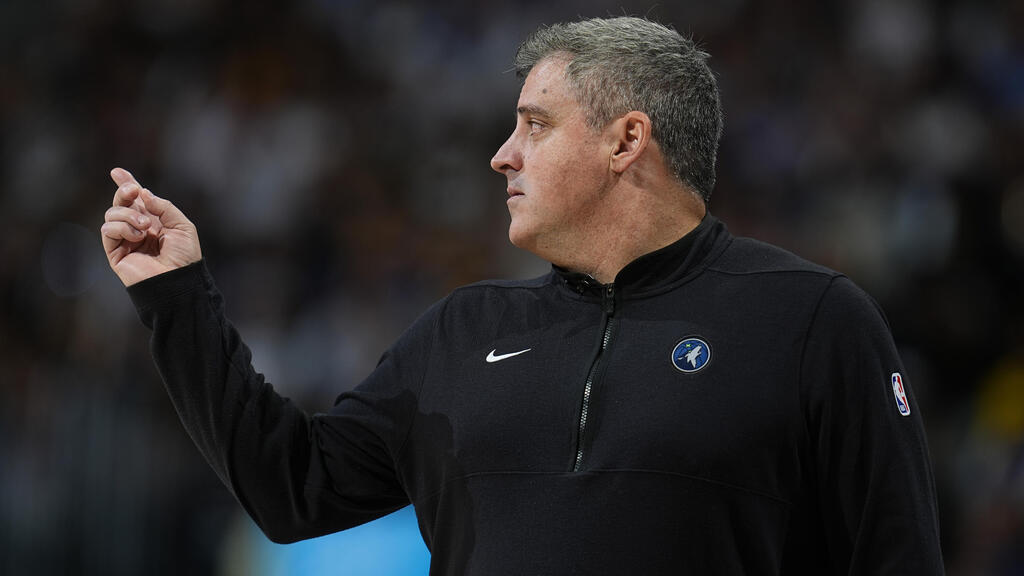
Micah Nori
(Photo: AP Photo/David Zalubowski)
The second aspect of his shooting difficulties is more serious. Avdija remains among the NBA's leaders in drawing fouls, ranking third in the league with 9.5 free-throw attempts per game. Attempts is the important word here, because those shots are not necessarily going in.
More than ever, Avdija looks uncomfortable at the line and is leaving far too many points behind. After setting a career high of 80.2% last season, he has opened this campaign shooting just 66.7%, his worst mark since his rookie year. For a player expected to make repeated trips to the line, including in the most important moments of games, that simply is not good enough.
Consider the percentages of the two players ahead of him in free-throw attempts: Luka Doncic is shooting 88.7%, while Jayson Tatum is at 87%. Still, these are technical details that can be improved, and Avdija has always experienced fluctuations in his shooting. They do not change the significance of what he has achieved so far.
The man at the center
According to a report in The Athletic, after Morant signed with Portland over the summer, Avdija initiated a conversation with new coach Micah Nori. He wanted to know how everything was supposed to work and what his place would be alongside Lillard and Morant. Many analysts and fans shared those concerns at the time.
"I promise you that you're going to be more efficient," Nori told him. "Maybe you won't have as many touches at the beginning of possessions, but I'll put you in positions where you'll have an advantage."
That is exactly what is happening now. And it is not only Nori who trusts Avdija. Portland's veteran guards are making it clear, through both their words and their actions, that the Israeli is the team's central player.