

Israeli agricultural technology startup Nanovel has been awarded a €2.5 million ($2.9 million) grant from the European Innovation Council to accelerate development and commercialization of autonomous robots designed to harvest citrus fruit, the company announced Wednesday.
The non-dilutive grant, awarded through the European Innovation Council's Accelerator program under the European Union's Horizon Europe innovation initiative, also makes Nanovel eligible for up to €4.3 million ($5 million) in additional equity investment. The company said the funding is expected to serve as the cornerstone of a planned financing round of about €8 million ($9.3 million).
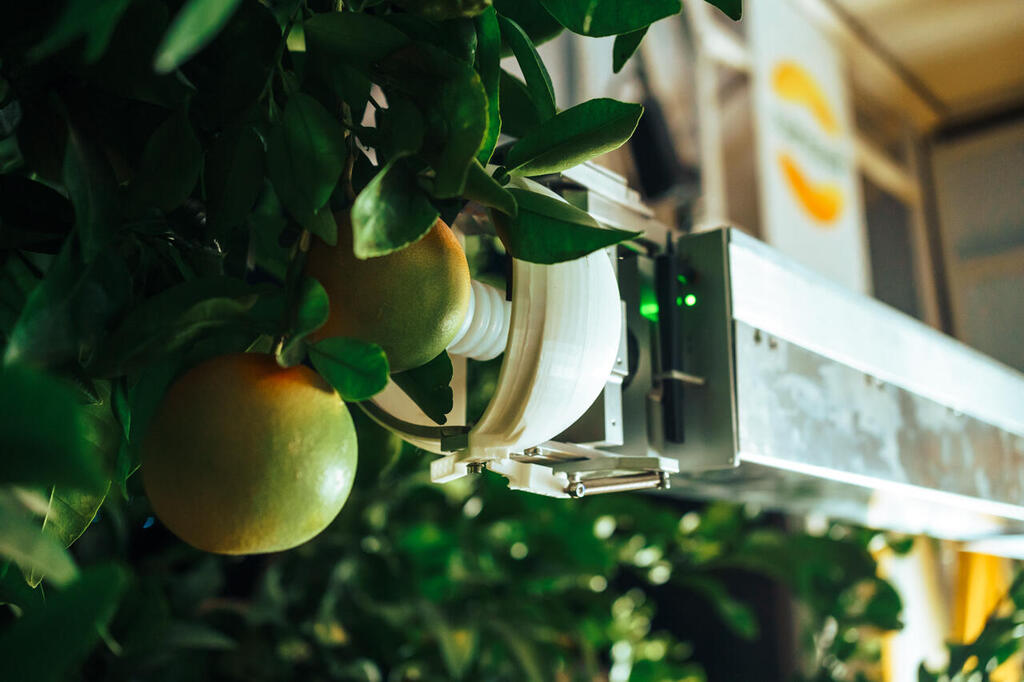
Nanovel said the funding will support development of a commercially ready robotic harvesting system, expansion of operations in Europe and large-scale field trials with citrus growers in Spain and Italy ahead of a planned commercial launch in 2028.
The company is developing autonomous robots that use artificial intelligence, computer vision and robotic arms to harvest citrus fruit, addressing labor shortages that have become an increasing challenge for fruit growers worldwide.
According to Nanovel, seasonal manual labor accounts for roughly half of fresh fruit production costs, while the agricultural sector continues to face shortages of available workers.
"Our mission is to ensure global availability for consumers and economic viability for fresh fruit growers by automating the most critical and labor-intensive part of the production process," founder and Chief Executive Isaac Mazor said in a statement.
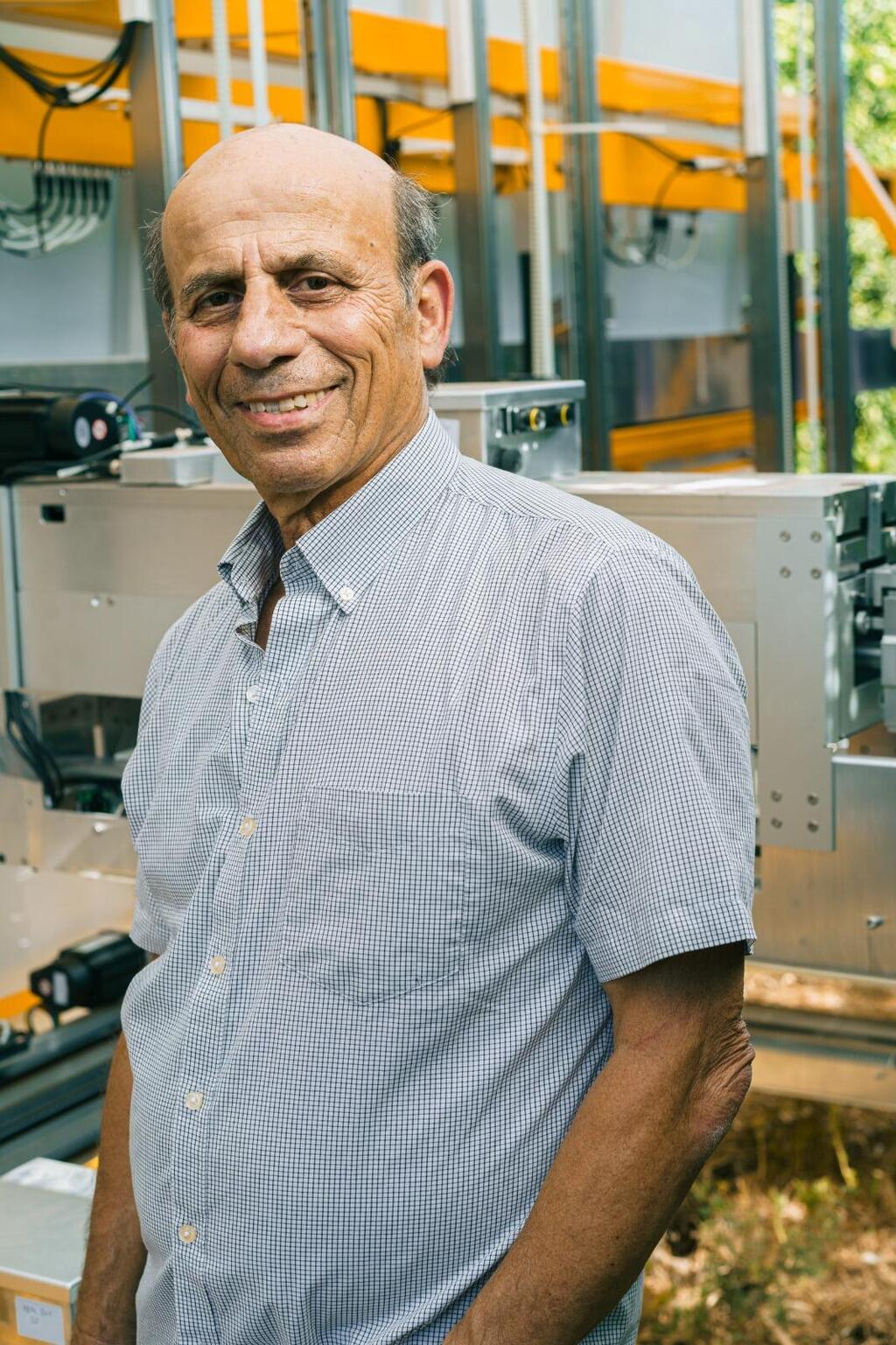
Nanovel founder and CEO Isaac Mazor
(Photo: Tal Badrak)
The company said it will initially target harvesting oranges and lemons, a market it estimates represents a $1 billion annual opportunity worldwide.
Nanovel's harvesting platform uses computer vision and deep-learning artificial intelligence to identify fruit growing deep within dense tree canopies. A patented robotic mechanism, which the company calls "Grip & Trim," grasps individual fruit and cuts the stem without damaging the produce. Multiple robotic arms operate simultaneously under the control of an onboard computer connected to a remote fleet management system.
The company said it is completing development of a multi-arm harvesting platform designed to increase productivity in commercial orchards.
Nanovel has conducted field trials in Israel, Europe and the United States. In 2025, it completed field validation in California in collaboration with the Citrus Research Board, an industry-funded organization supporting citrus research.
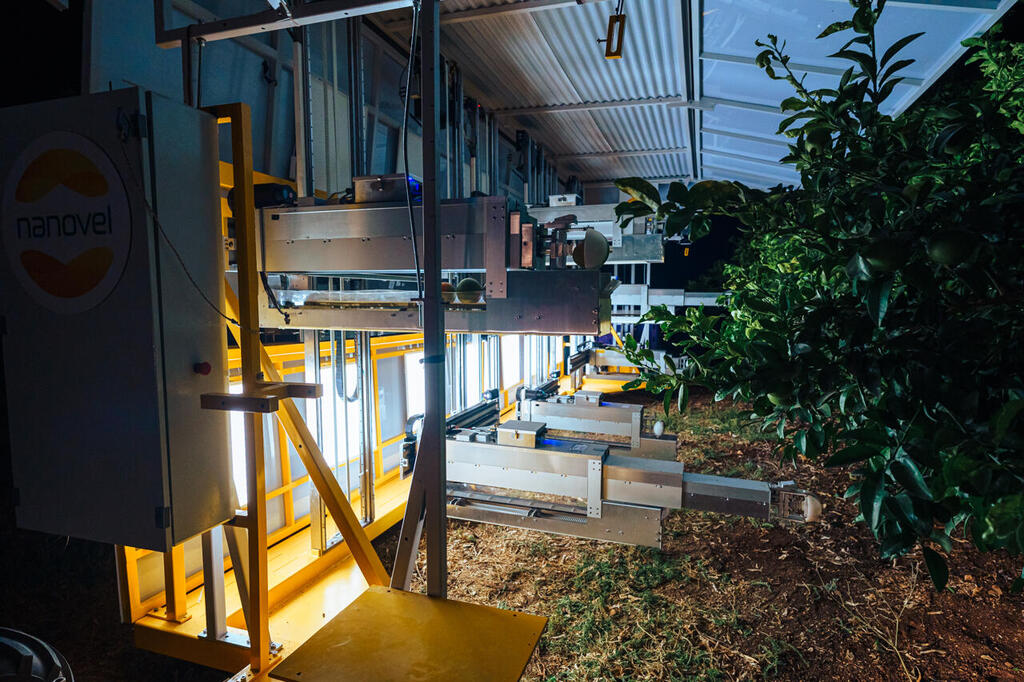
Nanovel’s robot
(Photo: Tal Badrak)
Although the company's initial commercial focus is oranges and lemons, it said the technology is also being adapted for other citrus varieties as well as crops including mangoes, peaches and nectarines.
Founded in 2018, Nanovel is led by Mazor, who previously founded Jordan Valley Semiconductors, an Israeli metrology equipment company that was acquired by Bruker Corp.
The company said the European Innovation Council selected Nanovel based on its technological innovation, commercial potential and execution capabilities. The EIC Accelerator program provides grants and equity financing to startups developing high-risk, high-impact technologies with commercialization potential.
Nanovel is headquartered in Mevo Carmel, in northern Israel, and develops precision agriculture technologies that combine artificial intelligence, computer vision and robotics to automate specialty crop harvesting.
First published: 15:00, 07.15.26