

Senior Pentagon officials breathed a sigh of relief after the successful rescue of the navigator of an F-15E fighter jet shot down Friday over southwestern Iran, in what has been described as one of the most complex operations in recent memory.
The navigator was safely extracted early Sunday after spending two days hiding in hostile territory.
Site of the pilot’s rescue
(Video: X)


Area where Iranian reports said searches for the navigator were conducted
Beyond the human drama, the operation offered a rare look into the U.S. military’s Combat Search and Rescue (CSAR) doctrine, designed for precisely such scenarios. It includes elite Pararescue units, known as PJs, along with specialized rescue helicopters and coordinated multi-domain support.
The device that made it possible
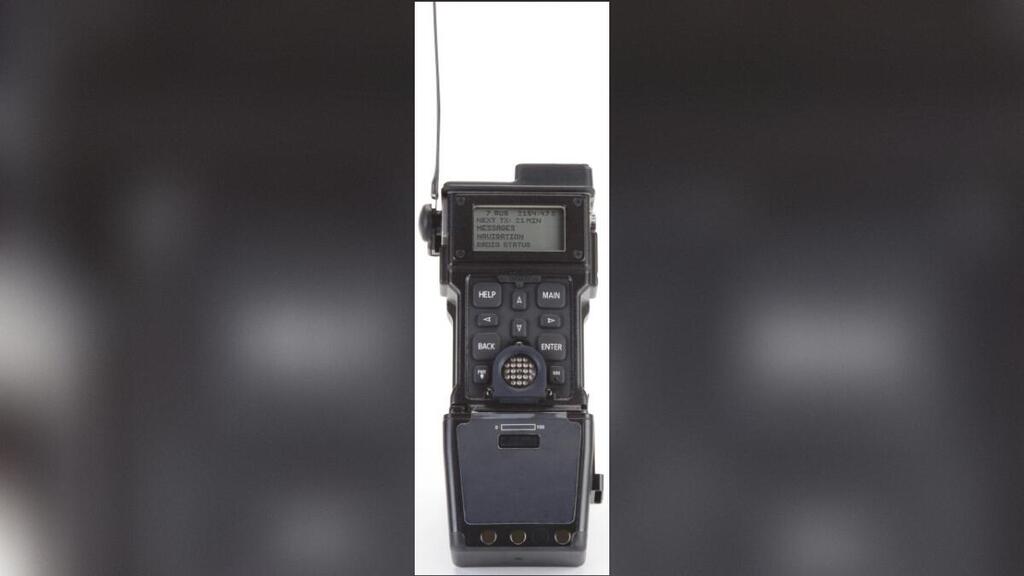
At the center of the system is a compact satellite-based communication device weighing about 800 grams, known as CSEL, short for Combat Survivor Evader Locator.
Manufactured by Boeing, the device resembles a rugged military radio combined with a handheld computer. It is integrated into the pilot’s survival vest and remains attached even after ejection.
Typically positioned near the chest or upper waist for quick access, the device is designed to withstand the extreme forces of ejection and immediately begin transmitting encrypted data.
It continuously sends location coordinates and short encrypted messages using rapid frequency-hopping signals, making detection by enemy electronic warfare systems extremely difficult.
Built for extreme conditions
The CSEL is engineered for durability and usability under stress. It can function after submersion in water up to 10 meters deep, and its battery can last up to 21 days in standby mode.
Its interface is deliberately simple, allowing operation in darkness, under pressure, and even while wearing flight gloves.
The device features both line-of-sight communication via a short external antenna and satellite communication through an internal antenna. If necessary, users can deploy an additional external antenna to improve signal in dense terrain.
A protected emergency button can transmit an unencrypted distress signal on international frequencies, though it is considered a last resort due to the risk of exposure.
Silent communication under threat
One of the device’s key advantages is its ability to transmit predefined encrypted messages such as “injured,” “enemy nearby,” or “ready for extraction,” avoiding the need for voice communication that could reveal the user’s position.
It can also receive instructions from rescue teams, such as movement directions toward extraction points.
Before missions, the device is connected to the aircraft’s navigation system, allowing it to preload coordinates and intelligence data automatically.
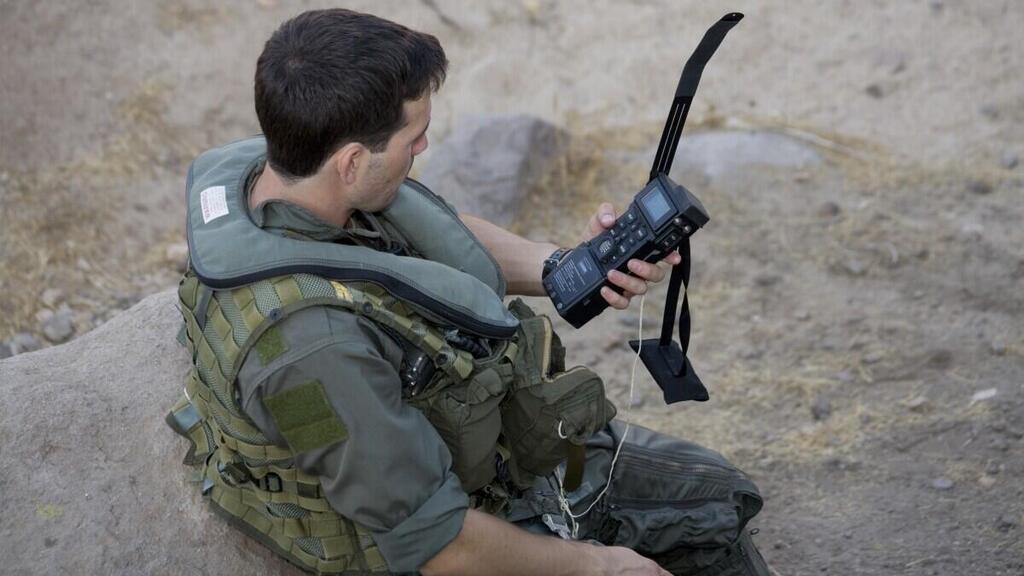
The CSEL is engineered for durability and usability under stress
(Photo: Boeing)
According to reports, once the navigator realized he was in an area with heavy enemy presence, he relied on preloaded safe zones stored in the device.
Instead of speaking over radio, he transmitted encrypted text messages every few hours with precise location updates, preventing Iranian forces from triangulating his position.
Only when rescue helicopters approached was the device switched to a mode that allowed pilots to lock onto his exact location, displayed in real time on cockpit systems.
Outsmarting advanced defenses
To evade Iran’s advanced electronic warfare systems, reportedly supplied by China and Russia, the device uses techniques such as ultra-short burst transmissions and rapid frequency hopping.
These signals appear as random background noise to enemy intercept systems, making them extremely difficult to detect or trace.
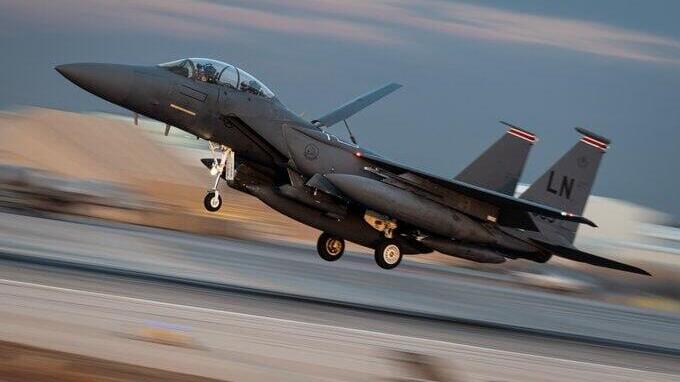
US F-15E
(Photo: X)
The CSEL system relies on military communication satellites to relay data from hostile territory to command centers in the United States and other global bases.
Four global rescue coordination centers can immediately identify the device, link it to the pilot’s identity and access critical personal data such as medical information and authentication codes.
Even in cases of complete communication disruption, the device can assist survival by storing topographic maps and predefined safe locations, guiding the user like a GPS device.
According to foreign reports, the Israeli Air Force uses domestically developed systems for similar rescue missions, some of which are considered more advanced in certain aspects.
These systems are built around compact personal emergency devices, integrating satellite positioning and secure communication tailored to Israel’s operational environment.
Israel’s Unit 669 serves as the equivalent to U.S. Pararescue forces, and pilots undergo regular survival and extraction training to prepare for such scenarios.