

OpenAI continues its rapid expansion. Following the launches of its Sora video generator and Pulse management dashboard, the company on Tuesday unveiled Atlas, a new AI-driven web browser that CEO Sam Altman described as “a once-in-a-decade opportunity to rethink the browsing experience,” according to Axios.
The goal, Altman said, is to transform OpenAI from a chatbot platform into a comprehensive technology ecosystem—and, in doing so, directly challenge tech giants like Google.
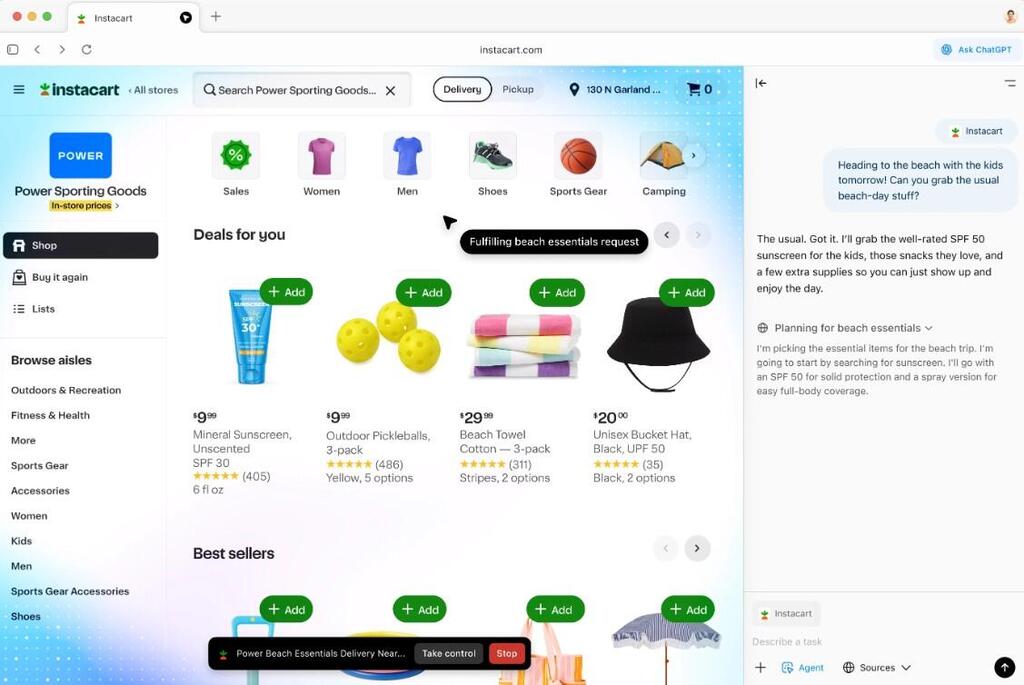
Atlas integrates ChatGPT into the heart of web navigation. Instead of traditional browser tabs, users will see a permanent sidebar labeled “Ask ChatGPT”, enabling real-time interactions such as summarizing pages, comparing products, analyzing code, or answering questions about the site they’re viewing.
The browser’s most significant new feature is Agent Mode, currently available to Plus and Pro subscribers. It allows the AI to perform autonomous online actions—such as booking restaurant reservations, filling out forms, or generating shopping lists from recipes.
In a demonstration, Altman showed how users can “take control” of the AI’s actions or stop them at any time with a red “Stop” button.
A direct threat to Google Chrome
Alphabet Inc.’s shares fell as much as 4% after the announcement, before recovering to close down 2.1%.
The launch poses a major challenge to Google Chrome, which commands roughly 71% of the global browser market, with about 3 billion users. Chrome already integrates Google’s Gemini AI, but Atlas represents the most aggressive challenge yet to Google’s online dominance since Chrome overtook Microsoft’s Internet Explorer.
History shows that browser hegemony is fragile: once-dominant names like Mosaic, Netscape, and Explorer have long vanished. Atlas could be the next major disruptor—if users adopt it.
OpenAI's Atlas browser
(Photo: OpenAI)
The deep integration of ChatGPT into the browser raises serious privacy and security questions. OpenAI says users will be able to browse either while logged in or in incognito mode, maintaining control over how much data is shared.
Still, integrating a browser into OpenAI’s ecosystem gives the company access to far more user data, including potentially sensitive information shared in chats—often more personal than what users reveal to Google or Meta. Experts say it remains unclear how well the app will be secured against hackers or data harvesting.
Atlas is part of a broader push to make OpenAI a full-scale tech platform, on par with Google or Microsoft.
Pulse, a proactive personal dashboard, provides tailored updates based on a user’s chat history and app integrations like Gmail and Google Calendar (available for Pro subscribers).

OpenAI CEO Sam Altman
(Photo: Reuters)
Sora, the company’s AI video generator, aims to compete with social platforms such as Meta and TikTok.
A new ChatGPT app store, launched in October, lets users access services like Spotify and Zillow directly from within the chat interface.
OpenAI has also entered e-commerce, partnering with Etsy, Shopify, and most recently Walmart, to enable instant checkout within ChatGPT conversations.
To attract early adopters, OpenAI is offering users a temporary data allowance boost in ChatGPT if they set Atlas as their default browser.
Altman’s strategy is clear: accumulate a critical mass of users to justify the move and position OpenAI as a direct rival to Google. Whether Atlas can carve into Chrome’s massive market share remains to be seen—but the race to redefine the web has officially begun.