

Quantum software company Qedma has integrated its error-mitigation technology with Quantinuum’s computing platform, allowing corporate and scientific researchers to run more complex calculations with improved accuracy, the companies announced this week.
The integration gives Quantinuum customers access to Qedma’s Quantum Error Suppression and Error Mitigation software, known as QESEM. Qedma developed the integration over the past year as a founding member of the Quantinuum Startup Partner Program.
Gallery
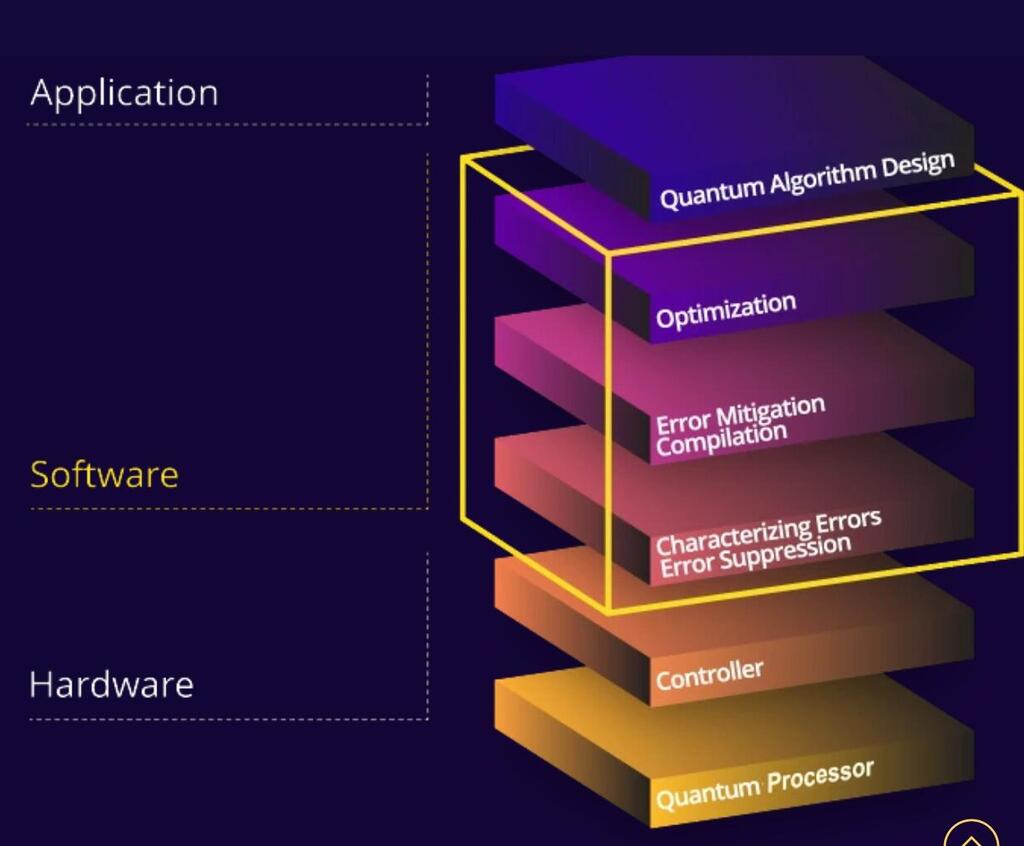
Qedma’s software stack uses error characterization, suppression and mitigation to improve the accuracy of quantum-computing applications
(Illustration: Qedma)
Errors caused by noise and other hardware limitations remain one of the largest obstacles to practical quantum computing. Qedma said its hardware-independent software analyzes and mitigates errors in quantum-computing output, improving circuit fidelity and allowing researchers to run larger and more complex algorithms on existing machines.
The company said the software could support more ambitious commercial and scientific workloads without requiring changes to the underlying quantum hardware.
Quantinuum’s computers have high average two-qubit gate fidelity, a measure of how accurately a system performs operations involving two quantum bits, or qubits. The company says that accuracy allows its systems to conduct simulations near the limits of what conventional computers can reproduce.
The companies said combining Quantinuum’s hardware with Qedma’s software could enable deeper and more accurate quantum calculations, expanding potential applications in finance, materials science and other fields.
“Running algorithms beyond the reach of classical simulation requires quantum computers with both a large number of qubits and exceptionally low error rates, which is exactly why we wanted to join Quantinuum’s Startup Partner Program,” Qedma CEO and co-founder Asif Sinay said.
Sinay said initial tests of QESEM on Quantinuum’s systems showed improvements on demanding workloads, including simulations approaching the limits of conventional computing.

Qedma founders
(Photo: Eyal Toueg)
Jennifer Strabley, Quantinuum’s vice president and general manager, said the company created its startup program to give emerging companies access to its developer platform and hardware, encourage innovation and shorten the time required to bring quantum technologies to market.
“This integration with Qedma creates a powerful way for our users to advance ambitious quantum research on our platform and shows how it is already being used to build the next generation of technology,” Strabley said.
She said the partnership reflected Quantinuum’s effort to provide customers with tools for tackling complex problems and that the company planned to expand the program to other quantum-technology startups.
Qedma develops software intended to reduce the effect of hardware errors in quantum computing. The company says QESEM can be used across different hardware platforms and allows researchers and businesses to obtain more accurate and reliable results from current quantum computers.
Sinay founded Qedma with Dorit Aharonov and Netanel Lindner. Aharonov is a quantum-computing researcher whose work three decades ago helped demonstrate the feasibility of error-corrected quantum computation and establish the foundations of quantum fault tolerance. Lindner is a theoretical condensed-matter physicist known for his research on complex quantum systems.
Quantinuum offers a full-stack quantum-computing platform, including hardware and software intended for use in commercial and research environments. It has deployed several generations of quantum systems based on the quantum charge-coupled device, or QCCD, architecture.
The company works with organizations in the pharmaceutical, materials-science, financial-services, government and industrial sectors.
Headquartered in Broomfield, Colorado, Quantinuum employs about 700 people and has facilities in the United States, Britain, Germany, Japan, Qatar and Singapore. The company said more than 70% of its technology employees hold master’s or doctoral degrees.