

Imagine entering a destination that appears on no map, has no official entrance and may not exist at all.
Its corridors stretch endlessly beneath buzzing fluorescent lights. Its walls are covered in faded yellow wallpaper, its carpets appear damp, and every empty room seems almost familiar — like an abandoned office, hotel or shopping center remembered from a dream.
Gallery
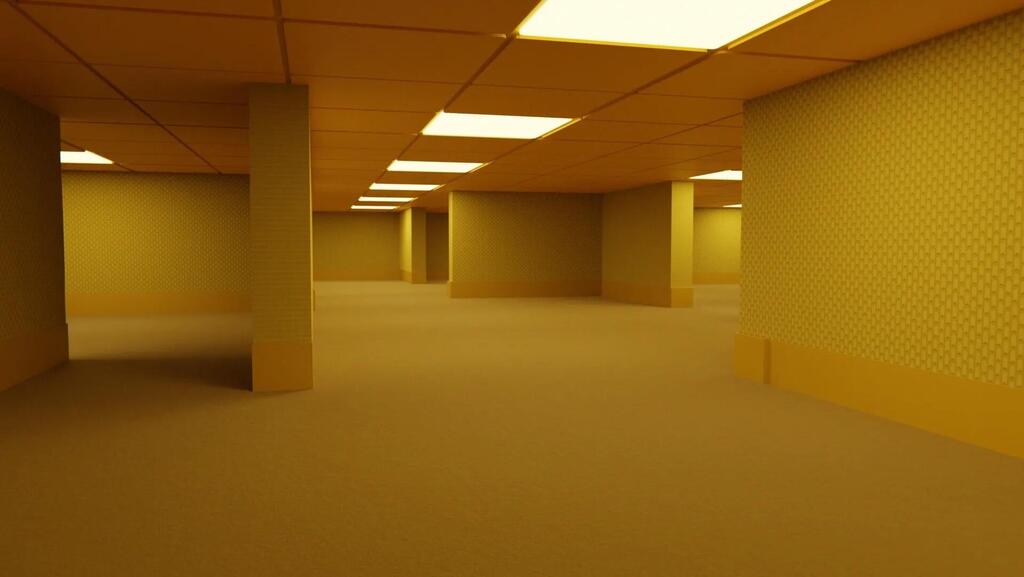
The endless yellow maze began as a single eerie image before expanding into videos, games and survival guides
(Photo: Shutterstock)
This is the Backrooms, one of the internet’s most enduring horror myths. What began as a single unsettling photograph has grown into an enormous fictional universe explored through videos, games, maps, online guides and social media stories.
Now, tourism researchers argue that the phenomenon represents something more than an internet meme. They describe it as a new form of digital travel in which people emotionally explore collectively imagined places without ever physically going anywhere.
The Backrooms originated in 2019, when an anonymous user posted a photograph of an empty, yellow-walled interior to the paranormal section of the online forum 4chan. Another user added a short piece of horror fiction suggesting that people could accidentally “no-clip” out of reality — a term borrowed from video games — and fall into an infinite maze of empty rooms.
From that simple premise, internet users began constructing an entire mythology.
They invented different “levels,” creatures, hazards, escape routes and survival rules. Some created supposedly recovered footage from people trapped inside. Others produced maps, travel advice and first-person accounts written as though the Backrooms were a genuine location.
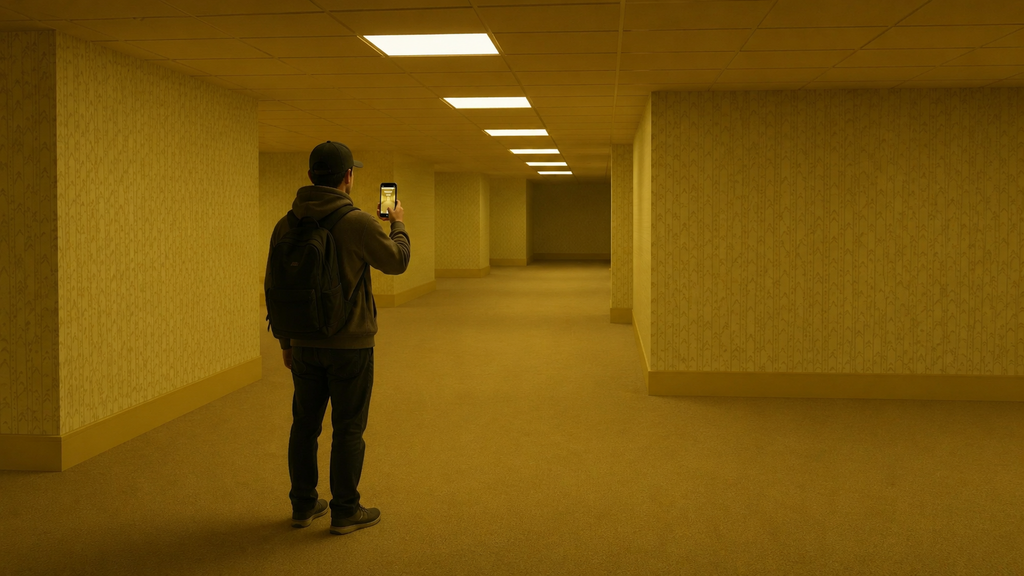
Researchers describe it as a new form of digital travel in which people emotionally explore collectively imagined places without ever physically going anywhere
A viral “found footage” video by filmmaker Kane Parsons helped introduce the legend to a far larger audience. The video has accumulated tens of millions of views, while the wider mythology has spread through YouTube, Reddit, video games and dedicated online archives.
Researchers Sophie James and James Cronin studied the phenomenon through long-term observation of the Backrooms community on Reddit, which had more than 342,000 contributors when their research was conducted.
Writing in the Annals of Tourism Research, they describe the activity as “online legend-tripping” and propose a new category called “para-terrestrial dark tourism.” Unlike conventional dark tourism, which takes visitors to real places associated with tragedy, death or fear, the Backrooms offer a destination created almost entirely through collaborative imagination.
Participants are not merely consuming a finished story. They help create the destination itself.
Every new video, fictional document, creature or unexplored level expands the territory. There is no central authority deciding what is real within the mythology, and no definitive version that closes off further exploration.
That lack of certainty is central to its appeal, the researchers argue. Traditional tourist destinations are mapped, marketed and explained. The Backrooms remain unstable and unknowable, allowing visitors to imagine that there is always another corridor, hidden level or unexplained threat beyond what has already been documented.
The experience also challenges the usual distinction between visiting and imagining.
Backrooms fans may never physically enter the yellow maze, but they navigate its environments through games, videos and stories. They learn its supposed rules, discuss the safest routes and repeatedly return to newly created sections of the fictional world.
In that sense, researchers say, the internet is becoming more than a tool for planning travel or viewing distant destinations. It can function as a destination in its own right — an environment people explore, inhabit emotionally and help construct together.
The Backrooms’ visual language also plays heavily on nostalgia.
Its empty offices, stained carpets, hotel corridors and deserted public spaces resemble environments many people encountered during childhood but rarely considered memorable. Stripped of people and activity, they become unsettling: recognizable enough to feel personal, but unfamiliar enough to appear outside normal reality.
Academic research into the Backrooms has connected its popularity to liminal spaces, internet folklore, nostalgia, video-game culture and the anxiety created by places that seem caught between one purpose and another.
The phenomenon has since moved far beyond anonymous message boards. It has inspired numerous games and adaptations, including a feature film directed by Parsons, whose original YouTube work helped popularize the mythology.
But the Backrooms remain difficult to commercialize in the conventional sense because no company owns the entire idea and no physical location can fully contain it.
That may be precisely why fans continue to return.
Unlike a theme park attraction with a fixed route and exit, the Backrooms can always expand. Its most powerful promise is not that visitors will discover what lies inside, but that the maze can never be completely known.
The result is a tourist destination built from an internet rumor: nowhere in the physical world, but increasingly real to the millions of people who continue to explore it.