


In 2024, when Itamar Serussi was managing the U.S. operations of Israeli renewable energy company Energix, he was working on a massive deal to supply 1.5 gigawatts of solar power to tech giant Google. The assumption was that companies like Google were purchasing solar energy and storage projects to help meet their carbon emissions reduction targets. But during negotiations, he noticed a shift in tone.
"Suddenly, they started talking to us differently," Serussi recalls. "They told us, 'Listen, our electricity consumption is rising dramatically, and we're looking for solutions that aren't just green but can also provide electricity 24/7 with extremely high reliability.' That's when it hit me: The world is moving toward a completely different reality, and the only solution that meets those requirements is nuclear energy."
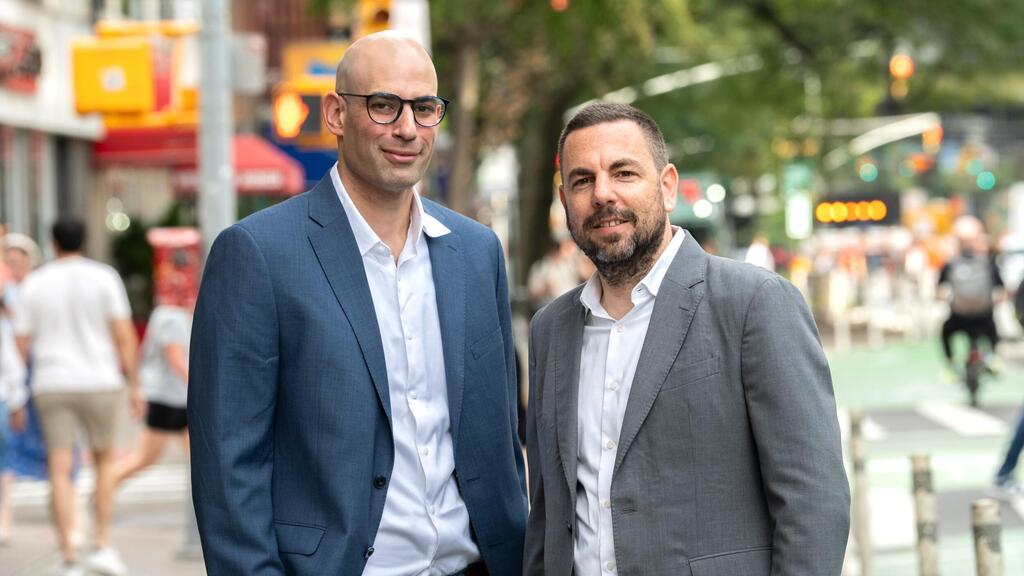
That realization led Serussi and his partner, Yonatan Raskin, who had headed global business development at Energix, to establish Arcvia in 2025. The two did not set out to develop nuclear technology or manufacture reactors themselves.
"We're project developers, not technology experts," Raskin explains. "What we know how to do well is bring infrastructure projects across the finish line."
Long-term contracts
Although small modular nuclear reactors (SMRs) are not yet operating on U.S. soil, and only a handful are operating elsewhere in the world, they are considered one of the energy industry's most promising technologies.
These reactors are designed to overcome the problems associated with their predecessors, large conventional nuclear reactors. They are intended to be safer, significantly cheaper and faster to build, with construction timelines measured in months. Most components are manufactured in factories and delivered to sites ready for installation. A single SMR can generate tens of megawatts, and several reactors can be combined to achieve substantial generating capacity.
Their smaller size allows reactors to be located near major electricity consumers in a model known as co-location: A data center is built next to an SMR, eliminating the need to transmit electricity over long distances.
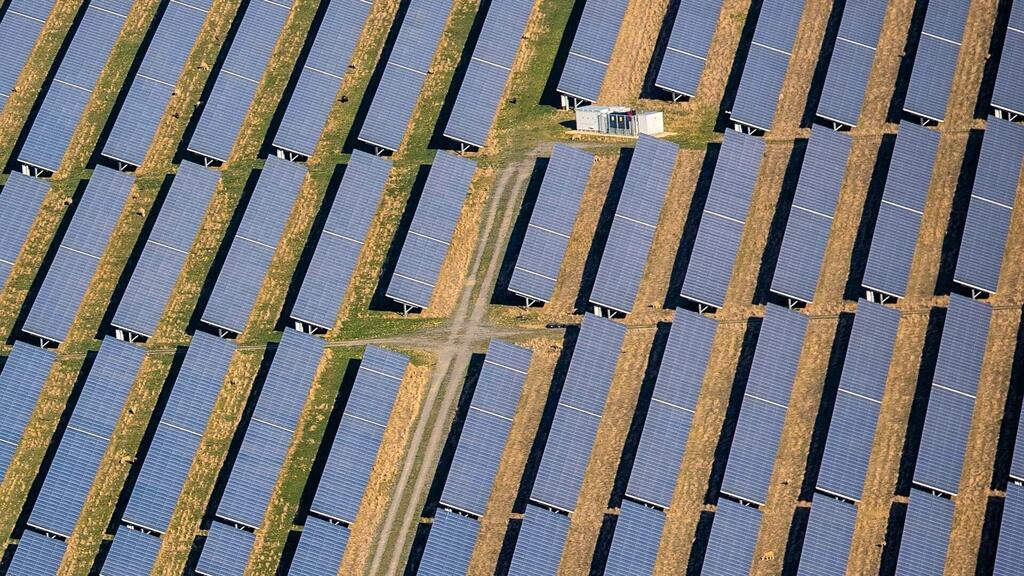
Solar farms: Why local residents are reluctant
(Photo: Courtesy of Energya)
According to the Clean Energy Buyers Association (CEBA), agreements to purchase more than 40 terawatt-hours of nuclear electricity were signed in the United States in 2025, surpassing solar and wind energy combined.
All this is taking place against a backdrop of political and regulatory support in Washington. The U.S. government has established a bipartisan goal of quadrupling the country's nuclear generating capacity by 2050, from approximately 100 gigawatts today to 400 gigawatts.
As part of this effort, the White House has issued a series of executive orders aimed at shortening licensing procedures, encouraging the establishment of small reactor testing sites at national laboratories, such as the DOME facility in Idaho, and allocating billions of dollars to strengthen the supply chain for high-assay low-enriched uranium (HALEU), a type of nuclear fuel, to reduce dependence on Russian imports.
Meanwhile, technology giants are rushing to sign long-term agreements. Google signed a deal with Kairos Power to develop a fleet of small reactors with a combined capacity of 500 megawatts. Amazon invested hundreds of millions of dollars in X-energy to develop projects with generating capacities measured in gigawatts, while Meta signed agreements with Oklo and TerraPower.
Microsoft went a step further, committing to purchase electricity for 20 years from the long-established nuclear power plant at Three Mile Island, the site of one of the most serious nuclear accidents in U.S. history.
Nuclear power plants are back in fashion.
This is why Arcvia is focusing exclusively on developing SMR projects.
There are many potential customers seeking to build SMRs, including companies developing reactor technologies such as NuScale, Sam Altman-backed Oklo and Bill Gates' TerraPower. But identifying suitable land for these reactors is beyond their capabilities.
"We genuinely see enormous potential for growth and capturing market share here," Serussi says. "In our assessment, we're already one of the leading players in this niche in the United States, and this market is going to grow significantly."
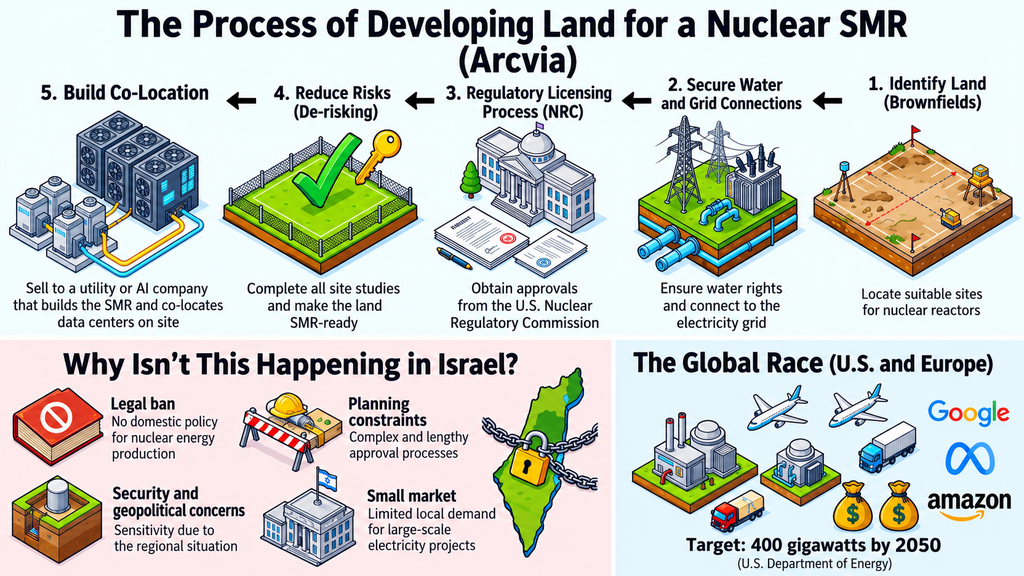
Acquiring land and preparing it for nuclear reactor construction requires complex geological surveys, securing water rights for cooling, negotiating grid connection agreements and meeting the stringent requirements of the U.S. Nuclear Regulatory Commission (NRC).
After all that, developers still need to secure the consent of the local community. The process can take years, and there is a real risk that a site will ultimately be rejected.
This is precisely where Arcvia comes in. Its executives have extensive experience developing land for electricity generation projects.
The company identifies potentially suitable sites, sometimes abandoned industrial properties known as brownfields, and carries out the painstaking groundwork: securing real estate and water rights, advancing NRC licensing, negotiating with local planning authorities and water and electricity infrastructure providers and obtaining community support.
Once the risks associated with a site have been addressed — a process known as de-risking — the property is classified as "powered land," allowing a reactor company or technology giant to move forward with minimal risk.
By that point, the land's value has risen by tens of percentage points, if not more, leaving developers with a substantial return.
A new investment trend
Arcvia's business appears to be moving full steam ahead.
"When we talk about SMRs, the definition of a single reactor ranges from 50 to 300 megawatts," Serussi explains. "But several units are built at one site, so in practice we're talking about complexes with capacities ranging from 600 megawatts to 1.2 gigawatts.
"The company currently holds options and rights to a portfolio of more than 20,000 dunams [approximately 4,940 acres] of land in the most strategic markets in the United States — areas where demand for electricity and data centers is highest, such as the Northeast."
According to Raskin, the company does not limit itself to the relatively small area required for the SMR itself. Instead, it secures larger properties in advance to provide planning flexibility.
"We acquire additional land from the outset to allow for the co-location of data centers alongside the reactor or the integration of battery energy storage systems during the interim period until the reactor is completed."
The business model is based on selling fully prepared, turnkey sites to utilities or independent power producers (IPPs), which then take responsibility for construction and operations.
The company currently employs seven people and plans to expand to 15 to 20 employees over the coming year.
The business was initially financed by the founders' own capital, followed by fundraising rounds that attracted prominent investors.
Among them is businessman Yossi Sagol, a former owner of Keter Plastic and one of the anchor investors in Econergy from its early days through its stock market listing.
His investment, estimated at several million dollars at a company valuation of tens of millions of dollars, marks an entry into one of the hottest sectors in energy investing.
He was joined by Amir Lazar, former CEO of Bank Leumi's mortgage subsidiary, and Avi Khouri, former chief financial officer of Keter Plastic.
This investment is part of a broader trend of investment in the energy sector by institutional investors such as Migdal Capital Markets, which has launched dedicated mutual funds focused on energy and renewable energy companies.
Generation Capital is also continuing to expand its investment portfolio in Israel's energy and infrastructure sectors through its subsidiaries PowerGen and BlueGen.
The trend is unmistakable.
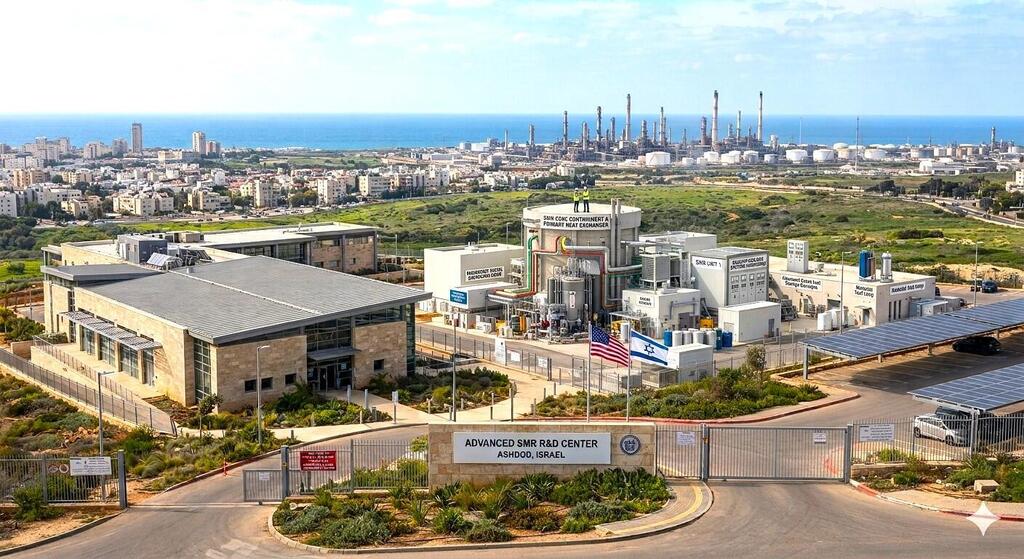
Nuclear power plant in Israel: Still a distant dream
(Photo: Courtesy of Energya)
Communities that reject solar power
One of the most interesting phenomena the entrepreneurs have encountered is the changing attitude of the American public toward nuclear energy, particularly compared with green energy, which is generally perceived as healthier and safer.
"People are always surprised by this, but today in the United States there's actually tremendous public opposition to solar projects," Serussi says.
"In projects like these, we frequently encountered very negative attitudes from residents. By contrast, with SMRs, we're seeing a level of support and acceptance we've never experienced before.
"We even have landowners who signed option agreements with us and insisted on including an explicit clause in the contract: 'You can build an SMR here, but we won't allow you to install solar panels.'"
"We deliberately choose to develop projects in places where we're wanted," Raskin says.
He attributes residents' support to the direct economic value nuclear reactors bring to local communities.
"A single SMR project is expected to create about 250 permanent, high-quality, well-paying jobs. Unlike a solar farm that stands empty of people, a nuclear power plant is a regional engine of economic growth.
"There are currently about 100 conventional nuclear reactors operating in the United States. For many residents of Pennsylvania or Virginia, nuclear energy isn't a frightening concept. Their father or grandfather worked at a plant like that for 30 years and retired with a respectable pension."
Concerns among local planning authorities about rising electricity prices following the construction of data centers also work in favor of nuclear reactors.
"When we speak with planning committees, they tell us, 'If the SMR comes first, we'll be happy to approve it because it adds new generating capacity to the grid and eases pressure on electricity prices for residents,'" Serussi adds.
Anticipating the nuclear decade
The United States currently has approximately 100 gigawatts of installed nuclear generating capacity. The U.S. Department of Energy's goal is to reach 400 gigawatts by 2050, with most of the additional capacity expected to come from SMR technologies.
While small reactors are already operating in Russia and China, the first projects in the Western world are at advanced stages of development and construction, including GE Hitachi's reactor in Canada and Bill Gates' Natrium project in Wyoming.
"When we started talking about this in mid-2025, most people outside the industry thought we were a little crazy," Raskin says.
"But today everyone understands there's simply no way to meet the enormous demand created by the artificial intelligence revolution without a massive expansion of nuclear energy.
"This market is going to grow at an unprecedented pace, and we're positioned exactly at the intersection of infrastructure and electricity."
Despite the enthusiasm and frenzy in capital markets, the SMR industry still faces significant obstacles.
Building a nuclear reactor, even a small, modular one, remains a formidable engineering and regulatory undertaking.
Apart from government-backed projects in China and Russia, no Western company has yet brought a fully commercial SMR online and connected it to the electricity grid.
GE Vernova, in partnership with Hitachi, is furthest along, having begun physical construction of a BWRX-300 reactor in Canada, with grid connection expected around 2030.
Most other companies are still in the planning, preliminary licensing or initial earthworks stages.
This article was originally published by Energya, ynet's news website covering energy and technology.