

As reusable rockets lower the cost of putting infrastructure into space, an Israeli startup is betting that the next major opportunity will come after launch: keeping that infrastructure supplied and operating.
Moonshot Space is developing an electromagnetic launch system designed to send relatively small cargo shipments into space frequently and at lower cost. Under the company's concept, a ground-based electromagnetic accelerator would provide a cargo vehicle with its initial acceleration before an onboard propulsion system completes the journey into orbit.
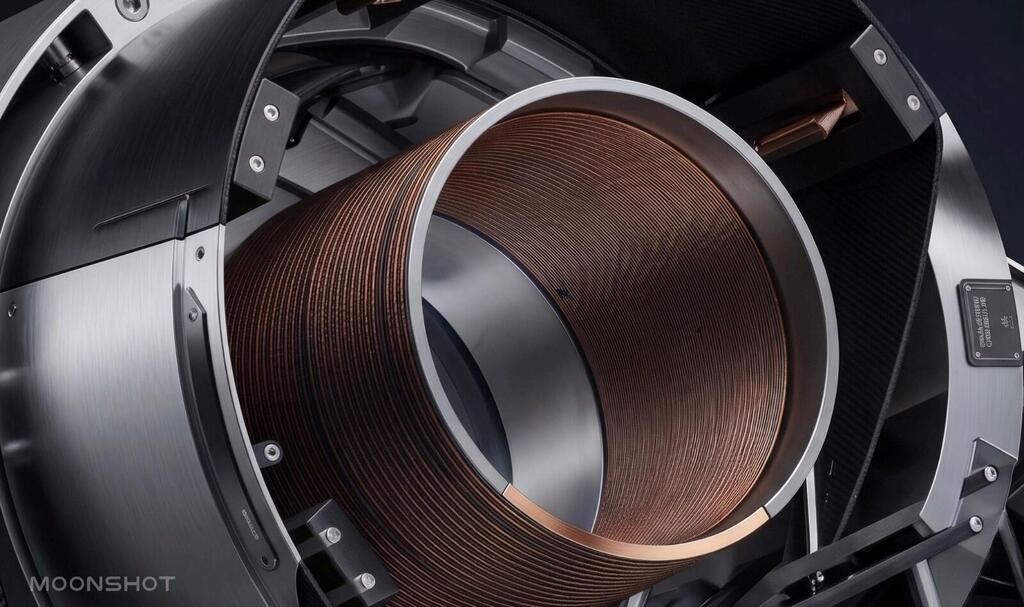
The company describes its goal as building a “delivery system to space” that could transport propellant, construction materials, replacement components and other supplies to satellites, commercial space stations and, eventually, facilities farther from Earth.
For decades, launches have dominated the economics and public image of spaceflight. But reusable rockets are making it possible to put more satellites and other infrastructure into orbit, creating another challenge: maintaining, refueling and expanding those systems once they are there.
On Earth, factories, airlines, trucks and shipping networks form supply chains that allow industries to operate continuously. Moonshot is betting that a similar logistics infrastructure will be needed as commercial activity in space expands.
The power is there. The delivery is missing.
One potential example is the growing interest in putting data centers in orbit.
Artificial intelligence requires enormous computing resources and, in turn, large amounts of electricity. Building new power plants and transmission infrastructure on Earth can take years, while demand for AI computing capacity can increase much more quickly.
That has prompted proposals to place data centers in space, where spacecraft in suitable orbits could make extensive use of solar power to operate computers before transmitting their results back to Earth.
But access to electricity would solve only part of the problem.
Even if a spacecraft's computers remained functional, it could eventually run short of the propellant needed to maintain or adjust its orbit and avoid collisions.
Software can be uploaded remotely. Propellant cannot.
Large rockets can carry major pieces of infrastructure into orbit, but using an entire rocket to deliver a relatively small quantity of fuel or replacement equipment could be prohibitively expensive. Rideshare launches can lower costs by carrying payloads for several customers, but they may not reach the required orbit at the time an operator needs a delivery.
Moonshot is designing its system around that gap, envisioning smaller and more frequent shipments tailored to the needs of infrastructure already operating in space.
The company says its system could eventually deliver resources through a broader network of orbital transportation and servicing companies. A reliable supply chain, it argues, could allow operators to keep spacecraft functioning longer, build larger facilities and plan expansion without having to launch every resource they may need at the beginning of a mission.
An idea that brought a team together
Moonshot's founders saw an opportunity emerging from the success of reusable rockets.
As the cost of reaching space began to fall, they concluded that maintaining the infrastructure those rockets delivered could become the next significant bottleneck.

Moonshot founders Shahar Bahiri, Hilla Haddad Chmelnik and Fred Simon
(Photo: Moonshot Space )
Shahar Bahiri, a space enthusiast who spent eight years founding and running a transportation startup, developed Moonshot's initial launch concept and founded the company. He now serves as its co-founder and chief operating officer.
Bahiri approached Hilla Haddad, whose previous work included involvement with Israel's Iron Dome missile defense program, managing programs valued at billions of dollars and serving as director general of Israel's Science and Technology Ministry.
After working with senior engineers to examine whether the concept was technically feasible, Haddad joined as co-founder and CEO, viewing the project as an opportunity to establish a major Israeli aerospace company.
They were later joined by Fred Simon, a serial entrepreneur who helped found four startups, including Israeli software company JFrog. Simon had independently considered a similar launch concept years earlier and left JFrog after 14 years to become Moonshot's co-founder and chief technology officer.
The broader team includes veterans of the David's Sling missile defense program as well as entrepreneurs, former senior government officials and former diplomats, according to the company.
Moonshot says it intends to combine Israeli expertise in missile technology, aerospace engineering and software with commercial experience to build a company serving the emerging space logistics industry.
More than 2,000 test launches
Moonshot began developing its technology with a proprietary multiphysics simulator designed to model the different forces involved in electromagnetic propulsion.
Engineers used the simulator to develop and refine the propulsion system before constructing a physical launcher to test their designs.
The company says it has since conducted more than 2,000 test firings and continues testing the system daily. Moonshot says the results have largely supported predictions produced by its simulator and shown improvements in energy efficiency compared with results from other published electromagnetic launcher designs.
The claims have not yet been independently verified.
The company plans to build a larger system capable of conducting hypersonic experiments, testing models traveling at more than five times the speed of sound.
Moonshot sees hypersonic testing as both its first commercial application and an intermediate step toward orbital delivery. The system would allow the company to put its electromagnetic propulsion technology to practical use while developing expertise needed to accelerate larger vehicles to the speeds required for its eventual space logistics system.
The company is also working to develop partnerships beyond its launch technology.
Moonshot says it is cooperating with companies involved in orbital transportation and refueling and has signed an agreement with Alaska Aerospace to explore potential launch services from Alaska. The goal is to eventually connect its ground-based system with companies capable of transporting and servicing cargo after it reaches space.
Built in Israel, aimed at orbit
Significant engineering challenges remain before the technology can become an operational orbital delivery system.
Moonshot would have to scale its launcher to accommodate larger payloads while reducing costs and solving the problem of protecting vehicles and cargo from the extreme conditions created by high-speed travel through the atmosphere.
The company ultimately plans to keep its research and development operations in Israel while providing logistics services to customers operating in space.
Under that vision, satellite operators could schedule future deliveries of propellant or components instead of designing spacecraft around a fixed lifetime supply. Commercial stations could receive construction materials as they expand, while orbital data centers could be replenished and upgraded without replacing the entire platform.
Moonshot's founders believe Israel's decades of experience in rocketry, defense engineering and software provide a foundation for competing in such a market.
The company's larger bet is that as putting infrastructure into orbit becomes increasingly routine, getting there will no longer be enough.
The next challenge will be keeping it running.