

Iran has drawn up plans to target undersea communications cables in the Gulf and intends to prevent their repair after any attack, according to a Reuters report published Friday, citing two senior Iranian security officials. The officials said the plans were intended as retaliation for renewed U.S.-Israeli strikes on Iran, but did not disclose how or where such attacks would be carried out.
The threat has also been made publicly. Yadollah Javani, a senior official in Iran's Islamic Revolutionary Guard Corps (IRGC), warned that seven major internet cables beneath the Strait of Hormuz could be targeted if Iran's national infrastructure came under attack.
Gallery
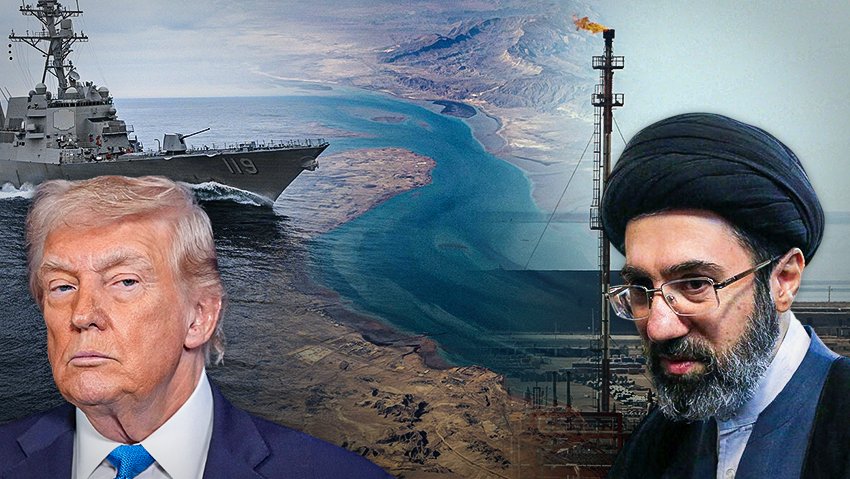
US President Donald Trump and Iran's Mojtaba Khamenei
(Photo: AP/Alex Brandon, Atta KENARE/AFP, REUTERS/Stringer, Lance Davis/United States Navy/Huntington Ingalls Industries)
The cables form part of an infrastructure most people rarely think about. Our phones may connect to the internet wirelessly, but communications between countries and continents depend heavily on fiber-optic cables laid along the seabed. According to the United Nations' International Telecommunication Union (ITU), submarine cables carry more than 99% of international data traffic.
Damage to these cables could disrupt internet access, cloud services, financial transactions and the operations of businesses and governments.
However, figures from telecommunications research firm TeleGeography, provided to Reuters, put the threat into perspective. Less than 1% of global international bandwidth passes through the Strait of Hormuz. The potential impact is therefore significant, particularly for Gulf countries, but does not necessarily translate into a worldwide internet shutdown.
The main danger: Disruptions across the Gulf
According to TeleGeography's analysis, the extent of any disruption would depend on the connections available to each country and telecommunications provider. Bahrain, Qatar and Kuwait have terrestrial connections to Saudi Arabia, while Kuwait also has a connection to Iraq.
But the existence of an alternative route does not guarantee that it can handle all the traffic redirected to it if several cables are damaged simultaneously. Even countries that avoid a complete disconnection could experience network congestion and slower internet speeds. The ITU warns that such disruptions could also affect access to banking, healthcare and education services.
Iran's threats extend beyond undersea cables. According to The Guardian, Tehran has also warned that data centers and artificial intelligence facilities in the Gulf could be targeted in the event of renewed attacks.
And what about Israel? The country has submarine communications cables connecting it to Europe through the Mediterranean Sea. One example is Bezeq International's JONAH cable, which links Israel to Italy. That route does not pass through the Strait of Hormuz, so Iran's threat against cables in the Gulf should not be interpreted as a warning that Israel will lose its internet connection.
At the same time, the existence of a separate route is not enough to determine whether specific services used in Israel might be affected by regional disruptions, particularly those dependent on international cloud infrastructure or connections through the Gulf.
The distinction is also important globally. According to TeleGeography, damage to cables in the Strait of Hormuz would primarily threaten connectivity within the Gulf. Cables running through the Red Sea, by contrast, are important for communications between Europe, Asia and East Africa.
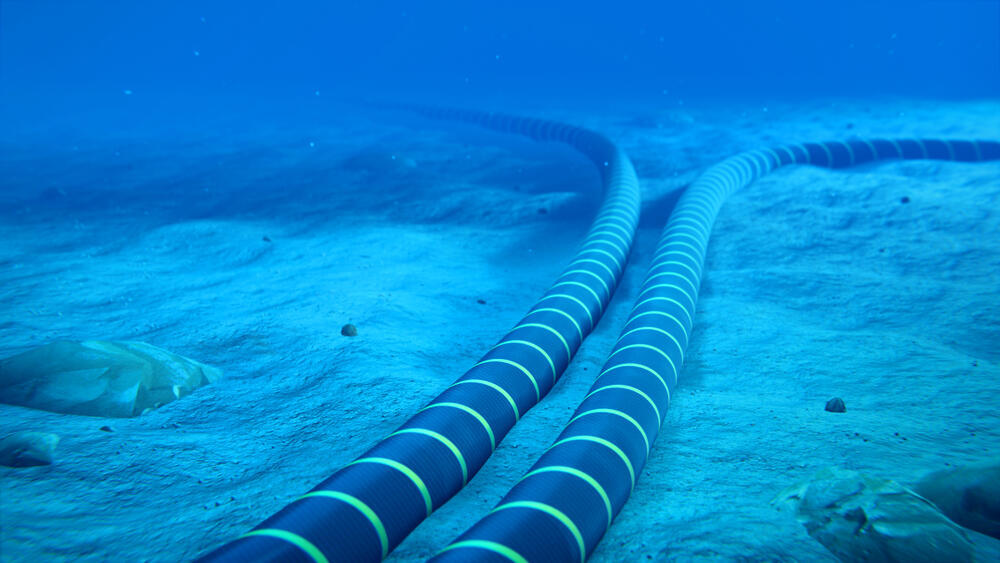
An undersea communications cable
(Photo: shutterstock)
Backup connections are limited, and repairs could take months
Submarine communications cables are damaged even during normal operations. According to the International Cable Protection Committee (ICPC), approximately 150 to 200 cable faults occur worldwide each year, most of them caused by accidental human activity, particularly fishing operations and ships' anchors. Deliberate sabotage is a recognized risk, but it is not the main cause of cable damage.
Telecommunications networks are designed to withstand faults by distributing traffic across multiple cables. When one connection is damaged, data can be rerouted through others, meaning users do not always notice that anything has happened.
However, simultaneous damage to several connections reduces the available backup capacity and makes widespread disruption more difficult to avoid.
Satellites are not a complete substitute either. According to TeleGeography, satellite communications are useful for connecting areas without access to fiber-optic networks, but submarine cables can carry vastly greater quantities of information at a lower cost. It would therefore be unrealistic to assume that all disrupted internet traffic could simply be transferred to space.
In a conflict zone, however, the challenge goes beyond finding alternative connections. Specialized cable repair vessels require permits to enter the waters where damaged cables are located. Once repairs begin, the ships must remain stationary, leaving them particularly exposed in hostile waters.
Even when repairing a cable is technically possible, access to the damaged section may remain blocked. There is already a precedent. According to TeleGeography, repairing three submarine cables damaged in the Red Sea in 2024 took approximately six months.
That is what makes Iran's threat to prevent repairs particularly significant. A strike lasting only a short time could leave behind communications disruptions that continue for months.