

More than a third of Iran’s most senior military commanders believe the war they are fighting will end in collapse. Nearly all of them also believe Iran will emerge from it stronger.
Israeli startup AskIt built behavioral profiles of 122 senior IRGC commanders, each based on the individual’s life trajectory, military career, and formative experiences. The platform does not ask an AI to “think like an Iranian general.” It constructs a specific profile for each person and computes how that trajectory generates a response - the difference between retrieving a stereotype and simulating a life.
When asked to project the most likely outcome of the current war, the 122 synthetic commanders split into three nearly equal camps. The largest single group did not predict victory. 38.5% predict crisis and collapse. 35.2% believe in victory and resistance. 22.1% expect deep structural transformation. Only 4.1% anticipate ceasefire and reconstruction.
Combined, roughly 60% do not see a path to direct military victory. These are not dissidents or analysts. They are synthetic profiles of the IRGC’s own senior leadership. Dr. Neal Tsur, CTO, AskIt: “We don’t try to guess what any single general would do. We identify thinking patterns that cut across the entire group - including the patterns that contradict the regime’s official narrative.”
91% of the same commanders who predict crisis also say Iran will emerge from the war stronger. On the surface that makes no sense. The reasoning chains explain it. The Shia framework of suffering as a formative force - rooted in the Karbala narrative at the core of IRGC identity - allows generals to hold both positions simultaneously. Collapse is not defeat. It is, in this worldview, the condition that produces the next strength. What 38.5% are describing is not pessimism. It is a specific theology of resilience.
A standard survey captures one answer. This simulation captures both layers - the operational assessment and the ideological filter sitting on top of it. That gap is where the real intelligence lives.
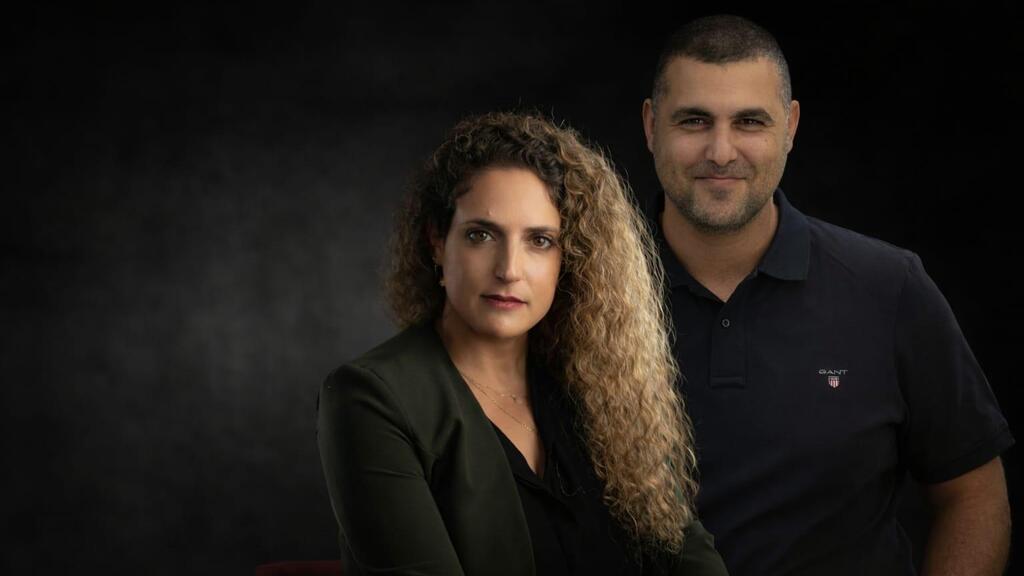
AskIt founders
(Credit: Sharon Gabay, AskIt)
When does it end
30.3% say it ends when national will prevails - conditional, no timeline. 29.5% say within months, some within weeks. 21.3% see no clear end. 15.6% say only when the enemy surrenders.
The near-term group is the most analytically interesting. Some profiles invoke specific windows - “four weeks,” “coming months” - language that suggests either an expectation of negotiated settlement or a genuine disconnection from the battlefield. Either reading matters for how the corps is likely to behave under continued pressure.
Khamenei’s assassination: unanimous defiance, acknowledged damage
Every single commander - all 122 - answered that the assassination did not achieve its objective.
But read the reasoning, not just the answer. While every profile asserts failure, a significant subset simultaneously acknowledges confusion, turbulence in power structures, damage to old frameworks. The assassination failed, they say - but in the same breath they describe what it disrupted. Whether that is resilience or crisis-induced denial, the simulation cannot determine. But the gap between the stated conclusion and the described reality is itself a signal.
45% of commanders believe the primary motive was Khamenei’s symbolic power - that the US and Israel acted out of fear of what he represented, not calculation about what would follow. In the generals’ mental model, being targeted is proof of strength.
AskIt AI was founded in 2025 by CEO Lotan Magal and CTO Dr. Neal Tsur. Magal served 14 years in government roles including intelligence positions, then specialized in behavioral economics at Kayma under Prof. Dan Ariely, where she advised the Israeli Ministry of Finance. She subsequently served as CEO of polling firm Direct Pulse. Dr. Tsur, a veteran of Unit 8200, holds a PhD in socio-physics and 12 years of experience building predictive AI models for collective behavior. He served as lead researcher for Israeli defense agencies and the Prime Minister’s Office.