


The year 2025 is closing as one of the most complex years Israeli high-tech has experienced in the past decade. On one hand, geopolitical uncertainty, a certain global slowdown and a selective capital market. On the other, new highs in company valuations, an unprecedented boom in cyber and artificial intelligence, and a deeper Israeli presence on international stages.
But if 2025 was a year of exploration and breakthrough, 2026 is shaping up as a year of decision: a year in which Israel will continue to lead in cyber, expand its AI capabilities, but in which companies seeking to be part of the global revolution will be required to present clear technological and business focus.
December always brings year-end summaries and insights into Israeli high-tech. But we went further, asking a range of experts and commentators what 2026 will look like. The answers surprised even us.
What defined 2025?
The data point to a clear process of consolidation: capital is concentrating in fewer funds and fewer companies, but those that earned investor confidence benefited significantly. Last week, the “Trends and Forecasts” conference hosted by Guy Katsovich, founder and partner at Fusion Fund and Pearl Cohen law firm, brought together leaders of Israel’s startup scene. The conference presented a report by Israeli fund Vintage, showing that 2025 was a peak year for local mergers and acquisitions, compared with the United States and Europe, where markets showed only moderate recovery.
Gallery
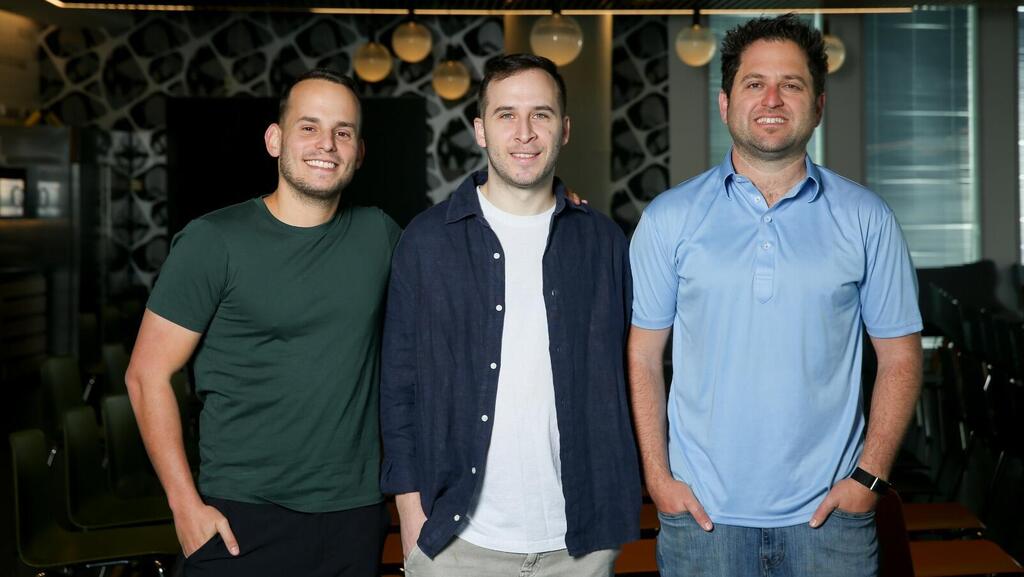
Fusion Foundation: From right: Yair Vardi, Amit Shechter and Guy Katsovich
(Photo: Maisa Studio)
Asaf Horesh, managing partner at Vintage, presented figures indicating that U.S. venture capital fundraising totaled more than $61 billion in 2025, with total investments exceeding $250 billion. At the same time, only 376 funds raised capital this year, less than half the 832 funds that did so in 2024. Fully 50% of investments went to just 1% of companies, most of them, unsurprisingly, AI companies at advanced growth stages. The abundance of capital drove up valuations due to fierce competition for serial entrepreneurs, the so-called “second-timers.”
“Investment behavior around AI is very reminiscent of what we saw in 2021-2022, and it can be explained by the fact that humanity is experiencing an unprecedented technological leap, accompanied by rapid adoption and significant value creation,” Horesh said.
What lies ahead in 2026?
2026 is emerging as a decisive year for the core sectors of high-tech, with investors highly optimistic. An investor survey by Fusion Fund, conducted among more than 200 investors, found that 62% define the state of Israeli venture capital as “good” or “excellent,” compared with just 25% a year earlier. Optimism regarding Israel’s future also rose to 74.5%, an unusual figure after two years of slowdown and war.
According to the survey, the main challenge facing venture funds is competition for attractive startups, including competition from foreign funds. Nearly all respondents (98%) believe cyber will continue to lead, while 96% also cited artificial intelligence. In third place was quantum technology at 23%, overtaking fintech this year.
Maor Friedman, general partner at F2 Fund, defines the coming year as a “year of sobriety,” in which the AI bubble will deflate. “The gap between high expectations and actual performance will become clearer. Investors will return to real business metrics: usage, efficiency, growth and the ability to build a healthy company over time. Fewer stories and more numbers,” he said.

Maor Friedman, general partner at F2 Fund
(Photo: Eyal Regev)
Where exactly is the line between “sobriety” and a “bubble”? Does the renewed investor demand, reminiscent of 2022, for clear revenue and growth metrics signal another burst bubble? According to Friedman, the process will also halt the “new funds trend” and strengthen experienced funds, while deepening the presence of global funds in Israel. Still, he stresses optimism: “2026 will be a year of building meaningful, resilient companies with technological depth.”
Karen Schwok, founder and CEO of Lucid Investments, agrees that, despite investor concerns about frothiness, “2026 is shaping up as a positive year based on the economic indicators we have seen in recent quarters. However, valuation levels require a more cautious and sober investment approach. Investment volumes are expected to continue growing moderately, but capital will be deployed more selectively, toward mature companies with revenues, customers and clear business value. The era of growth at any cost is over; the focus has shifted to execution, efficiency and stability.”
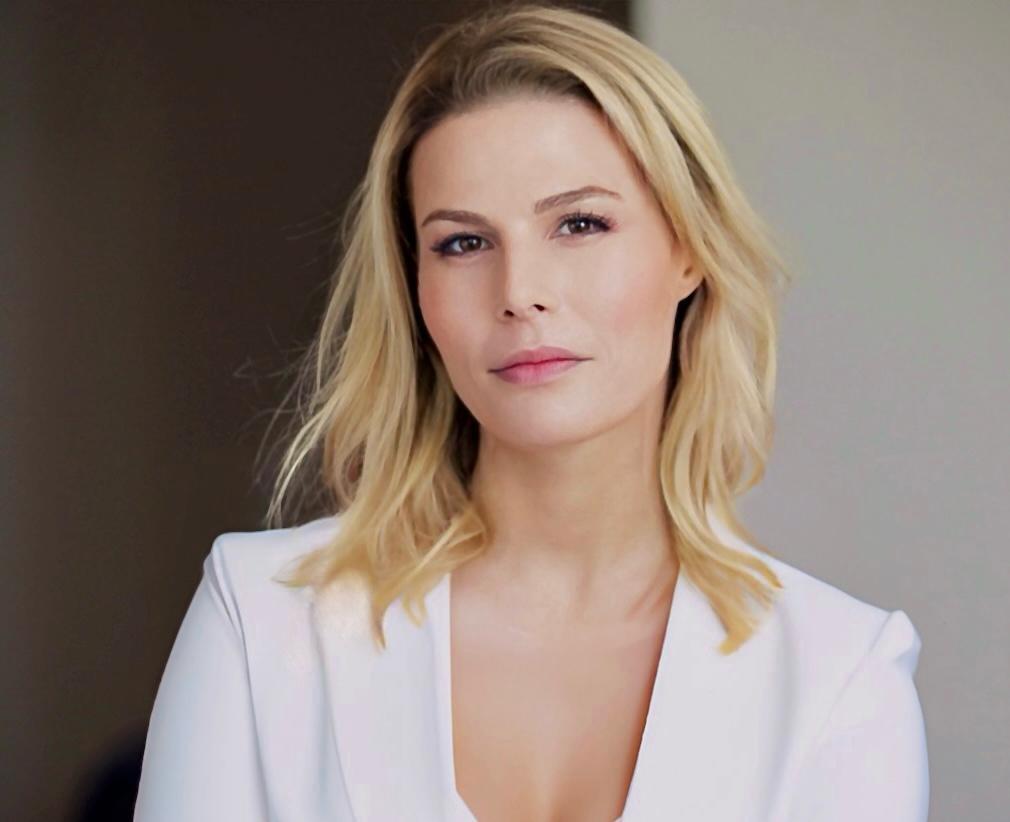
Karen Schwok, founder and CEO of Lucid Investments
(Photo: Yariv Fine)
Yaniv Golan, co-founding partner at Lool Ventures, views this as a positive trend, even if it requires corrections. “When we look toward 2026, the familiar talk of a bursting bubble misses the magnitude of the moment. We are not witnessing artificial inflation, but rather a positive technological earthquake, centered on the AI revolution, which is creating enormous value here and now and will dramatically shape our future. My forecast is not collapse, but maturation and accelerated growth, with corrections filtering out the noise.”
An entrepreneur’s perspective is also revealing. Shai Bargil, CEO and co-founder of startup Sequent, believes companies will indeed find fundraising harder in the coming year due to accelerated AI adoption and the emergence of free solutions for many applications. The solution, he says, is demonstrating to investors that a company’s technology cannot easily be replaced by AI. “When we raise capital next year, we will tell investors that beyond Sequent’s potential to lead a large vertical market, investing in a company operating in a domain that cannot be disrupted by AI is a form of hedging for funds and their investors, at a time when risk in software investments is rising exponentially.”
AI accelerates forward
According to estimates by the American firm Insight Partners, The market is in a “both things can be true” moment - simultaneously overhyped and more valuable. But, Insight warns, massive capital inflows and interconnected risk create fragility. Strategic M&A is accelerating, and 2026 renewals will test which AI startups and scale-ups have real staying power whether they have a solid business foundation
Praveen Akkiraju, managing director at Insight, says: "It’s a gold rush, but there’s a ton of pyrite. Everything looks shiny now, but 2026 will be the first year many of these startups hit real renewal cycles. That’s when we expect to see how sustainable their revenue is. You’ll see companies that went from zero to six or eight million in ARR in a year. Then you ask, ‘What’s your growth next year?’ If that drops to something like 30%, those companies can become un-fundable very quickly.”
Insight Partners estimates that in the coming year, we will witness new breakthroughs in AI. Lonne Jaffe, Managing Director at Insight Partners: "We have whole new frontiers of improvement: reinforcement learning post-training, better data curation, multimodality, improved algorithms, plus lots of data centres and chips coming online now that people started building a while ago”.
Oren Yunger, managing partner at U.S. fund Notable Capital, which invests in Israel, agrees. “In 2026 we are facing a real leap in model intelligence, driven by the next generation of NVIDIA processors. This hardware will deliver a dramatic increase in computing power alongside significant savings in energy and memory costs, making advanced models more efficient and accessible than ever. The scale of this revolution is historic; it is enough to look at current investments in AI infrastructure, which exceed all the budgets ever invested in building the U.S. highway system.”
George Mathew, managing director at Insight, says that AI intelligence will improve this year: “We’re seeing two vectors of growth in the next wave of AI systems. One is intelligence - models with trillions of parameters, like GPT-5. The other is reasoning. I predict the first ‘million-agent problem’ will be introduced and solved in the next 12 to 18 months.”

Guy Preminger, senior partner and head of the technology sector at PwC Israel
(Photo: Eli Dessa)
PwC also expects 2026 to be a year of structural change. Its global investor survey found that 61% of investors see technology as the most attractive investment sector, but 92% demand technological transformation as a condition for growth. More than 75% expect an increase in mergers and acquisitions, and 70% believe strategic alliances between companies will become essential.
Guy Preminger, senior partner and head of the technology sector at PwC Israel, points to two additional sectors: cyber and defense tech. “We are identifying a growing trend of investors seeking opportunities in cyber, alongside global mega-funds choosing to invest significant sums at early stages of cyber startups,” he said. “At the same time, Israeli funds, both veteran and new, are raising capital at scale, including in defense tech, a new and emerging field.”
The overall picture leads to a clear conclusion: 2026 will not be a year of a dramatic bubble burst, but rather a year of deep filtering and maturation. The hype around AI will not disappear, but it will no longer be a magic trick; it will be a technological capability that must prove its value. Companies that fail to bridge promise and execution will struggle to survive. By contrast, companies with technological depth, market and use-case fit, real customers and rapid adaptability will emerge significantly stronger.
Ori Barzilay, a partner at Team8, summed it up: “If 2025 was a year of exploration, 2026 will be a year of proof. The achievements of Israeli high-tech companies amid last year’s challenges, alongside the strategic adoption of AI, give us a relative advantage in a global market hungry for stability alongside innovation. Investors today are choosing based more on deep technological value. Those who navigate the technological leap will not only survive, but redefine their field.”
Israel, experts believe, will continue to stand out as a scale-up nation, particularly in cyber, applied AI and defense tech. Europe may deepen its role as a complementary strategic market, but it will not replace the United States as the primary destination for Israeli companies. Ultimately, 2026 will mark a sharp shift from the question of “who is raising” to “who is truly building.” Those who succeed this year will lay the foundations for the next generation of technology giants.