

Jetson Thor may prove to be one of humanity's most significant assets in robotics to date. Revealed by Nvidia on Monday, it is a dedicated supercomputer for robots, built to address one of the field’s most persistent challenges: enabling humanlike, real-time behavior alongside people.
For decades, robots have been deployed in manufacturing and industrial settings, but creating autonomous, learning robots that can interact fluidly with humans has remained elusive. While artificial intelligence models already allow robots to parse natural language, adapt to unfamiliar scenarios and mimic human movements, doing so in real time requires immense computing power. The flood of sensor data — visual, spatial, tactile — has long exceeded what robots could process on board.
That is where Jetson Thor marks a breakthrough. Built on Nvidia’s Blackwell architecture, delivering an unprecedented 2,070 teraflops, it introduces real-time inference and reasoning at a level critical for humanoid robotics. This combination of sheer power and energy efficiency lowers the barrier for developers worldwide to build robots capable of dynamic, context-aware performance. As Nvidia CEO Jensen Huang put it, this is “the ultimate supercomputer for the era of physical AI and general robotics.”
The industry has already begun to adopt it. Boston Dynamics is integrating Jetson Thor into its humanoid platform Atlas, while Agility Robotics will use it in the sixth generation of its logistics robot Digit. These adoptions reflect how far the field has progressed. Robotic “senses” — advanced vision systems, depth mapping and tactile feedback — are no longer the limiting factor. The missing link has always been sufficient computing power. Jetson Thor, with over seven times the AI performance of its predecessor, is positioned to close that gap.
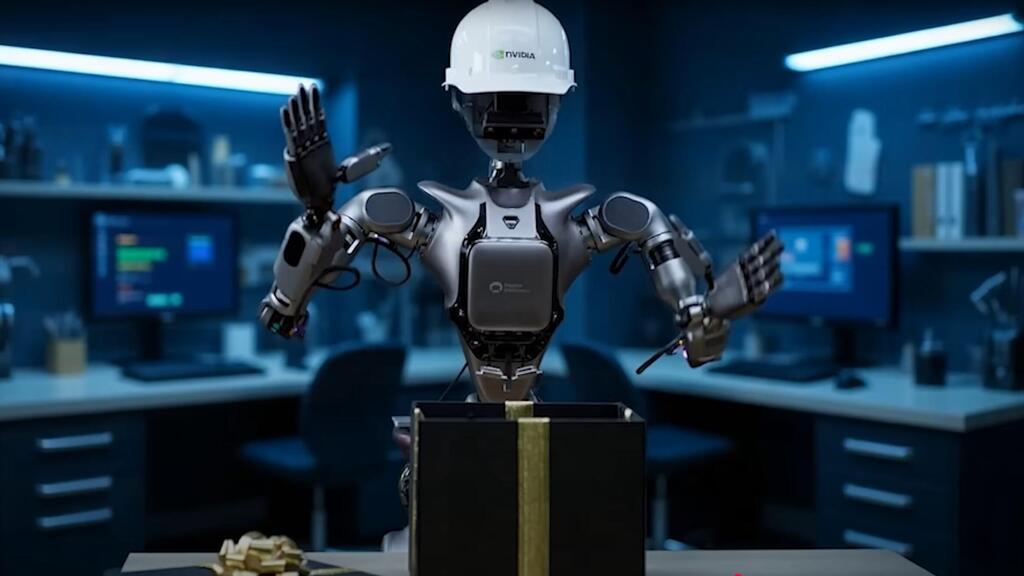
The implications reach far beyond humanoids. From precision surgery assistants to agricultural automation, logistics, transport and elder care, Jetson Thor could accelerate robotics deployment across entire sectors. At Carnegie Mellon University’s Robotics Institute, researchers are already using it to power autonomous systems navigating disaster zones and performing search-and-rescue tasks once considered beyond reach.
Still, two barriers must be addressed before widespread adoption: the cost, which remains in the tens of thousands of dollars per unit, and the power supply, since without long-life batteries, robots cannot yet sustain continuous independent operation. Nvidia and its partners are pushing toward standardization and cost reductions, but we're still years away from them being available in every household.

Jensen Huang
(Photo: Nvidia)
Jetson Thor does not just add computing muscle; it represents a structural shift. For the first time, robotics has the processing foundation required to deliver on decades of vision: machines that reason, adapt and act reliably in the human world.