

Nagireddy Sriramyachandra, a 25-year-old from Chennai in southern India, straps a smartphone to her head every day and films herself slicing mangoes in her kitchen. For an hour of filming she earns around 250 rupees, or just over $2. The videos she produces are sent to a U.S. data company that uses them to train humanoid robots to perform household and factory tasks.
“Who else will give you 250 rupees an hour just for household work?” she asks, adding: “Maybe I will get a robot myself in the future.”
Gallery
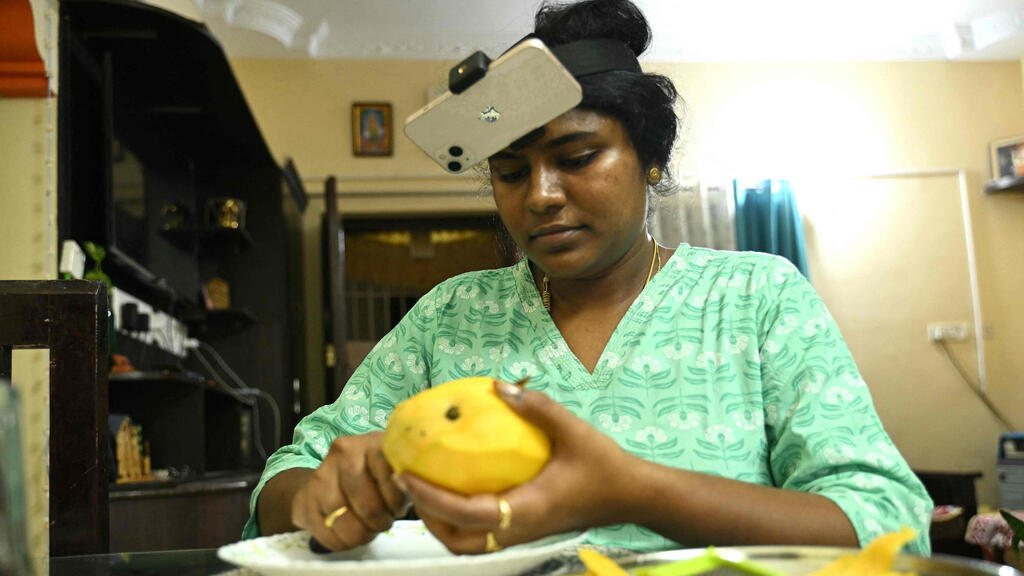
Nagireddy Sriramyachandra films hersef peeling mangoes so AI can learn from her
(Photo: R.Satish Babu/AFP)
Sriramyachandra is not an exception. India has become a major global supplier of training data for robotics, with tens of thousands of workers recording their bodily movements to teach machines how to operate in human environments.
Engineers prefer so-called “egocentric” video, captured from a head-mounted camera, because it records depth, hand movements and intent in a more natural flow. This approach allows robots to learn domestic and industrial tasks by observation rather than through millions of lines of code. In a textile shop in Karur, eight workers can be seen wearing head-mounted cameras and smart glasses, recording every movement.
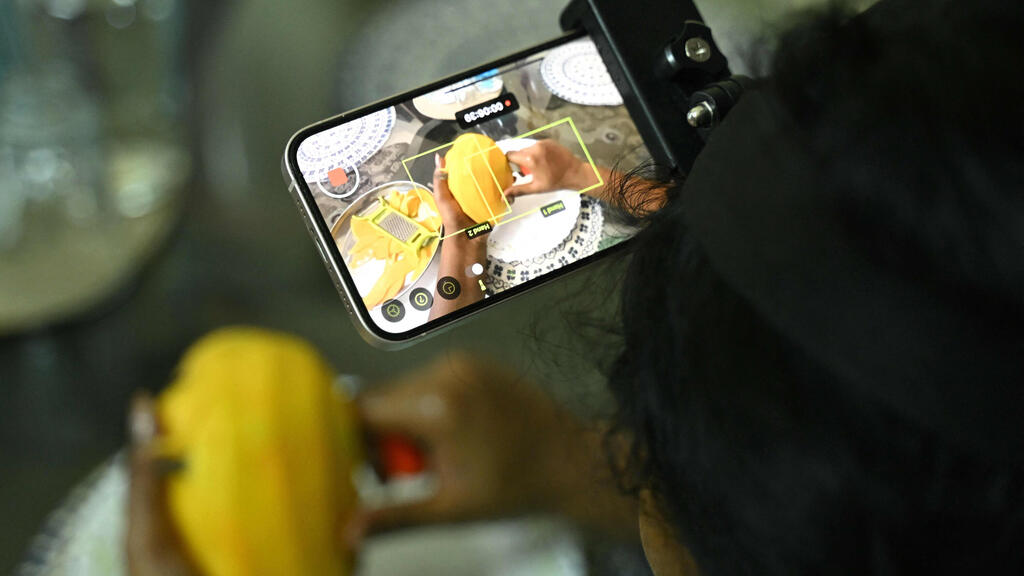
What the smartphone records
(Photo: R.Satish Babu/AFP)
The company behind much of this work is Objectways, a data firm with offices in India and the United States that works with Amazon SageMaker and counts Fortune 500 companies among its clients. Ravi Shankar, the company’s U.S. head of operations, describes the types of requests coming from customers: “Folding clothes, coffee making... cooking a very specific thing, sandwich making.” He adds: “Some jobs are supposed to be taken over, so humans can go and do better things."
The first-person filming also raises concerns. It is inherently intimate, capturing homes, kitchens and sometimes workers’ private surroundings. Some participants refuse to film in bedrooms, and labor activists raise an unanswered question: should people whose movements are encoded into commercial datasets receive ongoing compensation or royalties for their use? Participation remains largely project-based and consensual, but economic necessity in the regions fueling the data boom can blur the boundaries of free choice.