


Some scientific ideas are born from a focused search for a new treatment; others emerge almost by chance. Alpha DaRT belongs to the latter category—and it would be hard to find a better origin story.
In the early 2000s, the late Prof. Yitzhak Kelson, a physicist at Tel Aviv University, and his doctoral student Lior Arazi were working on a question that had nothing to do with cancer: how alpha particles could be used to measure thin layers of material. The technology had potential industrial applications, but the use of radiation made it complicated from a regulatory standpoint. Then, as Kelson later recounted, a doctor working in a nearby laboratory suggested they consider a medical application instead.
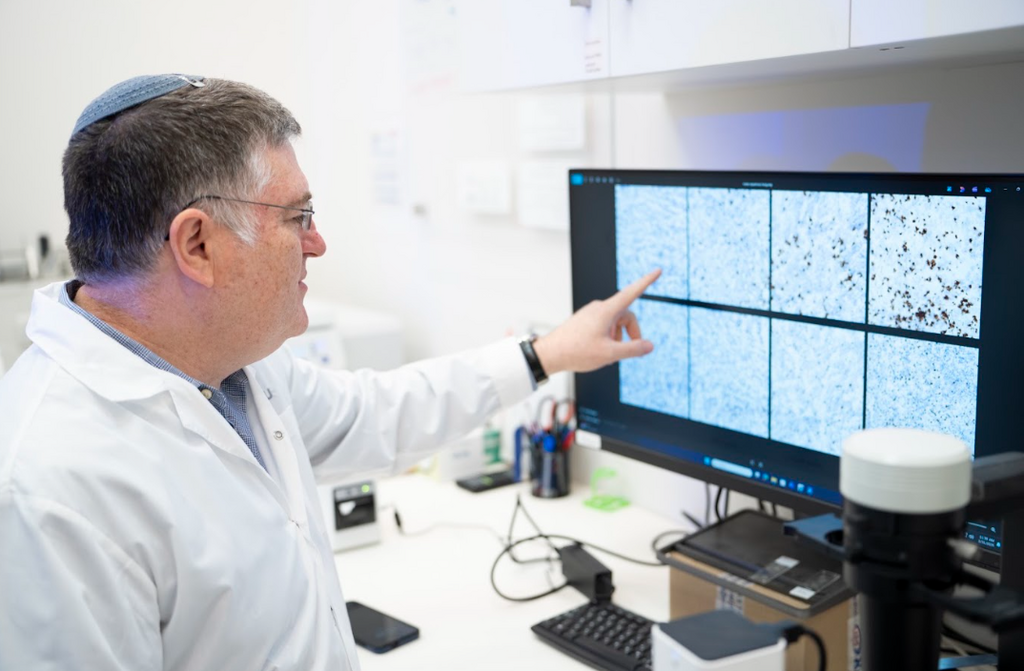
That suggestion opened an entirely new direction. Kelson joined forces with Prof. Yona Keisari, a cancer researcher and immunologist at the Faculty of Medicine, and two scientists from very different fields transformed a physics concept into a new method for treating solid tumors.
Their breakthrough was to take what had long been considered alpha radiation’s greatest disadvantage and turn it into its strength. Alpha particles can cause devastating damage to cells, but they travel only a very short distance through tissue; even a sheet of paper can stop them. That makes it difficult to use them to irradiate a tumor deep inside the body from an external source.
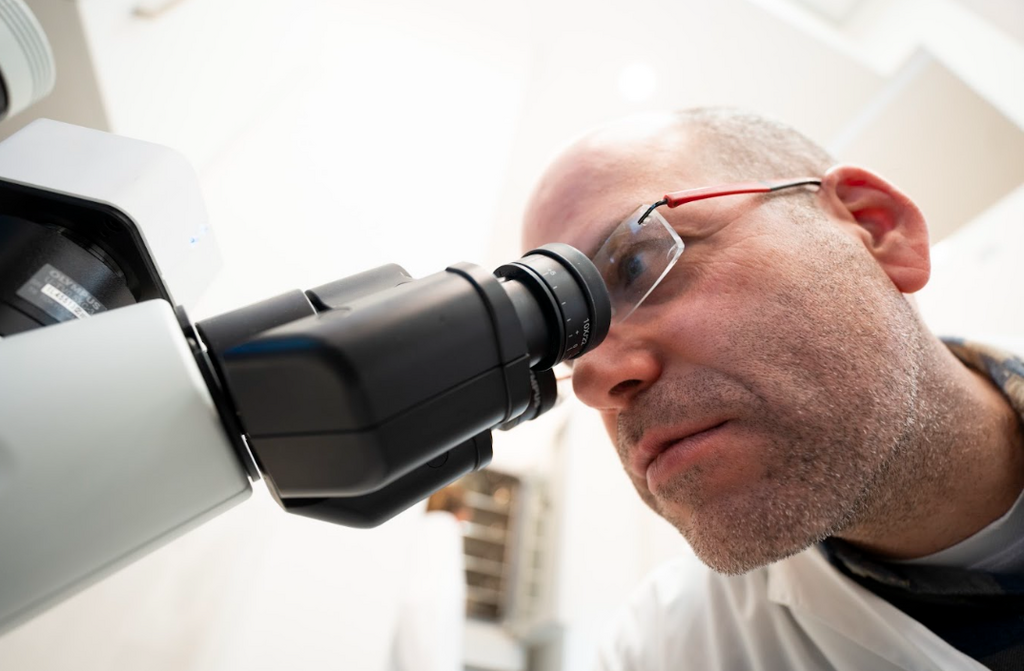
Instead of bringing the radiation to the tumor, Alpha DaRT places the radiation source inside it
(Photo: Alpha DaRT)
Alpha DaRT bypasses that problem in an almost elegantly simple way: instead of bringing the radiation to the tumor, it places the radiation source inside it. Tiny metal sources loaded with radium-224 are inserted directly into the tumor, where they release radioactive atoms that spread several millimeters around them and emit alpha particles. In this way, the tumor is irradiated from within, at high intensity and over a short range, while aiming to spare as much of the surrounding healthy tissue as possible.
“The genius of Professor Yitzhak Kelson and Professor Yona Keisari was in developing a technology that allows the radiation to spread within the tumor through the diffusion of atoms,” Alpha Tau CEO Uzi Sofer explained in an interview with ynet in April this year.
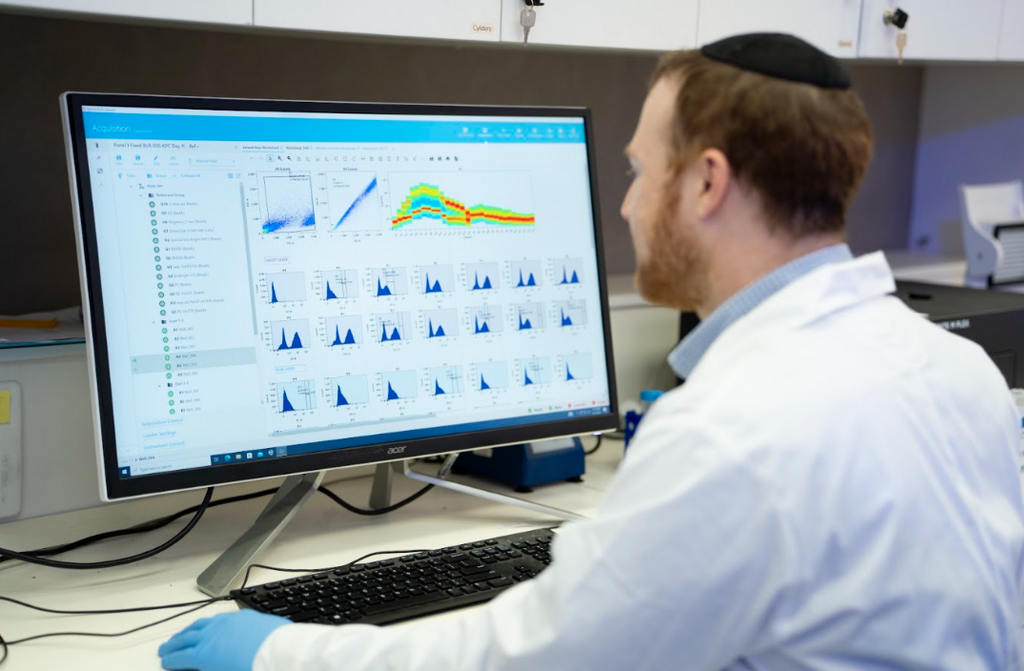
It may work even in environments where conventional radiation therapy faces greater difficulty
(Photo: Alpha DaRT)
Behind that explanation lies another potential advantage: alpha radiation causes particularly severe damage to the DNA of cancer cells and is less dependent on the presence of oxygen within the tumor. In other words, it may work even in environments where conventional radiation therapy faces greater difficulty.
The journey from the laboratory to patients took years. In 2015, Alpha Tau Medical was established, led by Sofer and in collaboration with Kelson and Keisari, to take the invention from Tel Aviv University into hospitals. The first human trial began in 2017 in patients with skin and head and neck tumors, and the initial results drew attention: all evaluable lesions responded to treatment, with complete tumor disappearance recorded in most of them.
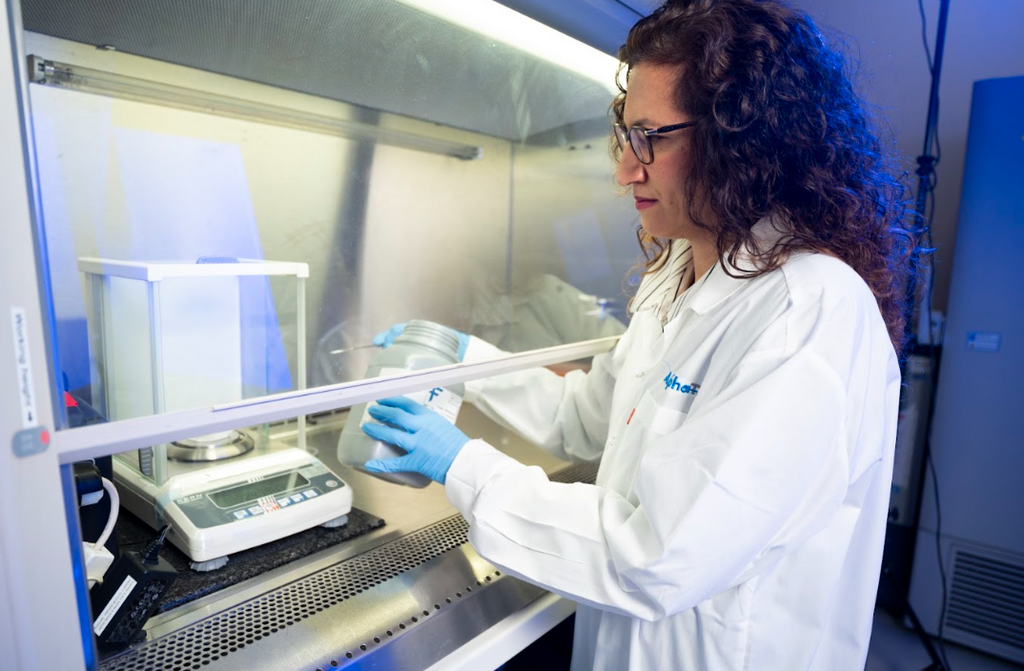
The technology is currently being studied against some of the most challenging cancers
(Photo: Alpha DaRT)
Since then, the clinical program has expanded across continents and into additional types of cancer. In February 2026, Alpha DaRT reached one of its most important milestones: Japan granted the technology marketing approval for the treatment of locally advanced or recurrent head and neck cancer that cannot be treated surgically, the technology’s first approval outside Israel. In the United States, enrollment of 88 patients has already been completed for a pivotal trial in recurrent cutaneous squamous cell carcinoma, and the company has begun the process of submitting its application for FDA approval.
But perhaps the most intriguing part of the Alpha DaRT story is that its ambitions now extend far beyond accessible skin tumors. The technology is currently being studied against some of the most challenging cancers, including pancreatic cancer and glioblastoma. In August, the first patient in Israel with recurrent glioblastoma was treated at Hadassah Ein Kerem as part of a Phase I study that is currently focused primarily on evaluating the treatment’s safety.
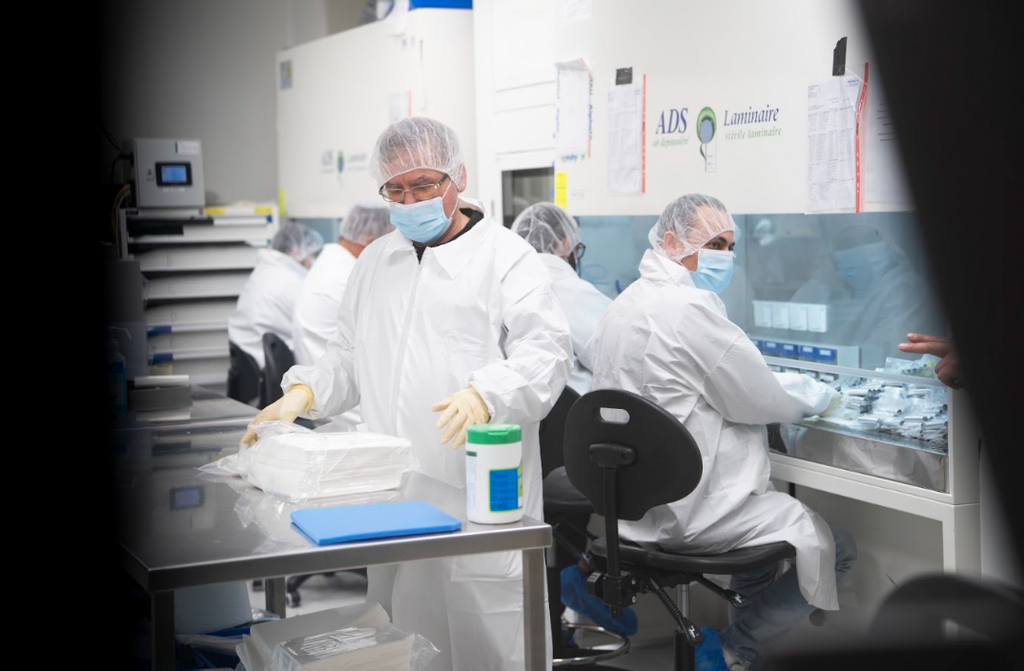
Alpha DaRT takes a limitation that once appeared to be built into the laws of physics and turns it into a therapeutic advantage
(Photo: Alpha DaRT)
At the same time, Alpha DaRT is also being investigated in combination with immunotherapy. Behind this approach is an idea Keisari has been studying for years: destroying a tumor may not only eliminate it locally, but could also expose the cancer cells’ identifying markers to the immune system. The possibility of turning a local treatment into a kind of alarm signal for the immune system is still under investigation, but if demonstrated in larger clinical trials, it could significantly expand the technology’s potential.
More than two decades after that almost accidental meeting of physics and medicine at Tel Aviv University, Alpha DaRT is a long way from being an exotic laboratory experiment. A technology born from an attempt to find another use for alpha particles has become an Israeli cancer-treatment platform, received marketing approval in Japan, is approaching a crucial regulatory milestone in the United States and has already reached experimental treatment of brain tumors in Israel.
It does not promise to “beat cancer.” But it does something no less remarkable: it takes a limitation that once appeared to be built into the laws of physics and turns it into a therapeutic advantage, one that could open a new path for tackling some of the most difficult cancers to treat.

First published: 13:36, 09.09.26