

The human brain is the foundation of our memories, our emotions, our knowledge and our identity. It makes us who we are, and when something goes awry, the consequences are dramatic.
In recent years, there have been significant developments in our ability to study the brain, and today we can ask questions that previously were simply un-addressable. What happened in these years, you wonder?
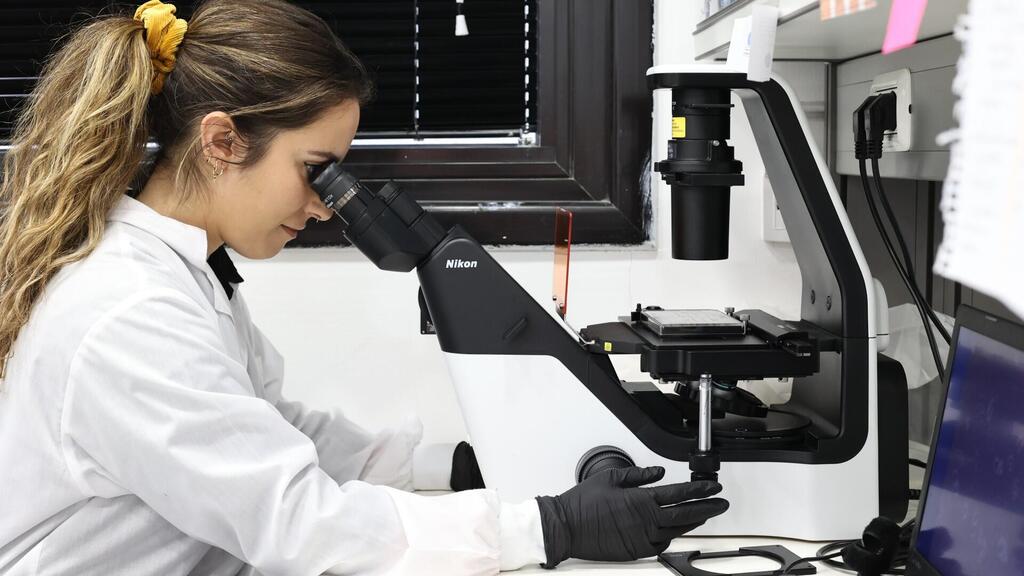
Scientists have developed technologies to grow a human brain in a dish! Imagine human brain cells growing in a petri dish, communicating with each other. Now imagine that this system actually reflects the characteristics of the person from whom the cells were derived, and is also capable of learning.
Sounds a bit like the world of artificial intelligence? Absolutely! In 2022, it was first demonstrated that a neural network derived from humans was able to master a computer game of Pong and even improve performance over time. It sounds like a scene from a science fiction movie, but it is a living, breathing reality that is already leaving the confines of the laboratory and entering the market.
Israel is known worldwide as a high-tech powerhouse, has demonstrated significant successes in the field, and high-tech companies constitute an important economic growth engine of for the country. The next significant growth engine is the field of biotechnology , and specifically within it, bioconvergence – combining biological methods with advanced computational technological applications such as artificial intelligence. With proven technological capabilities and hospitals that are among the world's leaders, it is easy to see why Israel can be a global leader in the field of bioconvergence.
From skin cells to brain cells
Within this context, let's return to brain-in-a-dish technologies. These technologies create an extraordinary opportunity. The progress in scientific research has led to the fact that from a blood sample, it is possible to derive neuronal (brain) cells of that individual, which preserve unique properties of their brain.
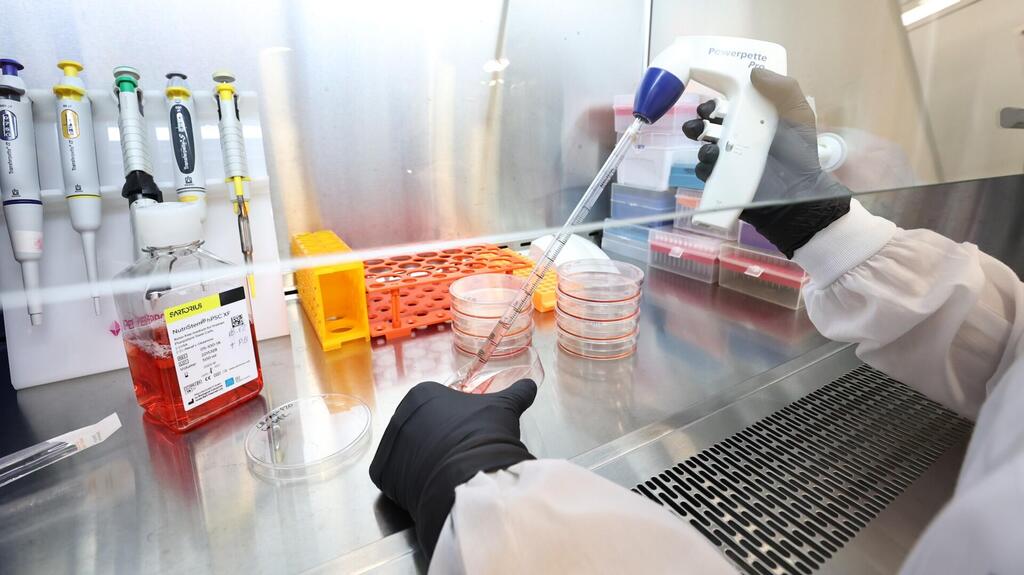
If in the past the only way to study the brain was through animal experiments or brain imaging , an expensive technology that provides a 30,000 meters view, today the human brain can be examined , at the individual level, through a simple, everyday sample. One clear example is drug development, where evaluating drug effects start with animal models, whose ability to reflect human brain activity is very limited, but constitute a critical milestone in making decisions and planning expensive clinical trials.
In addition to the fact that animal models are notoriously insufficient for predicting effects on the human brain, the ethical question of using animals for experiments also arises. A brain-in-a-dish could serve as a better alternative both morally and scientifically. The FDA has already eliminated the sweeping need for animal experiments as part of the drug approval process, and in Israel too there is an ongoing public discourse on animal rights, therefore the adoption of such technology could also become a social tool that enables advanced research in the field of the brain while minimizing the need for the use of animals .
Brain-in-a-dish technology makes it possible not only to examine in advance how human neural networks respond to various substances, but also to characterize subgroups of such networks according to the individuals from whom the samples were taken. This could save years of work and hundreds of millions of dollars in development processes. Neurological diseases such as Alzheimer's and Parkinson's as well as psychiatric disorders such as schizophrenia and depression are considered particularly complex puzzles.
The ability to take a sample from a specific patient, grow a neural network from it and use it as a personal model for testing drugs brings us closer to the era of truly personalized medicine. This is an area where Israel can lead thanks to a combination of excellent researchers, innovative universities and a creative biotech industry.
Toward personalized medicine
The field of two-dimensional and even three-dimensional models (organoids) is already valued at several billion dollars a year and is growing at a double-digit rate every year. Israel, with its capabilities in biology, medicine, and artificial intelligence, can become a significant player.
A few successful startups are enough for us to see a new industry here that will generate billions of dollars, similar to the cyber industry. Within a few years, it will create jobs in the fields of research, medical devices, drug development, and regulation.
In the future, one can imagine a situation in which each patient will have a private neuronal organoid produced from easily sampled cells (skin, blood, urine) and become a tool for making decisions ranging from nutrition to medical treatments . This is a vision that until a few years ago was considered completely imaginary, but today it is approaching reality thanks to new technologies.
A multibillion-dollar market
The global market for two-dimensional and three-dimensional brain models (organoids) is already worth billions of dollars and growing at double-digit rates annually. With its expertise in biology, medicine, and artificial intelligence, Israel can become a significant player.
Just a handful of successful startups could create a new industry here — one that generates billions, as the cyber industry did. Within a few years, such an industry could create jobs in research, medical devices, drug development, and regulatory affairs.
Ultimately, a brain in a dish is not just a fascinating experiment but an emerging field with tremendous economic and health potential. In Israel, where the biotech industry and bioconvergence is among the most advanced in the world, this is a rare opportunity to lead a new generation of research, personalized medicine, medical devices and drug discovery. Those who invest now, whether private investors, venture capital funds or government institutions, may reap enormous rewards within a decade.
The writer is VP of Biological R&D at NeuroKaire.