

The question ‘Is a revolution in Iran approaching?’ has echoed in the West for decades. But anyone truly seeking an answer does not need to comb through intelligence reports. All it takes is opening the feed.
I have been following social media inside the Islamic Republic for several years, and the conclusion is clear: Instagram and TikTok are not just apps. They are the oxygen of Generation Z in this closed country. These young Iranians are far more connected to the world than we tend to imagine, and they are angry.
Gallery
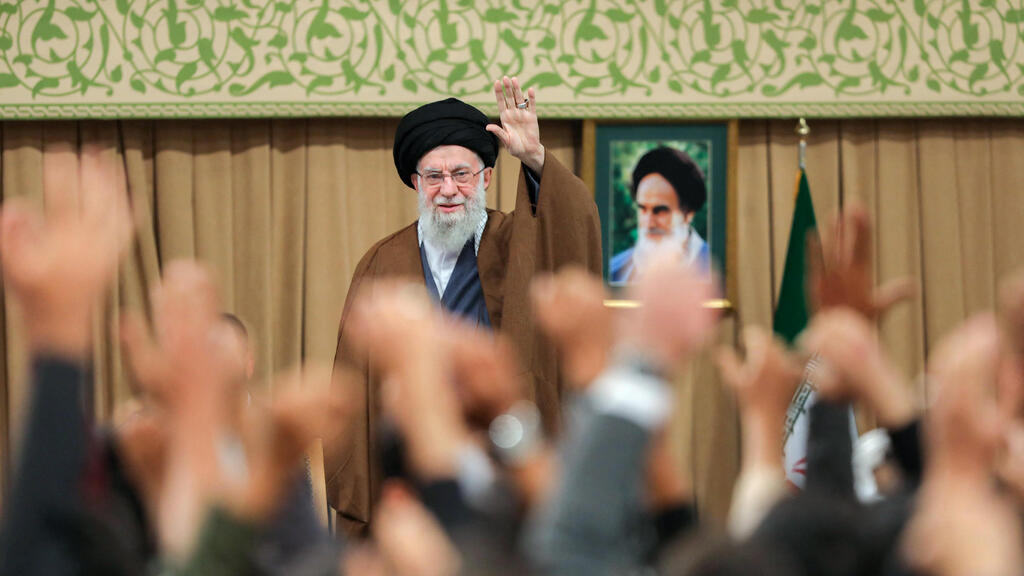
Khamenei addresses students in Tehran
(Photo: Khamenei.IR / AFP, West Asia News Agency)/Handout via Reuters)
Until recently, the Iranian feed functioned as a form of escapism. Most videos were light sketches about daily life. Content creators poked fun at the cost of living or at old customs like ‘taarof,’ the exhausting yet charming Persian art of politeness in which a person refuses an offer, such as food or payment, three times out of courtesy, even if they desperately want it, while the other side must keep insisting until the performance ends. But in the past month, the laughter has stopped. The feed has turned into a scream.
When a lake becomes a salt desert
The dramatic shift began with an infrastructure crisis. It started with electricity, as power cuts left homes without supply for several hours a day, and continued with disruptions to water delivery. Yet all of this paled in comparison to the true monster: a nationwide water crisis following six consecutive years of drought.
Lake Urmia before and after


The new and chilling trend on Iranian TikTok is ‘before and after’ videos. Thousands of young people upload nostalgic images of themselves swimming in vast, blue reservoirs, only to cut to today’s reality: a cracked, barren desert.
The most painful example is Lake Urmia, the salt lake that was once the largest in the Middle East and the sixth largest in the world. It is located in northwestern Iran, between the provinces of East and West Azerbaijan, not to be confused with the country of Azerbaijan.
In the past, its area measured about 5,200 square kilometers, more than three times the Sea of Galilee at its peak. It was a major tourist and ecological gem. Today, it has almost completely dried up. The reason is not nature alone, but primarily human intervention, including reckless river diversion and years of catastrophic mismanagement by the regime.
Young Iranians at water reservoirs that have already dried up
As if that were not enough, social media in recent weeks has been flooded with footage of massive forest fires. The combination of extreme heat and dryness ignites the terrain, and the regime stands helpless. There are no aircraft, no equipment and, worst of all, no water to extinguish the flames.
Tehran is collapsing, literally
But the real drama is unfolding underground. Due to extreme over pumping of groundwater to compensate for the drought, the land beneath Tehran is beginning to collapse inward.
The phenomenon, reminiscent of the sinkholes at the Dead Sea but on an urban scale, has caused the ground in the capital to subside at an alarming rate of about 30 centimeters per year. In videos posted from the city, home to about 15 million people in its metropolitan area, gaping holes appear suddenly in the middle of roads and sidewalks.
A sinkhole in Tehran
The situation has grown so severe that President Masoud Pezeshkian has publicly warned that Iran may soon have no choice but to evacuate Tehran and build a new capital elsewhere.
Pause for a moment and consider that prospect: evacuating an entire metropolis of roughly 15 million people because the ground beneath it is collapsing.
Longing for the shah’s English
The ecological disaster collides with a deepening economic crisis. The activation of the ‘snapback’ mechanism, which automatically reinstates international sanctions, has sent food prices soaring.
This distress has shaken even older Iranians, those slightly above Generation Z, out of their apathy. They are joining the younger generation in desperate videos, openly calling on the government to step aside.
Here, a fascinating element enters the picture: nostalgia.
Unlike the older generation that lived through the revolution, today’s youth never knew the shah. All they have are the stories of parents and grandparents, and the comparisons circulating online are devastating for the current regime.
‘There is no need to attack us. Save your missiles. This regime will destroy Iran on its own, without your help.’
The hottest trend features split screens. On one side is the awkward, broken English of current officials during foreign interviews. On the other is the flawless, eloquent and aristocratic English of the shah.
The comparison extends even to fashion. Young Iranians admire the modern suits and tailored elegance of the shah’s era, which still looks contemporary today, in contrast to the rumpled robes and black chadors associated with the ayatollahs’ rule.
The message to Israel: ‘Do not interfere’
Surprisingly, the war with Israel has also gone viral, but not in the way one might expect. The videos do not call for Israel’s destruction. Quite the opposite.
Young Iranians look straight into the camera, faces uncovered and without fear, sending a direct message to Jerusalem: ‘There is no need to attack us. Save your missiles. This regime will destroy Iran on its own, without your help.’
Symbols are also returning to the streets. The ‘Lion and Sun’ flag, Iran’s ancient emblem that the current regime erased to obliterate the memory of the monarchy, is now being waved at protests as a clear act of defiance. Chants of ‘Reza Shah, may your soul rest in peace’ echo through demonstrations. Images of Ayatollah Ruhollah Khomeini and Ayatollah Ali Khamenei are set on fire night after night, with the footage going viral within minutes.
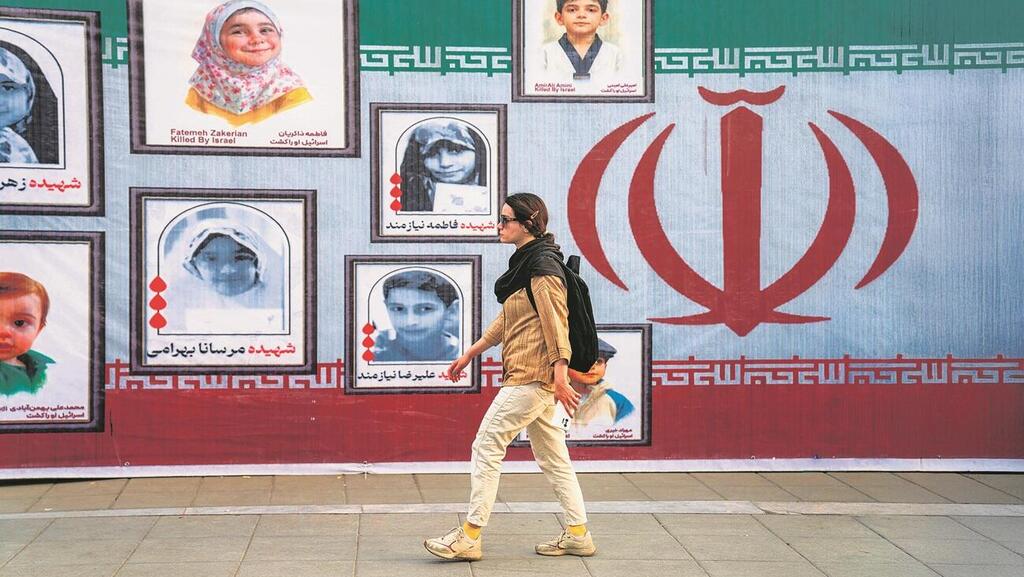
A woman on the streets of Tehran
(Photo: Majid Saeedi/Getty Images)
Bottom line
All of these developments are deeply encouraging, both for us and for the Iranian people. Public revulsion toward the regime has reached a boiling point.
But there is a major caveat that cannot be ignored. This is a messianic regime that sanctifies death over life. The real fear is that, in an effort to halt the internal collapse and unite the public, it will seek out a ‘common enemy.’ The identity of that enemy is hardly a mystery.
Despite knowing the price would be severe and once again paid by civilians, the regime in Tehran has repeatedly shown that it is willing to sacrifice everything, including its own people, on the altar of its survival.
Efi Banai is an expert on Iranian social media.