

Elbit Systems announced on Tuesday that it will supply its Helmet Display and Tracking System, or HDTS, for the Israeli Air Force’s fleet of UH-60 Black Hawk helicopters, known in Israel as “Yanshuf,” in a move aimed at enhancing operational capability and flight safety.
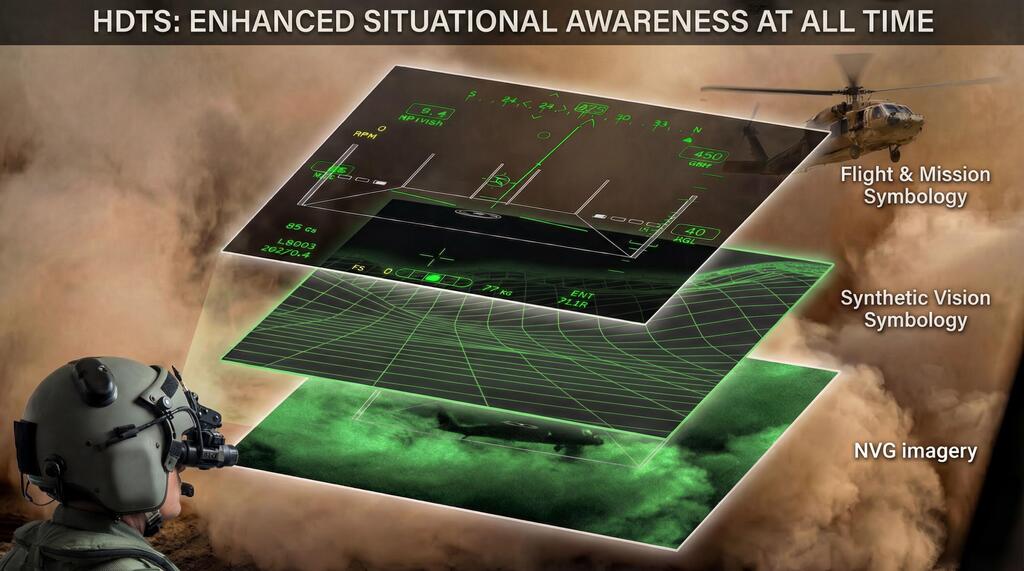
The HDTS is an operational system designed to provide aircrews with advanced 3D Synthetic Vision Symbology that displays terrain, obstacles and flight plans in real time. The system is intended to improve situational awareness and decision-making in degraded visual environments, including dust, precipitation, fog, smoke and night conditions, and to provide decision support during approach and landing.
In “brownout” conditions — when dust or sand severely limits visibility during landing — the system provides a synthetic landing-zone display designed to maintain continuous situational awareness and preserve flight safety margins.
The system includes Line-of-Sight head-tracking technology that aligns displayed symbology with the pilot’s viewing direction, allowing coordination among cockpit crew members based on mission requirements. The company said the feature is designed to improve team performance and reduce human error in dynamic flight conditions.
Built on what Elbit describes as an open and modular architecture, the HDTS integrates with intelligence, surveillance and reconnaissance, or ISR, and thermal imaging sensors, as well as navigation and positioning systems, obstacle-detection sensors and external video sources. The company said the system supports day and night operations in all weather conditions.
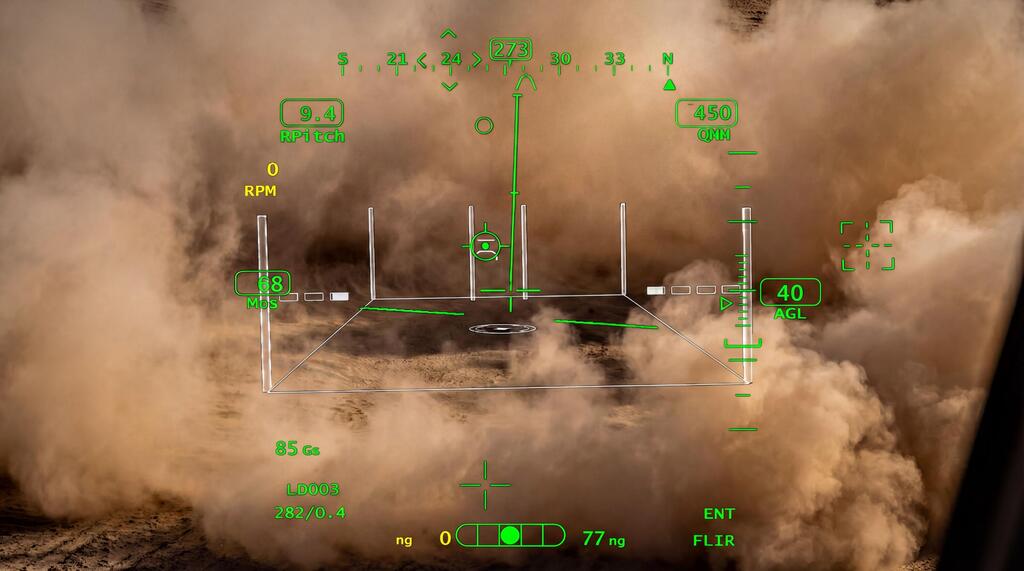
Helmet Display and Tracking System
(Illustration: Elbit Systems)
Yoram Shmuely, general manager of Elbit Systems Aerospace, said the program continues the company’s longstanding cooperation with the Israeli Air Force.
“Elbit Systems is a global leader in helmet system technologies, supplying advanced head‑mounted solutions for a wide range of aircraft platforms worldwide,” Shmuely said. “This program further strengthens Elbit’s position as a next‑generation provider of integrated aircrew solutions, marking the transition from basic helmet‑mounted displays to a fully operational system that unites display, precise head‑tracking, synthetic symbology, and multi‑sensor integration.”