
There are fields in which Israel has, over the years, become a global hub for medical innovation, and heart valve technologies are a particularly striking example. As early as 2004, U.S. medical device giant Edwards Lifesciences acquired PVT, which had developed technology for catheter-based heart valve replacement, and turned it into the foundation of its R&D center in Israel. In 2017, Edwards also acquired Israel’s Valtech Cardio, which developed a catheter-based system for heart valve repair. About two years ago, Innovalve joined that lineage, attempting to solve one of the most difficult challenges still facing the field: replacing the mitral valve without opening the chest.
The mitral valve sits between the heart’s left atrium and left ventricle, and its role is to ensure that blood flows in the right direction. When it does not close properly, some blood leaks backward. In severe cases, this can lead to shortness of breath, fatigue and, eventually, heart failure. The valve can be repaired or replaced surgically, but some patients are too elderly or medically fragile to undergo open-heart surgery.
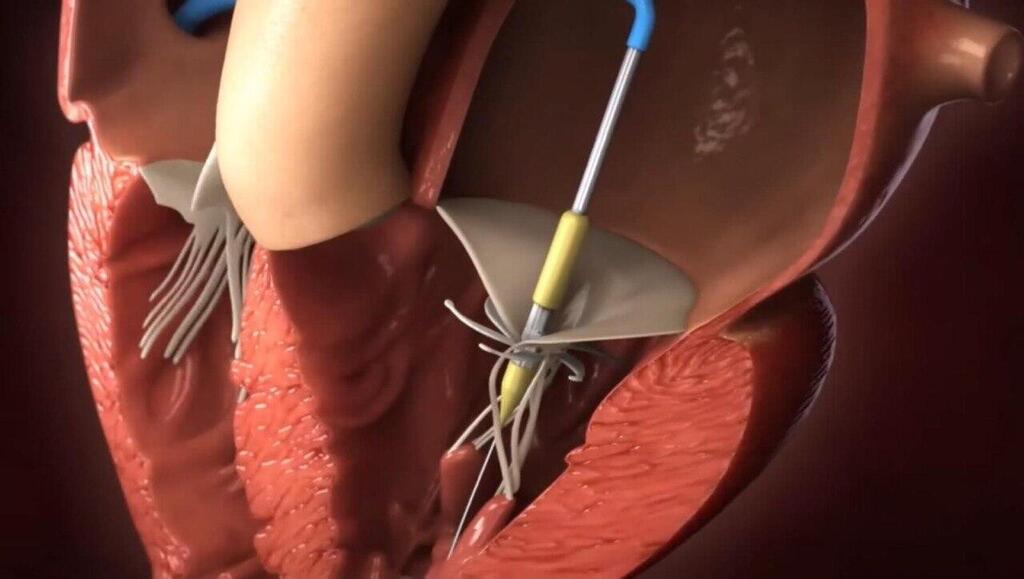
Unlike the aortic valve, where catheter-based replacement has already become a common treatment, the mitral valve presents a far more complex challenge. Its shape and anatomy make it difficult to anchor an artificial valve securely without the device shifting or obstructing blood flow out of the heart.
“Our technology makes it possible to reach this difficult location in the heart and, moreover, to anchor the valve securely while the heart is still beating,” Prof. Ehud Raanani explained in an interview with ynet following the announcement of the company’s acquisition.
Innovalve’s solution was born inside Sheba Medical Center, emerging from the clinical work of Raanani, director of the Heart, Thoracic and Vascular Center, and Dr. Boris Orlov, who headed the Mitral Valve Surgery Unit. The company grew within ARC, Sheba’s innovation arm, and continued operating inside the hospital, in close proximity to physicians and patients.

Innovalve
That proximity itself became part of the development process. Raanani said that during the preclinical stages, some experiments failed, and the team repeatedly had to make adjustments and return to the drawing board before arriving at a design that performed consistently.
The idea itself is easier to explain than to execute. Innovalve’s artificial valve is inserted through a vein in the groin and delivered to the heart by catheter, eliminating the need for a large incision in the chest. Surrounding the valve are six arms that open beneath the patient’s natural valve. With a rotational movement, they capture the thin cords connecting the valve to the heart muscle, wrapping the natural tissue around the implant and securing it in place.
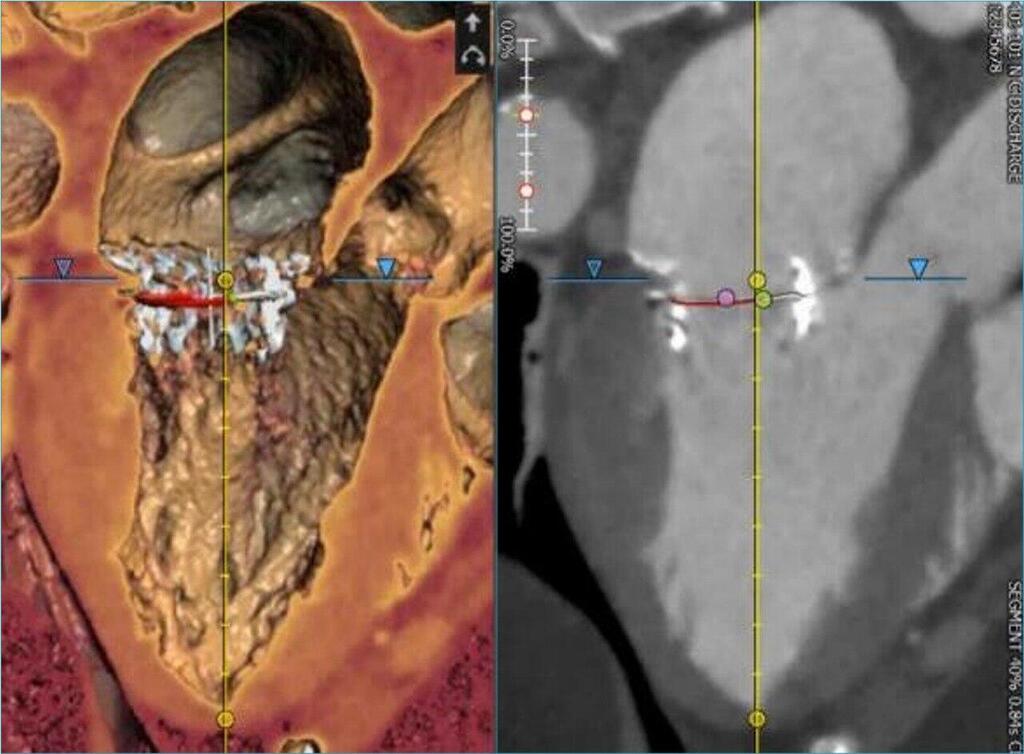
A CT scan showing the Innovalve valve (the white part) implanted in a human
(Photo: Innovalve)
This unique anchoring mechanism allows the implant to remain relatively small and helps reduce the risk of interfering with blood flow out of the left ventricle—one of the central problems that has made catheter-based mitral valve replacement so challenging.
The technology has already moved from the laboratory into human trials. In initial feasibility studies, the system was implanted in dozens of patients in the United States and elsewhere, with early results indicating a high rate of technical success and a significant reduction in mitral regurgitation. Edwards is currently continuing a multicenter clinical trial involving patients with significant mitral regurgitation who are considered at high risk for surgery. The system remains investigational and has not yet been approved for widespread commercial use.
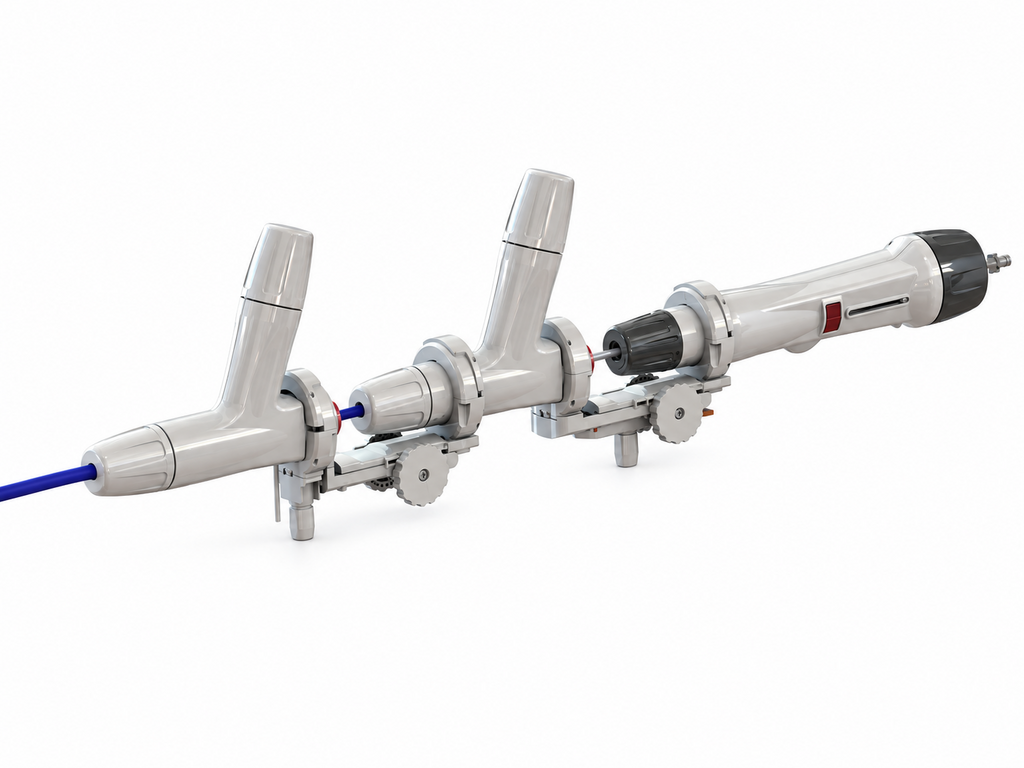
TMVR system for mitral valve replacement developed by Innovalve
(Photo: Innovalve)
But even before reaching the market, Innovalve received an extraordinary vote of confidence. Edwards first invested in Innovalve in 2017, and in October 2024 completed its acquisition of the company. Approximately $300 million was paid in cash for the remaining shares, while later Edwards financial reports valued the total consideration for the transaction—including its previous ownership stake and additional components—at approximately $381 million. For Edwards, Innovalve is expected to become part of the next generation of treatments for mitral valve disease.
This is still not the end of the road. Innovalve must demonstrate its safety and effectiveness in a larger number of patients and secure regulatory approvals. But its journey already tells a familiar Israeli story in medical innovation: a problem physicians encounter at a patient’s bedside becomes an engineering idea, then a medical device, then a human clinical trial—and ultimately a technology in which one of the world’s leading heart valve companies is willing to invest hundreds of millions of dollars.
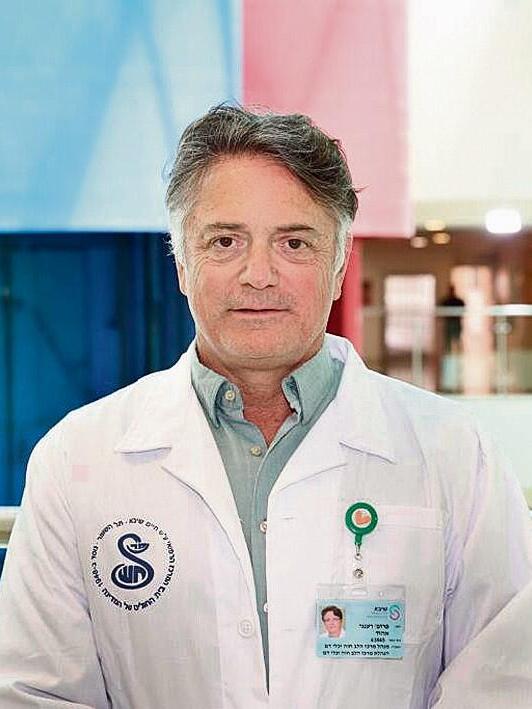 Professor Ehud RaananiPhoto: Sheba Spokesperson
If the next trials meet expectations, the valve born in the corridors of Sheba Medical Center could one day allow patients who cannot undergo open-heart surgery to receive a new mitral valve through a catheter.